
Teksti
Tausta
Näytä
Lisäasetukset
Kieli
Urantia Opas
Kysy kirjan sisällöstä. Opas vastaa Book Enginen omien lähdekohtien perusteella ja ohjaa sinut lukemaan ne.
Hei! 🙏
Olen sinun Urantia-oppaasi. Tehtäväni on auttaa sinua löytämään oikeat kohdat Urantia-kirjasta ja ymmärtämään sen opetuksia syvemmin. 😊❤️
Mooseksen opin kehitys ja ylevyys on vaikuttanut miltei puoleen maailmaan, ja se vaikuttaa edelleen, vielä kahdennellakymmenennellä vuosisadallakin. Vaikka Mooses ymmärsikin edistyneempää egyptiläistä uskonnonfilosofiaa, beduiiniorjat eivät tällaisista opetuksista paljonkaan tienneet, mutta he eivät koskaan olleet täysin unohtaneet sitä Horebvuoren jumalaa, jota heidän esivanhempansa olivat kutsuneet Jahveksi.
Mooses oli kuullut Makiventa Melkisedekin opetuksista sekä isältään että äidiltään, joiden uskonnollisten vakaumusten yhteisyys onkin selityksenä tälle epätavalliselle avioliitolle kuninkaallista verta olevan naisen ja vangittuna pidettyyn rotuun kuuluvan miehen välillä. Mooseksen appi-isä oli keeniläinen El Eljonin palvoja, mutta vapauttajan vanhemmat olivat El Shaddaihin uskovia. Niinpä Mooses kasvatettiin El Shaddain kannattajaksi. Appi-isän vaikutuksesta hänestä tuli El Eljonin kannattaja, ja siihen aikaan mennessä, jolloin heprealaiset Egyptistä-paon jälkeen leiriytyivät Siinaivuoren ympärille, hän oli muodostanut uuden ja entistä laajemman jumaluuskäsityksen (jonka hän oli johtanut kaikista aikaisemmista uskonnoistaan), jota hän viisautta osoittaen päätti julistaa kansalleen laajennettuna käsityksenä heidän ikivanhasta heimojumalastaan Jahvesta.
Mooses oli yrittänyt opettaa näille beduiineille El Eljonin ideaa, mutta jo ennen Egyptistä-lähtöä hän oli tullut vakuuttuneeksi siitä, etteivät nämä koskaan ymmärtäisi tätä oppia kokonaisuudessaan. Siksipä hän tieten tahtoen valitsi kompromissiratkaisun omaksumalla heidän heimonsa erämaajumalan seuraajiensa yhdeksi ja ainoaksi jumalaksi. Mooses ei erityisesti opettanut, etteikö muilla kansoilla ja kansakunnilla saattanut olla muita jumalia, mutta hän väitti päättäväisesti, että Jahve oli kaiken yllä ja yläpuolella ja että tämä oli sitä erityisesti heprealaisille. Mutta häntä vaivasi jatkuvasti se kiusallinen tilanne, että hänen piti yrittää tuoda uusi ja korkeampi jumaluusideansa näiden tietämättömien orjien tietoisuuteen ikivanhan Jahve-sanan valepuvussa, Jahven, jonka eduskuvana oli aina ollut beduiiniheimojen kultainen vasikka.
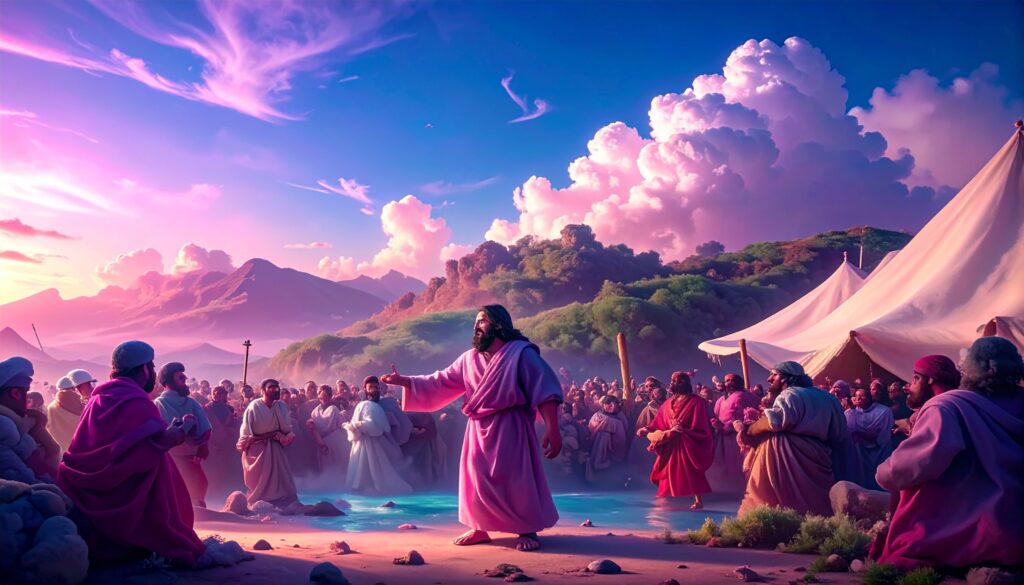
Se seikka, että Jahve oli pakomatkaa taittavien heprealaisten jumala, selittää, miksi he viipyivät niin kauan Siinain pyhän vuoren juurella, ja sen, miksi he juuri siellä saivat ne kymmenen käskyä, jotka Mooses julisti Jahven, Horebin jumalan, nimessä. Tämän Siinain juurella vietetyn pitkähkön ajan kuluessa tehtiin vasta kehittymään päässeen heprealaisen palvontatoiminnan uskonnollisista seremonioista entistä täydellisempiä.
Ei näytä siltä, että Mooses olisi koskaan onnistunut saamaan kehittämäänsä, melko pitkälle edistynyttä seremoniaalista palvontatoimintaa vakiintumaan ja pitämään seuraajansa koossa yli neljännesvuosisadan ajan, ellei olisi sattunut, että Horeb purkautui rajusti heidän kolmannen sen juurella viettämänsä palvonnantäyteisen viikon aikana. ”Jahven vuori paloi tulessa ja siitä nousi savu niin kuin pätsin savu, ja koko vuori vapisi kovasti.” Tämän luonnonmullistuksen huomioon ottaen ei ole mitään yllättävää, että Mooses pystyi juurruttamaan veljiensä mieleen opetuksen, jonka mukaan heidän Jumalansa oli ”mahtava, kauhea, kuluttava tuli, peljättävä ja kaikkivoipainen”.
Mooses julisti Jahven olevan Herra, Israelin Jumala, joka oli erottanut heprealaiset valituksi kansakseen. Mooses oli rakentamassa uutta kansakuntaa, ja hän oli kyllin viisas sitoakseen uskonnolliset opetuksensa kansallisuuteen. Ja hän kertoi seuraajilleen, että Jahve oli ankara työnjohtaja, ”kiivas Jumala”. Mutta kaikesta huolimatta hän koetti laajentaa heidän käsitystään jumalallisuudesta opettamalla heille, että Jahve oli ”kaiken lihan henkien Jumala”, ja sanomalla: ”Sinun turvasi on ikiaikojen Jumala, sinua kannattavat iankaikkiset käsivarret.” Mooses opetti, että Jahve oli Jumala, joka piti sopimuksensa; että hän ”ei jätä sinua eikä hukuta sinua; hän ei unhota sinun isiesi kanssa tekemäänsä liittoa, sillä Herra rakastaa sinua, eikä hän unhota valaa, jonka hän vannoi isillesi.”
Mooses teki sankarillisen yrityksen kohottaakseen Jahven korkeimman Jumaluuden arvoasemaan, kun hän esitti Jahven ”totuuden Jumalana, joka on vailla vääryyttä, vanhurskas ja oikeamielinen kaikissa teoissansa.” Ja tästä ylevästä opetuksesta huolimatta hänen seuraajiensa rajoittunut käsityskyky pakotti kuitenkin puhumaan Jumalasta niin kuin tämä olisi ihmisen kuva, ikään kuin hän olisi altis kiukun-, vihan- ja ankaruudenpuuskille, jopa että hän olisi kostonhaluinen ja että hän antaisi ihmisen käyttäytymisen vaikuttaa herkästi itseensä.
Mooseksen opetusten kautta tästä heimokohtaisesta luonnonjumala Jahvesta tuli Herra, Israelin Jumala, joka kulki heidän kanssaan autiomaan halki ja jopa maanpakolaisuuteen. Maanpakolaisuudessa hänet ennen pitkää miellettiin kaikkien kansojen Jumalaksi. Myöhempi vankeus, joka piti juutalaiset orjina Babylonissa, vapautti kehittyvän Jahve-käsitteen lopulta niin, että se saattoi omaksua kaikkien kansakuntien Jumalan monoteistisen roolin.
Heprealaisten uskontohistorian ainoalaatuisin ja hämmästyttävin piirre on tämä jumaluuskäsitteen katkeamaton kehitys alkeellisesta Horebvuoren jumalasta heidän toinen toistaan seuranneiden hengellisten johtajiensa opetusten myötä sille korkealle kehitystasolle, joka kuvastuu Jesajain opetuksissa Jumaluudesta, Jesajain, jotka julistivat tuntemaamme suurenmoista käsitystä rakastavasta ja laupiaasta Luoja-Isästä.
The evolution and elevation of the Mosaic teaching has influenced almost one half of all the world, and still does even in the twentieth century. While Moses comprehended the more advanced Egyptian religious philosophy, the Bedouin slaves knew little about such teachings, but they had never entirely forgotten the god of Mount Horeb, whom their ancestors had called Yahweh.
Moses had heard of the teachings of Machiventa Melchizedek from both his father and his mother, their commonness of religious belief being the explanation for the unusual union between a woman of royal blood and a man from a captive race. Moses’ father-in-law was a Kenite worshiper of El Elyon, but the emancipator’s parents were believers in El Shaddai. Moses thus was educated an El Shaddaist; through the influence of his father-in-law he became an El Elyonist; and by the time of the Hebrew encampment about Mount Sinai after the flight from Egypt, he had formulated a new and enlarged concept of Deity (derived from all his former beliefs), which he wisely decided to proclaim to his people as an expanded concept of their olden tribal god, Yahweh.
Moses had endeavored to teach these Bedouins the idea of El Elyon, but before leaving Egypt, he had become convinced they would never fully comprehend this doctrine. Therefore he deliberately determined upon the compromise adoption of their tribal god of the desert as the one and only god of his followers. Moses did not specifically teach that other peoples and nations might not have other gods, but he did resolutely maintain that Yahweh was over and above all, especially to the Hebrews. But always was he plagued by the awkward predicament of trying to present his new and higher idea of Deity to these ignorant slaves under the guise of the ancient term Yahweh, which had always been symbolized by the golden calf of the Bedouin tribes.
The fact that Yahweh was the god of the fleeing Hebrews explains why they tarried so long before the holy mountain of Sinai, and why they there received the ten commandments which Moses promulgated in the name of Yahweh, the god of Horeb. During this lengthy sojourn before Sinai the religious ceremonials of the newly evolving Hebrew worship were further perfected.
It does not appear that Moses would ever have succeeded in the establishment of his somewhat advanced ceremonial worship and in keeping his followers intact for a quarter of a century had it not been for the violent eruption of Horeb during the third week of their worshipful sojourn at its base. “The mountain of Yahweh was consumed in fire, and the smoke ascended like the smoke of a furnace, and the whole mountain quaked greatly.” In view of this cataclysm it is not surprising that Moses could impress upon his brethren the teaching that their God was “mighty, terrible, a devouring fire, fearful, and all-powerful.”
Moses proclaimed that Yahweh was the Lord God of Israel, who had singled out the Hebrews as his chosen people; he was building a new nation, and he wisely nationalized his religious teachings, telling his followers that Yahweh was a hard taskmaster, a “jealous God.” But nonetheless he sought to enlarge their concept of divinity when he taught them that Yahweh was the “God of the spirits of all flesh,” and when he said, “The eternal God is your refuge, and underneath are the everlasting arms.” Moses taught that Yahweh was a covenant-keeping God; that he “will not forsake you, neither destroy you, nor forget the covenant of your fathers because the Lord loves you and will not forget the oath by which he swore to your fathers.”
Moses made a heroic effort to uplift Yahweh to the dignity of a supreme Deity when he presented him as the “God of truth and without iniquity, just and right in all his ways.” And yet, despite this exalted teaching, the limited understanding of his followers made it necessary to speak of God as being in man’s image, as being subject to fits of anger, wrath, and severity, even that he was vengeful and easily influenced by man’s conduct.
Under the teachings of Moses this tribal nature god, Yahweh, became the Lord God of Israel, who followed them through the wilderness and even into exile, where he presently was conceived of as the God of all peoples. The later captivity that enslaved the Jews in Babylon finally liberated the evolving concept of Yahweh to assume the monotheistic role of the God of all nations.
The most unique and amazing feature of the religious history of the Hebrews concerns this continuous evolution of the concept of Deity from the primitive god of Mount Horeb up through the teachings of their successive spiritual leaders to the high level of development depicted in the Deity doctrines of the Isaiahs, who proclaimed that magnificent concept of the loving and merciful Creator Father.
SuomiEnglish
Mooseksen opin kehitys ja ylevyys on vaikuttanut miltei puoleen maailmaan, ja se vaikuttaa edelleen, vielä kahdennellakymmenennellä vuosisadallakin. Vaikka Mooses ymmärsikin edistyneempää egyptiläistä uskonnonfilosofiaa, beduiiniorjat eivät tällaisista opetuksista paljonkaan tienneet, mutta he eivät koskaan olleet täysin unohtaneet sitä Horebvuoren jumalaa, jota heidän esivanhempansa olivat kutsuneet Jahveksi.
The evolution and elevation of the Mosaic teaching has influenced almost one half of all the world, and still does even in the twentieth century. While Moses comprehended the more advanced Egyptian religious philosophy, the Bedouin slaves knew little about such teachings, but they had never entirely forgotten the god of Mount Horeb, whom their ancestors had called Yahweh.
Mooses oli kuullut Makiventa Melkisedekin opetuksista sekä isältään että äidiltään, joiden uskonnollisten vakaumusten yhteisyys onkin selityksenä tälle epätavalliselle avioliitolle kuninkaallista verta olevan naisen ja vangittuna pidettyyn rotuun kuuluvan miehen välillä. Mooseksen appi-isä oli keeniläinen El Eljonin palvoja, mutta vapauttajan vanhemmat olivat El Shaddaihin uskovia. Niinpä Mooses kasvatettiin El Shaddain kannattajaksi. Appi-isän vaikutuksesta hänestä tuli El Eljonin kannattaja, ja siihen aikaan mennessä, jolloin heprealaiset Egyptistä-paon jälkeen leiriytyivät Siinaivuoren ympärille, hän oli muodostanut uuden ja entistä laajemman jumaluuskäsityksen (jonka hän oli johtanut kaikista aikaisemmista uskonnoistaan), jota hän viisautta osoittaen päätti julistaa kansalleen laajennettuna käsityksenä heidän ikivanhasta heimojumalastaan Jahvesta.
Moses had heard of the teachings of Machiventa Melchizedek from both his father and his mother, their commonness of religious belief being the explanation for the unusual union between a woman of royal blood and a man from a captive race. Moses’ father-in-law was a Kenite worshiper of El Elyon, but the emancipator’s parents were believers in El Shaddai. Moses thus was educated an El Shaddaist; through the influence of his father-in-law he became an El Elyonist; and by the time of the Hebrew encampment about Mount Sinai after the flight from Egypt, he had formulated a new and enlarged concept of Deity (derived from all his former beliefs), which he wisely decided to proclaim to his people as an expanded concept of their olden tribal god, Yahweh.
Mooses oli yrittänyt opettaa näille beduiineille El Eljonin ideaa, mutta jo ennen Egyptistä-lähtöä hän oli tullut vakuuttuneeksi siitä, etteivät nämä koskaan ymmärtäisi tätä oppia kokonaisuudessaan. Siksipä hän tieten tahtoen valitsi kompromissiratkaisun omaksumalla heidän heimonsa erämaajumalan seuraajiensa yhdeksi ja ainoaksi jumalaksi. Mooses ei erityisesti opettanut, etteikö muilla kansoilla ja kansakunnilla saattanut olla muita jumalia, mutta hän väitti päättäväisesti, että Jahve oli kaiken yllä ja yläpuolella ja että tämä oli sitä erityisesti heprealaisille. Mutta häntä vaivasi jatkuvasti se kiusallinen tilanne, että hänen piti yrittää tuoda uusi ja korkeampi jumaluusideansa näiden tietämättömien orjien tietoisuuteen ikivanhan Jahve-sanan valepuvussa, Jahven, jonka eduskuvana oli aina ollut beduiiniheimojen kultainen vasikka.
Moses had endeavored to teach these Bedouins the idea of El Elyon, but before leaving Egypt, he had become convinced they would never fully comprehend this doctrine. Therefore he deliberately determined upon the compromise adoption of their tribal god of the desert as the one and only god of his followers. Moses did not specifically teach that other peoples and nations might not have other gods, but he did resolutely maintain that Yahweh was over and above all, especially to the Hebrews. But always was he plagued by the awkward predicament of trying to present his new and higher idea of Deity to these ignorant slaves under the guise of the ancient term Yahweh, which had always been symbolized by the golden calf of the Bedouin tribes.
Se seikka, että Jahve oli pakomatkaa taittavien heprealaisten jumala, selittää, miksi he viipyivät niin kauan Siinain pyhän vuoren juurella, ja sen, miksi he juuri siellä saivat ne kymmenen käskyä, jotka Mooses julisti Jahven, Horebin jumalan, nimessä. Tämän Siinain juurella vietetyn pitkähkön ajan kuluessa tehtiin vasta kehittymään päässeen heprealaisen palvontatoiminnan uskonnollisista seremonioista entistä täydellisempiä.
The fact that Yahweh was the god of the fleeing Hebrews explains why they tarried so long before the holy mountain of Sinai, and why they there received the ten commandments which Moses promulgated in the name of Yahweh, the god of Horeb. During this lengthy sojourn before Sinai the religious ceremonials of the newly evolving Hebrew worship were further perfected.
Ei näytä siltä, että Mooses olisi koskaan onnistunut saamaan kehittämäänsä, melko pitkälle edistynyttä seremoniaalista palvontatoimintaa vakiintumaan ja pitämään seuraajansa koossa yli neljännesvuosisadan ajan, ellei olisi sattunut, että Horeb purkautui rajusti heidän kolmannen sen juurella viettämänsä palvonnantäyteisen viikon aikana. ”Jahven vuori paloi tulessa ja siitä nousi savu niin kuin pätsin savu, ja koko vuori vapisi kovasti.” Tämän luonnonmullistuksen huomioon ottaen ei ole mitään yllättävää, että Mooses pystyi juurruttamaan veljiensä mieleen opetuksen, jonka mukaan heidän Jumalansa oli ”mahtava, kauhea, kuluttava tuli, peljättävä ja kaikkivoipainen”.
It does not appear that Moses would ever have succeeded in the establishment of his somewhat advanced ceremonial worship and in keeping his followers intact for a quarter of a century had it not been for the violent eruption of Horeb during the third week of their worshipful sojourn at its base. “The mountain of Yahweh was consumed in fire, and the smoke ascended like the smoke of a furnace, and the whole mountain quaked greatly.” In view of this cataclysm it is not surprising that Moses could impress upon his brethren the teaching that their God was “mighty, terrible, a devouring fire, fearful, and all-powerful.”
Mooses julisti Jahven olevan Herra, Israelin Jumala, joka oli erottanut heprealaiset valituksi kansakseen. Mooses oli rakentamassa uutta kansakuntaa, ja hän oli kyllin viisas sitoakseen uskonnolliset opetuksensa kansallisuuteen. Ja hän kertoi seuraajilleen, että Jahve oli ankara työnjohtaja, ”kiivas Jumala”. Mutta kaikesta huolimatta hän koetti laajentaa heidän käsitystään jumalallisuudesta opettamalla heille, että Jahve oli ”kaiken lihan henkien Jumala”, ja sanomalla: ”Sinun turvasi on ikiaikojen Jumala, sinua kannattavat iankaikkiset käsivarret.” Mooses opetti, että Jahve oli Jumala, joka piti sopimuksensa; että hän ”ei jätä sinua eikä hukuta sinua; hän ei unhota sinun isiesi kanssa tekemäänsä liittoa, sillä Herra rakastaa sinua, eikä hän unhota valaa, jonka hän vannoi isillesi.”
Moses proclaimed that Yahweh was the Lord God of Israel, who had singled out the Hebrews as his chosen people; he was building a new nation, and he wisely nationalized his religious teachings, telling his followers that Yahweh was a hard taskmaster, a “jealous God.” But nonetheless he sought to enlarge their concept of divinity when he taught them that Yahweh was the “God of the spirits of all flesh,” and when he said, “The eternal God is your refuge, and underneath are the everlasting arms.” Moses taught that Yahweh was a covenant-keeping God; that he “will not forsake you, neither destroy you, nor forget the covenant of your fathers because the Lord loves you and will not forget the oath by which he swore to your fathers.”
Mooses teki sankarillisen yrityksen kohottaakseen Jahven korkeimman Jumaluuden arvoasemaan, kun hän esitti Jahven ”totuuden Jumalana, joka on vailla vääryyttä, vanhurskas ja oikeamielinen kaikissa teoissansa.” Ja tästä ylevästä opetuksesta huolimatta hänen seuraajiensa rajoittunut käsityskyky pakotti kuitenkin puhumaan Jumalasta niin kuin tämä olisi ihmisen kuva, ikään kuin hän olisi altis kiukun-, vihan- ja ankaruudenpuuskille, jopa että hän olisi kostonhaluinen ja että hän antaisi ihmisen käyttäytymisen vaikuttaa herkästi itseensä.
Moses made a heroic effort to uplift Yahweh to the dignity of a supreme Deity when he presented him as the “God of truth and without iniquity, just and right in all his ways.” And yet, despite this exalted teaching, the limited understanding of his followers made it necessary to speak of God as being in man’s image, as being subject to fits of anger, wrath, and severity, even that he was vengeful and easily influenced by man’s conduct.
Mooseksen opetusten kautta tästä heimokohtaisesta luonnonjumala Jahvesta tuli Herra, Israelin Jumala, joka kulki heidän kanssaan autiomaan halki ja jopa maanpakolaisuuteen. Maanpakolaisuudessa hänet ennen pitkää miellettiin kaikkien kansojen Jumalaksi. Myöhempi vankeus, joka piti juutalaiset orjina Babylonissa, vapautti kehittyvän Jahve-käsitteen lopulta niin, että se saattoi omaksua kaikkien kansakuntien Jumalan monoteistisen roolin.
Under the teachings of Moses this tribal nature god, Yahweh, became the Lord God of Israel, who followed them through the wilderness and even into exile, where he presently was conceived of as the God of all peoples. The later captivity that enslaved the Jews in Babylon finally liberated the evolving concept of Yahweh to assume the monotheistic role of the God of all nations.
Heprealaisten uskontohistorian ainoalaatuisin ja hämmästyttävin piirre on tämä jumaluuskäsitteen katkeamaton kehitys alkeellisesta Horebvuoren jumalasta heidän toinen toistaan seuranneiden hengellisten johtajiensa opetusten myötä sille korkealle kehitystasolle, joka kuvastuu Jesajain opetuksissa Jumaluudesta, Jesajain, jotka julistivat tuntemaamme suurenmoista käsitystä rakastavasta ja laupiaasta Luoja-Isästä.
The most unique and amazing feature of the religious history of the Hebrews concerns this continuous evolution of the concept of Deity from the primitive god of Mount Horeb up through the teachings of their successive spiritual leaders to the high level of development depicted in the Deity doctrines of the Isaiahs, who proclaimed that magnificent concept of the loving and merciful Creator Father.