
Teksti
Tausta
Näytä
Lisäasetukset
Kieli
Urantia Opas
Kysy kirjan sisällöstä. Opas vastaa Book Enginen omien lähdekohtien perusteella ja ohjaa sinut lukemaan ne.
Hei! 🙏
Olen sinun Urantia-oppaasi. Tehtäväni on auttaa sinua löytämään oikeat kohdat Urantia-kirjasta ja ymmärtämään sen opetuksia syvemmin. 😊❤️
Jeesus oli useissa yhteyksissä esittänyt lausuntoja, jotka johdattivat hänen kuulijansa päättelemään, että vaikka hän aikoikin kohta lähteä tästä maailmasta, mitään epäilystä ei silti ollut sen suhteen, että hän palaisi viedäkseen taivaallisen valtakunnan työn täyttymykseen. Kun hänen seuraajansa sitten vakuuttuivat siitä, että hän oli jättämässä heidät, ja sitten kun hän jo oli poistunut tästä maailmasta, oli vain luonnollista kaikkien uskovain tarrautua lujasti näihin paluulupauksiin. Näin oppi Kristuksen toisesta tulemisesta sisällytettiin jo varhaisessa vaiheessa kristittyjen opetuksiin, ja lähes jokainen senjälkeinen opetuslasten sukupolvi on hartaasti uskonut tähän totuuteen ja luottavaisesti odottanut hänen joskus tapahtuvaa tulemistaan.
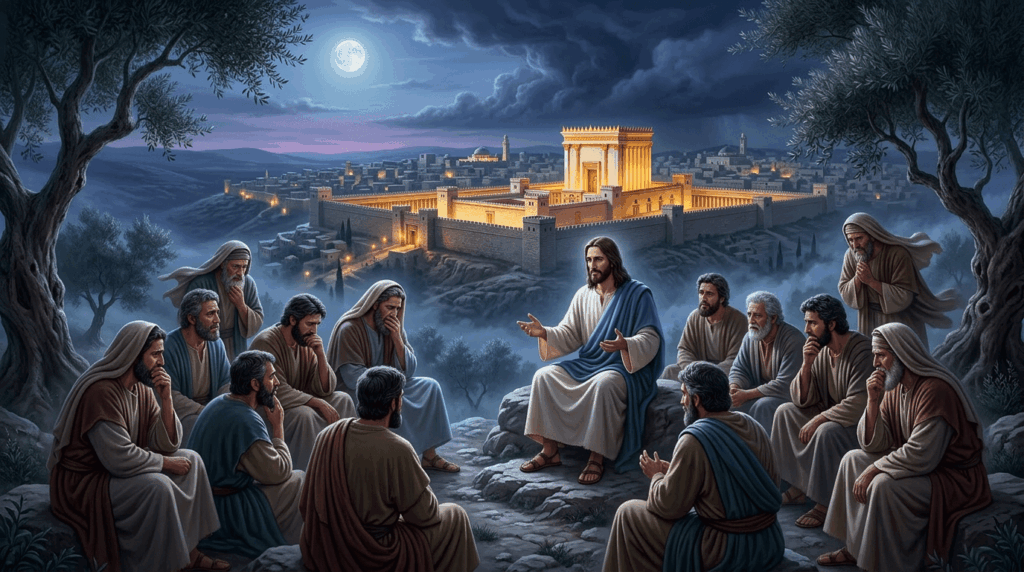
Jos kerran näiden ensimmäisten opetuslasten ja apostolien oli määrä erota Mestaristaan ja Opettajastaan, kuinka paljon lujemmin he tähän paluulupaukseen tarrautuivatkaan; eivätkä he tuhlanneet aikaa yhdistäessään Jerusalemin ennustetun hävityksen tähän luvattuun toiseen tulemiseen. Eivätkä he lakanneet tulkitsemasta hänen sanojaan tällä tavoin siitä huolimatta, että Mestari koko tämän Öljymäellä vietetyn opetusillan ajan näki aivan erityistä vaivaa estääkseen juuri tällaisen erehdyksen.
Jatkaessaan vastaustaan Pietarin esittämään kysymykseen Jeesus sanoi: ”Miksi te yhä kaipaatte Ihmisen Poikaa istumaan Daavidin valtaistuimella ja miksi yhä odotatte juutalaisten materiaalisten unelmain toteutumista? Enkö ole kaikki nämä vuodet kertonut teille, ettei valtakuntani ole tästä maailmasta? Kaikki, mitä nyt katselette, tulee häviämään, mutta tämä on oleva uusi alku, josta valtakunnan evankeliumi kulkeutuu kaikkialle maailmaan ja tämä pelastus leviää kaikkien kansojen keskuuteen. Ja kun tämä valtakunta on saavuttanut täyden kukoistuksensa, olkaa vakuuttuneet siitä, ettei taivaassa oleva Isä jätä antamatta teille entistäkin laajempaa totuuden paljastusta ja entistäkin pitemmälle menevää vanhurskauden osoitusta, sillä onhan hän jo lahjoittanut tälle maailmalle sen, josta tuli pimeyden ruhtinas, ja sitten Aatamin, jonka jälkeen tulivat Melkisedek, ja näinä päivinä, Ihmisen Poika. Ja tällä tavoin Isäni on edelleenkin tuova julki armoaan ja osoittava rakkauttaan myös tälle pimeyden ja pahuuden maailmalle. Niin tahdon minäkin sitten, kun Isäni on antanut minulle kaiken vallan ja kaikki valtuudet, seurata edelleen kohtaloanne ja antaa opastusta valtakunnan asioissa sen henkeni läsnäolon avulla, joka kohta vuodatetaan kaiken lihan päälle. Vaikka tulenkin tällä tavoin olemaan luonanne hengessä, lupaan lisäksi jonakin ajankohtana palata tähän maailmaan, jossa olen elänyt tämän lihallisen elämän ja saanut kokemuksen siitä, mitä on tehdä Jumalaa ihmiselle tunnetuksi ja samalla johdattaa ihmistä Jumalan luokse. Minun pitää varsin pian jättää teidät ja ryhtyä tekemään työtä, jonka Isä on huolekseni uskonut, mutta olkaa rohkein mielin, sillä jonakin hetkenä tulen takaisin. Sillä välin teitä tulee lohduttamaan ja opastamaan universumin Totuuden Henkeni.
”Te näette minut, nyt kun olen heikko ja lihallinen, mutta kun tulen takaisin, se on tapahtuva voimalla ja hengessä. Lihallisen ruumiin silmä näkee lihallisen Ihmisen Pojan, mutta vain henkeä oleva silmä on näkevä Isän kunnialla kruunaaman Ihmisen Pojan, joka ilmestyy maan päälle omissa nimissään.
”Mutta vain Paratiisin neuvostoissa ovat tiedossa ajankohdat, jolloin Ihmisen Poika ilmestyy uudelleen; edes taivaan enkelit eivät tiedä, milloin tämä tapahtuu. Teidän tulisi kuitenkin ymmärtää, että kun tämä valtakunnan evankeliumi on julistettu koko maailmalle kaikkien kansojen pelastukseksi ja kun aikakausi on saavuttanut täyteytensä, Isä lähettää teille uuden tuomiokautisen lahjan, tai muussa tapauksessa Ihmisen Poika palaa aikakauden tuomarin ominaisuudessa.
”Ja mitä sitten tulee Jerusalemin vaivan aikaan, josta olen teille puhunut, niin tämä sukupolvi ei ehdi hautaan ennen sanojeni toteenkäymistä; mutta jos kysymys on Ihmisen Pojan uuden tulemisen ajankohdista, siitä ei kukaan taivaassa tai maan päällä voi olettaa jotakin lausuvansa. Mutta teidän tulisi osoittaa viisautta sikäli, että osaatte erottaa, milloin aikakausi kypsyy; teidän tulisi olla valppaat osataksenne erottaa aikojen merkit. Tehän tiedätte, että kun viikunapuu kasvattaa hentoja versoja ja puhkeaa lehteen, niin kesä on lähellä. Samoin sitten kun maailma on selviytynyt aineellismielellisyyden pitkästä talvesta, ja kun huomaatte uutta tuomiokautta olevan hengellisen kevään tulevan, teidän tulisi tietää, että uutta vierailua merkitsevä suvi lähestyy.
”Mutta mikä merkitys on tällä Jumalan Poikien tulemista koskevalla opetuksella? Ettekö tajua, että kun teistä jokainen kerran kutsutaan päättämään mainen kamppailunne ja kulkemaan kuoleman portin läpi, seisotte välittömän tuomion edessä ja olette kasvotusten niiden tosiasioiden kanssa, jotka kuuluvat uuteen palvelun tuomiokauteen infiniittisen Isän ikuisen suunnitelman puitteissa? Mitä koko maailma joutuu kohtaamaan konkreettisena tosiasiana aikakauden lopulla, se itse kunkin teistä on yksilönä kohdattava henkilökohtaisena kokemuksena tullessanne luonnollisen elämänne päähän ja siirtyessänne sitä kautta eteenpäin kohtaamaan ne olosuhteet ja vaatimukset, jotka luontaisesti kuuluvat seuraavaan ilmoitukseen Isän valtakunnan ikuisesta edistymisestä.”
Mikään kaikista Mestarin apostoleilleen pitämistä puheista ei koskaan mennyt heidän mielessään yhtä sekaisin kuin tuona tiistai-iltana Öljymäellä pidetty puhe, joka käsitteli kahta aihetta: Jerusalemin hävitystä ja hänen omaa toista tulemistaan. Tästä johtuu, etteivät myöhemmin kirjoitetut selonteot, jotka perustuvat muistumiin siitä, mitä Mestari tuossa epätavallisessa tilanteessa sanoi, ole kovinkaan yhtäpitäviä. Niinpä sitten kävi, että kun kirjoitukset tuon tiistai-illan puheiden kohdalta jätettiin monessa suhteessa aukollisiksi, versoi tältä osin useita perimätietoja; ja heti toisen vuosisadan alussa Matteuksen evankeliumiin jäljennettiin sellaisenaan ja myöhemmin Markuksen ja Luukkaan kirjoituksiin lisättiin (osittain) eräs juutalainen apokalyptinen Messiaasta kertova kirjoitus. Sen oli kirjoittanut muuan Selta, joka kuului keisari Caligulan hoviin. Juuri näissä Seltan kirjoituksissa esiintyi vertaus kymmenestä neitsyestä. Mikään muu evankeliumikirjoitusten osa ei ole koskaan kärsinyt yhtä hämmentävästä väärintulkinnasta kuin juuri puheena olevan illan opetus. Mutta apostoli Johannes ei koskaan joutunut samalla tavoin ymmälleen.
Jatkaessaan matkaansa kohti leiriä nämä kolmetoista miestä olivat sanattomia ja suuren emotionaalisen jännityksen vallassa. Juudas oli vihdoin vahvistanut päätöksensä tovereidensa hylkäämisestä. Oli jo myöhä, kun Daavid Sebedeus, Johannes Markus ja joukko johtavia opetuslapsia toivottivat Jeesuksen ja kaksitoista apostolia tervetulleiksi uuteen leiriin, mutta apostolit eivät halunneet nukkua, vaan tahtoivat tietää enemmän Jerusalemin hävityksestä, Mestarin lähdöstä ja maailman lopusta.
On several occasions Jesus had made statements which led his hearers to infer that, while he intended presently to leave this world, he would most certainly return to consummate the work of the heavenly kingdom. As the conviction grew on his followers that he was going to leave them, and after he had departed from this world, it was only natural for all believers to lay fast hold upon these promises to return. The doctrine of the second coming of Christ thus became early incorporated into the teachings of the Christians, and almost every subsequent generation of disciples has devoutly believed this truth and has confidently looked forward to his sometime coming.
If they were to part with their Master and Teacher, how much more did these first disciples and the apostles grasp at this promise to return, and they lost no time in associating the predicted destruction of Jerusalem with this promised second coming. And they continued thus to interpret his words notwithstanding that, throughout this evening of instruction on Mount Olivet, the Master took particular pains to prevent just such a mistake.
In further answer to Peter’s question, Jesus said: “Why do you still look for the Son of Man to sit upon the throne of David and expect that the material dreams of the Jews will be fulfilled? Have I not told you all these years that my kingdom is not of this world? The things which you now look down upon are coming to an end, but this will be a new beginning out of which the gospel of the kingdom will go to all the world and this salvation will spread to all peoples. And when the kingdom shall have come to its full fruition, be assured that the Father in heaven will not fail to visit you with an enlarged revelation of truth and an enhanced demonstration of righteousness, even as he has already bestowed upon this world him who became the prince of darkness, and then Adam, who was followed by Melchizedek, and in these days, the Son of Man. And so will my Father continue to manifest his mercy and show forth his love, even to this dark and evil world. So also will I, after my Father has invested me with all power and authority, continue to follow your fortunes and to guide in the affairs of the kingdom by the presence of my spirit, who shall shortly be poured out upon all flesh. Even though I shall thus be present with you in spirit, I also promise that I will sometime return to this world, where I have lived this life in the flesh and achieved the experience of simultaneously revealing God to man and leading man to God. Very soon must I leave you and take up the work the Father has intrusted to my hands, but be of good courage, for I will sometime return. In the meantime, my Spirit of the Truth of a universe shall comfort and guide you.
“You behold me now in weakness and in the flesh, but when I return, it shall be with power and in the spirit. The eye of flesh beholds the Son of Man in the flesh, but only the eye of the spirit will behold the Son of Man glorified by the Father and appearing on earth in his own name.
“But the times of the reappearing of the Son of Man are known only in the councils of Paradise; not even the angels of heaven know when this will occur. However, you should understand that, when this gospel of the kingdom shall have been proclaimed to all the world for the salvation of all peoples, and when the fullness of the age has come to pass, the Father will send you another dispensational bestowal, or else the Son of Man will return to adjudge the age.
“And now concerning the travail of Jerusalem, about which I have spoken to you, even this generation will not pass away until my words are fulfilled; but concerning the times of the coming again of the Son of Man, no one in heaven or on earth may presume to speak. But you should be wise regarding the ripening of an age; you should be alert to discern the signs of the times. You know when the fig tree shows its tender branches and puts forth its leaves that summer is near. Likewise, when the world has passed through the long winter of material-mindedness and you discern the coming of the spiritual springtime of a new dispensation, should you know that the summertime of a new visitation draws near.
“But what is the significance of this teaching having to do with the coming of the Sons of God? Do you not perceive that, when each of you is called to lay down his life struggle and pass through the portal of death, you stand in the immediate presence of judgment, and that you are face to face with the facts of a new dispensation of service in the eternal plan of the infinite Father? What the whole world must face as a literal fact at the end of an age, you, as individuals, must each most certainly face as a personal experience when you reach the end of your natural life and thereby pass on to be confronted with the conditions and demands inherent in the next revelation of the eternal progression of the Father’s kingdom.”
Of all the discourses which the Master gave his apostles, none ever became so confused in their minds as this one, given this Tuesday evening on the Mount of Olives, regarding the twofold subject of the destruction of Jerusalem and his own second coming. There was, therefore, little agreement between the subsequent written accounts based on the memories of what the Master said on this extraordinary occasion. Consequently, when the records were left blank concerning much that was said that Tuesday evening, there grew up many traditions; and very early in the second century a Jewish apocalyptic about the Messiah written by one Selta, who was attached to the court of the Emperor Caligula, was bodily copied into the Matthew Gospel and subsequently added (in part) to the Mark and Luke records. It was in these writings of Selta that the parable of the ten virgins appeared. No part of the gospel record ever suffered such confusing misconstruction as this evening’s teaching. But the Apostle John never became thus confused.
As these thirteen men resumed their journey toward the camp, they were speechless and under great emotional tension. Judas had finally confirmed his decision to abandon his associates. It was a late hour when David Zebedee, John Mark, and a number of the leading disciples welcomed Jesus and the twelve to the new camp, but the apostles did not want to sleep; they wanted to know more about the destruction of Jerusalem, the Master’s departure, and the end of the world.
SuomiEnglish
Jeesus oli useissa yhteyksissä esittänyt lausuntoja, jotka johdattivat hänen kuulijansa päättelemään, että vaikka hän aikoikin kohta lähteä tästä maailmasta, mitään epäilystä ei silti ollut sen suhteen, että hän palaisi viedäkseen taivaallisen valtakunnan työn täyttymykseen. Kun hänen seuraajansa sitten vakuuttuivat siitä, että hän oli jättämässä heidät, ja sitten kun hän jo oli poistunut tästä maailmasta, oli vain luonnollista kaikkien uskovain tarrautua lujasti näihin paluulupauksiin. Näin oppi Kristuksen toisesta tulemisesta sisällytettiin jo varhaisessa vaiheessa kristittyjen opetuksiin, ja lähes jokainen senjälkeinen opetuslasten sukupolvi on hartaasti uskonut tähän totuuteen ja luottavaisesti odottanut hänen joskus tapahtuvaa tulemistaan.
On several occasions Jesus had made statements which led his hearers to infer that, while he intended presently to leave this world, he would most certainly return to consummate the work of the heavenly kingdom. As the conviction grew on his followers that he was going to leave them, and after he had departed from this world, it was only natural for all believers to lay fast hold upon these promises to return. The doctrine of the second coming of Christ thus became early incorporated into the teachings of the Christians, and almost every subsequent generation of disciples has devoutly believed this truth and has confidently looked forward to his sometime coming.
Jos kerran näiden ensimmäisten opetuslasten ja apostolien oli määrä erota Mestaristaan ja Opettajastaan, kuinka paljon lujemmin he tähän paluulupaukseen tarrautuivatkaan; eivätkä he tuhlanneet aikaa yhdistäessään Jerusalemin ennustetun hävityksen tähän luvattuun toiseen tulemiseen. Eivätkä he lakanneet tulkitsemasta hänen sanojaan tällä tavoin siitä huolimatta, että Mestari koko tämän Öljymäellä vietetyn opetusillan ajan näki aivan erityistä vaivaa estääkseen juuri tällaisen erehdyksen.
If they were to part with their Master and Teacher, how much more did these first disciples and the apostles grasp at this promise to return, and they lost no time in associating the predicted destruction of Jerusalem with this promised second coming. And they continued thus to interpret his words notwithstanding that, throughout this evening of instruction on Mount Olivet, the Master took particular pains to prevent just such a mistake.
Jatkaessaan vastaustaan Pietarin esittämään kysymykseen Jeesus sanoi: ”Miksi te yhä kaipaatte Ihmisen Poikaa istumaan Daavidin valtaistuimella ja miksi yhä odotatte juutalaisten materiaalisten unelmain toteutumista? Enkö ole kaikki nämä vuodet kertonut teille, ettei valtakuntani ole tästä maailmasta? Kaikki, mitä nyt katselette, tulee häviämään, mutta tämä on oleva uusi alku, josta valtakunnan evankeliumi kulkeutuu kaikkialle maailmaan ja tämä pelastus leviää kaikkien kansojen keskuuteen. Ja kun tämä valtakunta on saavuttanut täyden kukoistuksensa, olkaa vakuuttuneet siitä, ettei taivaassa oleva Isä jätä antamatta teille entistäkin laajempaa totuuden paljastusta ja entistäkin pitemmälle menevää vanhurskauden osoitusta, sillä onhan hän jo lahjoittanut tälle maailmalle sen, josta tuli pimeyden ruhtinas, ja sitten Aatamin, jonka jälkeen tulivat Melkisedek, ja näinä päivinä, Ihmisen Poika. Ja tällä tavoin Isäni on edelleenkin tuova julki armoaan ja osoittava rakkauttaan myös tälle pimeyden ja pahuuden maailmalle. Niin tahdon minäkin sitten, kun Isäni on antanut minulle kaiken vallan ja kaikki valtuudet, seurata edelleen kohtaloanne ja antaa opastusta valtakunnan asioissa sen henkeni läsnäolon avulla, joka kohta vuodatetaan kaiken lihan päälle. Vaikka tulenkin tällä tavoin olemaan luonanne hengessä, lupaan lisäksi jonakin ajankohtana palata tähän maailmaan, jossa olen elänyt tämän lihallisen elämän ja saanut kokemuksen siitä, mitä on tehdä Jumalaa ihmiselle tunnetuksi ja samalla johdattaa ihmistä Jumalan luokse. Minun pitää varsin pian jättää teidät ja ryhtyä tekemään työtä, jonka Isä on huolekseni uskonut, mutta olkaa rohkein mielin, sillä jonakin hetkenä tulen takaisin. Sillä välin teitä tulee lohduttamaan ja opastamaan universumin Totuuden Henkeni.
In further answer to Peter’s question, Jesus said: “Why do you still look for the Son of Man to sit upon the throne of David and expect that the material dreams of the Jews will be fulfilled? Have I not told you all these years that my kingdom is not of this world? The things which you now look down upon are coming to an end, but this will be a new beginning out of which the gospel of the kingdom will go to all the world and this salvation will spread to all peoples. And when the kingdom shall have come to its full fruition, be assured that the Father in heaven will not fail to visit you with an enlarged revelation of truth and an enhanced demonstration of righteousness, even as he has already bestowed upon this world him who became the prince of darkness, and then Adam, who was followed by Melchizedek, and in these days, the Son of Man. And so will my Father continue to manifest his mercy and show forth his love, even to this dark and evil world. So also will I, after my Father has invested me with all power and authority, continue to follow your fortunes and to guide in the affairs of the kingdom by the presence of my spirit, who shall shortly be poured out upon all flesh. Even though I shall thus be present with you in spirit, I also promise that I will sometime return to this world, where I have lived this life in the flesh and achieved the experience of simultaneously revealing God to man and leading man to God. Very soon must I leave you and take up the work the Father has intrusted to my hands, but be of good courage, for I will sometime return. In the meantime, my Spirit of the Truth of a universe shall comfort and guide you.
”Te näette minut, nyt kun olen heikko ja lihallinen, mutta kun tulen takaisin, se on tapahtuva voimalla ja hengessä. Lihallisen ruumiin silmä näkee lihallisen Ihmisen Pojan, mutta vain henkeä oleva silmä on näkevä Isän kunnialla kruunaaman Ihmisen Pojan, joka ilmestyy maan päälle omissa nimissään.
“You behold me now in weakness and in the flesh, but when I return, it shall be with power and in the spirit. The eye of flesh beholds the Son of Man in the flesh, but only the eye of the spirit will behold the Son of Man glorified by the Father and appearing on earth in his own name.
”Mutta vain Paratiisin neuvostoissa ovat tiedossa ajankohdat, jolloin Ihmisen Poika ilmestyy uudelleen; edes taivaan enkelit eivät tiedä, milloin tämä tapahtuu. Teidän tulisi kuitenkin ymmärtää, että kun tämä valtakunnan evankeliumi on julistettu koko maailmalle kaikkien kansojen pelastukseksi ja kun aikakausi on saavuttanut täyteytensä, Isä lähettää teille uuden tuomiokautisen lahjan, tai muussa tapauksessa Ihmisen Poika palaa aikakauden tuomarin ominaisuudessa.
“But the times of the reappearing of the Son of Man are known only in the councils of Paradise; not even the angels of heaven know when this will occur. However, you should understand that, when this gospel of the kingdom shall have been proclaimed to all the world for the salvation of all peoples, and when the fullness of the age has come to pass, the Father will send you another dispensational bestowal, or else the Son of Man will return to adjudge the age.
”Ja mitä sitten tulee Jerusalemin vaivan aikaan, josta olen teille puhunut, niin tämä sukupolvi ei ehdi hautaan ennen sanojeni toteenkäymistä; mutta jos kysymys on Ihmisen Pojan uuden tulemisen ajankohdista, siitä ei kukaan taivaassa tai maan päällä voi olettaa jotakin lausuvansa. Mutta teidän tulisi osoittaa viisautta sikäli, että osaatte erottaa, milloin aikakausi kypsyy; teidän tulisi olla valppaat osataksenne erottaa aikojen merkit. Tehän tiedätte, että kun viikunapuu kasvattaa hentoja versoja ja puhkeaa lehteen, niin kesä on lähellä. Samoin sitten kun maailma on selviytynyt aineellismielellisyyden pitkästä talvesta, ja kun huomaatte uutta tuomiokautta olevan hengellisen kevään tulevan, teidän tulisi tietää, että uutta vierailua merkitsevä suvi lähestyy.
“And now concerning the travail of Jerusalem, about which I have spoken to you, even this generation will not pass away until my words are fulfilled; but concerning the times of the coming again of the Son of Man, no one in heaven or on earth may presume to speak. But you should be wise regarding the ripening of an age; you should be alert to discern the signs of the times. You know when the fig tree shows its tender branches and puts forth its leaves that summer is near. Likewise, when the world has passed through the long winter of material-mindedness and you discern the coming of the spiritual springtime of a new dispensation, should you know that the summertime of a new visitation draws near.
”Mutta mikä merkitys on tällä Jumalan Poikien tulemista koskevalla opetuksella? Ettekö tajua, että kun teistä jokainen kerran kutsutaan päättämään mainen kamppailunne ja kulkemaan kuoleman portin läpi, seisotte välittömän tuomion edessä ja olette kasvotusten niiden tosiasioiden kanssa, jotka kuuluvat uuteen palvelun tuomiokauteen infiniittisen Isän ikuisen suunnitelman puitteissa? Mitä koko maailma joutuu kohtaamaan konkreettisena tosiasiana aikakauden lopulla, se itse kunkin teistä on yksilönä kohdattava henkilökohtaisena kokemuksena tullessanne luonnollisen elämänne päähän ja siirtyessänne sitä kautta eteenpäin kohtaamaan ne olosuhteet ja vaatimukset, jotka luontaisesti kuuluvat seuraavaan ilmoitukseen Isän valtakunnan ikuisesta edistymisestä.”
“But what is the significance of this teaching having to do with the coming of the Sons of God? Do you not perceive that, when each of you is called to lay down his life struggle and pass through the portal of death, you stand in the immediate presence of judgment, and that you are face to face with the facts of a new dispensation of service in the eternal plan of the infinite Father? What the whole world must face as a literal fact at the end of an age, you, as individuals, must each most certainly face as a personal experience when you reach the end of your natural life and thereby pass on to be confronted with the conditions and demands inherent in the next revelation of the eternal progression of the Father’s kingdom.”
Mikään kaikista Mestarin apostoleilleen pitämistä puheista ei koskaan mennyt heidän mielessään yhtä sekaisin kuin tuona tiistai-iltana Öljymäellä pidetty puhe, joka käsitteli kahta aihetta: Jerusalemin hävitystä ja hänen omaa toista tulemistaan. Tästä johtuu, etteivät myöhemmin kirjoitetut selonteot, jotka perustuvat muistumiin siitä, mitä Mestari tuossa epätavallisessa tilanteessa sanoi, ole kovinkaan yhtäpitäviä. Niinpä sitten kävi, että kun kirjoitukset tuon tiistai-illan puheiden kohdalta jätettiin monessa suhteessa aukollisiksi, versoi tältä osin useita perimätietoja; ja heti toisen vuosisadan alussa Matteuksen evankeliumiin jäljennettiin sellaisenaan ja myöhemmin Markuksen ja Luukkaan kirjoituksiin lisättiin (osittain) eräs juutalainen apokalyptinen Messiaasta kertova kirjoitus. Sen oli kirjoittanut muuan Selta, joka kuului keisari Caligulan hoviin. Juuri näissä Seltan kirjoituksissa esiintyi vertaus kymmenestä neitsyestä. Mikään muu evankeliumikirjoitusten osa ei ole koskaan kärsinyt yhtä hämmentävästä väärintulkinnasta kuin juuri puheena olevan illan opetus. Mutta apostoli Johannes ei koskaan joutunut samalla tavoin ymmälleen.
Of all the discourses which the Master gave his apostles, none ever became so confused in their minds as this one, given this Tuesday evening on the Mount of Olives, regarding the twofold subject of the destruction of Jerusalem and his own second coming. There was, therefore, little agreement between the subsequent written accounts based on the memories of what the Master said on this extraordinary occasion. Consequently, when the records were left blank concerning much that was said that Tuesday evening, there grew up many traditions; and very early in the second century a Jewish apocalyptic about the Messiah written by one Selta, who was attached to the court of the Emperor Caligula, was bodily copied into the Matthew Gospel and subsequently added (in part) to the Mark and Luke records. It was in these writings of Selta that the parable of the ten virgins appeared. No part of the gospel record ever suffered such confusing misconstruction as this evening’s teaching. But the Apostle John never became thus confused.
Jatkaessaan matkaansa kohti leiriä nämä kolmetoista miestä olivat sanattomia ja suuren emotionaalisen jännityksen vallassa. Juudas oli vihdoin vahvistanut päätöksensä tovereidensa hylkäämisestä. Oli jo myöhä, kun Daavid Sebedeus, Johannes Markus ja joukko johtavia opetuslapsia toivottivat Jeesuksen ja kaksitoista apostolia tervetulleiksi uuteen leiriin, mutta apostolit eivät halunneet nukkua, vaan tahtoivat tietää enemmän Jerusalemin hävityksestä, Mestarin lähdöstä ja maailman lopusta.
As these thirteen men resumed their journey toward the camp, they were speechless and under great emotional tension. Judas had finally confirmed his decision to abandon his associates. It was a late hour when David Zebedee, John Mark, and a number of the leading disciples welcomed Jesus and the twelve to the new camp, but the apostles did not want to sleep; they wanted to know more about the destruction of Jerusalem, the Master’s departure, and the end of the world.