
Teksti
Tausta
Näytä
Lisäasetukset
Kieli
Urantia Opas
Kysy kirjan sisällöstä. Opas vastaa Book Enginen omien lähdekohtien perusteella ja ohjaa sinut lukemaan ne.
Hei! 🙏
Olen sinun Urantia-oppaasi. Tehtäväni on auttaa sinua löytämään oikeat kohdat Urantia-kirjasta ja ymmärtämään sen opetuksia syvemmin. 😊❤️
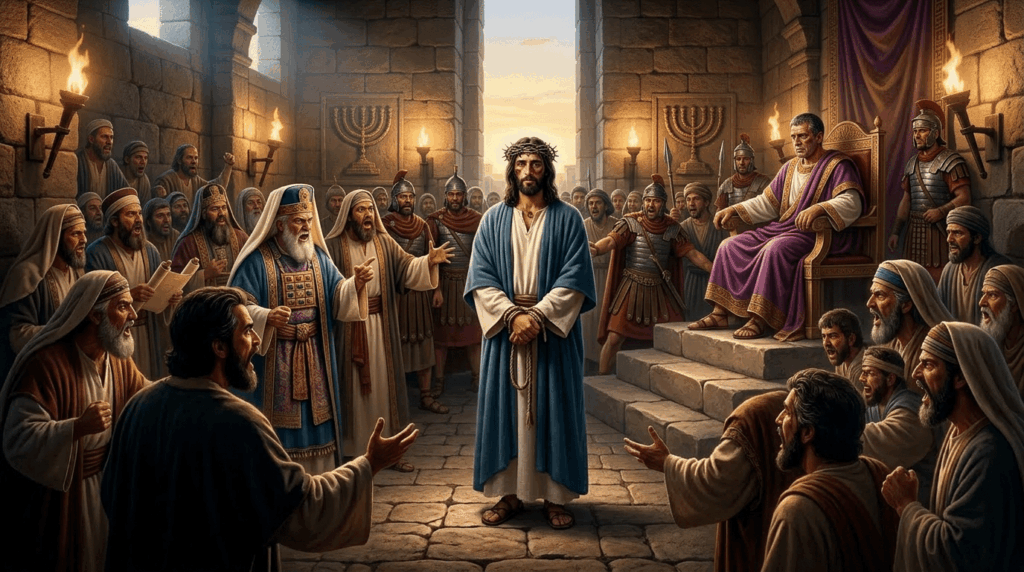
Pilatus vei Jeesuksen ja Johannes Sebedeuksen yksityishuoneeseen, jätti vartijat aulaan huoneen ulkopuolelle ja pyysi vankia istuutumaan. Itse hän istuutui vangin vierelle ja esitti useita kysymyksiä. Pilatus avasi Jeesuksen kanssa käymänsä keskustelun vakuuttamalla, ettei hän uskonut Jeesusta vastaan esitettyä ensimmäistä syytekohtaa, sitä että hän olisi kansakunnan turmelija ja kapinanlietsoja. Sitten Pilatus kysyi: ”Opetitko koskaan, että tulisi kieltäytyä maksamasta henkiveroa keisarille?” Jeesus osoitti Johannesta ja sanoi: ”Kysy häneltä tai keneltä muulta tahansa, joka on kuullut opetustani.” Silloin Pilatus esitti Johannekselle kysymyksen tästä henkiveroasiasta, ja Johannes antoi todistuksensa siitä, mitä hänen Mestarinsa oli opettanut, ja selitti Jeesuksen ja hänen apostoliensa maksavan veroja sekä keisarille että temppelille. Johannesta kuulusteltuaan Pilatus sanoi: ”Katsokin, ettet kerro kenellekään, että puhuin kanssasi.” Eikä Johannes koskaan tätä asiaa paljastanutkaan.
Sitten Pilatus käännähti ympäri esittääkseen Jeesukselle lisää kysymyksiä sanoen: ”Entä sitten tämä kolmas syytös sinua vastaan; oletko sinä juutalaisten kuningas?” Koska Pilatuksen äänessä oli mahdollisesti vilpittömän tiedonhalun sävy, Jeesus hymyili prokuraattorille ja sanoi: ”Pilatus, kysytkö tätä omasta puolestasi, vai poimitko sinä tämän kysymyksen noiden muiden eli syyttäjieni luettelosta?” Tämän jälkeen maaherra vastasi Jeesukselle puolittainen närkästys äänensävyssään: ”Olenko minä juutalainen? Oma väkesi ja ylipapit luovuttivat sinut käsiini ja pyysivät minua tuomitsemaan sinut kuolemaan. Asetan kyseenalaiseksi heidän syytöstensä todenperäisyyden ja koetan vain itseäni varten saada selville, mitä olet tehnyt. Kerro minulle, oletko sanonut olevasi juutalaisten kuningas ja oletko koettanut perustaa uuden valtakunnan?”
Silloin Jeesus sanoi Pilatukselle: ”Etkö tajua, ettei minun valtakuntani ole tästä maailmasta? Jos valtakuntani olisi tästä maailmasta, opetuslapseni epäilemättä taistelisivat, jottei minua luovutettaisi juutalaisten käsiin. Se, että olen täällä edessäsi näillä köysillä köytettynä, riittänee osoittamaan kaikille ihmisille, että kuningaskuntani on hengellinen valtapiiri, vaikkapa sellaisten ihmisten veljeskunta, joista uskon kautta ja rakkauden avulla on tullut Jumalan poikia. Ja tämä pelastus kuuluu yhtä hyvin ei-juutalaiselle kuin juutalaisellekin.”
”Olet siis sittenkin kuningas?”, Pilatus sanoi. Ja Jeesus vastasi: ”Niin, sellainen kuningas minä olen, ja valtakuntani on taivaassa olevan Isäni uskonpoikien perhekunta. Tätä tarkoitusta varten synnyin tähän maailmaan, nimittäin että osoittaisin Isäni kaikille ihmisille ja todistaisin siitä, että Jumala on totuus. Ja tänäkin hetkenä julistan sinulle, että jokainen, joka rakastaa totuutta, kuulee ääneni.”
Silloin Pilatus sanoi puoliksi piloillaan, puoliksi vakavissaan: ”Totuus, mikä on totuus – ken tietää?”
Pilatus ei kyennyt käsittämään Jeesuksen sanoja eikä pystynyt ymmärtämään tämän hengellisen valtakunnan olemusta, mutta hän oli nyt varma siitä, ettei vangittu ollut tehnyt mitään, mikä olisi vaatinut kuolemalla rankaisemista. Pilatuksen ei tarvinnut kuin kerran katsoa Jeesusta kasvoista kasvoihin, kun jo hänkin vakuuttui siitä, ettei tämä lempeä ja uupunut mutta majesteettinen ja rehti mies ollut mikään hurja ja vaarallinen vallankumouksellinen, joka pyrki asettumaan Israelin ajalliselle valtaistuimelle. Pilatus luuli ymmärtävänsä jotakin siitä, mitä Jeesus itseään kuninkaaksi kutsuessaan tarkoitti, sillä hänelle olivat tuttuja stoalaisten opetukset, kun nämä opettivat, että ”viisas mies on kuningas”. Pilatus oli perin juurin vakuuttunut siitä, että Jeesus oli vaarallisen kapinakenraalin sijasta harmiton tuulentupien rakentaja, viaton fanaatikko.
Mestaria kuulusteltuaan Pilatus meni takaisin pääpappien ja Jeesuksen syyttäjien luokse ja sanoi: ”Olen suorittanut tutkimukseni tämän miehen osalta enkä havaitse hänessä mitään vikaa. Mielestäni hän ei ole syypää häntä vastaan esittämiinne syytöksiin. Mielestäni hänet tulisi laskea vapaaksi.” Ja tämän kuullessaan juutalaiset suuttuivat silmittömästi. Ylitsevuotavassa suuttumuksessaan he kiljuivat suoraa huutoa, että Jeesuksen oli kuoltava. Ja muuan sanhedristeista astui urheasti Pilatuksen vierelle sanoen: ”Tämä mies villitsee kansaa Galileasta alkaen ja touhunsa koko Juudean alueelle ulottaen. Hän tekee ilkitöitä, hän on pahantekijä. Saat kauan katua, jos päästät tämän häijyn miehen vapauteen.”
Pilatus oli nyt ahtaalla tietämättä, miten menetellä Jeesuksen suhteen. Niinpä hän, kun kuuli heidän sanovan tämän aloittaneen toimintansa Galileasta, ajatteli välttävänsä vastuun päätöksen tekemisestä tässä asiassa tai ainakin saavansa ajatusaikaa lähettämällä Jeesuksen Herodeksen eteen. Herodes nimittäin oli tuolloin kaupungissa pääsiäistä viettämässä. Pilatus ajatteli myös, että tämä ele saattaisi olla omiaan lääkitsemään kitkerää mielialaa, joka jo jonkin aikaa oli vallinnut hänen ja Herodeksen välillä ja joka johtui heidän välillään esiintyneistä lukuisista väärinkäsityksistä lainkäytön alalla.
Kutsuessaan vartijat paikalle Pilatus sanoi: ”Tämä mies on galilealainen. Viekää hänet viivyttelemättä Herodeksen luokse, ja sitten kun tämä on suorittanut hänen osaltaan tutkimuksensa, ilmoittakaa minulle, mihin hän tutkimuksissaan päätyi.” Ja he veivät Jeesuksen Herodeksen luokse.
Pilate took Jesus and John Zebedee into a private chamber, leaving the guards outside in the hall, and requesting the prisoner to sit down, he sat down by his side and asked several questions. Pilate began his talk with Jesus by assuring him that he did not believe the first count against him: that he was a perverter of the nation and an inciter to rebellion. Then he asked, “Did you ever teach that tribute should be refused Caesar?” Jesus, pointing to John, said, “Ask him or any other man who has heard my teaching.” Then Pilate questioned John about this matter of tribute, and John testified concerning his Master’s teaching and explained that Jesus and his apostles paid taxes both to Caesar and to the temple. When Pilate had questioned John, he said, “See that you tell no man that I talked with you.” And John never did reveal this matter.
Pilate then turned around to question Jesus further, saying: “And now about the third accusation against you, are you the king of the Jews?” Since there was a tone of possibly sincere inquiry in Pilate’s voice, Jesus smiled on the procurator and said: “Pilate, do you ask this for yourself, or do you take this question from these others, my accusers?” Whereupon, in a tone of partial indignation, the governor answered: “Am I a Jew? Your own people and the chief priests delivered you up and asked me to sentence you to death. I question the validity of their charges and am only trying to find out for myself what you have done. Tell me, have you said that you are the king of the Jews, and have you sought to found a new kingdom?”
Then said Jesus to Pilate: “Do you not perceive that my kingdom is not of this world? If my kingdom were of this world, surely would my disciples fight that I should not be delivered into the hands of the Jews. My presence here before you in these bonds is sufficient to show all men that my kingdom is a spiritual dominion, even the brotherhood of men who, through faith and by love, have become the sons of God. And this salvation is for the gentile as well as for the Jew.”
“Then you are a king after all?” said Pilate. And Jesus answered: “Yes, I am such a king, and my kingdom is the family of the faith sons of my Father who is in heaven. For this purpose was I born into this world, even that I should show my Father to all men and bear witness to the truth of God. And even now do I declare to you that every one who loves the truth hears my voice.”
Then said Pilate, half in ridicule and half in sincerity, “Truth, what is truth—who knows?”
Pilate was not able to fathom Jesus’ words, nor was he able to understand the nature of his spiritual kingdom, but he was now certain that the prisoner had done nothing worthy of death. One look at Jesus, face to face, was enough to convince even Pilate that this gentle and weary, but majestic and upright, man was no wild and dangerous revolutionary who aspired to establish himself on the temporal throne of Israel. Pilate thought he understood something of what Jesus meant when he called himself a king, for he was familiar with the teachings of the Stoics, who declared that “the wise man is king.” Pilate was thoroughly convinced that, instead of being a dangerous seditionmonger, Jesus was nothing more or less than a harmless visionary, an innocent fanatic.
After questioning the Master, Pilate went back to the chief priests and the accusers of Jesus and said: “I have examined this man, and I find no fault in him. I do not think he is guilty of the charges you have made against him; I think he ought to be set free.” And when the Jews heard this, they were moved with great anger, so much so that they wildly shouted that Jesus should die; and one of the Sanhedrists boldly stepped up by the side of Pilate, saying: “This man stirs up the people, beginning in Galilee and continuing throughout all Judea. He is a mischief-maker and an evildoer. You will long regret it if you let this wicked man go free.”
Pilate was hard pressed to know what to do with Jesus; therefore, when he heard them say that he began his work in Galilee, he thought to avoid the responsibility of deciding the case, at least to gain time for thought, by sending Jesus to appear before Herod, who was then in the city attending the Passover. Pilate also thought that this gesture would help to antidote some of the bitter feeling which had existed for some time between himself and Herod, due to numerous misunderstandings over matters of jurisdiction.
Pilate, calling the guards, said: “This man is a Galilean. Take him forthwith to Herod, and when he has examined him, report his findings to me.” And they took Jesus to Herod.
SuomiEnglish
Pilatus vei Jeesuksen ja Johannes Sebedeuksen yksityishuoneeseen, jätti vartijat aulaan huoneen ulkopuolelle ja pyysi vankia istuutumaan. Itse hän istuutui vangin vierelle ja esitti useita kysymyksiä. Pilatus avasi Jeesuksen kanssa käymänsä keskustelun vakuuttamalla, ettei hän uskonut Jeesusta vastaan esitettyä ensimmäistä syytekohtaa, sitä että hän olisi kansakunnan turmelija ja kapinanlietsoja. Sitten Pilatus kysyi: ”Opetitko koskaan, että tulisi kieltäytyä maksamasta henkiveroa keisarille?” Jeesus osoitti Johannesta ja sanoi: ”Kysy häneltä tai keneltä muulta tahansa, joka on kuullut opetustani.” Silloin Pilatus esitti Johannekselle kysymyksen tästä henkiveroasiasta, ja Johannes antoi todistuksensa siitä, mitä hänen Mestarinsa oli opettanut, ja selitti Jeesuksen ja hänen apostoliensa maksavan veroja sekä keisarille että temppelille. Johannesta kuulusteltuaan Pilatus sanoi: ”Katsokin, ettet kerro kenellekään, että puhuin kanssasi.” Eikä Johannes koskaan tätä asiaa paljastanutkaan.
Pilate took Jesus and John Zebedee into a private chamber, leaving the guards outside in the hall, and requesting the prisoner to sit down, he sat down by his side and asked several questions. Pilate began his talk with Jesus by assuring him that he did not believe the first count against him: that he was a perverter of the nation and an inciter to rebellion. Then he asked, “Did you ever teach that tribute should be refused Caesar?” Jesus, pointing to John, said, “Ask him or any other man who has heard my teaching.” Then Pilate questioned John about this matter of tribute, and John testified concerning his Master’s teaching and explained that Jesus and his apostles paid taxes both to Caesar and to the temple. When Pilate had questioned John, he said, “See that you tell no man that I talked with you.” And John never did reveal this matter.
Sitten Pilatus käännähti ympäri esittääkseen Jeesukselle lisää kysymyksiä sanoen: ”Entä sitten tämä kolmas syytös sinua vastaan; oletko sinä juutalaisten kuningas?” Koska Pilatuksen äänessä oli mahdollisesti vilpittömän tiedonhalun sävy, Jeesus hymyili prokuraattorille ja sanoi: ”Pilatus, kysytkö tätä omasta puolestasi, vai poimitko sinä tämän kysymyksen noiden muiden eli syyttäjieni luettelosta?” Tämän jälkeen maaherra vastasi Jeesukselle puolittainen närkästys äänensävyssään: ”Olenko minä juutalainen? Oma väkesi ja ylipapit luovuttivat sinut käsiini ja pyysivät minua tuomitsemaan sinut kuolemaan. Asetan kyseenalaiseksi heidän syytöstensä todenperäisyyden ja koetan vain itseäni varten saada selville, mitä olet tehnyt. Kerro minulle, oletko sanonut olevasi juutalaisten kuningas ja oletko koettanut perustaa uuden valtakunnan?”
Pilate then turned around to question Jesus further, saying: “And now about the third accusation against you, are you the king of the Jews?” Since there was a tone of possibly sincere inquiry in Pilate’s voice, Jesus smiled on the procurator and said: “Pilate, do you ask this for yourself, or do you take this question from these others, my accusers?” Whereupon, in a tone of partial indignation, the governor answered: “Am I a Jew? Your own people and the chief priests delivered you up and asked me to sentence you to death. I question the validity of their charges and am only trying to find out for myself what you have done. Tell me, have you said that you are the king of the Jews, and have you sought to found a new kingdom?”
Silloin Jeesus sanoi Pilatukselle: ”Etkö tajua, ettei minun valtakuntani ole tästä maailmasta? Jos valtakuntani olisi tästä maailmasta, opetuslapseni epäilemättä taistelisivat, jottei minua luovutettaisi juutalaisten käsiin. Se, että olen täällä edessäsi näillä köysillä köytettynä, riittänee osoittamaan kaikille ihmisille, että kuningaskuntani on hengellinen valtapiiri, vaikkapa sellaisten ihmisten veljeskunta, joista uskon kautta ja rakkauden avulla on tullut Jumalan poikia. Ja tämä pelastus kuuluu yhtä hyvin ei-juutalaiselle kuin juutalaisellekin.”
Then said Jesus to Pilate: “Do you not perceive that my kingdom is not of this world? If my kingdom were of this world, surely would my disciples fight that I should not be delivered into the hands of the Jews. My presence here before you in these bonds is sufficient to show all men that my kingdom is a spiritual dominion, even the brotherhood of men who, through faith and by love, have become the sons of God. And this salvation is for the gentile as well as for the Jew.”
”Olet siis sittenkin kuningas?”, Pilatus sanoi. Ja Jeesus vastasi: ”Niin, sellainen kuningas minä olen, ja valtakuntani on taivaassa olevan Isäni uskonpoikien perhekunta. Tätä tarkoitusta varten synnyin tähän maailmaan, nimittäin että osoittaisin Isäni kaikille ihmisille ja todistaisin siitä, että Jumala on totuus. Ja tänäkin hetkenä julistan sinulle, että jokainen, joka rakastaa totuutta, kuulee ääneni.”
“Then you are a king after all?” said Pilate. And Jesus answered: “Yes, I am such a king, and my kingdom is the family of the faith sons of my Father who is in heaven. For this purpose was I born into this world, even that I should show my Father to all men and bear witness to the truth of God. And even now do I declare to you that every one who loves the truth hears my voice.”
Silloin Pilatus sanoi puoliksi piloillaan, puoliksi vakavissaan: ”Totuus, mikä on totuus – ken tietää?”
Then said Pilate, half in ridicule and half in sincerity, “Truth, what is truth—who knows?”
Pilatus ei kyennyt käsittämään Jeesuksen sanoja eikä pystynyt ymmärtämään tämän hengellisen valtakunnan olemusta, mutta hän oli nyt varma siitä, ettei vangittu ollut tehnyt mitään, mikä olisi vaatinut kuolemalla rankaisemista. Pilatuksen ei tarvinnut kuin kerran katsoa Jeesusta kasvoista kasvoihin, kun jo hänkin vakuuttui siitä, ettei tämä lempeä ja uupunut mutta majesteettinen ja rehti mies ollut mikään hurja ja vaarallinen vallankumouksellinen, joka pyrki asettumaan Israelin ajalliselle valtaistuimelle. Pilatus luuli ymmärtävänsä jotakin siitä, mitä Jeesus itseään kuninkaaksi kutsuessaan tarkoitti, sillä hänelle olivat tuttuja stoalaisten opetukset, kun nämä opettivat, että ”viisas mies on kuningas”. Pilatus oli perin juurin vakuuttunut siitä, että Jeesus oli vaarallisen kapinakenraalin sijasta harmiton tuulentupien rakentaja, viaton fanaatikko.
Pilate was not able to fathom Jesus’ words, nor was he able to understand the nature of his spiritual kingdom, but he was now certain that the prisoner had done nothing worthy of death. One look at Jesus, face to face, was enough to convince even Pilate that this gentle and weary, but majestic and upright, man was no wild and dangerous revolutionary who aspired to establish himself on the temporal throne of Israel. Pilate thought he understood something of what Jesus meant when he called himself a king, for he was familiar with the teachings of the Stoics, who declared that “the wise man is king.” Pilate was thoroughly convinced that, instead of being a dangerous seditionmonger, Jesus was nothing more or less than a harmless visionary, an innocent fanatic.
Mestaria kuulusteltuaan Pilatus meni takaisin pääpappien ja Jeesuksen syyttäjien luokse ja sanoi: ”Olen suorittanut tutkimukseni tämän miehen osalta enkä havaitse hänessä mitään vikaa. Mielestäni hän ei ole syypää häntä vastaan esittämiinne syytöksiin. Mielestäni hänet tulisi laskea vapaaksi.” Ja tämän kuullessaan juutalaiset suuttuivat silmittömästi. Ylitsevuotavassa suuttumuksessaan he kiljuivat suoraa huutoa, että Jeesuksen oli kuoltava. Ja muuan sanhedristeista astui urheasti Pilatuksen vierelle sanoen: ”Tämä mies villitsee kansaa Galileasta alkaen ja touhunsa koko Juudean alueelle ulottaen. Hän tekee ilkitöitä, hän on pahantekijä. Saat kauan katua, jos päästät tämän häijyn miehen vapauteen.”
After questioning the Master, Pilate went back to the chief priests and the accusers of Jesus and said: “I have examined this man, and I find no fault in him. I do not think he is guilty of the charges you have made against him; I think he ought to be set free.” And when the Jews heard this, they were moved with great anger, so much so that they wildly shouted that Jesus should die; and one of the Sanhedrists boldly stepped up by the side of Pilate, saying: “This man stirs up the people, beginning in Galilee and continuing throughout all Judea. He is a mischief-maker and an evildoer. You will long regret it if you let this wicked man go free.”
Pilatus oli nyt ahtaalla tietämättä, miten menetellä Jeesuksen suhteen. Niinpä hän, kun kuuli heidän sanovan tämän aloittaneen toimintansa Galileasta, ajatteli välttävänsä vastuun päätöksen tekemisestä tässä asiassa tai ainakin saavansa ajatusaikaa lähettämällä Jeesuksen Herodeksen eteen. Herodes nimittäin oli tuolloin kaupungissa pääsiäistä viettämässä. Pilatus ajatteli myös, että tämä ele saattaisi olla omiaan lääkitsemään kitkerää mielialaa, joka jo jonkin aikaa oli vallinnut hänen ja Herodeksen välillä ja joka johtui heidän välillään esiintyneistä lukuisista väärinkäsityksistä lainkäytön alalla.
Pilate was hard pressed to know what to do with Jesus; therefore, when he heard them say that he began his work in Galilee, he thought to avoid the responsibility of deciding the case, at least to gain time for thought, by sending Jesus to appear before Herod, who was then in the city attending the Passover. Pilate also thought that this gesture would help to antidote some of the bitter feeling which had existed for some time between himself and Herod, due to numerous misunderstandings over matters of jurisdiction.
Kutsuessaan vartijat paikalle Pilatus sanoi: ”Tämä mies on galilealainen. Viekää hänet viivyttelemättä Herodeksen luokse, ja sitten kun tämä on suorittanut hänen osaltaan tutkimuksensa, ilmoittakaa minulle, mihin hän tutkimuksissaan päätyi.” Ja he veivät Jeesuksen Herodeksen luokse.
Pilate, calling the guards, said: “This man is a Galilean. Take him forthwith to Herod, and when he has examined him, report his findings to me.” And they took Jesus to Herod.