
Teksti
Tausta
Näytä
Lisäasetukset
Kieli
Urantia Opas
Kysy kirjan sisällöstä. Opas vastaa Book Enginen omien lähdekohtien perusteella ja ohjaa sinut lukemaan ne.
Hei! 🙏
Olen sinun Urantia-oppaasi. Tehtäväni on auttaa sinua löytämään oikeat kohdat Urantia-kirjasta ja ymmärtämään sen opetuksia syvemmin. 😊❤️
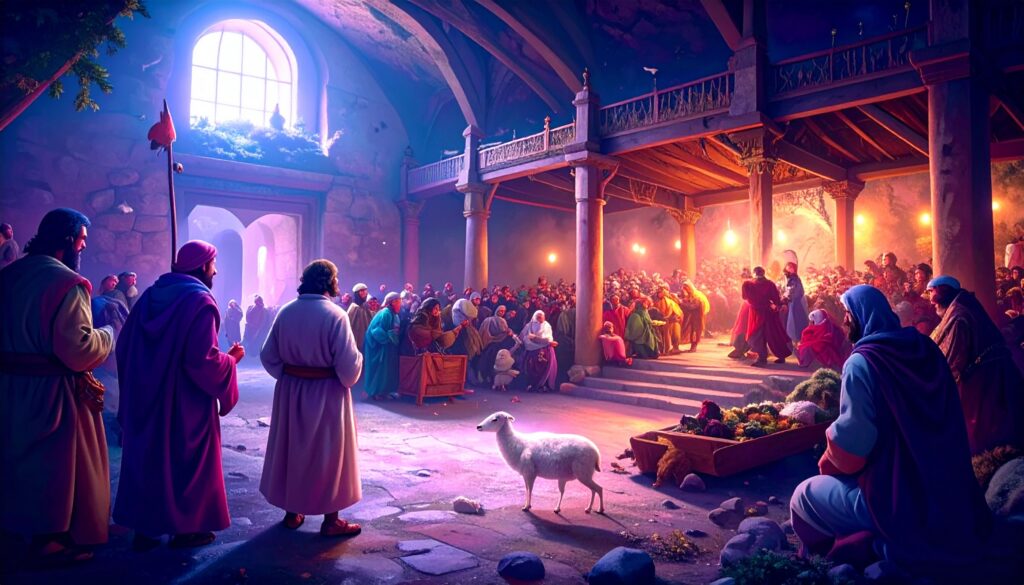
Sillä välin Jeesus oli pysytellyt koko iltapäivän temppelissä kuunnellen keskusteluja ja nauttien siellä vallitsevasta rauhallisemmasta ja siivommasta ilmapiiristä, nyt kun pääsiäisviikon suuret väkijoukot olivat jo miltei kokonaan sieltä kaikonneet. Iltapäivän keskustelujen päätyttyä, joissa Jeesus ei yhdessäkään käyttänyt puheenvuoroa, hän lähti Betaniaan, jonne hän saapui, juuri kun Simonin perhe oli ryhtymässä illalliselle. Perheen kolme nuorimmaista hehkuivat riemusta toivottaessaan Jeesuksen tervetulleeksi, ja hän jäikin sitten Simonin taloon yöksi. Hän ei sinä iltana paljonkaan seurustellut, vaan oli enimmän aikaa puutarhassa siellä yksikseen mietiskellen.
Seuraavan päivän aamuna Jeesus oli jalkeilla ja matkalla temppeliin. Öljymäen laella hän seisahtui ja itki näkymää, jonka hänen silmänsä tavoittivat – hengellisesti köyhtynyttä kansaa, jota perinteet kahlehtivat ja joka eli Rooman legioonien silmälläpidon alaisuudessa. Varhain aamupäivällä hän oli jo taas temppelissä mielessään päätös keskusteluihin osallistumisesta. Sillä välin Joosef ja Mariakin olivat aamun sarastaessa nousseet jalkeille, ja heidän aikomuksenaan oli palata omia jälkiään takaisin Jerusalemiin. Ensimmäiseksi he kiiruhtivat siihen sukulaistensa taloon, jonne he olivat perhekuntana majoittuneet pääsiäisviikon ajaksi, mutta tiedustelun tuloksena oli vain tieto, ettei kukaan ollut Jeesusta nähnyt. Koko päivän etsittyään ja jälkeäkään hänestä löytämättä he palasivat sukulaistensa luokse yöksi.
Toisessa kokouksessa Jeesus oli uskaltautunut esittämään kysymyksiä. Ja hän osallistui temppelikeskusteluihin tavalla, joka ällistytti, mutta aina myös niin, että hänen puheenvuoronsa olivat sopusoinnussa hänen nuoruutensa kanssa. Toisinaan hänen kärjekkäät kysymyksensä olivat jossakin määrin kiusallisia oppineille juutalaisen lain opettajille, mutta hän osoitti sellaista vilpittömästä rehellisyydestä kertovaa mielenlaatua ja siihen liittyvää silminnähtävää tiedonjanoa, että useimmat temppelin opettajista olivat taipuvaisia suhtautumaan häneen kaikella mahdollisella hienotunteisuudella. Mutta kun hän rohkeni epäillä, oliko oikein ottaa hengiltä juopunut gentiili, joka oli eksynyt ei-juutalaisten pihan ulkopuolelle ja tietämättään astunut temppelin kiellettyihin ja pyhinä pidettyihin tiloihin, muuan suvaitsemattomammista opettajista närkästyi nuorenmiehen kysymykseen kätketyistä arvosteluista ja tätä kiukkuisesti mulkoillen kysyi hänen ikäänsä. Jeesus vastasi: ”Kolmetoista vuotta, josta puuttuu hieman yli neljä kuukautta.” ”Miksi siis”, tokaisi siihen nyt jo kiukun vallassa oleva opettaja, ”olet täällä, kun kerran et ole lain pojan ikäinen?” Ja kun Jeesus selitti saaneensa vihkimyksen pääsiäisen aikana ja olevansa Nasaretin kouluista valmistunut oppilas, opettajat vastasivat ivallisesti ja kuin yhdestä suusta: ”Olisimme voineet arvata, että hän on Nasaretista.” Mutta johtava opettaja piti kiinni siitä, ettei Jeesusta tullut moittia, jos Nasaretin synagogan esimiehet olivat julistaneet hänet vastavalmistuneeksi oppilaaksi, vaikka hän muodollisesti oli kolmentoista sijasta vasta kaksitoistavuotias. Ja vaikka monet hänen parjaajistaan nousivat ja poistuivat paikalta, tehtiin päätös, jonka mukaan nuorimies saisi kenenkään häntä häiritsemättä olla edelleenkin oppilaana temppelikeskusteluissa.
Kun tämä hänen toinen temppelissä viettämänsä päivä päättyi, hän meni taas Betaniaan yöksi. Ja tälläkin kertaa hän meni puutarhaan mietiskelemään ja rukoilemaan. Kaikesta näkyi, että hänen mielensä askaroi painavien ongelmien parissa.
In the meantime, Jesus had remained in the temple throughout the afternoon, listening to the discussions and enjoying the more quiet and decorous atmosphere, the great crowds of Passover week having about disappeared. At the conclusion of the afternoon discussions, in none of which Jesus participated, he betook himself to Bethany, arriving just as Simon’s family made ready to partake of their evening meal. The three youngsters were overjoyed to greet Jesus, and he remained in Simon’s house for the night. He visited very little during the evening, spending much of the time alone in the garden meditating.
Early next day Jesus was up and on his way to the temple. On the brow of Olivet he paused and wept over the sight his eyes beheld—a spiritually impoverished people, tradition bound and living under the surveillance of the Roman legions. Early forenoon found him in the temple with his mind made up to take part in the discussions. Meanwhile, Joseph and Mary also had arisen with the early dawn with the intention of retracing their steps to Jerusalem. First, they hastened to the house of their relatives, where they had lodged as a family during the Passover week, but inquiry elicited the fact that no one had seen Jesus. After searching all day and finding no trace of him, they returned to their relatives for the night.
At the second conference Jesus had made bold to ask questions, and in a very amazing way he participated in the temple discussions but always in a manner consistent with his youth. Sometimes his pointed questions were somewhat embarrassing to the learned teachers of the Jewish law, but he evinced such a spirit of candid fairness, coupled with an evident hunger for knowledge, that the majority of the temple teachers were disposed to treat him with every consideration. But when he presumed to question the justice of putting to death a drunken gentile who had wandered outside the court of the gentiles and unwittingly entered the forbidden and reputedly sacred precincts of the temple, one of the more intolerant teachers grew impatient with the lad’s implied criticisms and, glowering down upon him, asked how old he was. Jesus replied, “thirteen years lacking a trifle more than four months.” “Then,” rejoined the now irate teacher, “why are you here, since you are not of age as a son of the law?” And when Jesus explained that he had received consecration during the Passover, and that he was a finished student of the Nazareth schools, the teachers with one accord derisively replied, “We might have known; he is from Nazareth.” But the leader insisted that Jesus was not to be blamed if the rulers of the synagogue at Nazareth had graduated him, technically, when he was twelve instead of thirteen; and notwithstanding that several of his detractors got up and left, it was ruled that the lad might continue undisturbed as a pupil of the temple discussions.
When this, his second day in the temple, was finished, again he went to Bethany for the night. And again he went out in the garden to meditate and pray. It was apparent that his mind was concerned with the contemplation of weighty problems.
SuomiEnglish
Sillä välin Jeesus oli pysytellyt koko iltapäivän temppelissä kuunnellen keskusteluja ja nauttien siellä vallitsevasta rauhallisemmasta ja siivommasta ilmapiiristä, nyt kun pääsiäisviikon suuret väkijoukot olivat jo miltei kokonaan sieltä kaikonneet. Iltapäivän keskustelujen päätyttyä, joissa Jeesus ei yhdessäkään käyttänyt puheenvuoroa, hän lähti Betaniaan, jonne hän saapui, juuri kun Simonin perhe oli ryhtymässä illalliselle. Perheen kolme nuorimmaista hehkuivat riemusta toivottaessaan Jeesuksen tervetulleeksi, ja hän jäikin sitten Simonin taloon yöksi. Hän ei sinä iltana paljonkaan seurustellut, vaan oli enimmän aikaa puutarhassa siellä yksikseen mietiskellen.
In the meantime, Jesus had remained in the temple throughout the afternoon, listening to the discussions and enjoying the more quiet and decorous atmosphere, the great crowds of Passover week having about disappeared. At the conclusion of the afternoon discussions, in none of which Jesus participated, he betook himself to Bethany, arriving just as Simon’s family made ready to partake of their evening meal. The three youngsters were overjoyed to greet Jesus, and he remained in Simon’s house for the night. He visited very little during the evening, spending much of the time alone in the garden meditating.
Seuraavan päivän aamuna Jeesus oli jalkeilla ja matkalla temppeliin. Öljymäen laella hän seisahtui ja itki näkymää, jonka hänen silmänsä tavoittivat – hengellisesti köyhtynyttä kansaa, jota perinteet kahlehtivat ja joka eli Rooman legioonien silmälläpidon alaisuudessa. Varhain aamupäivällä hän oli jo taas temppelissä mielessään päätös keskusteluihin osallistumisesta. Sillä välin Joosef ja Mariakin olivat aamun sarastaessa nousseet jalkeille, ja heidän aikomuksenaan oli palata omia jälkiään takaisin Jerusalemiin. Ensimmäiseksi he kiiruhtivat siihen sukulaistensa taloon, jonne he olivat perhekuntana majoittuneet pääsiäisviikon ajaksi, mutta tiedustelun tuloksena oli vain tieto, ettei kukaan ollut Jeesusta nähnyt. Koko päivän etsittyään ja jälkeäkään hänestä löytämättä he palasivat sukulaistensa luokse yöksi.
Early next day Jesus was up and on his way to the temple. On the brow of Olivet he paused and wept over the sight his eyes beheld—a spiritually impoverished people, tradition bound and living under the surveillance of the Roman legions. Early forenoon found him in the temple with his mind made up to take part in the discussions. Meanwhile, Joseph and Mary also had arisen with the early dawn with the intention of retracing their steps to Jerusalem. First, they hastened to the house of their relatives, where they had lodged as a family during the Passover week, but inquiry elicited the fact that no one had seen Jesus. After searching all day and finding no trace of him, they returned to their relatives for the night.
Toisessa kokouksessa Jeesus oli uskaltautunut esittämään kysymyksiä. Ja hän osallistui temppelikeskusteluihin tavalla, joka ällistytti, mutta aina myös niin, että hänen puheenvuoronsa olivat sopusoinnussa hänen nuoruutensa kanssa. Toisinaan hänen kärjekkäät kysymyksensä olivat jossakin määrin kiusallisia oppineille juutalaisen lain opettajille, mutta hän osoitti sellaista vilpittömästä rehellisyydestä kertovaa mielenlaatua ja siihen liittyvää silminnähtävää tiedonjanoa, että useimmat temppelin opettajista olivat taipuvaisia suhtautumaan häneen kaikella mahdollisella hienotunteisuudella. Mutta kun hän rohkeni epäillä, oliko oikein ottaa hengiltä juopunut gentiili, joka oli eksynyt ei-juutalaisten pihan ulkopuolelle ja tietämättään astunut temppelin kiellettyihin ja pyhinä pidettyihin tiloihin, muuan suvaitsemattomammista opettajista närkästyi nuorenmiehen kysymykseen kätketyistä arvosteluista ja tätä kiukkuisesti mulkoillen kysyi hänen ikäänsä. Jeesus vastasi: ”Kolmetoista vuotta, josta puuttuu hieman yli neljä kuukautta.” ”Miksi siis”, tokaisi siihen nyt jo kiukun vallassa oleva opettaja, ”olet täällä, kun kerran et ole lain pojan ikäinen?” Ja kun Jeesus selitti saaneensa vihkimyksen pääsiäisen aikana ja olevansa Nasaretin kouluista valmistunut oppilas, opettajat vastasivat ivallisesti ja kuin yhdestä suusta: ”Olisimme voineet arvata, että hän on Nasaretista.” Mutta johtava opettaja piti kiinni siitä, ettei Jeesusta tullut moittia, jos Nasaretin synagogan esimiehet olivat julistaneet hänet vastavalmistuneeksi oppilaaksi, vaikka hän muodollisesti oli kolmentoista sijasta vasta kaksitoistavuotias. Ja vaikka monet hänen parjaajistaan nousivat ja poistuivat paikalta, tehtiin päätös, jonka mukaan nuorimies saisi kenenkään häntä häiritsemättä olla edelleenkin oppilaana temppelikeskusteluissa.
At the second conference Jesus had made bold to ask questions, and in a very amazing way he participated in the temple discussions but always in a manner consistent with his youth. Sometimes his pointed questions were somewhat embarrassing to the learned teachers of the Jewish law, but he evinced such a spirit of candid fairness, coupled with an evident hunger for knowledge, that the majority of the temple teachers were disposed to treat him with every consideration. But when he presumed to question the justice of putting to death a drunken gentile who had wandered outside the court of the gentiles and unwittingly entered the forbidden and reputedly sacred precincts of the temple, one of the more intolerant teachers grew impatient with the lad’s implied criticisms and, glowering down upon him, asked how old he was. Jesus replied, “thirteen years lacking a trifle more than four months.” “Then,” rejoined the now irate teacher, “why are you here, since you are not of age as a son of the law?” And when Jesus explained that he had received consecration during the Passover, and that he was a finished student of the Nazareth schools, the teachers with one accord derisively replied, “We might have known; he is from Nazareth.” But the leader insisted that Jesus was not to be blamed if the rulers of the synagogue at Nazareth had graduated him, technically, when he was twelve instead of thirteen; and notwithstanding that several of his detractors got up and left, it was ruled that the lad might continue undisturbed as a pupil of the temple discussions.
Kun tämä hänen toinen temppelissä viettämänsä päivä päättyi, hän meni taas Betaniaan yöksi. Ja tälläkin kertaa hän meni puutarhaan mietiskelemään ja rukoilemaan. Kaikesta näkyi, että hänen mielensä askaroi painavien ongelmien parissa.
When this, his second day in the temple, was finished, again he went to Bethany for the night. And again he went out in the garden to meditate and pray. It was apparent that his mind was concerned with the contemplation of weighty problems.