
Teksti
Tausta
Näytä
Lisäasetukset
Kieli
Urantia Opas
Kysy kirjan sisällöstä. Opas vastaa Book Enginen omien lähdekohtien perusteella ja ohjaa sinut lukemaan ne.
Hei! 🙏
Olen sinun Urantia-oppaasi. Tehtäväni on auttaa sinua löytämään oikeat kohdat Urantia-kirjasta ja ymmärtämään sen opetuksia syvemmin. 😊❤️
Palatessaan opetuslastensa pariin (hänellä oli nyt kaksikymmentäviisi tai kolmekymmentä hänen seurassaan jatkuvasti pysyttelevää opetuslasta) Johannes tapasi heidät vakavaan neuvonpitoon syventyneinä keskustelemassa siitä, mitä hetki sitten Jeesuksen kasteen yhteydessä oli tapahtunut. Heidän hämmästystään lisäsi entisestään Johanneksen nyt heidän tietoonsa saattama tarina Gabrielin vierailusta Marian luona, ennen kuin Jeesus oli syntynyt, samoin kuin se, ettei Jeesus sanonut hänelle sanaakaan, edes silloin kun hän oli tälle tästä asiasta kertonut. Sinä iltana ei satanut, ja tämä kolmisenkymmentä henkilöä käsittänyt ryhmä jatkoi keskusteluaan pitkälle tähtikirkkaaseen yöhön. He ihmettelivät, minne Jeesus mahtoi mennä, ja milloin he taas näkisivät hänet.
Tuon päivän kokemuksen jälkeen Johanneksen saarnaamiseen tuli uusia ja varmuudesta kertovia, julistavia sävyjä, kun hän käsitteli tulevaa valtakuntaa ja odotettua Messiasta. Nämä neljäkymmentä odotuksen päivää Jeesuksen paluuta varrottaessa olivat piinallista aikaa. Mutta Johannes saarnasi edelleen, ja hän saarnasi voimallisesti, ja hänen opetuslapsensa alkoivat näihin aikoihin saarnata Johanneksen ympärille Jordanin rannalla kerääntyville valtaisille väkijoukoille.
Näiden neljänkymmenen odotuksen päivän kuluessa monet huhupuheet levisivät pitkin maaseutua ja jopa Tiberiaaseen ja Jerusalemiin saakka. Tuhannet tulivat nähdäkseen Johanneksen leirin uuden nähtävyyden, otaksutun Messiaan, mutta Jeesus ei ollutkaan nähtävillä. Johanneksen opetuslasten väittäessä, että tuo kummallinen Jumalan mies oli mennyt vuorille, monet epäilivät koko tarinaa.
Kolmisen viikkoa sen jälkeen, kun Jeesus oli poistunut heidän luotaan, tapahtumapaikalle Pellaan saapui Jerusalemin pappien ja fariseusten lähettämä uusi lähetystö. He kysyivät Johannekselta suoraan, oliko tämä Elia tai Mooseksen lupaama profeetta, ja Johanneksen sanoessa ”En ole”, heillä oli otsaa kysyä: ”Oletko sinä Messias?”, ja Johannes vastasi: ”En ole.” Silloin nämä Jerusalemista tulleet miehet sanoivat: ”Ellet ole Elia etkä profeetta etkä Messias, niin miksi kastat ihmisiä ja aiheutat kaiken tämän kohun?” Ja Johannes vastasi: ”Parempi olisi, jos ne, jotka ovat kuulleet minua ja jotka olen kastanut, itse kertoisivat, kuka minä olen, mutta sanon teille, että vaikka minä kastankin vedellä, keskuudessamme on ollut yksi, joka on tuleva takaisin kastaakseen teidät Pyhällä Hengellä.”
Nämä neljäkymmentä päivää olivat vaikea aika Johannekselle ja hänen opetuslapsilleen. Mikä olisi oleva Johanneksen suhde Jeesukseen? Keskustelun piiriin nousi sen sata kysymystä. Politiikka ja itsekäs eduntavoittelu alkoivat nousta esille. Messiaan ympärille rakennetuista erilaisista ideoista ja käsityksistä käytiin kiihkeitä keskusteluja. Tulisiko hänestä sotilasjohtaja ja Daavidin kaltainen kuningas? Löisikö hän Rooman armeijat, kuten Joosua oli lyönyt kanaanilaiset? Vai tulisiko hän perustamaan hengellisen valtakunnan? Johannes tuli vähemmistön mukana siihen tulokseen, että Jeesus oli mieluumminkin saapunut perustamaan taivaan valtakunnan, vaikkei hän omassa mielessään ollutkaan täysin selvillä, mitä tarkasti ottaen olisi sisällytettävä tähän tehtävään, jonka tavoitteena oli taivaan valtakunnan perustaminen.
Johannes koki nämä päivät erittäin rasittavina, ja hän rukoili, että Jeesus palaisi. Muutamat Johanneksen opetuslapset järjestivät etsintäpartioita lähetettäviksi Jeesuksen perään, mutta Johannes kielsi heitä sanoen: ”Meistä itse kenenkin aika on taivaan Jumalan käsissä; hän on ohjaava valittua Poikaansa.”
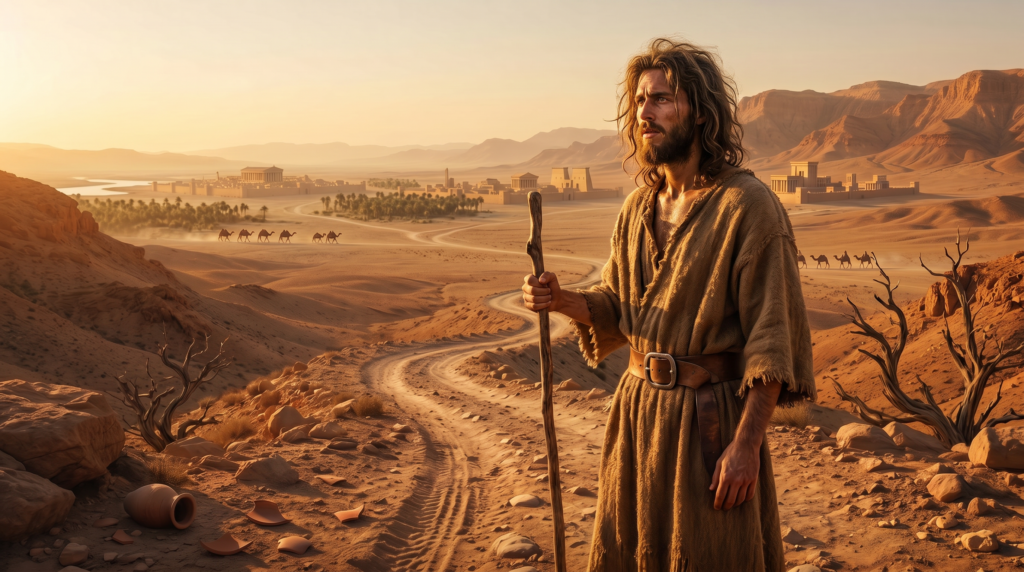
Oli varhainen sapattiaamun hetki, helmikuun 23. päivänä, kun aamuateriaansa nauttiva Johanneksen seurue katsahti ylös pohjoisen suunnalle ja näki Jeesuksen tulevan heitä kohti. Kun hän tuli lähemmäksi, Johannes nousi suurelle kivelle ja sointuvan äänensä korottaen sanoi: ”Katsokaa Jumalan Poikaa, maailman vapahtajaa! Tämä on hän, josta olen sanonut: ’Minun jälkeeni on tuleva yksi, joka asetetaan edelleni, siksi että hän oli ennen minua.’ Tämän asian vuoksi tulin autiomaasta saarnaamaan katumusta ja kastamaan vedellä, julistaen, että taivaan valtakunta on lähellä. Ja nyt tulee hän, jonka on määrä kastaa teidät Pyhällä Hengellä. Ja näin jumalallisen hengen laskeutuvan tämän miehen päälle ja kuulin Jumalan äänen julistavan: ’Tämä on rakastettu Poikani, joka on minulle suuresti mieleen.’”
Jeesus kehotti heitä palaamaan ateriansa ääreen istuutuen samalla itse aterioimaan Johanneksen kanssa, sillä hänen veljensä Jaakob ja Juuda olivat palanneet Kapernaumiin.
Seuraavan päivän aamuna hän lausui jäähyväiset Johannekselle ja tämän opetuslapsille ja palasi Galileaan. Hän ei antanut heille mitään lupausta siitä, milloin he taas näkisivät hänet. Johanneksen kysellessä omasta saarnaamisestaan ja tehtävästään Jeesus sanoi hänelle vain: ”Isäni on opastava sinua nyt ja vastaisuudessa niin kuin hän on tehnyt menneisyydessäkin.” Ja tuona aamuna Jordanin töyräillä nämä kaksi suurmiestä lähtivät omille teilleen, eivätkä he lihallisessa hahmossa enää koskaan tavanneet toisiaan.
When John returned to his disciples (he now had some twenty-five or thirty who abode with him constantly), he found them in earnest conference, discussing what had just happened in connection with Jesus’ baptism. They were all the more astonished when John now made known to them the story of the Gabriel visitation to Mary before Jesus was born, and also that Jesus spoke no word to him even after he had told him about this. There was no rain that evening, and this group of thirty or more talked long into the starlit night. They wondered where Jesus had gone, and when they would see him again.
After the experience of this day the preaching of John took on new and certain notes of proclamation concerning the coming kingdom and the expected Messiah. It was a tense time, these forty days of tarrying, waiting for the return of Jesus. But John continued to preach with great power, and his disciples began at about this time to preach to the overflowing throngs which gathered around John at the Jordan.
In the course of these forty days of waiting, many rumors spread about the countryside and even to Tiberias and Jerusalem. Thousands came over to see the new attraction in John’s camp, the reputed Messiah, but Jesus was not to be seen. When the disciples of John asserted that the strange man of God had gone to the hills, many doubted the entire story.
About three weeks after Jesus had left them, there arrived on the scene at Pella a new deputation from the priests and Pharisees at Jerusalem. They asked John directly if he was Elijah or the prophet that Moses promised; and when John said, “I am not,” they made bold to ask, “Are you the Messiah?” and John answered, “I am not.” Then said these men from Jerusalem: “If you are not Elijah, nor the prophet, nor the Messiah, then why do you baptize the people and create all this stir?” And John replied: “It should be for those who have heard me and received my baptism to say who I am, but I declare to you that, while I baptize with water, there has been among us one who will return to baptize you with the Holy Spirit.”
These forty days were a difficult period for John and his disciples. What was to be the relation of John to Jesus? A hundred questions came up for discussion. Politics and selfish preferment began to make their appearance. Intense discussions grew up around the various ideas and concepts of the Messiah. Would he become a military leader and a Davidic king? Would he smite the Roman armies as Joshua had the Canaanites? Or would he come to establish a spiritual kingdom? John rather decided, with the minority, that Jesus had come to establish the kingdom of heaven, although he was not altogether clear in his own mind as to just what was to be embraced within this mission of the establishment of the kingdom of heaven.
These were strenuous days in John’s experience, and he prayed for the return of Jesus. Some of John’s disciples organized scouting parties to go in search of Jesus, but John forbade, saying: “Our times are in the hands of the God of heaven; he will direct his chosen Son.”
It was early on the morning of Sabbath, February 23, that the company of John, engaged in eating their morning meal, looked up toward the north and beheld Jesus coming to them. As he approached them, John stood upon a large rock and, lifting up his sonorous voice, said: “Behold the Son of God, the deliverer of the world! This is he of whom I have said, ‘After me there will come one who is preferred before me because he was before me.’ For this cause came I out of the wilderness to preach repentance and to baptize with water, proclaiming that the kingdom of heaven is at hand. And now comes one who shall baptize you with the Holy Spirit. And I beheld the divine spirit descending upon this man, and I heard the voice of God declare, ‘This is my beloved Son in whom I am well pleased.’”
Jesus bade them return to their food while he sat down to eat with John, his brothers James and Jude having returned to Capernaum.
Early in the morning of the next day he took leave of John and his disciples, going back to Galilee. He gave them no word as to when they would again see him. To John’s inquiries about his own preaching and mission Jesus only said, “My Father will guide you now and in the future as he has in the past.” And these two great men separated that morning on the banks of the Jordan, never again to greet each other in the flesh.
SuomiEnglish
Palatessaan opetuslastensa pariin (hänellä oli nyt kaksikymmentäviisi tai kolmekymmentä hänen seurassaan jatkuvasti pysyttelevää opetuslasta) Johannes tapasi heidät vakavaan neuvonpitoon syventyneinä keskustelemassa siitä, mitä hetki sitten Jeesuksen kasteen yhteydessä oli tapahtunut. Heidän hämmästystään lisäsi entisestään Johanneksen nyt heidän tietoonsa saattama tarina Gabrielin vierailusta Marian luona, ennen kuin Jeesus oli syntynyt, samoin kuin se, ettei Jeesus sanonut hänelle sanaakaan, edes silloin kun hän oli tälle tästä asiasta kertonut. Sinä iltana ei satanut, ja tämä kolmisenkymmentä henkilöä käsittänyt ryhmä jatkoi keskusteluaan pitkälle tähtikirkkaaseen yöhön. He ihmettelivät, minne Jeesus mahtoi mennä, ja milloin he taas näkisivät hänet.
When John returned to his disciples (he now had some twenty-five or thirty who abode with him constantly), he found them in earnest conference, discussing what had just happened in connection with Jesus’ baptism. They were all the more astonished when John now made known to them the story of the Gabriel visitation to Mary before Jesus was born, and also that Jesus spoke no word to him even after he had told him about this. There was no rain that evening, and this group of thirty or more talked long into the starlit night. They wondered where Jesus had gone, and when they would see him again.
Tuon päivän kokemuksen jälkeen Johanneksen saarnaamiseen tuli uusia ja varmuudesta kertovia, julistavia sävyjä, kun hän käsitteli tulevaa valtakuntaa ja odotettua Messiasta. Nämä neljäkymmentä odotuksen päivää Jeesuksen paluuta varrottaessa olivat piinallista aikaa. Mutta Johannes saarnasi edelleen, ja hän saarnasi voimallisesti, ja hänen opetuslapsensa alkoivat näihin aikoihin saarnata Johanneksen ympärille Jordanin rannalla kerääntyville valtaisille väkijoukoille.
After the experience of this day the preaching of John took on new and certain notes of proclamation concerning the coming kingdom and the expected Messiah. It was a tense time, these forty days of tarrying, waiting for the return of Jesus. But John continued to preach with great power, and his disciples began at about this time to preach to the overflowing throngs which gathered around John at the Jordan.
Näiden neljänkymmenen odotuksen päivän kuluessa monet huhupuheet levisivät pitkin maaseutua ja jopa Tiberiaaseen ja Jerusalemiin saakka. Tuhannet tulivat nähdäkseen Johanneksen leirin uuden nähtävyyden, otaksutun Messiaan, mutta Jeesus ei ollutkaan nähtävillä. Johanneksen opetuslasten väittäessä, että tuo kummallinen Jumalan mies oli mennyt vuorille, monet epäilivät koko tarinaa.
In the course of these forty days of waiting, many rumors spread about the countryside and even to Tiberias and Jerusalem. Thousands came over to see the new attraction in John’s camp, the reputed Messiah, but Jesus was not to be seen. When the disciples of John asserted that the strange man of God had gone to the hills, many doubted the entire story.
Kolmisen viikkoa sen jälkeen, kun Jeesus oli poistunut heidän luotaan, tapahtumapaikalle Pellaan saapui Jerusalemin pappien ja fariseusten lähettämä uusi lähetystö. He kysyivät Johannekselta suoraan, oliko tämä Elia tai Mooseksen lupaama profeetta, ja Johanneksen sanoessa ”En ole”, heillä oli otsaa kysyä: ”Oletko sinä Messias?”, ja Johannes vastasi: ”En ole.” Silloin nämä Jerusalemista tulleet miehet sanoivat: ”Ellet ole Elia etkä profeetta etkä Messias, niin miksi kastat ihmisiä ja aiheutat kaiken tämän kohun?” Ja Johannes vastasi: ”Parempi olisi, jos ne, jotka ovat kuulleet minua ja jotka olen kastanut, itse kertoisivat, kuka minä olen, mutta sanon teille, että vaikka minä kastankin vedellä, keskuudessamme on ollut yksi, joka on tuleva takaisin kastaakseen teidät Pyhällä Hengellä.”
About three weeks after Jesus had left them, there arrived on the scene at Pella a new deputation from the priests and Pharisees at Jerusalem. They asked John directly if he was Elijah or the prophet that Moses promised; and when John said, “I am not,” they made bold to ask, “Are you the Messiah?” and John answered, “I am not.” Then said these men from Jerusalem: “If you are not Elijah, nor the prophet, nor the Messiah, then why do you baptize the people and create all this stir?” And John replied: “It should be for those who have heard me and received my baptism to say who I am, but I declare to you that, while I baptize with water, there has been among us one who will return to baptize you with the Holy Spirit.”
Nämä neljäkymmentä päivää olivat vaikea aika Johannekselle ja hänen opetuslapsilleen. Mikä olisi oleva Johanneksen suhde Jeesukseen? Keskustelun piiriin nousi sen sata kysymystä. Politiikka ja itsekäs eduntavoittelu alkoivat nousta esille. Messiaan ympärille rakennetuista erilaisista ideoista ja käsityksistä käytiin kiihkeitä keskusteluja. Tulisiko hänestä sotilasjohtaja ja Daavidin kaltainen kuningas? Löisikö hän Rooman armeijat, kuten Joosua oli lyönyt kanaanilaiset? Vai tulisiko hän perustamaan hengellisen valtakunnan? Johannes tuli vähemmistön mukana siihen tulokseen, että Jeesus oli mieluumminkin saapunut perustamaan taivaan valtakunnan, vaikkei hän omassa mielessään ollutkaan täysin selvillä, mitä tarkasti ottaen olisi sisällytettävä tähän tehtävään, jonka tavoitteena oli taivaan valtakunnan perustaminen.
These forty days were a difficult period for John and his disciples. What was to be the relation of John to Jesus? A hundred questions came up for discussion. Politics and selfish preferment began to make their appearance. Intense discussions grew up around the various ideas and concepts of the Messiah. Would he become a military leader and a Davidic king? Would he smite the Roman armies as Joshua had the Canaanites? Or would he come to establish a spiritual kingdom? John rather decided, with the minority, that Jesus had come to establish the kingdom of heaven, although he was not altogether clear in his own mind as to just what was to be embraced within this mission of the establishment of the kingdom of heaven.
Johannes koki nämä päivät erittäin rasittavina, ja hän rukoili, että Jeesus palaisi. Muutamat Johanneksen opetuslapset järjestivät etsintäpartioita lähetettäviksi Jeesuksen perään, mutta Johannes kielsi heitä sanoen: ”Meistä itse kenenkin aika on taivaan Jumalan käsissä; hän on ohjaava valittua Poikaansa.”
These were strenuous days in John’s experience, and he prayed for the return of Jesus. Some of John’s disciples organized scouting parties to go in search of Jesus, but John forbade, saying: “Our times are in the hands of the God of heaven; he will direct his chosen Son.”
Oli varhainen sapattiaamun hetki, helmikuun 23. päivänä, kun aamuateriaansa nauttiva Johanneksen seurue katsahti ylös pohjoisen suunnalle ja näki Jeesuksen tulevan heitä kohti. Kun hän tuli lähemmäksi, Johannes nousi suurelle kivelle ja sointuvan äänensä korottaen sanoi: ”Katsokaa Jumalan Poikaa, maailman vapahtajaa! Tämä on hän, josta olen sanonut: ’Minun jälkeeni on tuleva yksi, joka asetetaan edelleni, siksi että hän oli ennen minua.’ Tämän asian vuoksi tulin autiomaasta saarnaamaan katumusta ja kastamaan vedellä, julistaen, että taivaan valtakunta on lähellä. Ja nyt tulee hän, jonka on määrä kastaa teidät Pyhällä Hengellä. Ja näin jumalallisen hengen laskeutuvan tämän miehen päälle ja kuulin Jumalan äänen julistavan: ’Tämä on rakastettu Poikani, joka on minulle suuresti mieleen.’”
It was early on the morning of Sabbath, February 23, that the company of John, engaged in eating their morning meal, looked up toward the north and beheld Jesus coming to them. As he approached them, John stood upon a large rock and, lifting up his sonorous voice, said: “Behold the Son of God, the deliverer of the world! This is he of whom I have said, ‘After me there will come one who is preferred before me because he was before me.’ For this cause came I out of the wilderness to preach repentance and to baptize with water, proclaiming that the kingdom of heaven is at hand. And now comes one who shall baptize you with the Holy Spirit. And I beheld the divine spirit descending upon this man, and I heard the voice of God declare, ‘This is my beloved Son in whom I am well pleased.’”
Jeesus kehotti heitä palaamaan ateriansa ääreen istuutuen samalla itse aterioimaan Johanneksen kanssa, sillä hänen veljensä Jaakob ja Juuda olivat palanneet Kapernaumiin.
Jesus bade them return to their food while he sat down to eat with John, his brothers James and Jude having returned to Capernaum.
Seuraavan päivän aamuna hän lausui jäähyväiset Johannekselle ja tämän opetuslapsille ja palasi Galileaan. Hän ei antanut heille mitään lupausta siitä, milloin he taas näkisivät hänet. Johanneksen kysellessä omasta saarnaamisestaan ja tehtävästään Jeesus sanoi hänelle vain: ”Isäni on opastava sinua nyt ja vastaisuudessa niin kuin hän on tehnyt menneisyydessäkin.” Ja tuona aamuna Jordanin töyräillä nämä kaksi suurmiestä lähtivät omille teilleen, eivätkä he lihallisessa hahmossa enää koskaan tavanneet toisiaan.
Early in the morning of the next day he took leave of John and his disciples, going back to Galilee. He gave them no word as to when they would again see him. To John’s inquiries about his own preaching and mission Jesus only said, “My Father will guide you now and in the future as he has in the past.” And these two great men separated that morning on the banks of the Jordan, never again to greet each other in the flesh.