
Teksti
Tausta
Näytä
Lisäasetukset
Kieli
Urantia Opas
Kysy kirjan sisällöstä. Opas vastaa Book Enginen omien lähdekohtien perusteella ja ohjaa sinut lukemaan ne.
Hei! 🙏
Olen sinun Urantia-oppaasi. Tehtäväni on auttaa sinua löytämään oikeat kohdat Urantia-kirjasta ja ymmärtämään sen opetuksia syvemmin. 😊❤️
Useita kuukausia jatkuneen sairauden jälkeen Sakarias kuoli heinäkuussa vuonna 12 jKr. Johanneksen ollessa vasta vähän yli kahdeksantoistavuotias. Johannekselle tämä aika oli perin hämmentävä, sillä nasiirilupaus kielsi koskemasta kuolleeseen, vaikka tämä olisi oman perheen jäsen. Vaikka Johannes oli koettanut noudattaa niitä lupauksensa asettamia rajoituksia, jotka koskivat itsensä saastuttamista kuolleeseen kajoamalla, hän epäili silti, oliko hän ollut täysin tottelevainen nasiiriyhteisön vaatimuksia kohtaan; siksi hän meni isänsä hautajaisten jälkeen Jerusalemiin, jossa hän naistenpihan nasiirinurkkauksessa toimitti vaaditut puhdistusuhrit.
Tuon vuoden syyskuussa Elisabet ja Johannes tekivät matkan Nasaretiin käydäkseen Marian ja Jeesuksen luona. Johannes oli jo miltei päättänyt lähteä liikkeelle elämäntyönsä merkeissä, mutta Jeesuksen lausumat sanat kuten myös hänen antamansa esimerkki kehottivat häntä palaamaan kotiin, pitämään huolta äidistään ja odottamaan ”Isän osoittaman hetken tulemista”. Jeesukselle ja Marialle tämän mieluisan vierailun päätteeksi hyvästit lausuttuaan Johannes tapasi Jeesuksen uudelleen vasta siinä tilanteessa, jolloin hän kastoi tämän Jordanissa.
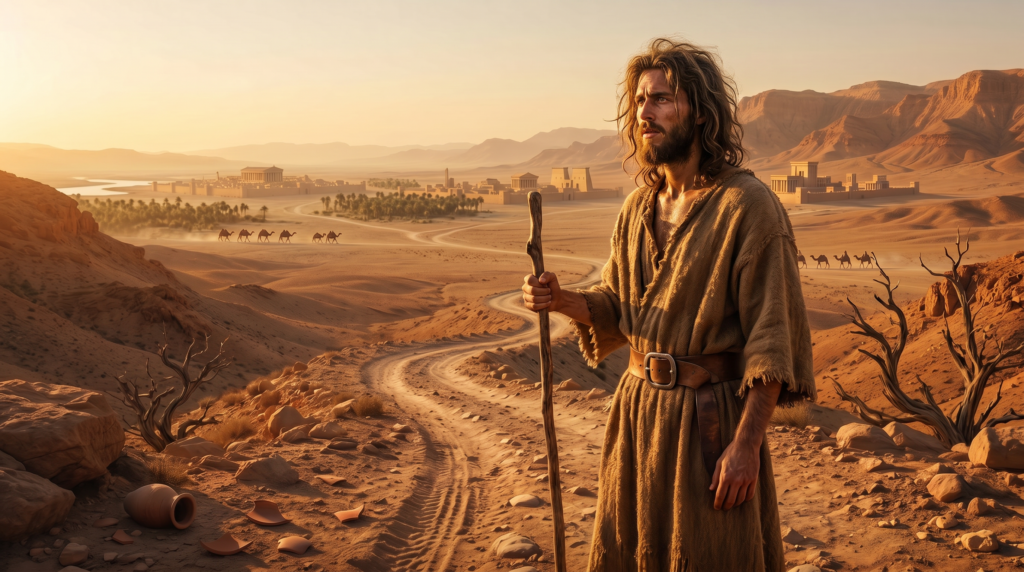
Johannes ja Elisabet palasivat kotiinsa ja ryhtyivät laatimaan tulevaisuudensuunnitelmia. Koska Johannes kieltäytyi vastaanottamasta hänelle temppelirahastoista maksettavaa papin palkkiota, he olivat kahden vuoden kuluttua kotiaan lukuun ottamatta lähes puilla paljailla. Siksi he päättivätkin lähteä lammaskatraineen etelään. Ja niin he kesänä, jona Johannes oli kaksikymmentä, muuttivat Hebroniin. Niin sanotussa ”Juudean erämaassa” Johannes kaitsi lampaitaan erään puron rantamilla, joka oli Kuolleeseenmereen Eengedin luona laskevan suuremman virran sivuhaara. Eengedin siirtokuntaan kuului paitsi eliniäksi ja tietyksi ajaksi vihkiytyneitä nasiireja myös lukuisia sellaisia muita asketismia harjoittavia lammaspaimenia, jotka kokoontuivat katraineen näille tienoille ja jotka veljeilivät nasiiriyhdyskunnan kanssa. He saivat toimeentulonsa lampaankasvatuksesta sekä varakkaiden juutalaisten veljeskunnalle tekemistä lahjoituksista.
Aikaa myöten Johannes palasi Hebroniin yhä harvemmin käyden sen sijaan useammin Eengedissä. Hän poikkesi niin täydelleen nasiirien enemmistöstä, että hänen oli erittäin vaikea ylläpitää keskusteluyhteyttä veljeskuntaan. Mutta hän piti hyvin paljon Abnerista, Eengedin siirtokunnan tunnustetusta johtajasta ja päälliköstä.
After an illness of several months Zacharias died in July, a.d. 12, when John was just past eighteen years of age. This was a time of great embarrassment to John since the Nazarite vow forbade contact with the dead, even in one’s own family. Although John had endeavored to comply with the restrictions of his vow regarding contamination by the dead, he doubted that he had been wholly obedient to the requirements of the Nazarite order; therefore, after his father’s burial he went to Jerusalem, where, in the Nazarite corner of the women’s court, he offered the sacrifices required for his cleansing.
In September of this year Elizabeth and John made a journey to Nazareth to visit Mary and Jesus. John had just about made up his mind to launch out in his lifework, but he was admonished, not only by Jesus’ words but also by his example, to return home, take care of his mother, and await the “coming of the Father’s hour.” After bidding Jesus and Mary good-bye at the end of this enjoyable visit, John did not again see Jesus until the event of his baptism in the Jordan.
John and Elizabeth returned to their home and began to lay plans for the future. Since John refused to accept the priest’s allowance due him from the temple funds, by the end of two years they had all but lost their home; so they decided to go south with the sheep herd. Accordingly, the summer that John was twenty years of age witnessed their removal to Hebron. In the so-called “wilderness of Judea” John tended his sheep along a brook that was tributary to a larger stream which entered the Dead Sea at Engedi. The Engedi colony included not only Nazarites of lifelong and time-period consecration but numerous other ascetic herdsmen who congregated in this region with their herds and fraternized with the Nazarite brotherhood. They supported themselves by sheep raising and from gifts which wealthy Jews made to the order.
As time passed, John returned less often to Hebron, while he made more frequent visits to Engedi. He was so entirely different from the majority of the Nazarites that he found it very difficult fully to fraternize with the brotherhood. But he was very fond of Abner, the acknowledged leader and head of the Engedi colony.
SuomiEnglish
Useita kuukausia jatkuneen sairauden jälkeen Sakarias kuoli heinäkuussa vuonna 12 jKr. Johanneksen ollessa vasta vähän yli kahdeksantoistavuotias. Johannekselle tämä aika oli perin hämmentävä, sillä nasiirilupaus kielsi koskemasta kuolleeseen, vaikka tämä olisi oman perheen jäsen. Vaikka Johannes oli koettanut noudattaa niitä lupauksensa asettamia rajoituksia, jotka koskivat itsensä saastuttamista kuolleeseen kajoamalla, hän epäili silti, oliko hän ollut täysin tottelevainen nasiiriyhteisön vaatimuksia kohtaan; siksi hän meni isänsä hautajaisten jälkeen Jerusalemiin, jossa hän naistenpihan nasiirinurkkauksessa toimitti vaaditut puhdistusuhrit.
After an illness of several months Zacharias died in July, a.d. 12, when John was just past eighteen years of age. This was a time of great embarrassment to John since the Nazarite vow forbade contact with the dead, even in one’s own family. Although John had endeavored to comply with the restrictions of his vow regarding contamination by the dead, he doubted that he had been wholly obedient to the requirements of the Nazarite order; therefore, after his father’s burial he went to Jerusalem, where, in the Nazarite corner of the women’s court, he offered the sacrifices required for his cleansing.
Tuon vuoden syyskuussa Elisabet ja Johannes tekivät matkan Nasaretiin käydäkseen Marian ja Jeesuksen luona. Johannes oli jo miltei päättänyt lähteä liikkeelle elämäntyönsä merkeissä, mutta Jeesuksen lausumat sanat kuten myös hänen antamansa esimerkki kehottivat häntä palaamaan kotiin, pitämään huolta äidistään ja odottamaan ”Isän osoittaman hetken tulemista”. Jeesukselle ja Marialle tämän mieluisan vierailun päätteeksi hyvästit lausuttuaan Johannes tapasi Jeesuksen uudelleen vasta siinä tilanteessa, jolloin hän kastoi tämän Jordanissa.
In September of this year Elizabeth and John made a journey to Nazareth to visit Mary and Jesus. John had just about made up his mind to launch out in his lifework, but he was admonished, not only by Jesus’ words but also by his example, to return home, take care of his mother, and await the “coming of the Father’s hour.” After bidding Jesus and Mary good-bye at the end of this enjoyable visit, John did not again see Jesus until the event of his baptism in the Jordan.
Johannes ja Elisabet palasivat kotiinsa ja ryhtyivät laatimaan tulevaisuudensuunnitelmia. Koska Johannes kieltäytyi vastaanottamasta hänelle temppelirahastoista maksettavaa papin palkkiota, he olivat kahden vuoden kuluttua kotiaan lukuun ottamatta lähes puilla paljailla. Siksi he päättivätkin lähteä lammaskatraineen etelään. Ja niin he kesänä, jona Johannes oli kaksikymmentä, muuttivat Hebroniin. Niin sanotussa ”Juudean erämaassa” Johannes kaitsi lampaitaan erään puron rantamilla, joka oli Kuolleeseenmereen Eengedin luona laskevan suuremman virran sivuhaara. Eengedin siirtokuntaan kuului paitsi eliniäksi ja tietyksi ajaksi vihkiytyneitä nasiireja myös lukuisia sellaisia muita asketismia harjoittavia lammaspaimenia, jotka kokoontuivat katraineen näille tienoille ja jotka veljeilivät nasiiriyhdyskunnan kanssa. He saivat toimeentulonsa lampaankasvatuksesta sekä varakkaiden juutalaisten veljeskunnalle tekemistä lahjoituksista.
John and Elizabeth returned to their home and began to lay plans for the future. Since John refused to accept the priest’s allowance due him from the temple funds, by the end of two years they had all but lost their home; so they decided to go south with the sheep herd. Accordingly, the summer that John was twenty years of age witnessed their removal to Hebron. In the so-called “wilderness of Judea” John tended his sheep along a brook that was tributary to a larger stream which entered the Dead Sea at Engedi. The Engedi colony included not only Nazarites of lifelong and time-period consecration but numerous other ascetic herdsmen who congregated in this region with their herds and fraternized with the Nazarite brotherhood. They supported themselves by sheep raising and from gifts which wealthy Jews made to the order.
Aikaa myöten Johannes palasi Hebroniin yhä harvemmin käyden sen sijaan useammin Eengedissä. Hän poikkesi niin täydelleen nasiirien enemmistöstä, että hänen oli erittäin vaikea ylläpitää keskusteluyhteyttä veljeskuntaan. Mutta hän piti hyvin paljon Abnerista, Eengedin siirtokunnan tunnustetusta johtajasta ja päälliköstä.
As time passed, John returned less often to Hebron, while he made more frequent visits to Engedi. He was so entirely different from the majority of the Nazarites that he found it very difficult fully to fraternize with the brotherhood. But he was very fond of Abner, the acknowledged leader and head of the Engedi colony.