
Teksti
Tausta
Näytä
Lisäasetukset
Kieli
Urantia Opas
Kysy kirjan sisällöstä. Opas vastaa Book Enginen omien lähdekohtien perusteella ja ohjaa sinut lukemaan ne.
Hei! 🙏
Olen sinun Urantia-oppaasi. Tehtäväni on auttaa sinua löytämään oikeat kohdat Urantia-kirjasta ja ymmärtämään sen opetuksia syvemmin. 😊❤️
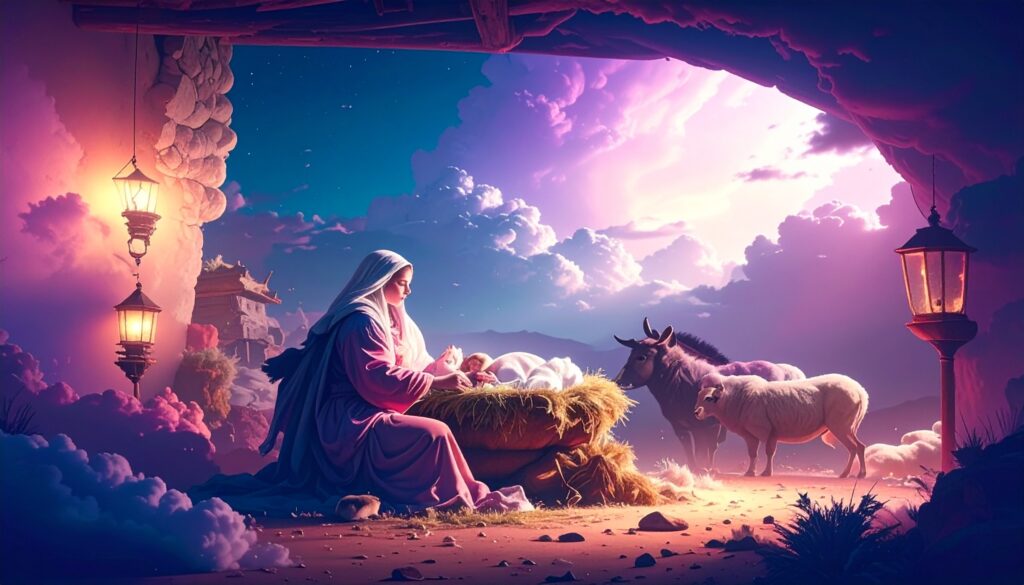
Koko seuraavan yön Maria oli rauhaton, niin ettei heistä kumpikaan saanut paljon unta. Päivän koittaessa synnytyspoltot tuntuivat jo selvästi, ja keskipäivän aikaan, elokuun 21. päivänä vuonna 7 eKr. Maria synnytti naispuolisten matkalaistovereiden avustamana ja näiden hellässä hoivassa poikalapsen. Jeesus Nasaretilainen syntyi tähän maailmaan, hänet kapaloitiin vaatteisiin, jotka Maria oli tuonut mukanaan tällaista tilanteen mahdollista käännettä ajatellen, ja pantiin läheiseen seimeen makaamaan.
Luvattu lapsi syntyi täsmälleen samalla tavalla kuin kaikki lapset ovat tähän maailmaan ennen tuota päivää ja sen jälkeen tulleet. Ja kahdeksantena päivänä hänet juutalaisen tavan mukaan ympärileikattiin ja hänelle annettiin virallisesti nimi Joshua (Jeesus).
Jeesuksen syntymää seuranneena päivänä Joosef merkitytti heidät väestökirjoihin. Hän tapasi miehen, jonka kanssa he olivat keskustelleet kahta iltaa aikaisemmin Jerikossa, ja tämä vei Joosefin erään varakkaan ystävänsä luo, jolla oli huone majatalossa ja joka sanoi ilomielin vaihtavansa majapaikkaa nasaretilaispariskunnan kanssa. Tuona iltapäivänä he muuttivat majataloon, jossa he asuivat lähes kolme viikkoa, kunnes pääsivät majoittumaan Joosefin erään kaukaisen sukulaisen taloon.
Toisena päivänä Jeesuksen syntymän jälkeen Maria lähetti Elisabetille sanoman, että hänen lapsensa oli tullut maailmaan, ja sai vastaukseksi viestin, jossa Joosef kutsuttiin Jerusalemiin keskustelemaan kaikista heidän asioistaan Sakariaksen kanssa. Seuraavalla viikolla Joosef menikin Jerusalemiin pitämään kokousta Sakariaan kanssa. Sekä Sakariaan että Elisabetin oli vallannut vilpitön vakaumus siitä, että Jeesuksesta oli toden totta tuleva juutalainen vapahtaja, Messias, ja että heidän poikansa Johanneksen oli määrä olla hänen apulaistensa päämies, kohtalon mies hänen oikealla puolellaan. Ja koska Marialla oli samanlaisia ajatuksia, ei ollut vaikeaa saada Joosefia taivutelluksi jäämään Betlehemiin, Daavidin kaupunkiin, jotta Jeesuksella olisi tilaisuus varttua Daavidin seuraajaksi koko Israelin valtaistuimelle. Niinpä he jäivät Betlehemiin yli vuodeksi, jona aikana Joosef aina välillä työskenteli omassa kirvesmiehen ammatissaan.
Jeesuksen puolelta päivin tapahtuneen syntymän hetkellä lauloivat ohjaajiensa johdolla paikalle kokoontuneet Urantian serafit todellakin ylistyshymnejä Betlehemin seimen yllä, mutta ihmiskorvat eivät näitä ylistyksen ilmauksia tavoittaneet. Betlehemin lapselle eivät mitkään paimenet sen kummemmin kuin muutkaan ihmisluodut tulleet osoittamaan kunnioitustaan, ennen kuin vasta päivänä, jolloin muutamat Sakariaan Jerusalemista matkaan lähettämät uurilaispapit saapuivat.
Joskus aikaisemmin oli muuan outo uskonnollinen opettaja näiden mesopotamialaispappien omasta maasta kertonut heille nähneensä unen, jossa hänelle ilmoitettiin, että ”elämän valo” ilmestyisi kohdakkoin maan päälle pikkulapsena, ja tämä tapahtuisi juutalaisten keskuudessa. Ja sinnepä nämä kolme opettajaa lähtivät tätä ”elämän valoa” etsimään. Jerusalemissa monta viikkoa turhaan etsiskeltyään he olivat jo kääntymäisillään takaisin kohti Uuria, kun Sakarias kohtasi heidät ja ilmoitti uskovansa, että Jeesus olisi heidän etsintöjensä kohde. Sakarias lähetti heidät Betlehemiin, josta he löysivätkin lapsen ja jättivät tuomansa lahjat tämän maiselle äidille Marialle. Lapsi oli heidän vierailunsa aikaan jo miltei kolmen viikon ikäinen.
Nämä viisaat miehet eivät nähneet mitään tähteä, joka olisi ohjannut heidät Betlehemiin. Betlehemin tähdestä kertova kaunis legenda sai alkunsa seuraavalla tavalla: Jeesus syntyi keskipäivällä elokuun 21. päivänä vuonna 7 eKr. Toukokuun 29. päivänä vuonna 7 eKr. sattui Kalojen tähtikuviossa Jupiterin ja Saturnuksen epätavallinen konjunktio. Ja on merkillinen astronominen tosiasia, että saman vuoden syyskuun 29. päivänä ja joulukuun 5. päivänä sattui samanlainen konjunktio. Näihin harvinaisiin mutta täysin luonnollisiin tapahtumiin nojautuen seuraavan sukupolven hyvää tarkoittavat intoilijat rakensivat tunteisiin vetoavan legendan Betlehemin tähdestä ja jumaloivista itämaan tietäjistä, jotka se johdatti seimen äärelle, ja siitä miten nämä tietäjät näkivät vastasyntyneen lapsen ja osoittivat hänelle kunnioitustaan. Orientin ja lähellä orienttia elävien ihmisten mieli iloitsee saduista, ja niinpä he sepittävät jatkuvasti tällaisia kauniita myyttejä uskonnollisten johtajiensa ja poliittisten sankareidensa elämästä. Silloin kun kirjapainotaitoa ei vielä tunnettu, kun valtaosa inhimillisestä tietämyksestä siirtyi sukupolvelta toiselle suusanallisesti, myyteistä tuli varsin helposti perimätietoa, ja perimätiedot alettiin lopulta hyväksyä tosiasioiksi.
All that night Mary was restless so that neither of them slept much. By the break of day the pangs of childbirth were well in evidence, and at noon, August 21, 7 b.c., with the help and kind ministrations of women fellow travelers, Mary was delivered of a male child. Jesus of Nazareth was born into the world, was wrapped in the clothes which Mary had brought along for such a possible contingency, and laid in a near-by manger.
In just the same manner as all babies before that day and since have come into the world, the promised child was born; and on the eighth day, according to the Jewish practice, he was circumcised and formally named Joshua (Jesus).
The next day after the birth of Jesus, Joseph made his enrollment. Meeting a man they had talked with two nights previously at Jericho, Joseph was taken by him to a well-to-do friend who had a room at the inn, and who said he would gladly exchange quarters with the Nazareth couple. That afternoon they moved up to the inn, where they lived for almost three weeks until they found lodgings in the home of a distant relative of Joseph.
The second day after the birth of Jesus, Mary sent word to Elizabeth that her child had come and received word in return inviting Joseph up to Jerusalem to talk over all their affairs with Zacharias. The following week Joseph went to Jerusalem to confer with Zacharias. Both Zacharias and Elizabeth had become possessed with the sincere conviction that Jesus was indeed to become the Jewish deliverer, the Messiah, and that their son John was to be his chief of aides, his right-hand man of destiny. And since Mary held these same ideas, it was not difficult to prevail upon Joseph to remain in Bethlehem, the City of David, so that Jesus might grow up to become the successor of David on the throne of all Israel. Accordingly, they remained in Bethlehem more than a year, Joseph meantime working some at his carpenter’s trade.
At the noontide birth of Jesus the seraphim of Urantia, assembled under their directors, did sing anthems of glory over the Bethlehem manger, but these utterances of praise were not heard by human ears. No shepherds nor any other mortal creatures came to pay homage to the babe of Bethlehem until the day of the arrival of certain priests from Ur, who were sent down from Jerusalem by Zacharias.
These priests from Mesopotamia had been told sometime before by a strange religious teacher of their country that he had had a dream in which he was informed that “the light of life” was about to appear on earth as a babe and among the Jews. And thither went these three teachers looking for this “light of life.” After many weeks of futile search in Jerusalem, they were about to return to Ur when Zacharias met them and disclosed his belief that Jesus was the object of their quest and sent them on to Bethlehem, where they found the babe and left their gifts with Mary, his earth mother. The babe was almost three weeks old at the time of their visit.
These wise men saw no star to guide them to Bethlehem. The beautiful legend of the star of Bethlehem originated in this way: Jesus was born August 21 at noon, 7 b.c. On May 29, 7 b.c., there occurred an extraordinary conjunction of Jupiter and Saturn in the constellation of Pisces. And it is a remarkable astronomic fact that similar conjunctions occurred on September 29 and December 5 of the same year. Upon the basis of these extraordinary but wholly natural events the well-meaning zealots of the succeeding generation constructed the appealing legend of the star of Bethlehem and the adoring Magi led thereby to the manger, where they beheld and worshiped the newborn babe. Oriental and near-Oriental minds delight in fairy stories, and they are continually spinning such beautiful myths about the lives of their religious leaders and political heroes. In the absence of printing, when most human knowledge was passed by word of mouth from one generation to another, it was very easy for myths to become traditions and for traditions eventually to become accepted as facts.
SuomiEnglish
Koko seuraavan yön Maria oli rauhaton, niin ettei heistä kumpikaan saanut paljon unta. Päivän koittaessa synnytyspoltot tuntuivat jo selvästi, ja keskipäivän aikaan, elokuun 21. päivänä vuonna 7 eKr. Maria synnytti naispuolisten matkalaistovereiden avustamana ja näiden hellässä hoivassa poikalapsen. Jeesus Nasaretilainen syntyi tähän maailmaan, hänet kapaloitiin vaatteisiin, jotka Maria oli tuonut mukanaan tällaista tilanteen mahdollista käännettä ajatellen, ja pantiin läheiseen seimeen makaamaan.
All that night Mary was restless so that neither of them slept much. By the break of day the pangs of childbirth were well in evidence, and at noon, August 21, 7 b.c., with the help and kind ministrations of women fellow travelers, Mary was delivered of a male child. Jesus of Nazareth was born into the world, was wrapped in the clothes which Mary had brought along for such a possible contingency, and laid in a near-by manger.
Luvattu lapsi syntyi täsmälleen samalla tavalla kuin kaikki lapset ovat tähän maailmaan ennen tuota päivää ja sen jälkeen tulleet. Ja kahdeksantena päivänä hänet juutalaisen tavan mukaan ympärileikattiin ja hänelle annettiin virallisesti nimi Joshua (Jeesus).
In just the same manner as all babies before that day and since have come into the world, the promised child was born; and on the eighth day, according to the Jewish practice, he was circumcised and formally named Joshua (Jesus).
Jeesuksen syntymää seuranneena päivänä Joosef merkitytti heidät väestökirjoihin. Hän tapasi miehen, jonka kanssa he olivat keskustelleet kahta iltaa aikaisemmin Jerikossa, ja tämä vei Joosefin erään varakkaan ystävänsä luo, jolla oli huone majatalossa ja joka sanoi ilomielin vaihtavansa majapaikkaa nasaretilaispariskunnan kanssa. Tuona iltapäivänä he muuttivat majataloon, jossa he asuivat lähes kolme viikkoa, kunnes pääsivät majoittumaan Joosefin erään kaukaisen sukulaisen taloon.
The next day after the birth of Jesus, Joseph made his enrollment. Meeting a man they had talked with two nights previously at Jericho, Joseph was taken by him to a well-to-do friend who had a room at the inn, and who said he would gladly exchange quarters with the Nazareth couple. That afternoon they moved up to the inn, where they lived for almost three weeks until they found lodgings in the home of a distant relative of Joseph.
Toisena päivänä Jeesuksen syntymän jälkeen Maria lähetti Elisabetille sanoman, että hänen lapsensa oli tullut maailmaan, ja sai vastaukseksi viestin, jossa Joosef kutsuttiin Jerusalemiin keskustelemaan kaikista heidän asioistaan Sakariaksen kanssa. Seuraavalla viikolla Joosef menikin Jerusalemiin pitämään kokousta Sakariaan kanssa. Sekä Sakariaan että Elisabetin oli vallannut vilpitön vakaumus siitä, että Jeesuksesta oli toden totta tuleva juutalainen vapahtaja, Messias, ja että heidän poikansa Johanneksen oli määrä olla hänen apulaistensa päämies, kohtalon mies hänen oikealla puolellaan. Ja koska Marialla oli samanlaisia ajatuksia, ei ollut vaikeaa saada Joosefia taivutelluksi jäämään Betlehemiin, Daavidin kaupunkiin, jotta Jeesuksella olisi tilaisuus varttua Daavidin seuraajaksi koko Israelin valtaistuimelle. Niinpä he jäivät Betlehemiin yli vuodeksi, jona aikana Joosef aina välillä työskenteli omassa kirvesmiehen ammatissaan.
The second day after the birth of Jesus, Mary sent word to Elizabeth that her child had come and received word in return inviting Joseph up to Jerusalem to talk over all their affairs with Zacharias. The following week Joseph went to Jerusalem to confer with Zacharias. Both Zacharias and Elizabeth had become possessed with the sincere conviction that Jesus was indeed to become the Jewish deliverer, the Messiah, and that their son John was to be his chief of aides, his right-hand man of destiny. And since Mary held these same ideas, it was not difficult to prevail upon Joseph to remain in Bethlehem, the City of David, so that Jesus might grow up to become the successor of David on the throne of all Israel. Accordingly, they remained in Bethlehem more than a year, Joseph meantime working some at his carpenter’s trade.
Jeesuksen puolelta päivin tapahtuneen syntymän hetkellä lauloivat ohjaajiensa johdolla paikalle kokoontuneet Urantian serafit todellakin ylistyshymnejä Betlehemin seimen yllä, mutta ihmiskorvat eivät näitä ylistyksen ilmauksia tavoittaneet. Betlehemin lapselle eivät mitkään paimenet sen kummemmin kuin muutkaan ihmisluodut tulleet osoittamaan kunnioitustaan, ennen kuin vasta päivänä, jolloin muutamat Sakariaan Jerusalemista matkaan lähettämät uurilaispapit saapuivat.
At the noontide birth of Jesus the seraphim of Urantia, assembled under their directors, did sing anthems of glory over the Bethlehem manger, but these utterances of praise were not heard by human ears. No shepherds nor any other mortal creatures came to pay homage to the babe of Bethlehem until the day of the arrival of certain priests from Ur, who were sent down from Jerusalem by Zacharias.
Joskus aikaisemmin oli muuan outo uskonnollinen opettaja näiden mesopotamialaispappien omasta maasta kertonut heille nähneensä unen, jossa hänelle ilmoitettiin, että ”elämän valo” ilmestyisi kohdakkoin maan päälle pikkulapsena, ja tämä tapahtuisi juutalaisten keskuudessa. Ja sinnepä nämä kolme opettajaa lähtivät tätä ”elämän valoa” etsimään. Jerusalemissa monta viikkoa turhaan etsiskeltyään he olivat jo kääntymäisillään takaisin kohti Uuria, kun Sakarias kohtasi heidät ja ilmoitti uskovansa, että Jeesus olisi heidän etsintöjensä kohde. Sakarias lähetti heidät Betlehemiin, josta he löysivätkin lapsen ja jättivät tuomansa lahjat tämän maiselle äidille Marialle. Lapsi oli heidän vierailunsa aikaan jo miltei kolmen viikon ikäinen.
These priests from Mesopotamia had been told sometime before by a strange religious teacher of their country that he had had a dream in which he was informed that “the light of life” was about to appear on earth as a babe and among the Jews. And thither went these three teachers looking for this “light of life.” After many weeks of futile search in Jerusalem, they were about to return to Ur when Zacharias met them and disclosed his belief that Jesus was the object of their quest and sent them on to Bethlehem, where they found the babe and left their gifts with Mary, his earth mother. The babe was almost three weeks old at the time of their visit.
Nämä viisaat miehet eivät nähneet mitään tähteä, joka olisi ohjannut heidät Betlehemiin. Betlehemin tähdestä kertova kaunis legenda sai alkunsa seuraavalla tavalla: Jeesus syntyi keskipäivällä elokuun 21. päivänä vuonna 7 eKr. Toukokuun 29. päivänä vuonna 7 eKr. sattui Kalojen tähtikuviossa Jupiterin ja Saturnuksen epätavallinen konjunktio. Ja on merkillinen astronominen tosiasia, että saman vuoden syyskuun 29. päivänä ja joulukuun 5. päivänä sattui samanlainen konjunktio. Näihin harvinaisiin mutta täysin luonnollisiin tapahtumiin nojautuen seuraavan sukupolven hyvää tarkoittavat intoilijat rakensivat tunteisiin vetoavan legendan Betlehemin tähdestä ja jumaloivista itämaan tietäjistä, jotka se johdatti seimen äärelle, ja siitä miten nämä tietäjät näkivät vastasyntyneen lapsen ja osoittivat hänelle kunnioitustaan. Orientin ja lähellä orienttia elävien ihmisten mieli iloitsee saduista, ja niinpä he sepittävät jatkuvasti tällaisia kauniita myyttejä uskonnollisten johtajiensa ja poliittisten sankareidensa elämästä. Silloin kun kirjapainotaitoa ei vielä tunnettu, kun valtaosa inhimillisestä tietämyksestä siirtyi sukupolvelta toiselle suusanallisesti, myyteistä tuli varsin helposti perimätietoa, ja perimätiedot alettiin lopulta hyväksyä tosiasioiksi.
These wise men saw no star to guide them to Bethlehem. The beautiful legend of the star of Bethlehem originated in this way: Jesus was born August 21 at noon, 7 b.c. On May 29, 7 b.c., there occurred an extraordinary conjunction of Jupiter and Saturn in the constellation of Pisces. And it is a remarkable astronomic fact that similar conjunctions occurred on September 29 and December 5 of the same year. Upon the basis of these extraordinary but wholly natural events the well-meaning zealots of the succeeding generation constructed the appealing legend of the star of Bethlehem and the adoring Magi led thereby to the manger, where they beheld and worshiped the newborn babe. Oriental and near-Oriental minds delight in fairy stories, and they are continually spinning such beautiful myths about the lives of their religious leaders and political heroes. In the absence of printing, when most human knowledge was passed by word of mouth from one generation to another, it was very easy for myths to become traditions and for traditions eventually to become accepted as facts.