
Teksti
Tausta
Näytä
Lisäasetukset
Kieli
Urantia Opas
Kysy kirjan sisällöstä. Opas vastaa Book Enginen omien lähdekohtien perusteella ja ohjaa sinut lukemaan ne.
Hei! 🙏
Olen sinun Urantia-oppaasi. Tehtäväni on auttaa sinua löytämään oikeat kohdat Urantia-kirjasta ja ymmärtämään sen opetuksia syvemmin. 😊❤️
Siidoniin saapuessaan Jeesus ja hänen työtoverinsa kulkivat erään sillan yli. Monille se oli heidän ensimmäinen koskaan näkemänsä silta. Heidän kävellessään tätä siltaa pitkin Jeesus sanoi muun muassa: ”Tämä maailma on vain silta. Voitte kulkea sen yli, mutta teidän ei tule ajatella, että rakennatte sen päälle asuinpaikan.”
Kahdenkymmenenneljän apostolin ja evankelistan aloittaessa aherruksensa Siidonissa Jeesus meni asumaan yhteen kotiin heti kaupungin pohjoispuolella, Justan ja hänen äitinsä, Bernicen, taloon. Jeesus opetti Justan talossa näitä kahtakymmentäneljää joka aamu, ja iltapäivisin ja iltaisin nämä hajaantuivat Siidoniin opettamaan ja saarnaamaan.
Apostoleja ja evankelistoja rohkaisi suuresti tapa, jolla Siidonin ei-juutalaiset ottivat vastaan heidän sanomansa. Heidän lyhyen käyntinsä aikana valtakunnan väkimäärä lisääntyi monella. Tämä kuutisen viikkoa jatkunut Foinikian-jakso oli sielujen voittamiseksi tehdyssä työssä hyvin tuloksellista aikaa, mutta myöhemmät juutalaiset evankeliumien kirjoittajat olivat taipuvaisia sivuuttamaan kevyellä maininnalla sen, miten lämpimästi nämä gentiilit ottivat vastaan Jeesuksen opetukset täsmälleen samaan aikaan, kun niin peräti suuri määrä hänen oman kansansa jäseniä oli asettunut vihamieliseen rintamaan häntä vastaan.
Nämä gentiiliuskovat arvostivat Jeesuksen opetuksia monin tavoin täysimääräisemmin kuin juutalaiset. Monet näistä kreikankielisistä syyrialais-foinikialaisista tulivat tietämään paitsi sen, että Jeesus oli Jumalan kaltainen, myös, että Jumala oli Jeesuksen kaltainen. Näille niin kutsutuille pakanoille muodostui hyvä ymmärrys siitä Mestarin opetuksesta, että tämän maailman ja koko maailmankaikkeuden lait ovat yhdenmukaisia. He käsittivät opetuksen siitä, ettei Jumala suosi henkilöitä, rotuja eikä kansakuntia; ettei Universaalisessa Isässä ilmene mitään suosimista; että maailmankaikkeus on kauttaaltaan ja ajasta aikaan lainkuuliainen ja pettämättömän luotettava. Nämä pakanat eivät pelänneet Jeesusta, he uskalsivat ottaa vastaan hänen sanomansa. Minään aikakautena vika ei ole ollut siinä, että ihmiset olisivat olleet kyvyttömiä ymmärtämään Jeesusta, vaan siinä, että he ovat pelänneet niin tehdä.
Jeesus selvitti kahdellekymmenelleneljälle, ettei hän ollut paennut Galileasta siksi, että häneltä olisi puuttunut rohkeutta käydä vihamiehiänsä vastaan. He käsittivät, ettei hän ollut vielä valmis avoimeen selkkaukseen vakiintuneen uskonnon kanssa ja ettei hän tavoitellut marttyyriutta. Juuri erään tällaisen Justan kodissa pidetyn keskustelutilaisuuden kuluessa Mestari sanoi opetuslapsilleen ensi kerran sanat ”Vaikka taivas ja maa katoaisivat, totuuden sanani eivät katoa.”
Siidonissa-oleskelun aikana Jeesuksen opetusten teemana oli hengellinen edistyminen. Hän kertoi heille, etteivät he voineet jäädä paikalleen, vaan heidän oli pakostakin joko kuljettava eteenpäin vanhurskaudessa tai taannuttava pahuuteen ja syntiin. Hän kehotti heitä: ”Unohtakaa menneisyyteen kuuluvat asiat, samalla kun ponnistelette eteenpäin omaksuaksenne valtakunnan suuremmat realiteetit.” Hän pyytämällä pyysi heitä, etteivät he tyytyisi olemaan evankeliumin suhteen lapsia, vaan pyrkisivät saavuttamaan Jumalan pojan täysikasvuisuuden hengen yhteydessä ja uskovien yhteisössä.
Jeesus sanoi: ”Opetuslasteni täytyy, ei vain lakata tekemästä pahaa, vaan oppia tekemään hyvää; teidän täytyy ei vain puhdistautua kaikesta tietoisesta synnistä, vaan teidän täytyy päästä yksinpä sellaisestakin, että teillä on syyllisyydentuntoja. Jos tunnustatte syntinne, ne annetaan anteeksi; siksi teidän on pidettävä omatuntonne sellaisena, ettei sitä mikään paina.”
Jeesus nautti suuresti näiden ei-juutalaisten osoittamasta huumorintajusta. Mestarin sydäntä kosketti ja hänen armeliaisuudentuntoonsa vetosi yhtä paljon Noranan, syyrialaisnaisen, osoittama huumorintaju kuin hänen suuri ja sinnikäs uskonsa. Jeesus piti perin valitettavana sitä, että hänen kansaltaan – juutalaisilta – niin suuressa määrin puuttui huumorintaju. Kerran hän sanoi Tuomakselle: ”Minun väkeni ottaa itsensä liian vakavasti. Heiltä puuttuu huumorin arvostus kutakuinkin kokonaan. Fariseusten raskassoutuinen uskonto ei olisi koskaan päässyt alulle sellaisen kansan keskuudessa, jolla on huumorintajua. Heiltä puuttuu myös johdonmukaisuutta, sillä hehän kuurnivat hyttysiä mutta nielevät kameleja.”
In entering Sidon, Jesus and his associates passed over a bridge, the first one many of them had ever seen. As they walked over this bridge, Jesus, among other things, said: “This world is only a bridge; you may pass over it, but you should not think to build a dwelling place upon it.”
As the twenty-four began their labors in Sidon, Jesus went to stay in a home just north of the city, the house of Justa and her mother, Bernice. Jesus taught the twenty-four each morning at the home of Justa, and they went abroad in Sidon to teach and preach during the afternoons and evenings.
The apostles and the evangelists were greatly cheered by the manner in which the gentiles of Sidon received their message; during their short sojourn many were added to the kingdom. This period of about six weeks in Phoenicia was a very fruitful time in the work of winning souls, but the later Jewish writers of the Gospels were wont lightly to pass over the record of this warm reception of Jesus’ teachings by these gentiles at this very time when such a large number of his own people were in hostile array against him.
In many ways these gentile believers appreciated Jesus’ teachings more fully than the Jews. Many of these Greek-speaking Syrophoenicians came to know not only that Jesus was like God but also that God was like Jesus. These so-called heathen achieved a good understanding of the Master’s teachings about the uniformity of the laws of this world and the entire universe. They grasped the teaching that God is no respecter of persons, races, or nations; that there is no favoritism with the Universal Father; that the universe is wholly and ever law-abiding and unfailingly dependable. These gentiles were not afraid of Jesus; they dared to accept his message. All down through the ages men have not been unable to comprehend Jesus; they have been afraid to.
Jesus made it clear to the twenty-four that he had not fled from Galilee because he lacked courage to confront his enemies. They comprehended that he was not yet ready for an open clash with established religion, and that he did not seek to become a martyr. It was during one of these conferences at the home of Justa that the Master first told his disciples that “even though heaven and earth shall pass away, my words of truth shall not.”
The theme of Jesus’ instructions during the sojourn at Sidon was spiritual progression. He told them they could not stand still; they must go forward in righteousness or retrogress into evil and sin. He admonished them to “forget those things which are in the past while you push forward to embrace the greater realities of the kingdom.” He besought them not to be content with their childhood in the gospel but to strive for the attainment of the full stature of divine sonship in the communion of the spirit and in the fellowship of believers.
Said Jesus: “My disciples must not only cease to do evil but learn to do well; you must not only be cleansed from all conscious sin, but you must refuse to harbor even the feelings of guilt. If you confess your sins, they are forgiven; therefore must you maintain a conscience void of offense.”
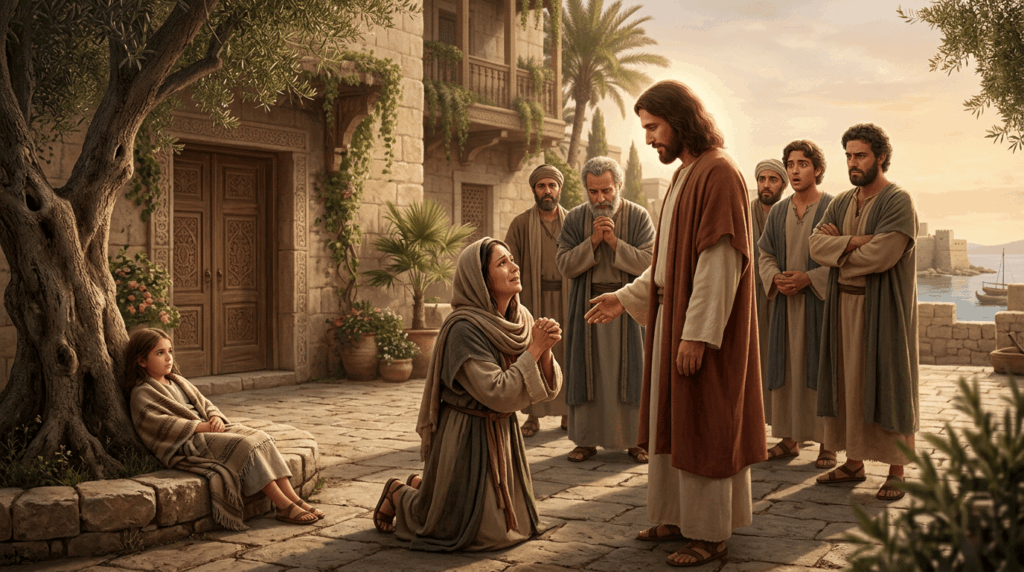
Jesus greatly enjoyed the keen sense of humor which these gentiles exhibited. It was the sense of humor displayed by Norana, the Syrian woman, as well as her great and persistent faith, that so touched the Master’s heart and appealed to his mercy. Jesus greatly regretted that his people—the Jews—were so lacking in humor. He once said to Thomas: “My people take themselves too seriously; they are just about devoid of an appreciation of humor. The burdensome religion of the Pharisees could never have had origin among a people with a sense of humor. They also lack consistency; they strain at gnats and swallow camels.”
SuomiEnglish
Siidoniin saapuessaan Jeesus ja hänen työtoverinsa kulkivat erään sillan yli. Monille se oli heidän ensimmäinen koskaan näkemänsä silta. Heidän kävellessään tätä siltaa pitkin Jeesus sanoi muun muassa: ”Tämä maailma on vain silta. Voitte kulkea sen yli, mutta teidän ei tule ajatella, että rakennatte sen päälle asuinpaikan.”
In entering Sidon, Jesus and his associates passed over a bridge, the first one many of them had ever seen. As they walked over this bridge, Jesus, among other things, said: “This world is only a bridge; you may pass over it, but you should not think to build a dwelling place upon it.”
Kahdenkymmenenneljän apostolin ja evankelistan aloittaessa aherruksensa Siidonissa Jeesus meni asumaan yhteen kotiin heti kaupungin pohjoispuolella, Justan ja hänen äitinsä, Bernicen, taloon. Jeesus opetti Justan talossa näitä kahtakymmentäneljää joka aamu, ja iltapäivisin ja iltaisin nämä hajaantuivat Siidoniin opettamaan ja saarnaamaan.
As the twenty-four began their labors in Sidon, Jesus went to stay in a home just north of the city, the house of Justa and her mother, Bernice. Jesus taught the twenty-four each morning at the home of Justa, and they went abroad in Sidon to teach and preach during the afternoons and evenings.
Apostoleja ja evankelistoja rohkaisi suuresti tapa, jolla Siidonin ei-juutalaiset ottivat vastaan heidän sanomansa. Heidän lyhyen käyntinsä aikana valtakunnan väkimäärä lisääntyi monella. Tämä kuutisen viikkoa jatkunut Foinikian-jakso oli sielujen voittamiseksi tehdyssä työssä hyvin tuloksellista aikaa, mutta myöhemmät juutalaiset evankeliumien kirjoittajat olivat taipuvaisia sivuuttamaan kevyellä maininnalla sen, miten lämpimästi nämä gentiilit ottivat vastaan Jeesuksen opetukset täsmälleen samaan aikaan, kun niin peräti suuri määrä hänen oman kansansa jäseniä oli asettunut vihamieliseen rintamaan häntä vastaan.
The apostles and the evangelists were greatly cheered by the manner in which the gentiles of Sidon received their message; during their short sojourn many were added to the kingdom. This period of about six weeks in Phoenicia was a very fruitful time in the work of winning souls, but the later Jewish writers of the Gospels were wont lightly to pass over the record of this warm reception of Jesus’ teachings by these gentiles at this very time when such a large number of his own people were in hostile array against him.
Nämä gentiiliuskovat arvostivat Jeesuksen opetuksia monin tavoin täysimääräisemmin kuin juutalaiset. Monet näistä kreikankielisistä syyrialais-foinikialaisista tulivat tietämään paitsi sen, että Jeesus oli Jumalan kaltainen, myös, että Jumala oli Jeesuksen kaltainen. Näille niin kutsutuille pakanoille muodostui hyvä ymmärrys siitä Mestarin opetuksesta, että tämän maailman ja koko maailmankaikkeuden lait ovat yhdenmukaisia. He käsittivät opetuksen siitä, ettei Jumala suosi henkilöitä, rotuja eikä kansakuntia; ettei Universaalisessa Isässä ilmene mitään suosimista; että maailmankaikkeus on kauttaaltaan ja ajasta aikaan lainkuuliainen ja pettämättömän luotettava. Nämä pakanat eivät pelänneet Jeesusta, he uskalsivat ottaa vastaan hänen sanomansa. Minään aikakautena vika ei ole ollut siinä, että ihmiset olisivat olleet kyvyttömiä ymmärtämään Jeesusta, vaan siinä, että he ovat pelänneet niin tehdä.
In many ways these gentile believers appreciated Jesus’ teachings more fully than the Jews. Many of these Greek-speaking Syrophoenicians came to know not only that Jesus was like God but also that God was like Jesus. These so-called heathen achieved a good understanding of the Master’s teachings about the uniformity of the laws of this world and the entire universe. They grasped the teaching that God is no respecter of persons, races, or nations; that there is no favoritism with the Universal Father; that the universe is wholly and ever law-abiding and unfailingly dependable. These gentiles were not afraid of Jesus; they dared to accept his message. All down through the ages men have not been unable to comprehend Jesus; they have been afraid to.
Jeesus selvitti kahdellekymmenelleneljälle, ettei hän ollut paennut Galileasta siksi, että häneltä olisi puuttunut rohkeutta käydä vihamiehiänsä vastaan. He käsittivät, ettei hän ollut vielä valmis avoimeen selkkaukseen vakiintuneen uskonnon kanssa ja ettei hän tavoitellut marttyyriutta. Juuri erään tällaisen Justan kodissa pidetyn keskustelutilaisuuden kuluessa Mestari sanoi opetuslapsilleen ensi kerran sanat ”Vaikka taivas ja maa katoaisivat, totuuden sanani eivät katoa.”
Jesus made it clear to the twenty-four that he had not fled from Galilee because he lacked courage to confront his enemies. They comprehended that he was not yet ready for an open clash with established religion, and that he did not seek to become a martyr. It was during one of these conferences at the home of Justa that the Master first told his disciples that “even though heaven and earth shall pass away, my words of truth shall not.”
Siidonissa-oleskelun aikana Jeesuksen opetusten teemana oli hengellinen edistyminen. Hän kertoi heille, etteivät he voineet jäädä paikalleen, vaan heidän oli pakostakin joko kuljettava eteenpäin vanhurskaudessa tai taannuttava pahuuteen ja syntiin. Hän kehotti heitä: ”Unohtakaa menneisyyteen kuuluvat asiat, samalla kun ponnistelette eteenpäin omaksuaksenne valtakunnan suuremmat realiteetit.” Hän pyytämällä pyysi heitä, etteivät he tyytyisi olemaan evankeliumin suhteen lapsia, vaan pyrkisivät saavuttamaan Jumalan pojan täysikasvuisuuden hengen yhteydessä ja uskovien yhteisössä.
The theme of Jesus’ instructions during the sojourn at Sidon was spiritual progression. He told them they could not stand still; they must go forward in righteousness or retrogress into evil and sin. He admonished them to “forget those things which are in the past while you push forward to embrace the greater realities of the kingdom.” He besought them not to be content with their childhood in the gospel but to strive for the attainment of the full stature of divine sonship in the communion of the spirit and in the fellowship of believers.
Jeesus sanoi: ”Opetuslasteni täytyy, ei vain lakata tekemästä pahaa, vaan oppia tekemään hyvää; teidän täytyy ei vain puhdistautua kaikesta tietoisesta synnistä, vaan teidän täytyy päästä yksinpä sellaisestakin, että teillä on syyllisyydentuntoja. Jos tunnustatte syntinne, ne annetaan anteeksi; siksi teidän on pidettävä omatuntonne sellaisena, ettei sitä mikään paina.”
Said Jesus: “My disciples must not only cease to do evil but learn to do well; you must not only be cleansed from all conscious sin, but you must refuse to harbor even the feelings of guilt. If you confess your sins, they are forgiven; therefore must you maintain a conscience void of offense.”
Jeesus nautti suuresti näiden ei-juutalaisten osoittamasta huumorintajusta. Mestarin sydäntä kosketti ja hänen armeliaisuudentuntoonsa vetosi yhtä paljon Noranan, syyrialaisnaisen, osoittama huumorintaju kuin hänen suuri ja sinnikäs uskonsa. Jeesus piti perin valitettavana sitä, että hänen kansaltaan – juutalaisilta – niin suuressa määrin puuttui huumorintaju. Kerran hän sanoi Tuomakselle: ”Minun väkeni ottaa itsensä liian vakavasti. Heiltä puuttuu huumorin arvostus kutakuinkin kokonaan. Fariseusten raskassoutuinen uskonto ei olisi koskaan päässyt alulle sellaisen kansan keskuudessa, jolla on huumorintajua. Heiltä puuttuu myös johdonmukaisuutta, sillä hehän kuurnivat hyttysiä mutta nielevät kameleja.”
Jesus greatly enjoyed the keen sense of humor which these gentiles exhibited. It was the sense of humor displayed by Norana, the Syrian woman, as well as her great and persistent faith, that so touched the Master’s heart and appealed to his mercy. Jesus greatly regretted that his people—the Jews—were so lacking in humor. He once said to Thomas: “My people take themselves too seriously; they are just about devoid of an appreciation of humor. The burdensome religion of the Pharisees could never have had origin among a people with a sense of humor. They also lack consistency; they strain at gnats and swallow camels.”