
Teksti
Tausta
Näytä
Lisäasetukset
Kieli
Urantia Opas
Kysy kirjan sisällöstä. Opas vastaa Book Enginen omien lähdekohtien perusteella ja ohjaa sinut lukemaan ne.
Hei! 🙏
Olen sinun Urantia-oppaasi. Tehtäväni on auttaa sinua löytämään oikeat kohdat Urantia-kirjasta ja ymmärtämään sen opetuksia syvemmin. 😊❤️
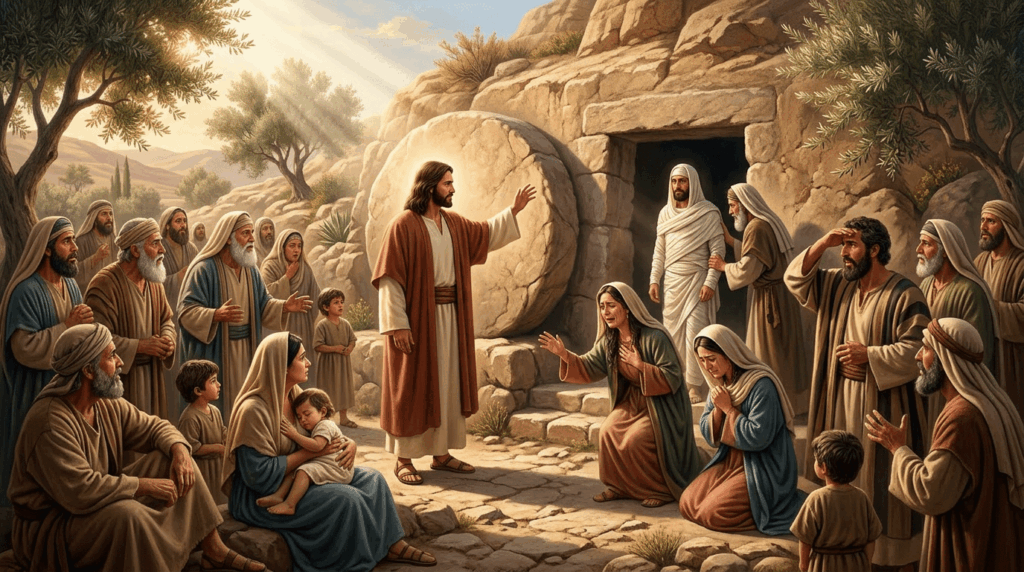
Käytettyään surijoilta sivussa muutaman hetken Martan ja Marian lohduttamiseen Jeesus kysyi heiltä: ”Minne olette hänet laskeneet?” Silloin Martta sanoi: ”Tule katsomaan.” Ja astellessaan hiljaisuuden vallitessa kummankin surevan sisaren jäljessä Mestari itki. Kun heidän jäljessään kulkevat ystävälliset juutalaiset näkivät hänen kyynelensä, yksi heistä sanoi: ”Katsokaa, kuinka hän häntä rakasti. Eikö hän, joka avasi sokean silmät, olisi kyennyt estämään tämän miehen kuoleman?” Sillä hetkellä he seisoivat jo perhehaudan edessä. Se oli pieni luonnon muovaama luola tai onkalo, kymmenisen metriä korkean kallioseinämän kupeessa puutarhapalstan perimmäisessä nurkassa.
Ihmismielille on vaikea selittää, miksi Jeesus oikeastaan itki. Vaikka käytettävissämme ovat rekisterimerkinnät toisiinsa kietoutuvista inhimillisistä emootioista ja jumalallisista ajatuksista sellaisina kuin ne ovat tallentuneet Personoidun Suuntaajan mieleen, emme silti ole näiden emotionaalisten ilmiöiden todellisesta syystä täysin varmoja. Tunnemme houkutusta uskoa, että Jeesuksen itkun syynä olivat monetkin hänen mielessään tuona hetkenä risteilleet ajatukset ja tunteet. Näitä olivat muun muassa:
1. Hän tunsi aitoa ja osaaottavaa myötätuntoa Marttaa ja Mariaa kohtaan; hän tunsi todellista ja syvää inhimillistä hellyyttä näitä veljensä menettäneitä sisaria kohtaan.
2. Hänen mieltään hämmensi surijalauman läsnäolo; jotkut näistä vilpittömiä, toiset pelkkiä teeskentelijöitä. Häntä harmistuttivat aina tällaiset ulkonaiset suremisnäytökset. Hän tiesi, että sisaret rakastivat veljeään ja että he luottivat uskovien eloonjäämiseen. Tällaiset ristiriitaiset tuntemukset saattavat ehkä selittää, miksi hän nyyhki, kun he tulivat hautakammion lähelle.
3. Lasaruksen palauttaminen kuolevaisten elämän piiriin tosiaankin emmitytti häntä. Lasaruksen sisaret toki tarvitsivat veljeään, mutta Jeesusta suretti se, että hänen olisi kutsuttava ystävänsä takaisin kokemaan katkeraa vainoa, jota hän hyvin tiesi Lasaruksen joutuvan kestämään sen seurauksena, että hän tulisi olemaan Ihmisen Pojan kaikista suurimman voimanosoituksen kohde.
Ja tässä yhteydessä saamme kertoa erään mielenkiintoisen ja valaisevan tosiseikan: Vaikka tämä kertomus eteneekin ikään kuin kysymyksessä olisi näennäisesti luonnollinen ja normaali tapahtuma ihmisten elämänkulun puitteissa, siinä on kuitenkin joitakin varsin kiinnostavia sivupiirteitä. Vaikka viestintuoja meni Jeesuksen luo sunnuntaina kertoen hänelle Lasaruksen sairaudesta ja vaikka Jeesus lähetti sanan, jonka mukaan se ”ei ollut kuolemaksi”, hän samalla kuitenkin meni itse henkilökohtaisesti Betaniaan ja jopa kysyi sisarilta: ”Minne olette hänet laskeneet?” Jos kohta tämä kaikki tuntuukin viittaavan siihen, että Mestari eteni siten kuin tämän elinpiirin puitteissa menetellään ja ihmismielen rajallisen tietämyksen mukaisesti, universumin arkistot paljastavat kuitenkin Jeesuksen Personoidun Suuntaajan antaneen määräykset Lasaruksen Ajatuksensuuntaajan viivyttämisestä tällä planeetalla määräämättömän ajan Lasaruksen kuoleman jälkeen ja tämän määräyksen tulleen kirjatuksi täsmälleen viisitoista minuuttia, ennen kuin Lasarus henkäisi viimeisen kerran.
Tiesikö Jeesuksen jumalallinen mieli jo ennen Lasaruksen kuolemaa, että hän herättäisi tämän kuolleista? Sitä emme tiedä. Tiedämme vain sen, minkä tässä yhteydessä kirjaan merkitsemme.
Monet Jeesuksen vihamiehistä tunsivat houkutusta virnuilla hänen kiintymyksenosoituksilleen, ja he sanoivat toisilleen: ”Jos hän nyt noin suuressa arvossa tätä miestä piti, miksi hän odotteli näin kauan, ennen kuin tuli Betaniaan? Jos hän on, mitä hänestä väitetään, miksei hän pelastanut rakasta ystäväänsä? Mitä hyvää siinä on, että hän parantelee muukalaisia Galileassa, mutta ei kykene pelastamaan niitä, joita rakastaa?” Ja monilla muillakin tavoilla he pitivät pilkkanaan ja vähättelivät Jeesuksen opetuksia ja tekoja.
Ja niin puoli kolmen maissa tuona torstai-iltapäivänä tässä Betanian pikkukylässä näyttämö oli valmiina sitä varten, että sillä esitettäisiin suurin kaikista Nebadonin Mikaelin maiseen toimintaan liittyneistä teoista, suurenmoisin hänen lihallishahmoisen inkarnoitumisensa aikaisista jumalallisen vallan julkituonneista, sillä hänen oma kuolleistanousunsa tapahtui, vasta kun hän jo oli vapautunut kuolevaisen ilmiasun kahleista.
Eipä osannut Lasaruksen haudan äärelle kerääntynyt pieni väkijoukko arvata, että käden ulottuvilla oli valtava kertymä kaikkiin luokkiin kuuluvia taivaallisia olentoja, jotka olivat Jeesuksen Personoidun Suuntaajan määräyksestä Gabrielin johdolla kokoontuneet paikalle ja jotka nyt odotuksesta väristen olivat valmiita täyttämään, mitä heidän rakastamansa Hallitsija käskisi.
Kun Jeesus lausui nämä käskysanat: ”Ottakaa kivi pois”, paikalle kokoontuneet taivaalliset joukot valmistautuivat esittämään sen draaman, jossa Lasarus nousee kuolleista kuolevaisen olennon lihallisessa hahmossa. Tämänmuotoiseen kuolleistaheräämiseen liittyy toimeenpanovaikeuksia, jotka ylittävät moninkertaisesti sen tavallisen menetelmän, jolla kuolevaiset olennot morontiahahmossa herätetään kuolleista, ja siihen vaaditaan paljon enemmän taivaallisia persoonallisuuksia ja paljon suurempaa universumivalmiuksien organisointia.
Kuultuaan Jeesuksen äskeisen käskyn, joka määräsi vierittämään kiven pois haudan suulta, Martta ja Maria joutuivat ristiriitaisten tunteiden valtaan. Maria toivoi, että tarkoituksena olisi Lasaruksen kuolleistaherättäminen, mutta Marttaa, vaikka hän tiettyyn määrään saakka jakoikin sisarensa uskon, vaivasi enemmän pelko, ettei Lasarus olisi ulkonaisesti siinä kunnossa, että häntä sopisi esitellä Jeesukselle, apostoleille ja heidän ystävilleen. Martta sanoi: ”Täytyykö meidän vierittää kivi pois? Veljeni on nyt ollut neljä päivää kuolleena, joten ruumiin mätäneminen on tähän hetkeen mennessä jo alkanut.” Martta sanoi näin myös siitä syystä, ettei hän ollut varma, miksi Mestari oli pyytänyt kiven poistettavaksi; hän ajatteli Jeesuksen ehkä haluavan vain nähdä Lasaruksen viimeisen kerran. Martan suhtautuminen ei ollut vakaata ja ailahtelematonta. Kun he epäröivät vierittää kiven pois, Jeesus sanoi: ”Enkö alun alkaen sanonut teille, ettei tämä sairaus ollut kuolemaksi? Enkö ole tullut täyttämään lupaustani? Ja enkö luoksenne tultuani sanonut, että jos vain uskoisitte, näkisitte Jumalan kunnian? Minkä tähden epäilette? Kuinka kauan vielä kestää, ennen kuin uskotte ja tottelette?”
Jeesuksen lausuttua nämä sanat hänen apostolinsa tarttuivat auliiden naapureiden avustamina kiveen ja vierittivät sen sivuun haudan suulta.
Juutalaisten keskuudessa eli yleisenä uskomus, jonka mukaan sappipisara kuoleman enkelin miekankärjessä alkoi vaikuttaa kolmannen päivän lopulla niin, että se toimi täydellä voimallaan neljäntenä päivänä. Heidän käsityksensä mukaan ihmisen sielu saattoi viipyä haudan lähettyvillä kolmannen päivän loppuun saakka ja koettaa saada kuollutta ruumista henkiin; mutta he uskoivat lujasti, että ennen kuin neljännen päivän aamu valkeni, tällainen sielu oli jo jatkanut matkaansa täältä poistuneiden sielujen olinpaikkaan.
Nämä uskomukset ja käsitykset vainajista ja vainajien hengen poistumisesta olivat omiaan saamaan kaikki tuolla hetkellä Lasaruksen haudalla läsnä olevat ja sittemmin kaikki, jotka saattaisivat kuulla siitä, mitä kohta oli tapahtuva, mielessään vakuuttuneiksi siitä, että tämä oli todellakin ja totisesti tapaus, jossa ihminen herätettiin kuolleista, ja että sen suoritti henkilökohtaisin toimin hän, joka julisti olevansa ”kuolleistanousu ja elämä.”
After Jesus had spent a few moments in comforting Martha and Mary, apart from the mourners, he asked them, “Where have you laid him?” Then Martha said, “Come and see.” And as the Master followed on in silence with the two sorrowing sisters, he wept. When the friendly Jews who followed after them saw his tears, one of them said: “Behold how he loved him. Could not he who opened the eyes of the blind have kept this man from dying?” By this time they were standing before the family tomb, a small natural cave, or declivity, in the ledge of rock which rose up some thirty feet at the far end of the garden plot.
It is difficult to explain to human minds just why Jesus wept. While we have access to the registration of the combined human emotions and divine thoughts, as of record in the mind of the Personalized Adjuster, we are not altogether certain about the real cause of these emotional manifestations. We are inclined to believe that Jesus wept because of a number of thoughts and feelings which were going through his mind at this time, such as:
1. He felt a genuine and sorrowful sympathy for Martha and Mary; he had a real and deep human affection for these sisters who had lost their brother.
2. He was perturbed in his mind by the presence of the crowd of mourners, some sincere and some merely pretenders. He always resented these outward exhibitions of mourning. He knew the sisters loved their brother and had faith in the survival of believers. These conflicting emotions may possibly explain why he groaned as they came near the tomb.
3. He truly hesitated about bringing Lazarus back to the mortal life. His sisters really needed him, but Jesus regretted having to summon his friend back to experience the bitter persecution which he well knew Lazarus would have to endure as a result of being the subject of the greatest of all demonstrations of the divine power of the Son of Man.
And now we may relate an interesting and instructive fact: Although this narrative unfolds as an apparently natural and normal event in human affairs, it has some very interesting side lights. While the messenger went to Jesus on Sunday, telling him of Lazarus’s illness, and while Jesus sent word that it was “not to the death,” at the same time he went in person up to Bethany and even asked the sisters, “Where have you laid him?” Even though all of this seems to indicate that the Master was proceeding after the manner of this life and in accordance with the limited knowledge of the human mind, nevertheless, the records of the universe reveal that Jesus’ Personalized Adjuster issued orders for the indefinite detention of Lazarus’s Thought Adjuster on the planet subsequent to Lazarus’s death, and that this order was made of record just fifteen minutes before Lazarus breathed his last.
Did the divine mind of Jesus know, even before Lazarus died, that he would raise him from the dead? We do not know. We know only what we are herewith placing on record.
Many of Jesus’ enemies were inclined to sneer at his manifestations of affection, and they said among themselves: “If he thought so much of this man, why did he tarry so long before coming to Bethany? If he is what they claim, why did he not save his dear friend? What is the good of healing strangers in Galilee if he cannot save those whom he loves?” And in many other ways they mocked and made light of the teachings and works of Jesus.
And so, on this Thursday afternoon at about half past two o’clock, was the stage all set in this little hamlet of Bethany for the enactment of the greatest of all works connected with the earth ministry of Michael of Nebadon, the greatest manifestation of divine power during his incarnation in the flesh, since his own resurrection occurred after he had been liberated from the bonds of mortal habitation.
The small group assembled before Lazarus’s tomb little realized the presence near at hand of a vast concourse of all orders of celestial beings assembled under the leadership of Gabriel and now in waiting, by direction of the Personalized Adjuster of Jesus, vibrating with expectancy and ready to execute the bidding of their beloved Sovereign.
When Jesus spoke those words of command, “Take away the stone,” the assembled celestial hosts made ready to enact the drama of the resurrection of Lazarus in the likeness of his mortal flesh. Such a form of resurrection involves difficulties of execution which far transcend the usual technique of the resurrection of mortal creatures in morontia form and requires far more celestial personalities and a far greater organization of universe facilities.
When Martha and Mary heard this command of Jesus directing that the stone in front of the tomb be rolled away, they were filled with conflicting emotions. Mary hoped that Lazarus was to be raised from the dead, but Martha, while to some extent sharing her sister’s faith, was more exercised by the fear that Lazarus would not be presentable, in his appearance, to Jesus, the apostles, and their friends. Said Martha: “Must we roll away the stone? My brother has now been dead four days, so that by this time decay of the body has begun.” Martha also said this because she was not certain as to why the Master had requested that the stone be removed; she thought maybe Jesus wanted only to take one last look at Lazarus. She was not settled and constant in her attitude. As they hesitated to roll away the stone, Jesus said: “Did I not tell you at the first that this sickness was not to the death? Have I not come to fulfill my promise? And after I came to you, did I not say that, if you would only believe, you should see the glory of God? Wherefore do you doubt? How long before you will believe and obey?”
When Jesus had finished speaking, his apostles, with the assistance of willing neighbors, laid hold upon the stone and rolled it away from the entrance to the tomb.
It was the common belief of the Jews that the drop of gall on the point of the sword of the angel of death began to work by the end of the third day, so that it was taking full effect on the fourth day. They allowed that the soul of man might linger about the tomb until the end of the third day, seeking to reanimate the dead body; but they firmly believed that such a soul had gone on to the abode of departed spirits ere the fourth day had dawned.
These beliefs and opinions regarding the dead and the departure of the spirits of the dead served to make sure, in the minds of all who were now present at Lazarus’s tomb and subsequently to all who might hear of what was about to occur, that this was really and truly a case of the raising of the dead by the personal working of one who declared he was “the resurrection and the life.”
SuomiEnglish
Käytettyään surijoilta sivussa muutaman hetken Martan ja Marian lohduttamiseen Jeesus kysyi heiltä: ”Minne olette hänet laskeneet?” Silloin Martta sanoi: ”Tule katsomaan.” Ja astellessaan hiljaisuuden vallitessa kummankin surevan sisaren jäljessä Mestari itki. Kun heidän jäljessään kulkevat ystävälliset juutalaiset näkivät hänen kyynelensä, yksi heistä sanoi: ”Katsokaa, kuinka hän häntä rakasti. Eikö hän, joka avasi sokean silmät, olisi kyennyt estämään tämän miehen kuoleman?” Sillä hetkellä he seisoivat jo perhehaudan edessä. Se oli pieni luonnon muovaama luola tai onkalo, kymmenisen metriä korkean kallioseinämän kupeessa puutarhapalstan perimmäisessä nurkassa.
After Jesus had spent a few moments in comforting Martha and Mary, apart from the mourners, he asked them, “Where have you laid him?” Then Martha said, “Come and see.” And as the Master followed on in silence with the two sorrowing sisters, he wept. When the friendly Jews who followed after them saw his tears, one of them said: “Behold how he loved him. Could not he who opened the eyes of the blind have kept this man from dying?” By this time they were standing before the family tomb, a small natural cave, or declivity, in the ledge of rock which rose up some thirty feet at the far end of the garden plot.
Ihmismielille on vaikea selittää, miksi Jeesus oikeastaan itki. Vaikka käytettävissämme ovat rekisterimerkinnät toisiinsa kietoutuvista inhimillisistä emootioista ja jumalallisista ajatuksista sellaisina kuin ne ovat tallentuneet Personoidun Suuntaajan mieleen, emme silti ole näiden emotionaalisten ilmiöiden todellisesta syystä täysin varmoja. Tunnemme houkutusta uskoa, että Jeesuksen itkun syynä olivat monetkin hänen mielessään tuona hetkenä risteilleet ajatukset ja tunteet. Näitä olivat muun muassa:
It is difficult to explain to human minds just why Jesus wept. While we have access to the registration of the combined human emotions and divine thoughts, as of record in the mind of the Personalized Adjuster, we are not altogether certain about the real cause of these emotional manifestations. We are inclined to believe that Jesus wept because of a number of thoughts and feelings which were going through his mind at this time, such as:
1. Hän tunsi aitoa ja osaaottavaa myötätuntoa Marttaa ja Mariaa kohtaan; hän tunsi todellista ja syvää inhimillistä hellyyttä näitä veljensä menettäneitä sisaria kohtaan.
1. He felt a genuine and sorrowful sympathy for Martha and Mary; he had a real and deep human affection for these sisters who had lost their brother.
2. Hänen mieltään hämmensi surijalauman läsnäolo; jotkut näistä vilpittömiä, toiset pelkkiä teeskentelijöitä. Häntä harmistuttivat aina tällaiset ulkonaiset suremisnäytökset. Hän tiesi, että sisaret rakastivat veljeään ja että he luottivat uskovien eloonjäämiseen. Tällaiset ristiriitaiset tuntemukset saattavat ehkä selittää, miksi hän nyyhki, kun he tulivat hautakammion lähelle.
2. He was perturbed in his mind by the presence of the crowd of mourners, some sincere and some merely pretenders. He always resented these outward exhibitions of mourning. He knew the sisters loved their brother and had faith in the survival of believers. These conflicting emotions may possibly explain why he groaned as they came near the tomb.
3. Lasaruksen palauttaminen kuolevaisten elämän piiriin tosiaankin emmitytti häntä. Lasaruksen sisaret toki tarvitsivat veljeään, mutta Jeesusta suretti se, että hänen olisi kutsuttava ystävänsä takaisin kokemaan katkeraa vainoa, jota hän hyvin tiesi Lasaruksen joutuvan kestämään sen seurauksena, että hän tulisi olemaan Ihmisen Pojan kaikista suurimman voimanosoituksen kohde.
3. He truly hesitated about bringing Lazarus back to the mortal life. His sisters really needed him, but Jesus regretted having to summon his friend back to experience the bitter persecution which he well knew Lazarus would have to endure as a result of being the subject of the greatest of all demonstrations of the divine power of the Son of Man.
Ja tässä yhteydessä saamme kertoa erään mielenkiintoisen ja valaisevan tosiseikan: Vaikka tämä kertomus eteneekin ikään kuin kysymyksessä olisi näennäisesti luonnollinen ja normaali tapahtuma ihmisten elämänkulun puitteissa, siinä on kuitenkin joitakin varsin kiinnostavia sivupiirteitä. Vaikka viestintuoja meni Jeesuksen luo sunnuntaina kertoen hänelle Lasaruksen sairaudesta ja vaikka Jeesus lähetti sanan, jonka mukaan se ”ei ollut kuolemaksi”, hän samalla kuitenkin meni itse henkilökohtaisesti Betaniaan ja jopa kysyi sisarilta: ”Minne olette hänet laskeneet?” Jos kohta tämä kaikki tuntuukin viittaavan siihen, että Mestari eteni siten kuin tämän elinpiirin puitteissa menetellään ja ihmismielen rajallisen tietämyksen mukaisesti, universumin arkistot paljastavat kuitenkin Jeesuksen Personoidun Suuntaajan antaneen määräykset Lasaruksen Ajatuksensuuntaajan viivyttämisestä tällä planeetalla määräämättömän ajan Lasaruksen kuoleman jälkeen ja tämän määräyksen tulleen kirjatuksi täsmälleen viisitoista minuuttia, ennen kuin Lasarus henkäisi viimeisen kerran.
And now we may relate an interesting and instructive fact: Although this narrative unfolds as an apparently natural and normal event in human affairs, it has some very interesting side lights. While the messenger went to Jesus on Sunday, telling him of Lazarus’s illness, and while Jesus sent word that it was “not to the death,” at the same time he went in person up to Bethany and even asked the sisters, “Where have you laid him?” Even though all of this seems to indicate that the Master was proceeding after the manner of this life and in accordance with the limited knowledge of the human mind, nevertheless, the records of the universe reveal that Jesus’ Personalized Adjuster issued orders for the indefinite detention of Lazarus’s Thought Adjuster on the planet subsequent to Lazarus’s death, and that this order was made of record just fifteen minutes before Lazarus breathed his last.
Tiesikö Jeesuksen jumalallinen mieli jo ennen Lasaruksen kuolemaa, että hän herättäisi tämän kuolleista? Sitä emme tiedä. Tiedämme vain sen, minkä tässä yhteydessä kirjaan merkitsemme.
Did the divine mind of Jesus know, even before Lazarus died, that he would raise him from the dead? We do not know. We know only what we are herewith placing on record.
Monet Jeesuksen vihamiehistä tunsivat houkutusta virnuilla hänen kiintymyksenosoituksilleen, ja he sanoivat toisilleen: ”Jos hän nyt noin suuressa arvossa tätä miestä piti, miksi hän odotteli näin kauan, ennen kuin tuli Betaniaan? Jos hän on, mitä hänestä väitetään, miksei hän pelastanut rakasta ystäväänsä? Mitä hyvää siinä on, että hän parantelee muukalaisia Galileassa, mutta ei kykene pelastamaan niitä, joita rakastaa?” Ja monilla muillakin tavoilla he pitivät pilkkanaan ja vähättelivät Jeesuksen opetuksia ja tekoja.
Many of Jesus’ enemies were inclined to sneer at his manifestations of affection, and they said among themselves: “If he thought so much of this man, why did he tarry so long before coming to Bethany? If he is what they claim, why did he not save his dear friend? What is the good of healing strangers in Galilee if he cannot save those whom he loves?” And in many other ways they mocked and made light of the teachings and works of Jesus.
Ja niin puoli kolmen maissa tuona torstai-iltapäivänä tässä Betanian pikkukylässä näyttämö oli valmiina sitä varten, että sillä esitettäisiin suurin kaikista Nebadonin Mikaelin maiseen toimintaan liittyneistä teoista, suurenmoisin hänen lihallishahmoisen inkarnoitumisensa aikaisista jumalallisen vallan julkituonneista, sillä hänen oma kuolleistanousunsa tapahtui, vasta kun hän jo oli vapautunut kuolevaisen ilmiasun kahleista.
And so, on this Thursday afternoon at about half past two o’clock, was the stage all set in this little hamlet of Bethany for the enactment of the greatest of all works connected with the earth ministry of Michael of Nebadon, the greatest manifestation of divine power during his incarnation in the flesh, since his own resurrection occurred after he had been liberated from the bonds of mortal habitation.
Eipä osannut Lasaruksen haudan äärelle kerääntynyt pieni väkijoukko arvata, että käden ulottuvilla oli valtava kertymä kaikkiin luokkiin kuuluvia taivaallisia olentoja, jotka olivat Jeesuksen Personoidun Suuntaajan määräyksestä Gabrielin johdolla kokoontuneet paikalle ja jotka nyt odotuksesta väristen olivat valmiita täyttämään, mitä heidän rakastamansa Hallitsija käskisi.
The small group assembled before Lazarus’s tomb little realized the presence near at hand of a vast concourse of all orders of celestial beings assembled under the leadership of Gabriel and now in waiting, by direction of the Personalized Adjuster of Jesus, vibrating with expectancy and ready to execute the bidding of their beloved Sovereign.
Kun Jeesus lausui nämä käskysanat: ”Ottakaa kivi pois”, paikalle kokoontuneet taivaalliset joukot valmistautuivat esittämään sen draaman, jossa Lasarus nousee kuolleista kuolevaisen olennon lihallisessa hahmossa. Tämänmuotoiseen kuolleistaheräämiseen liittyy toimeenpanovaikeuksia, jotka ylittävät moninkertaisesti sen tavallisen menetelmän, jolla kuolevaiset olennot morontiahahmossa herätetään kuolleista, ja siihen vaaditaan paljon enemmän taivaallisia persoonallisuuksia ja paljon suurempaa universumivalmiuksien organisointia.
When Jesus spoke those words of command, “Take away the stone,” the assembled celestial hosts made ready to enact the drama of the resurrection of Lazarus in the likeness of his mortal flesh. Such a form of resurrection involves difficulties of execution which far transcend the usual technique of the resurrection of mortal creatures in morontia form and requires far more celestial personalities and a far greater organization of universe facilities.
Kuultuaan Jeesuksen äskeisen käskyn, joka määräsi vierittämään kiven pois haudan suulta, Martta ja Maria joutuivat ristiriitaisten tunteiden valtaan. Maria toivoi, että tarkoituksena olisi Lasaruksen kuolleistaherättäminen, mutta Marttaa, vaikka hän tiettyyn määrään saakka jakoikin sisarensa uskon, vaivasi enemmän pelko, ettei Lasarus olisi ulkonaisesti siinä kunnossa, että häntä sopisi esitellä Jeesukselle, apostoleille ja heidän ystävilleen. Martta sanoi: ”Täytyykö meidän vierittää kivi pois? Veljeni on nyt ollut neljä päivää kuolleena, joten ruumiin mätäneminen on tähän hetkeen mennessä jo alkanut.” Martta sanoi näin myös siitä syystä, ettei hän ollut varma, miksi Mestari oli pyytänyt kiven poistettavaksi; hän ajatteli Jeesuksen ehkä haluavan vain nähdä Lasaruksen viimeisen kerran. Martan suhtautuminen ei ollut vakaata ja ailahtelematonta. Kun he epäröivät vierittää kiven pois, Jeesus sanoi: ”Enkö alun alkaen sanonut teille, ettei tämä sairaus ollut kuolemaksi? Enkö ole tullut täyttämään lupaustani? Ja enkö luoksenne tultuani sanonut, että jos vain uskoisitte, näkisitte Jumalan kunnian? Minkä tähden epäilette? Kuinka kauan vielä kestää, ennen kuin uskotte ja tottelette?”
When Martha and Mary heard this command of Jesus directing that the stone in front of the tomb be rolled away, they were filled with conflicting emotions. Mary hoped that Lazarus was to be raised from the dead, but Martha, while to some extent sharing her sister’s faith, was more exercised by the fear that Lazarus would not be presentable, in his appearance, to Jesus, the apostles, and their friends. Said Martha: “Must we roll away the stone? My brother has now been dead four days, so that by this time decay of the body has begun.” Martha also said this because she was not certain as to why the Master had requested that the stone be removed; she thought maybe Jesus wanted only to take one last look at Lazarus. She was not settled and constant in her attitude. As they hesitated to roll away the stone, Jesus said: “Did I not tell you at the first that this sickness was not to the death? Have I not come to fulfill my promise? And after I came to you, did I not say that, if you would only believe, you should see the glory of God? Wherefore do you doubt? How long before you will believe and obey?”
Jeesuksen lausuttua nämä sanat hänen apostolinsa tarttuivat auliiden naapureiden avustamina kiveen ja vierittivät sen sivuun haudan suulta.
When Jesus had finished speaking, his apostles, with the assistance of willing neighbors, laid hold upon the stone and rolled it away from the entrance to the tomb.
Juutalaisten keskuudessa eli yleisenä uskomus, jonka mukaan sappipisara kuoleman enkelin miekankärjessä alkoi vaikuttaa kolmannen päivän lopulla niin, että se toimi täydellä voimallaan neljäntenä päivänä. Heidän käsityksensä mukaan ihmisen sielu saattoi viipyä haudan lähettyvillä kolmannen päivän loppuun saakka ja koettaa saada kuollutta ruumista henkiin; mutta he uskoivat lujasti, että ennen kuin neljännen päivän aamu valkeni, tällainen sielu oli jo jatkanut matkaansa täältä poistuneiden sielujen olinpaikkaan.
It was the common belief of the Jews that the drop of gall on the point of the sword of the angel of death began to work by the end of the third day, so that it was taking full effect on the fourth day. They allowed that the soul of man might linger about the tomb until the end of the third day, seeking to reanimate the dead body; but they firmly believed that such a soul had gone on to the abode of departed spirits ere the fourth day had dawned.
Nämä uskomukset ja käsitykset vainajista ja vainajien hengen poistumisesta olivat omiaan saamaan kaikki tuolla hetkellä Lasaruksen haudalla läsnä olevat ja sittemmin kaikki, jotka saattaisivat kuulla siitä, mitä kohta oli tapahtuva, mielessään vakuuttuneiksi siitä, että tämä oli todellakin ja totisesti tapaus, jossa ihminen herätettiin kuolleista, ja että sen suoritti henkilökohtaisin toimin hän, joka julisti olevansa ”kuolleistanousu ja elämä.”
These beliefs and opinions regarding the dead and the departure of the spirits of the dead served to make sure, in the minds of all who were now present at Lazarus’s tomb and subsequently to all who might hear of what was about to occur, that this was really and truly a case of the raising of the dead by the personal working of one who declared he was “the resurrection and the life.”