
Teksti
Tausta
Näytä
Lisäasetukset
Kieli
Urantia Opas
Kysy kirjan sisällöstä. Opas vastaa Book Enginen omien lähdekohtien perusteella ja ohjaa sinut lukemaan ne.
Hei! 🙏
Olen sinun Urantia-oppaasi. Tehtäväni on auttaa sinua löytämään oikeat kohdat Urantia-kirjasta ja ymmärtämään sen opetuksia syvemmin. 😊❤️
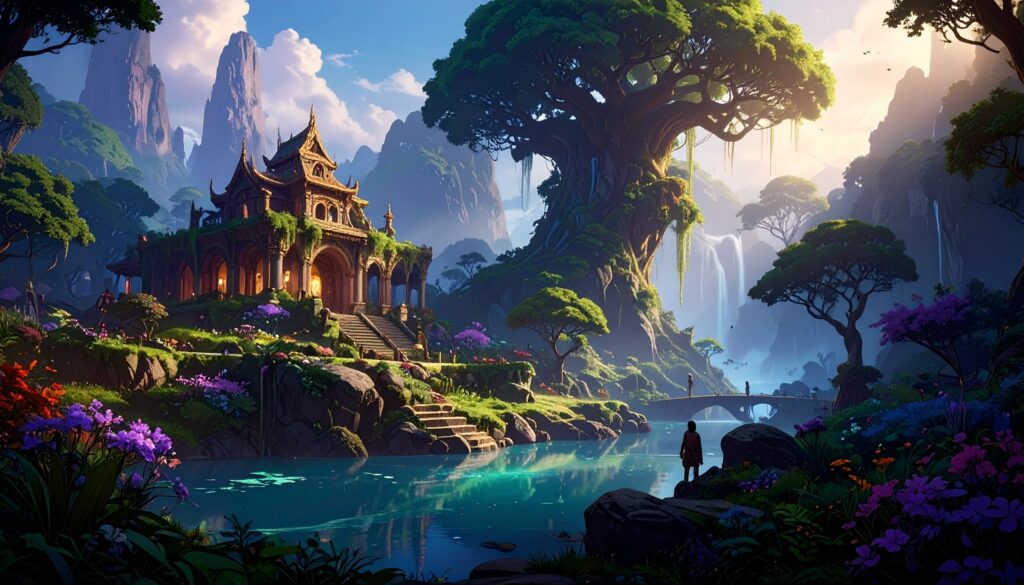
Van istutti puutarhatemppelin keskelle kauan varjellun elämänpuun, jonka lehdet olivat ”kansoille parannukseksi”, ja jonka hedelmät olivat näin kauan ylläpitäneet hänen elämäänsä maan päällä. Van oli tietoinen siitä, että myös Aatami ja Eeva olisivat elossa pysyäkseen riippuvaisia tästä Eedenin lahjasta, sitten kun he aineellisessa hahmossa Urantialle saapuisivat.
Järjestelmän pääkaupungissa asuvat Aineelliset Pojat eivät tarvitse elämänpuuta ravinnokseen. Vain planeetalla jälleenpersonoituina ollessaan he ovat riippuvaisia tästä fyysisen kuolemattomuuden antavasta apuneuvosta.
”Hyvän ja pahan tiedon puu” on lähinnä kielikuva, symbolinen nimitys, joka kattaa koko joukon ihmiskunnan kokemuksia, mutta ”elämänpuu” ei ollut myytti; se oli todellinen, ja Urantialla tällainen puu oli olemassa pitkän aikaa. Kun Edentian Kaikkein Korkeimmat hyväksyivät Caligastian valtuuttamisen Urantian Planeettaprinssiksi ja aikaisemmin mainitut sata Jerusemin kansalaista hänen hallinnolliseksi esikunnakseen, he lähettivät planeetalle Melkisedekien kautta erään Edentian pensaan, ja tästä kasvista varttui Urantian elämänpuu. Tämänmuotoinen ei-älyllinen elollisuus on peräisin konstellaation päämajasfääreiltä, sen lisäksi sitä esiintyy paikallis- ja superuniversumien päämajamaailmoissa samoin kuin Havonan sfääreillä, mutta ei järjestelmäpääkaupungeissa.
Tämä superkasvi varastoi tiettyjä avaruusenergioita, jotka toimivat vastamyrkkynä eläinhahmoiseen olemassaoloon kuuluvien vanhenemista aiheuttavien tekijöiden suhteen. Elämänpuun hedelmä oli kuin superkemiallinen akku, josta sitä syötäessä salaperäisesti vapautui elämää pidentävää universumivoimaa. Tästä ravintomuodosta ei ollut Urantian tavallisille, evolutionaarisille olennoille mitään hyötyä, mutta se oli erityisen käyttökelpoista Caligastian esikunnan sadalle aineellistetulle jäsenelle ja niille sadalle muunnetulle andoniitille, jotka olivat antaneet elämänplasmaansa Prinssin esikunnalle ja jotka vastalahjana olivat saaneet sitä elämäntäydennettä, jonka ansiosta heidän oli mahdollista käyttää hyväkseen elämänpuun hedelmiä pidentääkseen määräämättömäksi ajaksi muuten kuolevaiselle ominaista olemassaoloaan.
Prinssin hallituskauden aikana puu kasvoi maasta Isän temppelin pyöreällä keskuspihalla. Kapinan puhjettua Van ja hänen työtoverinsa kasvattivat väliaikaisessa leirissään puun ydinosasta uuden kasvin. Tämä Edentian pensas vietiin sittemmin heidän pakopaikkaansa ylämaalle, jossa se yli sadanviidenkymmenentuhannen vuoden ajan palveli sekä Vania että Amadonia.
Kun Van työtovereineen valmisteli puutarhaa Aatamia ja Eevaa varten, he istuttivat Edentian puun Eedenin puutarhaan, jossa se taas kerran kasvoi uuden, Isälle omistetun temppelin pyöreällä keskuspihalla. Ja kaksimuotoista fyysistä elämäänsä ylläpitääkseen Aatami ja Eeva nauttivat määräajoin sen hedelmiä.
Kun Aineellisen Pojan suunnitelmat menivät hakoteille, Aatamille ja hänen perheelleen ei annettu lupaa viedä puun ydinosaa pois puutarhasta. Kun nodiitit tunkeutuivat Eedeniin, heille kerrottiin, että heistä tulisi ”jumalten kaltaisia, jos he söisivät puun hedelmiä”. Suureksi hämmästyksekseen he löysivät puun vartioimattomana. He söivät vuosikaudet mielin määrin sen hedelmiä, mutta se ei vaikuttanut heihin millään tavoin. He olivat kaikki tämän maailman aineellisia kuolevaisia; heiltä puuttui se varustus, joka olisi toiminut puun hedelmien täydennyksenä. Heitä raivostutti se, etteivät he kyenneet saamaan puusta mitään hyötyä, ja erään heidän sisällissotansa yhteydessä tulipalo hävitti sekä temppelin että puun. Jäljelle jäi vain kivimuuri, kunnes puutarha myöhemmin vaipui mereen. Tämä oli jo toinen Isälle omistettu temppeli, joka tuhoutui.
Ja nyt täytyy kaikkien Urantian lihallisten ihmisten käydä läpi elämän ja kuoleman luonnollinen kulku. Aatami ja Eeva, heidän lapsensa ja heidän lastenlapsensa kumppaneineen menehtyivät kaikki aikanaan, ja he tulivat paikallisuniversumin ylösnousemusjärjestelmän piiriin, minkä mukaan aineellista kuolemaa seuraa herääminen mansiomaailmassa.
In the center of the Garden temple Van planted the long-guarded tree of life, whose leaves were for the “healing of the nations,” and whose fruit had so long sustained him on earth. Van well knew that Adam and Eve would also be dependent on this gift of Edentia for their life maintenance after they once appeared on Urantia in material form.
The Material Sons on the system capitals do not require the tree of life for sustenance. Only in the planetary repersonalization are they dependent on this adjunct to physical immortality.
The “tree of the knowledge of good and evil” may be a figure of speech, a symbolic designation covering a multitude of human experiences, but the “tree of life” was not a myth; it was real and for a long time was present on Urantia. When the Most Highs of Edentia approved the commission of Caligastia as Planetary Prince of Urantia and those of the one hundred Jerusem citizens as his administrative staff, they sent to the planet, by the Melchizedeks, a shrub of Edentia, and this plant grew to be the tree of life on Urantia. This form of nonintelligent life is native to the constellation headquarters spheres, being also found on the headquarters worlds of the local and superuniverses as well as on the Havona spheres, but not on the system capitals.
This superplant stored up certain space-energies which were antidotal to the age-producing elements of animal existence. The fruit of the tree of life was like a superchemical storage battery, mysteriously releasing the life-extension force of the universe when eaten. This form of sustenance was wholly useless to the ordinary evolutionary beings on Urantia, but specifically it was serviceable to the one hundred materialized members of Caligastia’s staff and to the one hundred modified Andonites who had contributed of their life plasm to the Prince’s staff, and who, in return, were made possessors of that complement of life which made it possible for them to utilize the fruit of the tree of life for an indefinite extension of their otherwise mortal existence.
During the days of the Prince’s rule the tree was growing from the earth in the central and circular courtyard of the Father’s temple. Upon the outbreak of the rebellion it was regrown from the central core by Van and his associates in their temporary camp. This Edentia shrub was subsequently taken to their highland retreat, where it served both Van and Amadon for more than one hundred and fifty thousand years.
When Van and his associates made ready the Garden for Adam and Eve, they transplanted the Edentia tree to the Garden of Eden, where, once again, it grew in a central, circular courtyard of another temple to the Father. And Adam and Eve periodically partook of its fruit for the maintenance of their dual form of physical life.
When the plans of the Material Son went astray, Adam and his family were not permitted to carry the core of the tree away from the Garden. When the Nodites invaded Eden, they were told that they would become as “gods if they partook of the fruit of the tree.” Much to their surprise they found it unguarded. They ate freely of the fruit for years, but it did nothing for them; they were all material mortals of the realm; they lacked that endowment which acted as a complement to the fruit of the tree. They became enraged at their inability to benefit from the tree of life, and in connection with one of their internal wars, the temple and the tree were both destroyed by fire; only the stone wall stood until the Garden was subsequently submerged. This was the second temple of the Father to perish.
And now must all flesh on Urantia take the natural course of life and death. Adam, Eve, their children, and their children’s children, together with their associates, all perished in the course of time, thus becoming subject to the ascension scheme of the local universe wherein mansion world resurrection follows material death.
SuomiEnglish
Van istutti puutarhatemppelin keskelle kauan varjellun elämänpuun, jonka lehdet olivat ”kansoille parannukseksi”, ja jonka hedelmät olivat näin kauan ylläpitäneet hänen elämäänsä maan päällä. Van oli tietoinen siitä, että myös Aatami ja Eeva olisivat elossa pysyäkseen riippuvaisia tästä Eedenin lahjasta, sitten kun he aineellisessa hahmossa Urantialle saapuisivat.
In the center of the Garden temple Van planted the long-guarded tree of life, whose leaves were for the “healing of the nations,” and whose fruit had so long sustained him on earth. Van well knew that Adam and Eve would also be dependent on this gift of Edentia for their life maintenance after they once appeared on Urantia in material form.
Järjestelmän pääkaupungissa asuvat Aineelliset Pojat eivät tarvitse elämänpuuta ravinnokseen. Vain planeetalla jälleenpersonoituina ollessaan he ovat riippuvaisia tästä fyysisen kuolemattomuuden antavasta apuneuvosta.
The Material Sons on the system capitals do not require the tree of life for sustenance. Only in the planetary repersonalization are they dependent on this adjunct to physical immortality.
”Hyvän ja pahan tiedon puu” on lähinnä kielikuva, symbolinen nimitys, joka kattaa koko joukon ihmiskunnan kokemuksia, mutta ”elämänpuu” ei ollut myytti; se oli todellinen, ja Urantialla tällainen puu oli olemassa pitkän aikaa. Kun Edentian Kaikkein Korkeimmat hyväksyivät Caligastian valtuuttamisen Urantian Planeettaprinssiksi ja aikaisemmin mainitut sata Jerusemin kansalaista hänen hallinnolliseksi esikunnakseen, he lähettivät planeetalle Melkisedekien kautta erään Edentian pensaan, ja tästä kasvista varttui Urantian elämänpuu. Tämänmuotoinen ei-älyllinen elollisuus on peräisin konstellaation päämajasfääreiltä, sen lisäksi sitä esiintyy paikallis- ja superuniversumien päämajamaailmoissa samoin kuin Havonan sfääreillä, mutta ei järjestelmäpääkaupungeissa.
The “tree of the knowledge of good and evil” may be a figure of speech, a symbolic designation covering a multitude of human experiences, but the “tree of life” was not a myth; it was real and for a long time was present on Urantia. When the Most Highs of Edentia approved the commission of Caligastia as Planetary Prince of Urantia and those of the one hundred Jerusem citizens as his administrative staff, they sent to the planet, by the Melchizedeks, a shrub of Edentia, and this plant grew to be the tree of life on Urantia. This form of nonintelligent life is native to the constellation headquarters spheres, being also found on the headquarters worlds of the local and superuniverses as well as on the Havona spheres, but not on the system capitals.
Tämä superkasvi varastoi tiettyjä avaruusenergioita, jotka toimivat vastamyrkkynä eläinhahmoiseen olemassaoloon kuuluvien vanhenemista aiheuttavien tekijöiden suhteen. Elämänpuun hedelmä oli kuin superkemiallinen akku, josta sitä syötäessä salaperäisesti vapautui elämää pidentävää universumivoimaa. Tästä ravintomuodosta ei ollut Urantian tavallisille, evolutionaarisille olennoille mitään hyötyä, mutta se oli erityisen käyttökelpoista Caligastian esikunnan sadalle aineellistetulle jäsenelle ja niille sadalle muunnetulle andoniitille, jotka olivat antaneet elämänplasmaansa Prinssin esikunnalle ja jotka vastalahjana olivat saaneet sitä elämäntäydennettä, jonka ansiosta heidän oli mahdollista käyttää hyväkseen elämänpuun hedelmiä pidentääkseen määräämättömäksi ajaksi muuten kuolevaiselle ominaista olemassaoloaan.
This superplant stored up certain space-energies which were antidotal to the age-producing elements of animal existence. The fruit of the tree of life was like a superchemical storage battery, mysteriously releasing the life-extension force of the universe when eaten. This form of sustenance was wholly useless to the ordinary evolutionary beings on Urantia, but specifically it was serviceable to the one hundred materialized members of Caligastia’s staff and to the one hundred modified Andonites who had contributed of their life plasm to the Prince’s staff, and who, in return, were made possessors of that complement of life which made it possible for them to utilize the fruit of the tree of life for an indefinite extension of their otherwise mortal existence.
Prinssin hallituskauden aikana puu kasvoi maasta Isän temppelin pyöreällä keskuspihalla. Kapinan puhjettua Van ja hänen työtoverinsa kasvattivat väliaikaisessa leirissään puun ydinosasta uuden kasvin. Tämä Edentian pensas vietiin sittemmin heidän pakopaikkaansa ylämaalle, jossa se yli sadanviidenkymmenentuhannen vuoden ajan palveli sekä Vania että Amadonia.
During the days of the Prince’s rule the tree was growing from the earth in the central and circular courtyard of the Father’s temple. Upon the outbreak of the rebellion it was regrown from the central core by Van and his associates in their temporary camp. This Edentia shrub was subsequently taken to their highland retreat, where it served both Van and Amadon for more than one hundred and fifty thousand years.
Kun Van työtovereineen valmisteli puutarhaa Aatamia ja Eevaa varten, he istuttivat Edentian puun Eedenin puutarhaan, jossa se taas kerran kasvoi uuden, Isälle omistetun temppelin pyöreällä keskuspihalla. Ja kaksimuotoista fyysistä elämäänsä ylläpitääkseen Aatami ja Eeva nauttivat määräajoin sen hedelmiä.
When Van and his associates made ready the Garden for Adam and Eve, they transplanted the Edentia tree to the Garden of Eden, where, once again, it grew in a central, circular courtyard of another temple to the Father. And Adam and Eve periodically partook of its fruit for the maintenance of their dual form of physical life.
Kun Aineellisen Pojan suunnitelmat menivät hakoteille, Aatamille ja hänen perheelleen ei annettu lupaa viedä puun ydinosaa pois puutarhasta. Kun nodiitit tunkeutuivat Eedeniin, heille kerrottiin, että heistä tulisi ”jumalten kaltaisia, jos he söisivät puun hedelmiä”. Suureksi hämmästyksekseen he löysivät puun vartioimattomana. He söivät vuosikaudet mielin määrin sen hedelmiä, mutta se ei vaikuttanut heihin millään tavoin. He olivat kaikki tämän maailman aineellisia kuolevaisia; heiltä puuttui se varustus, joka olisi toiminut puun hedelmien täydennyksenä. Heitä raivostutti se, etteivät he kyenneet saamaan puusta mitään hyötyä, ja erään heidän sisällissotansa yhteydessä tulipalo hävitti sekä temppelin että puun. Jäljelle jäi vain kivimuuri, kunnes puutarha myöhemmin vaipui mereen. Tämä oli jo toinen Isälle omistettu temppeli, joka tuhoutui.
When the plans of the Material Son went astray, Adam and his family were not permitted to carry the core of the tree away from the Garden. When the Nodites invaded Eden, they were told that they would become as “gods if they partook of the fruit of the tree.” Much to their surprise they found it unguarded. They ate freely of the fruit for years, but it did nothing for them; they were all material mortals of the realm; they lacked that endowment which acted as a complement to the fruit of the tree. They became enraged at their inability to benefit from the tree of life, and in connection with one of their internal wars, the temple and the tree were both destroyed by fire; only the stone wall stood until the Garden was subsequently submerged. This was the second temple of the Father to perish.
Ja nyt täytyy kaikkien Urantian lihallisten ihmisten käydä läpi elämän ja kuoleman luonnollinen kulku. Aatami ja Eeva, heidän lapsensa ja heidän lastenlapsensa kumppaneineen menehtyivät kaikki aikanaan, ja he tulivat paikallisuniversumin ylösnousemusjärjestelmän piiriin, minkä mukaan aineellista kuolemaa seuraa herääminen mansiomaailmassa.
And now must all flesh on Urantia take the natural course of life and death. Adam, Eve, their children, and their children’s children, together with their associates, all perished in the course of time, thus becoming subject to the ascension scheme of the local universe wherein mansion world resurrection follows material death.