
Teksti
Tausta
Näytä
Lisäasetukset
Kieli
Urantia Opas
Kysy kirjan sisällöstä. Opas vastaa Book Enginen omien lähdekohtien perusteella ja ohjaa sinut lukemaan ne.
Hei! 🙏
Olen sinun Urantia-oppaasi. Tehtäväni on auttaa sinua löytämään oikeat kohdat Urantia-kirjasta ja ymmärtämään sen opetuksia syvemmin. 😊❤️
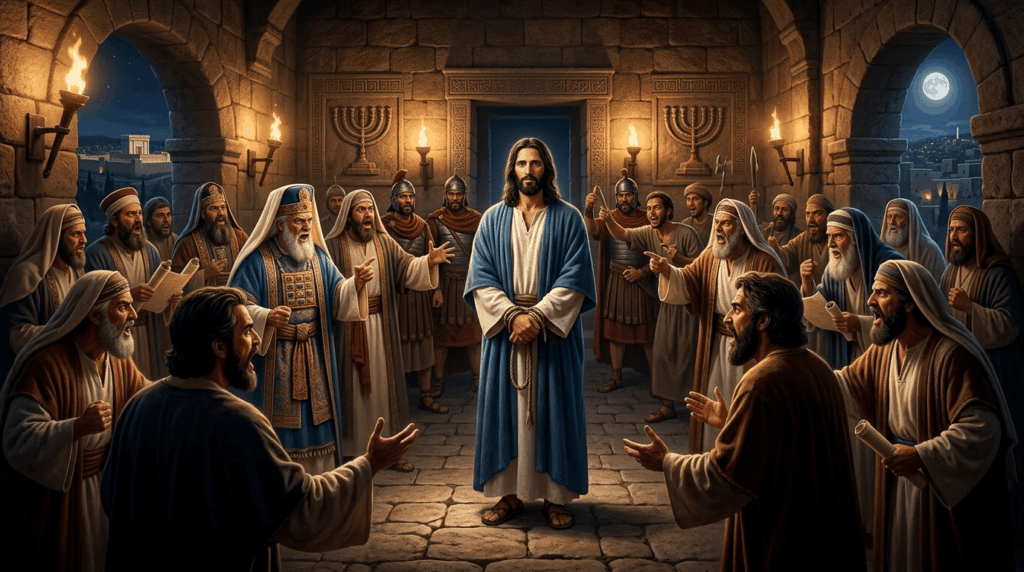
Kello puoli kuusi oikeusistuin kokoontui uuteen istuntoon, ja Jeesus ohjattiin viereiseen huoneeseen, jossa Johannes oli odottamassa. Siellä roomalainen sotilas ja temppelinvartijat vahtivat Jeesusta sillä aikaa, kun oikeus ryhtyi muotoilemaan syytteitä, jotka esiteltäisiin Pilatukselle. Hannas teki tovereilleen selväksi, ettei jumalanpilkkasyytöksellä olisi Pilatuksen kohdalla mitään painoa. Juudas oli paikalla sen aikaa, kun tämä oikeusistuimen toinen kokous oli koolla, mutta hän ei esittänyt mitään todistajanlausuntoa.
Tämä oikeuden istunto kesti vain puoli tuntia, ja kun he päättivät kokouksen mennäkseen Pilatuksen eteen, he olivat laatineet Jeesusta vastaan sellaisen syytekirjelmän, että tämä sen mukaan ansaitsi kuolemantuomion. Kirjelmässä esitettiin kolme syytettä:
1. Että hän oli juutalaiskansakunnan turmelija; hän petkutti kansaa ja yllytti sitä kapinaan.
2. Että hän opetti ihmisiä kieltäytymään maksamasta henkiveroa keisarille.
3. Että hän väittäessään olevansa kuningas ja uudenlaisen valtakunnan perustaja yllytti maanpetokseen keisaria vastaan.
Koko tämä oikeudenkäynti oli sääntöjenvastainen ja täysin vastoin juutalaisia lakeja. Ei ollut kahta todistajaa, jotka olisivat olleet samaa mieltä jostakin asiasta, ellei lukuun oteta niitä, joiden esittämä lausunto koski Jeesuksen toteamusta temppelin hävittämisestä ja sen uudelleenpystyttämisestä kolmen päivän kuluessa. Ja mitä tähän asiaan tuli, edes sen osalta ei yksikään todistaja puhunut syytetyn puolustukseksi, eikä myöskään Jeesusta pyydetty selittämään, mitä hän toteamuksellaan tahtoi sanoa.
Ainoa asia, jonka perusteella oikeus olisi johdonmukaisuutta noudattaen voinut hänet tuomita, oli syyte jumalanpilkasta, ja sekin olisi ollut täysin hänen oman todistuksensa varassa. Myös jumalanpilkkasyytöksen osalta he jättivät kuolemanrangaistuksen edellyttämän muodollisen äänestyksen suorittamatta.
Ja nyt he julkesivat laatia kolme syytettä, joiden kanssa he menisivät Pilatuksen eteen ilman, että niiden osalta oli kuultu yhtäkään todistajaa. Niistä oli lisäksi sovittu sellaiseen aikaan, jolloin syytösten kohteena oleva vangittu ei ollut ollut paikalla. Kun tämä oli tehty, kolme fariseusta jätti hyvästinsä; he halusivat kyllä, että Jeesus surmataan, mutta he eivät suostuneet laatimaan häntä vastaan syytöksiä ilman todistajia eikä sellaisessa tilanteessa, jolloin hän itse ei ollut läsnä.
Jeesus ei enää esiintynyt sanhedristioikeuden edessä. He eivät halunneet taas katsella hänen kasvojaan lausuessaan tuomiotaan hänen syyttömästä elämästään. Jeesus ei (ihmisenä) ollut tietoinen heidän muodollisista syytteistään, ennen kuin kuuli Pilatuksen lukevan ne ääneen.
Jeesuksen ollessa Johanneksen ja vartijoiden kanssa huoneessa ja oikeuden pitäessä toista istuntoaan muutamat ylipapin palatsin palveluskuntaan kuuluvat naiset tulivat ystävineen katsomaan outoa vangittua, ja yksi heistä kysyi häneltä: ”Oletko sinä Messias, Jumalan Poika?” Ja Jeesus vastasi: ”Jos minä sinulle kerron, sinä et minua usko; ja jos minä sinulta kysyn, sinä et vastaa.”
Tuona aamuna kello kuusi Jeesus ohjattiin Kaiafaan talosta Pilatuksen eteen, jotta vahvistettaisiin se kuolemantuomio, josta tämä sanhedristioikeus oli näin epäoikeudenmukaisesti ja sääntöjenvastaisesti päättänyt.
At five-thirty o’clock the court reassembled, and Jesus was led into the adjoining room, where John was waiting. Here the Roman soldier and the temple guards watched over Jesus while the court began the formulation of the charges which were to be presented to Pilate. Annas made it clear to his associates that the charge of blasphemy would carry no weight with Pilate. Judas was present during this second meeting of the court, but he gave no testimony.
This session of the court lasted only a half hour, and when they adjourned to go before Pilate, they had drawn up the indictment of Jesus, as being worthy of death, under three heads:
1. That he was a perverter of the Jewish nation; he deceived the people and incited them to rebellion.
2. That he taught the people to refuse to pay tribute to Caesar.
3. That, by claiming to be a king and the founder of a new sort of kingdom, he incited treason against the emperor.
This entire procedure was irregular and wholly contrary to the Jewish laws. No two witnesses had agreed on any matter except those who testified regarding Jesus’ statement about destroying the temple and raising it again in three days. And even concerning that point, no witnesses spoke for the defense, and neither was Jesus asked to explain his intended meaning.
The only point the court could have consistently judged him on was that of blasphemy, and that would have rested entirely on his own testimony. Even concerning blasphemy, they failed to cast a formal ballot for the death sentence.
And now they presumed to formulate three charges, with which to go before Pilate, on which no witnesses had been heard, and which were agreed upon while the accused prisoner was absent. When this was done, three of the Pharisees took their leave; they wanted to see Jesus destroyed, but they would not formulate charges against him without witnesses and in his absence.
Jesus did not again appear before the Sanhedrist court. They did not want again to look upon his face as they sat in judgment upon his innocent life. Jesus did not know (as a man) of their formal charges until he heard them recited by Pilate.
While Jesus was in the room with John and the guards, and while the court was in its second session, some of the women about the high priest’s palace, together with their friends, came to look upon the strange prisoner, and one of them asked him, “Are you the Messiah, the Son of God?” And Jesus answered: “If I tell you, you will not believe me; and if I ask you, you will not answer.”
At six o’clock that morning Jesus was led forth from the home of Caiaphas to appear before Pilate for confirmation of the sentence of death which this Sanhedrist court had so unjustly and irregularly decreed.
SuomiEnglish
Kello puoli kuusi oikeusistuin kokoontui uuteen istuntoon, ja Jeesus ohjattiin viereiseen huoneeseen, jossa Johannes oli odottamassa. Siellä roomalainen sotilas ja temppelinvartijat vahtivat Jeesusta sillä aikaa, kun oikeus ryhtyi muotoilemaan syytteitä, jotka esiteltäisiin Pilatukselle. Hannas teki tovereilleen selväksi, ettei jumalanpilkkasyytöksellä olisi Pilatuksen kohdalla mitään painoa. Juudas oli paikalla sen aikaa, kun tämä oikeusistuimen toinen kokous oli koolla, mutta hän ei esittänyt mitään todistajanlausuntoa.
At five-thirty o’clock the court reassembled, and Jesus was led into the adjoining room, where John was waiting. Here the Roman soldier and the temple guards watched over Jesus while the court began the formulation of the charges which were to be presented to Pilate. Annas made it clear to his associates that the charge of blasphemy would carry no weight with Pilate. Judas was present during this second meeting of the court, but he gave no testimony.
Tämä oikeuden istunto kesti vain puoli tuntia, ja kun he päättivät kokouksen mennäkseen Pilatuksen eteen, he olivat laatineet Jeesusta vastaan sellaisen syytekirjelmän, että tämä sen mukaan ansaitsi kuolemantuomion. Kirjelmässä esitettiin kolme syytettä:
This session of the court lasted only a half hour, and when they adjourned to go before Pilate, they had drawn up the indictment of Jesus, as being worthy of death, under three heads:
1. Että hän oli juutalaiskansakunnan turmelija; hän petkutti kansaa ja yllytti sitä kapinaan.
1. That he was a perverter of the Jewish nation; he deceived the people and incited them to rebellion.
2. Että hän opetti ihmisiä kieltäytymään maksamasta henkiveroa keisarille.
2. That he taught the people to refuse to pay tribute to Caesar.
3. Että hän väittäessään olevansa kuningas ja uudenlaisen valtakunnan perustaja yllytti maanpetokseen keisaria vastaan.
3. That, by claiming to be a king and the founder of a new sort of kingdom, he incited treason against the emperor.
Koko tämä oikeudenkäynti oli sääntöjenvastainen ja täysin vastoin juutalaisia lakeja. Ei ollut kahta todistajaa, jotka olisivat olleet samaa mieltä jostakin asiasta, ellei lukuun oteta niitä, joiden esittämä lausunto koski Jeesuksen toteamusta temppelin hävittämisestä ja sen uudelleenpystyttämisestä kolmen päivän kuluessa. Ja mitä tähän asiaan tuli, edes sen osalta ei yksikään todistaja puhunut syytetyn puolustukseksi, eikä myöskään Jeesusta pyydetty selittämään, mitä hän toteamuksellaan tahtoi sanoa.
This entire procedure was irregular and wholly contrary to the Jewish laws. No two witnesses had agreed on any matter except those who testified regarding Jesus’ statement about destroying the temple and raising it again in three days. And even concerning that point, no witnesses spoke for the defense, and neither was Jesus asked to explain his intended meaning.
Ainoa asia, jonka perusteella oikeus olisi johdonmukaisuutta noudattaen voinut hänet tuomita, oli syyte jumalanpilkasta, ja sekin olisi ollut täysin hänen oman todistuksensa varassa. Myös jumalanpilkkasyytöksen osalta he jättivät kuolemanrangaistuksen edellyttämän muodollisen äänestyksen suorittamatta.
The only point the court could have consistently judged him on was that of blasphemy, and that would have rested entirely on his own testimony. Even concerning blasphemy, they failed to cast a formal ballot for the death sentence.
Ja nyt he julkesivat laatia kolme syytettä, joiden kanssa he menisivät Pilatuksen eteen ilman, että niiden osalta oli kuultu yhtäkään todistajaa. Niistä oli lisäksi sovittu sellaiseen aikaan, jolloin syytösten kohteena oleva vangittu ei ollut ollut paikalla. Kun tämä oli tehty, kolme fariseusta jätti hyvästinsä; he halusivat kyllä, että Jeesus surmataan, mutta he eivät suostuneet laatimaan häntä vastaan syytöksiä ilman todistajia eikä sellaisessa tilanteessa, jolloin hän itse ei ollut läsnä.
And now they presumed to formulate three charges, with which to go before Pilate, on which no witnesses had been heard, and which were agreed upon while the accused prisoner was absent. When this was done, three of the Pharisees took their leave; they wanted to see Jesus destroyed, but they would not formulate charges against him without witnesses and in his absence.
Jeesus ei enää esiintynyt sanhedristioikeuden edessä. He eivät halunneet taas katsella hänen kasvojaan lausuessaan tuomiotaan hänen syyttömästä elämästään. Jeesus ei (ihmisenä) ollut tietoinen heidän muodollisista syytteistään, ennen kuin kuuli Pilatuksen lukevan ne ääneen.
Jesus did not again appear before the Sanhedrist court. They did not want again to look upon his face as they sat in judgment upon his innocent life. Jesus did not know (as a man) of their formal charges until he heard them recited by Pilate.
Jeesuksen ollessa Johanneksen ja vartijoiden kanssa huoneessa ja oikeuden pitäessä toista istuntoaan muutamat ylipapin palatsin palveluskuntaan kuuluvat naiset tulivat ystävineen katsomaan outoa vangittua, ja yksi heistä kysyi häneltä: ”Oletko sinä Messias, Jumalan Poika?” Ja Jeesus vastasi: ”Jos minä sinulle kerron, sinä et minua usko; ja jos minä sinulta kysyn, sinä et vastaa.”
While Jesus was in the room with John and the guards, and while the court was in its second session, some of the women about the high priest’s palace, together with their friends, came to look upon the strange prisoner, and one of them asked him, “Are you the Messiah, the Son of God?” And Jesus answered: “If I tell you, you will not believe me; and if I ask you, you will not answer.”
Tuona aamuna kello kuusi Jeesus ohjattiin Kaiafaan talosta Pilatuksen eteen, jotta vahvistettaisiin se kuolemantuomio, josta tämä sanhedristioikeus oli näin epäoikeudenmukaisesti ja sääntöjenvastaisesti päättänyt.
At six o’clock that morning Jesus was led forth from the home of Caiaphas to appear before Pilate for confirmation of the sentence of death which this Sanhedrist court had so unjustly and irregularly decreed.