
Teksti
Tausta
Näytä
Lisäasetukset
Kieli
Urantia Opas
Kysy kirjan sisällöstä. Opas vastaa Book Enginen omien lähdekohtien perusteella ja ohjaa sinut lukemaan ne.
Hei! 🙏
Olen sinun Urantia-oppaasi. Tehtäväni on auttaa sinua löytämään oikeat kohdat Urantia-kirjasta ja ymmärtämään sen opetuksia syvemmin. 😊❤️
Maaliskuussa vuonna 8 eKr. (samassa kuussa, jolloin Joosef ja Maria menivät naimisiin) keisari Augustus määräsi, että kaikki Rooman valtakunnan asukkaat oli laskettava, eli että oli suoritettava väestönlaskenta, jota voitaisiin käyttää tehokkaamman verotuksen toimeenpanon perustana. Juutalaiset olivat suhtautuneet aina hyvin ennakkoluuloisesti kaikkiin yrityksiin ”ihmisten lukemiseksi”, ja tämä seikka yhdessä sen seikan kanssa, että Juudean kuninkaalla Herodeksella oli vakavia vaikeuksia omassa maassaan, oli johtanut tämän väestönlaskennan toimeenpanon lykkäämiseen yhdellä vuodella juutalaisten kuningaskunnassa. Koko Rooman valtakunnassa tämä väestönlaskenta toimitettiin vuonna 8 eKr., paitsi Herodeksen Palestiinan kuningaskunnassa, jossa se suoritettiin vuonna 7 eKr. eli vuotta myöhemmin.
Marian ei olisi ollut välttämätöntä lähteä Betlehemiin kirjoihin merkittäväksi, sillä Joosefilla oli oikeus suorittaa rekisteröityminen perheensä puolesta, mutta seikkailunhaluisena ja tarmokkaana henkilönä Maria vaatimalla vaati päästä hänen mukaansa. Häntä pelotti jäädä yksin, saattoihan nimittäin käydä, että lapsi syntyisi, sillä aikaa kun Joosef olisi poissa. Ja Betlehem ei sitä paitsi ollut kaukana Juudan kaupungista, ja Maria piti mahdollisena, että hän pääsisi tekemään mieluisan vierailun sukulaisensa Elisabetin luokse.
Joosef itse asiassa kielsi Mariaa tulemasta mukaansa, mutta kiellosta ei ollut mitään hyötyä. Kun pakattiin evästä kolmen tai neljän päivän matkaa varten, Maria laittoi kaksinkertaiset annokset ja valmistautui matkaa varten. Mutta ennen kuin he varsinaisesti astuivat taipaleelle, Joosef oli myöntynyt Marian mukaantuloon, ja päivänkoitteessa he lähtivät Nasaretista ilo sydämessään.
Joosef ja Maria olivat köyhiä, ja koska heillä oli vain yksi kuormajuhta, niin Maria, jonka raskaudentila oli jo pitkällä, istui matkatarpeiden kanssa eläimen selässä Joosefin kulkiessa jalan juhtaa taluttaen. Kodin rakentaminen ja varustaminen olivat olleet Joosefille suuri rasitus, sillä hänen oli annettava osuutensa myös vanhempiensa elatukseen. Hänen isästään oli nimittäin vähän aikaisemmin tullut työkyvytön. Ja näin tämä juutalaispariskunta lähti vaatimattomasta kodistaan vuoden 7 eKr. elokuun 18. päivän varhaisena aamuhetkenä taivaltamaan kohti Betlehemiä.
Heidän ensimmäinen matkapäivänsä vei heidät Gilboavuoren eduskukkuloiden taakse, ja siellä he leiriytyivät yöksi Jordanvirran rannalle ja ryhtyivät arvailemaan, minkähänlainen poika heille syntyisi. Joosef piti kiinni käsityksestä, että tämä olisi hengellinen opettaja, Marian puolestaan takertuessa näkemykseen, että tämä olisi juutalainen Messias, heprealaiskansakunnan vapahtaja.
Ani varhain elokuun 19. päivän aamuna Joosef ja Maria olivat jälleen matkalla. He nauttivat puolisensa Jordaninlaakson ylle kohoavan Sartabavuoren juurella, jatkoivat sitten matkaansa ja saapuivat Jerikoon yöksi. Siellä he jäivät kaupungin liepeillä maantien poskessa sijaitsevaan majataloon. Ilta-aterian jälkeen nasaretilaismatkamiehet vetäytyivät yön lepoon vasta käytyään pitkät keskustelut Rooman vallan harjoittamasta sorrosta, Herodeksesta, väestön kirjoihinviemisestä ja siitä, missä määrin toisaalta Aleksandrialla ja toisaalta Jerusalemilla oli vaikutusta juutalaisen oppineisuuden ja kulttuurin keskuksina. Elokuun 20. päivän aamunkoitteessa he jatkoivat matkaansa ja saapuivat ennen puoltapäivää Jerusalemiin. Siellä he kävivät temppelissä ja jatkamalla kulkuaan päämääräänsä kohti he saapuivat Betlehemiin parhaaseen aikaan iltapäivällä.
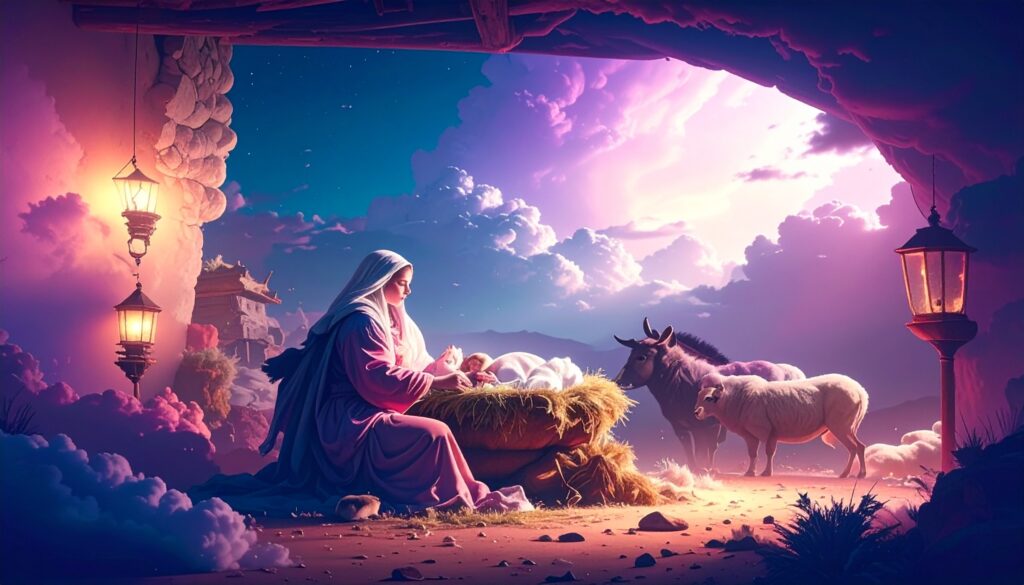
Majatalo oli täpötäynnä, ja niinpä Joosef koetti saada majapaikkaa etäisten sukulaisten luota, mutta jokainen huone Betlehemissä oli täpötäynnä. Palatessaan majatalon pihalle hän sai kuulla, että kallion kupeeseen louhitut ja heti majatalon alapuolella sijaitsevat karavaanitallit oli tyhjennetty eläimistä ja siivottu majoituksen tarpeessa olevia varten. Joosef jätti aasin pihamaalle ja nosti harteilleen heidän vaate- ja evässäkkinsä ja laskeutui yhdessä Marian kanssa kiviportaat alas heidän majapaikkaansa. He havaitsivat asettuneensa tilaan, joka oli ollut viljan varastointihuoneena pilttuiden ja seimien edessä. Sinne oli ripustettu telttaverhoja, ja he pitivät itseään onnekkaina saatuaan näinkin mukavan majapaikan.
Joosef oli ajatellut mennä suoralta kädeltä merkityttämään heidät kirjoihin, mutta Maria oli uupunut. Hän oli melkoisen levoton ja pyysi Joosefia jäämään hänen vierelleen, minkä tämä tekikin.
In the month of March, 8 b.c. (the month Joseph and Mary were married), Caesar Augustus decreed that all inhabitants of the Roman Empire should be numbered, that a census should be made which could be used for effecting better taxation. The Jews had always been greatly prejudiced against any attempt to “number the people,” and this, in connection with the serious domestic difficulties of Herod, King of Judea, had conspired to cause the postponement of the taking of this census in the Jewish kingdom for one year. Throughout all the Roman Empire this census was registered in the year 8 b.c., except in the Palestinian kingdom of Herod, where it was taken in 7 b.c., one year later.
It was not necessary that Mary should go to Bethlehem for enrollment—Joseph was authorized to register for his family—but Mary, being an adventurous and aggressive person, insisted on accompanying him. She feared being left alone lest the child be born while Joseph was away, and again, Bethlehem being not far from the City of Judah, Mary foresaw a possible pleasurable visit with her kinswoman Elizabeth.
Joseph virtually forbade Mary to accompany him, but it was of no avail; when the food was packed for the trip of three or four days, she prepared double rations and made ready for the journey. But before they actually set forth, Joseph was reconciled to Mary’s going along, and they cheerfully departed from Nazareth at the break of day.
Joseph and Mary were poor, and since they had only one beast of burden, Mary, being large with child, rode on the animal with the provisions while Joseph walked, leading the beast. The building and furnishing of a home had been a great drain on Joseph since he had also to contribute to the support of his parents, as his father had been recently disabled. And so this Jewish couple went forth from their humble home early on the morning of August 18, 7 b.c., on their journey to Bethlehem.
Their first day of travel carried them around the foothills of Mount Gilboa, where they camped for the night by the river Jordan and engaged in many speculations as to what sort of a son would be born to them, Joseph adhering to the concept of a spiritual teacher and Mary holding to the idea of a Jewish Messiah, a deliverer of the Hebrew nation.
Bright and early the morning of August 19, Joseph and Mary were again on their way. They partook of their noontide meal at the foot of Mount Sartaba, overlooking the Jordan valley, and journeyed on, making Jericho for the night, where they stopped at an inn on the highway in the outskirts of the city. Following the evening meal and after much discussion concerning the oppressiveness of Roman rule, Herod, the census enrollment, and the comparative influence of Jerusalem and Alexandria as centers of Jewish learning and culture, the Nazareth travelers retired for the night’s rest. Early in the morning of August 20 they resumed their journey, reaching Jerusalem before noon, visiting the temple, and going on to their destination, arriving at Bethlehem in midafternoon.
The inn was overcrowded, and Joseph accordingly sought lodgings with distant relatives, but every room in Bethlehem was filled to overflowing. On returning to the courtyard of the inn, he was informed that the caravan stables, hewn out of the side of the rock and situated just below the inn, had been cleared of animals and cleaned up for the reception of lodgers. Leaving the donkey in the courtyard, Joseph shouldered their bags of clothing and provisions and with Mary descended the stone steps to their lodgings below. They found themselves located in what had been a grain storage room to the front of the stalls and mangers. Tent curtains had been hung, and they counted themselves fortunate to have such comfortable quarters.
Joseph had thought to go out at once and enroll, but Mary was weary; she was considerably distressed and besought him to remain by her side, which he did.
SuomiEnglish
Maaliskuussa vuonna 8 eKr. (samassa kuussa, jolloin Joosef ja Maria menivät naimisiin) keisari Augustus määräsi, että kaikki Rooman valtakunnan asukkaat oli laskettava, eli että oli suoritettava väestönlaskenta, jota voitaisiin käyttää tehokkaamman verotuksen toimeenpanon perustana. Juutalaiset olivat suhtautuneet aina hyvin ennakkoluuloisesti kaikkiin yrityksiin ”ihmisten lukemiseksi”, ja tämä seikka yhdessä sen seikan kanssa, että Juudean kuninkaalla Herodeksella oli vakavia vaikeuksia omassa maassaan, oli johtanut tämän väestönlaskennan toimeenpanon lykkäämiseen yhdellä vuodella juutalaisten kuningaskunnassa. Koko Rooman valtakunnassa tämä väestönlaskenta toimitettiin vuonna 8 eKr., paitsi Herodeksen Palestiinan kuningaskunnassa, jossa se suoritettiin vuonna 7 eKr. eli vuotta myöhemmin.
In the month of March, 8 b.c. (the month Joseph and Mary were married), Caesar Augustus decreed that all inhabitants of the Roman Empire should be numbered, that a census should be made which could be used for effecting better taxation. The Jews had always been greatly prejudiced against any attempt to “number the people,” and this, in connection with the serious domestic difficulties of Herod, King of Judea, had conspired to cause the postponement of the taking of this census in the Jewish kingdom for one year. Throughout all the Roman Empire this census was registered in the year 8 b.c., except in the Palestinian kingdom of Herod, where it was taken in 7 b.c., one year later.
Marian ei olisi ollut välttämätöntä lähteä Betlehemiin kirjoihin merkittäväksi, sillä Joosefilla oli oikeus suorittaa rekisteröityminen perheensä puolesta, mutta seikkailunhaluisena ja tarmokkaana henkilönä Maria vaatimalla vaati päästä hänen mukaansa. Häntä pelotti jäädä yksin, saattoihan nimittäin käydä, että lapsi syntyisi, sillä aikaa kun Joosef olisi poissa. Ja Betlehem ei sitä paitsi ollut kaukana Juudan kaupungista, ja Maria piti mahdollisena, että hän pääsisi tekemään mieluisan vierailun sukulaisensa Elisabetin luokse.
It was not necessary that Mary should go to Bethlehem for enrollment—Joseph was authorized to register for his family—but Mary, being an adventurous and aggressive person, insisted on accompanying him. She feared being left alone lest the child be born while Joseph was away, and again, Bethlehem being not far from the City of Judah, Mary foresaw a possible pleasurable visit with her kinswoman Elizabeth.
Joosef itse asiassa kielsi Mariaa tulemasta mukaansa, mutta kiellosta ei ollut mitään hyötyä. Kun pakattiin evästä kolmen tai neljän päivän matkaa varten, Maria laittoi kaksinkertaiset annokset ja valmistautui matkaa varten. Mutta ennen kuin he varsinaisesti astuivat taipaleelle, Joosef oli myöntynyt Marian mukaantuloon, ja päivänkoitteessa he lähtivät Nasaretista ilo sydämessään.
Joseph virtually forbade Mary to accompany him, but it was of no avail; when the food was packed for the trip of three or four days, she prepared double rations and made ready for the journey. But before they actually set forth, Joseph was reconciled to Mary’s going along, and they cheerfully departed from Nazareth at the break of day.
Joosef ja Maria olivat köyhiä, ja koska heillä oli vain yksi kuormajuhta, niin Maria, jonka raskaudentila oli jo pitkällä, istui matkatarpeiden kanssa eläimen selässä Joosefin kulkiessa jalan juhtaa taluttaen. Kodin rakentaminen ja varustaminen olivat olleet Joosefille suuri rasitus, sillä hänen oli annettava osuutensa myös vanhempiensa elatukseen. Hänen isästään oli nimittäin vähän aikaisemmin tullut työkyvytön. Ja näin tämä juutalaispariskunta lähti vaatimattomasta kodistaan vuoden 7 eKr. elokuun 18. päivän varhaisena aamuhetkenä taivaltamaan kohti Betlehemiä.
Joseph and Mary were poor, and since they had only one beast of burden, Mary, being large with child, rode on the animal with the provisions while Joseph walked, leading the beast. The building and furnishing of a home had been a great drain on Joseph since he had also to contribute to the support of his parents, as his father had been recently disabled. And so this Jewish couple went forth from their humble home early on the morning of August 18, 7 b.c., on their journey to Bethlehem.
Heidän ensimmäinen matkapäivänsä vei heidät Gilboavuoren eduskukkuloiden taakse, ja siellä he leiriytyivät yöksi Jordanvirran rannalle ja ryhtyivät arvailemaan, minkähänlainen poika heille syntyisi. Joosef piti kiinni käsityksestä, että tämä olisi hengellinen opettaja, Marian puolestaan takertuessa näkemykseen, että tämä olisi juutalainen Messias, heprealaiskansakunnan vapahtaja.
Their first day of travel carried them around the foothills of Mount Gilboa, where they camped for the night by the river Jordan and engaged in many speculations as to what sort of a son would be born to them, Joseph adhering to the concept of a spiritual teacher and Mary holding to the idea of a Jewish Messiah, a deliverer of the Hebrew nation.
Ani varhain elokuun 19. päivän aamuna Joosef ja Maria olivat jälleen matkalla. He nauttivat puolisensa Jordaninlaakson ylle kohoavan Sartabavuoren juurella, jatkoivat sitten matkaansa ja saapuivat Jerikoon yöksi. Siellä he jäivät kaupungin liepeillä maantien poskessa sijaitsevaan majataloon. Ilta-aterian jälkeen nasaretilaismatkamiehet vetäytyivät yön lepoon vasta käytyään pitkät keskustelut Rooman vallan harjoittamasta sorrosta, Herodeksesta, väestön kirjoihinviemisestä ja siitä, missä määrin toisaalta Aleksandrialla ja toisaalta Jerusalemilla oli vaikutusta juutalaisen oppineisuuden ja kulttuurin keskuksina. Elokuun 20. päivän aamunkoitteessa he jatkoivat matkaansa ja saapuivat ennen puoltapäivää Jerusalemiin. Siellä he kävivät temppelissä ja jatkamalla kulkuaan päämääräänsä kohti he saapuivat Betlehemiin parhaaseen aikaan iltapäivällä.
Bright and early the morning of August 19, Joseph and Mary were again on their way. They partook of their noontide meal at the foot of Mount Sartaba, overlooking the Jordan valley, and journeyed on, making Jericho for the night, where they stopped at an inn on the highway in the outskirts of the city. Following the evening meal and after much discussion concerning the oppressiveness of Roman rule, Herod, the census enrollment, and the comparative influence of Jerusalem and Alexandria as centers of Jewish learning and culture, the Nazareth travelers retired for the night’s rest. Early in the morning of August 20 they resumed their journey, reaching Jerusalem before noon, visiting the temple, and going on to their destination, arriving at Bethlehem in midafternoon.
Majatalo oli täpötäynnä, ja niinpä Joosef koetti saada majapaikkaa etäisten sukulaisten luota, mutta jokainen huone Betlehemissä oli täpötäynnä. Palatessaan majatalon pihalle hän sai kuulla, että kallion kupeeseen louhitut ja heti majatalon alapuolella sijaitsevat karavaanitallit oli tyhjennetty eläimistä ja siivottu majoituksen tarpeessa olevia varten. Joosef jätti aasin pihamaalle ja nosti harteilleen heidän vaate- ja evässäkkinsä ja laskeutui yhdessä Marian kanssa kiviportaat alas heidän majapaikkaansa. He havaitsivat asettuneensa tilaan, joka oli ollut viljan varastointihuoneena pilttuiden ja seimien edessä. Sinne oli ripustettu telttaverhoja, ja he pitivät itseään onnekkaina saatuaan näinkin mukavan majapaikan.
The inn was overcrowded, and Joseph accordingly sought lodgings with distant relatives, but every room in Bethlehem was filled to overflowing. On returning to the courtyard of the inn, he was informed that the caravan stables, hewn out of the side of the rock and situated just below the inn, had been cleared of animals and cleaned up for the reception of lodgers. Leaving the donkey in the courtyard, Joseph shouldered their bags of clothing and provisions and with Mary descended the stone steps to their lodgings below. They found themselves located in what had been a grain storage room to the front of the stalls and mangers. Tent curtains had been hung, and they counted themselves fortunate to have such comfortable quarters.
Joosef oli ajatellut mennä suoralta kädeltä merkityttämään heidät kirjoihin, mutta Maria oli uupunut. Hän oli melkoisen levoton ja pyysi Joosefia jäämään hänen vierelleen, minkä tämä tekikin.
Joseph had thought to go out at once and enroll, but Mary was weary; she was considerably distressed and besought him to remain by her side, which he did.