
Teksti
Tausta
Näytä
Lisäasetukset
Kieli
Urantia Opas
Kysy kirjan sisällöstä. Opas vastaa Book Enginen omien lähdekohtien perusteella ja ohjaa sinut lukemaan ne.
Hei! 🙏
Olen sinun Urantia-oppaasi. Tehtäväni on auttaa sinua löytämään oikeat kohdat Urantia-kirjasta ja ymmärtämään sen opetuksia syvemmin. 😊❤️
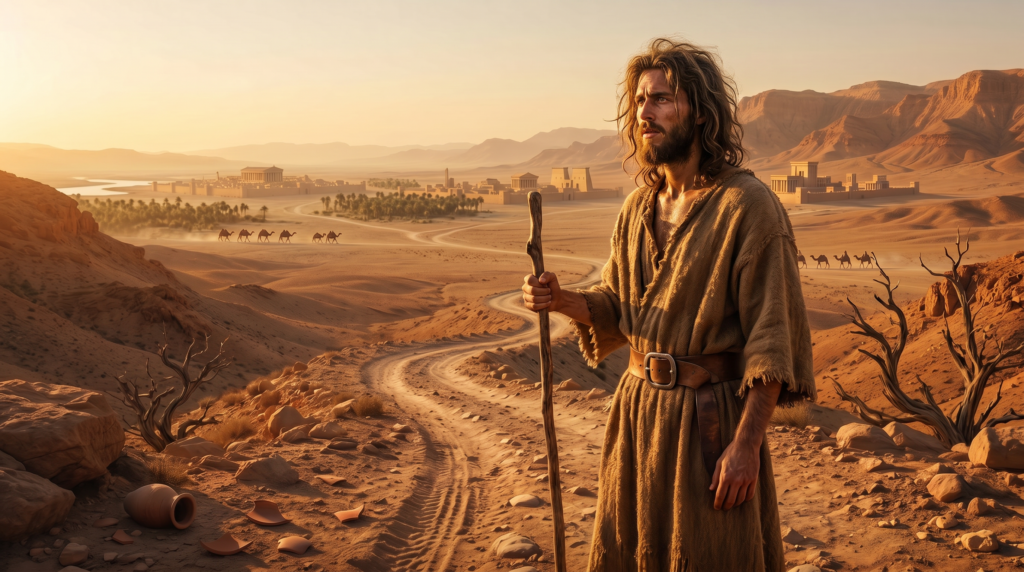
Tämän purolaakson eri puolille Johannes rakensi peräti kaksitoista päällekkäin asetetuista kivistä kokoonpantua eläinsuojaa ja yöpymisaitausta. Näissä hän saattoi vartioida ja suojella lammas- ja vuohikatraitaan. Se, että Johannes vietti elämäänsä lammaspaimenena, soi hänelle runsaasti aikaa ajattelemiseen. Hän keskusteli paljon erään bet-suurilaisen orpopojan, Ezdan, kanssa, jonka hän oli tavallaan adoptoinut ja joka piti huolta katraista, kun hän kävi Hebronissa tapaamassa äitiään ja myymässä lampaitaan samoin kuin hänen käydessään Eengedissä sapattipalveluksissa. Johannes ja tämä nuorimies elivät varsin yksinkertaisesti. He ravitsivat itsensä lampaanlihalla, vuohenmaidolla, metsähunajalla ja noilla seuduin tavattavilla ravinnoksi kelpaavilla heinäsirkoilla. Tähän heidän tavanomaiseen ruokavalioonsa toivat oman lisänsä Hebronista ja Eengedistä aika ajoin tuodut elintarpeet.
Elisabet huolehti, että Johannes pysyi Palestiinan ja maailman tapahtumien tasalla, ja yhä syvemmäksi kävi Johanneksen vakuuttuneisuus siitä, että se aika oli nopeasti lähestymässä, jolloin vanha järjestys tulisi tiensä päähän; että hänestä olisi tuleva uuden aikakauden, ”taivaan valtakunnan”, lähestymisestä kertova airut. Tämä karu lammaspaimen tunsi erityistä mielenkiintoa profeetta Danielin kirjoituksiin. Hän luki tuhanteen kertaan Danielin kuvauksen suuresta kuvapatsaasta, josta Sakarias oli hänelle kertonut, että se esitti maailman suurten valtakuntien historiaa: ensin Babylonian, sitten Persian, Kreikan ja lopulta Rooman historiaa. Johannes tajusi Rooman jo tuolloin koostuvan niin monista eri kieliä puhuvista kansoista ja roduista, ettei siitä koskaan voisi tulla lujaa ja kiinteää valtakuntaa. Hän uskoi Rooman jo tuolloin jakautuvan Syyriaksi, Egyptiksi, Palestiinaksi ja muiksi provinsseiksi, ja sitten hän vielä luki: ”Näiden kuningasten päivinä on taivaan Jumala pystyttävä valtakunnan, joka on kukistumaton iankaikkisesti. Eikä tätä valtakuntaa toiselle kansalle anneta, vaan se on musertava kaikki ne muut valtakunnat ja tekevä niistä lopun, ja se itse on pysyvä iankaikkisesti.” ”Ja hänelle annettiin valta ja kunnia ja valtakunta, jotta kaikki kansat, kansakunnat ja kielet palvelisivat häntä. Hänen valtansa on iankaikkinen valta, joka ei häviä, ja hänen valtakuntaansa ei koskaan hävitetä.” ”Ja valtakunta ja valta ja valtakunnan suuruus kaiken taivaan alla annetaan Kaikkein Korkeimman pyhien kansalle, ja hänen valtakuntansa on iankaikkinen valtakunta, ja kaikki vallat palvelevat häntä ja ovat hänelle alamaiset.”
Johannes ei koskaan päässyt selville vesille hämmennyksen tilastaan, jonka aiheuttivat toisaalta se, mitä hän oli vanhemmiltaan kuullut Jeesuksesta, ja toisaalta hänen kirjoituksista lukemansa äsken mainitut tekstikohdat. Danielin kirjasta hän luki: ”Minä näin yöllisissä näyissä, ja katso, taivaan pilvissä tuli Ihmisen Pojan kaltainen, ja hänelle annettiin valta, kunnia ja valtakunta.” Mutta nämä profeetan sanat eivät olleet sopusoinnussa sen kanssa, mitä hänen vanhempansa olivat hänelle opettaneet. Keskustelu, jonka hän oli käynyt Jeesuksen kanssa tämän luona kahdeksantoistavuotiaana käydessään, ei sekään käynyt yksiin näiden pyhissä kirjoituksissa esitettyjen toteamusten kanssa. Tästä hämmennyksestä huolimatta hänen äitinsä vakuutti hänelle aina epätietoisuuden hetkellä, että hänen kaukainen serkkunsa Jeesus Nasaretilainen oli oikea Messias, että hän oli saapunut istuakseen Daavidin valtaistuimella ja että hänestä (Johanneksesta) oli määrä tulla hänen edellä käyvä airuensa ja tärkein tukijansa.
Kaikki mitä Johannes kuuli Rooman paheellisuudesta ja turmeluksesta ja valtakunnassa esiintyvästä irstaudesta ja moraalisesta mahoudesta, kaikki mitä hän tiesi Herodes Antipaan ja Juudean maaherrojen pahoista teoista, saivat hänet uskomaan, että aikakauden loppu oli tulossa. Tästä karusta ja jalosta luonnonlapsesta tuntui, että maailma oli kypsä ihmisen aikakauden päättymiseen ja uuden ja jumalallisen aikakauden, taivaan valtakunnan, sarastukseen. Johanneksen sydämessä kasvoi sellainen tunne, että hän oli viimeinen vanhoista ja ensimmäinen uusista profeetoista. Ja häntä suorastaan värisytti vahvistumistaan vahvistunut tarve lähteä julistamaan kaikille ihmisille: ”Katukaa! Selvittäkää välinne Jumalan kanssa! Laittautukaa valmiiksi loppua varten; valmistautukaa maailman asioiden uuden ja ikuisen järjestyksen, taivaan valtakunnan, tulemiseen.”
Along the valley of this little brook John built no less than a dozen stone shelters and night corrals, consisting of piled-up stones, wherein he could watch over and safeguard his herds of sheep and goats. John’s life as a shepherd afforded him a great deal of time for thought. He talked much with Ezda, an orphan lad of Beth-zur, whom he had in a way adopted, and who cared for the herds when he made trips to Hebron to see his mother and to sell sheep, as well as when he went down to Engedi for Sabbath services. John and the lad lived very simply, subsisting on mutton, goat’s milk, wild honey, and the edible locusts of that region. This, their regular diet, was supplemented by provisions brought from Hebron and Engedi from time to time.
Elizabeth kept John posted about Palestinian and world affairs, and his conviction grew deeper and deeper that the time was fast approaching when the old order was to end; that he was to become the herald of the approach of a new age, “the kingdom of heaven.” This rugged shepherd was very partial to the writings of the Prophet Daniel. He read a thousand times Daniel’s description of the great image, which Zacharias had told him represented the history of the great kingdoms of the world, beginning with Babylon, then Persia, Greece, and finally Rome. John perceived that already was Rome composed of such polyglot peoples and races that it could never become a strongly cemented and firmly consolidated empire. He believed that Rome was even then divided, as Syria, Egypt, Palestine, and other provinces; and then he further read “in the days of these kings shall the God of heaven set up a kingdom which shall never be destroyed. And this kingdom shall not be left to other people but shall break in pieces and consume all these kingdoms, and it shall stand forever.” “And there was given him dominion and glory and a kingdom that all peoples, nations, and languages should serve him. His dominion is an everlasting dominion, which shall not pass away, and his kingdom never shall be destroyed.” “And the kingdom and dominion and the greatness of the kingdom under the whole heaven shall be given to the people of the saints of the Most High, whose kingdom is an everlasting kingdom, and all dominions shall serve and obey him.”
John was never able completely to rise above the confusion produced by what he had heard from his parents concerning Jesus and by these passages which he read in the Scriptures. In Daniel he read: “I saw in the night visions, and, behold, one like the Son of Man came with the clouds of heaven, and there was given him dominion and glory and a kingdom.” But these words of the prophet did not harmonize with what his parents had taught him. Neither did his talk with Jesus, at the time of his visit when he was eighteen years old, correspond with these statements of the Scriptures. Notwithstanding this confusion, throughout all of his perplexity his mother assured him that his distant cousin, Jesus of Nazareth, was the true Messiah, that he had come to sit on the throne of David, and that he (John) was to become his advance herald and chief support.
From all John heard of the vice and wickedness of Rome and the dissoluteness and moral barrenness of the empire, from what he knew of the evil doings of Herod Antipas and the governors of Judea, he was minded to believe that the end of the age was impending. It seemed to this rugged and noble child of nature that the world was ripe for the end of the age of man and the dawn of the new and divine age—the kingdom of heaven. The feeling grew in John’s heart that he was to be the last of the old prophets and the first of the new. And he fairly vibrated with the mounting impulse to go forth and proclaim to all men: “Repent! Get right with God! Get ready for the end; prepare yourselves for the appearance of the new and eternal order of earth affairs, the kingdom of heaven.”
SuomiEnglish
Tämän purolaakson eri puolille Johannes rakensi peräti kaksitoista päällekkäin asetetuista kivistä kokoonpantua eläinsuojaa ja yöpymisaitausta. Näissä hän saattoi vartioida ja suojella lammas- ja vuohikatraitaan. Se, että Johannes vietti elämäänsä lammaspaimenena, soi hänelle runsaasti aikaa ajattelemiseen. Hän keskusteli paljon erään bet-suurilaisen orpopojan, Ezdan, kanssa, jonka hän oli tavallaan adoptoinut ja joka piti huolta katraista, kun hän kävi Hebronissa tapaamassa äitiään ja myymässä lampaitaan samoin kuin hänen käydessään Eengedissä sapattipalveluksissa. Johannes ja tämä nuorimies elivät varsin yksinkertaisesti. He ravitsivat itsensä lampaanlihalla, vuohenmaidolla, metsähunajalla ja noilla seuduin tavattavilla ravinnoksi kelpaavilla heinäsirkoilla. Tähän heidän tavanomaiseen ruokavalioonsa toivat oman lisänsä Hebronista ja Eengedistä aika ajoin tuodut elintarpeet.
Along the valley of this little brook John built no less than a dozen stone shelters and night corrals, consisting of piled-up stones, wherein he could watch over and safeguard his herds of sheep and goats. John’s life as a shepherd afforded him a great deal of time for thought. He talked much with Ezda, an orphan lad of Beth-zur, whom he had in a way adopted, and who cared for the herds when he made trips to Hebron to see his mother and to sell sheep, as well as when he went down to Engedi for Sabbath services. John and the lad lived very simply, subsisting on mutton, goat’s milk, wild honey, and the edible locusts of that region. This, their regular diet, was supplemented by provisions brought from Hebron and Engedi from time to time.
Elisabet huolehti, että Johannes pysyi Palestiinan ja maailman tapahtumien tasalla, ja yhä syvemmäksi kävi Johanneksen vakuuttuneisuus siitä, että se aika oli nopeasti lähestymässä, jolloin vanha järjestys tulisi tiensä päähän; että hänestä olisi tuleva uuden aikakauden, ”taivaan valtakunnan”, lähestymisestä kertova airut. Tämä karu lammaspaimen tunsi erityistä mielenkiintoa profeetta Danielin kirjoituksiin. Hän luki tuhanteen kertaan Danielin kuvauksen suuresta kuvapatsaasta, josta Sakarias oli hänelle kertonut, että se esitti maailman suurten valtakuntien historiaa: ensin Babylonian, sitten Persian, Kreikan ja lopulta Rooman historiaa. Johannes tajusi Rooman jo tuolloin koostuvan niin monista eri kieliä puhuvista kansoista ja roduista, ettei siitä koskaan voisi tulla lujaa ja kiinteää valtakuntaa. Hän uskoi Rooman jo tuolloin jakautuvan Syyriaksi, Egyptiksi, Palestiinaksi ja muiksi provinsseiksi, ja sitten hän vielä luki: ”Näiden kuningasten päivinä on taivaan Jumala pystyttävä valtakunnan, joka on kukistumaton iankaikkisesti. Eikä tätä valtakuntaa toiselle kansalle anneta, vaan se on musertava kaikki ne muut valtakunnat ja tekevä niistä lopun, ja se itse on pysyvä iankaikkisesti.” ”Ja hänelle annettiin valta ja kunnia ja valtakunta, jotta kaikki kansat, kansakunnat ja kielet palvelisivat häntä. Hänen valtansa on iankaikkinen valta, joka ei häviä, ja hänen valtakuntaansa ei koskaan hävitetä.” ”Ja valtakunta ja valta ja valtakunnan suuruus kaiken taivaan alla annetaan Kaikkein Korkeimman pyhien kansalle, ja hänen valtakuntansa on iankaikkinen valtakunta, ja kaikki vallat palvelevat häntä ja ovat hänelle alamaiset.”
Elizabeth kept John posted about Palestinian and world affairs, and his conviction grew deeper and deeper that the time was fast approaching when the old order was to end; that he was to become the herald of the approach of a new age, “the kingdom of heaven.” This rugged shepherd was very partial to the writings of the Prophet Daniel. He read a thousand times Daniel’s description of the great image, which Zacharias had told him represented the history of the great kingdoms of the world, beginning with Babylon, then Persia, Greece, and finally Rome. John perceived that already was Rome composed of such polyglot peoples and races that it could never become a strongly cemented and firmly consolidated empire. He believed that Rome was even then divided, as Syria, Egypt, Palestine, and other provinces; and then he further read “in the days of these kings shall the God of heaven set up a kingdom which shall never be destroyed. And this kingdom shall not be left to other people but shall break in pieces and consume all these kingdoms, and it shall stand forever.” “And there was given him dominion and glory and a kingdom that all peoples, nations, and languages should serve him. His dominion is an everlasting dominion, which shall not pass away, and his kingdom never shall be destroyed.” “And the kingdom and dominion and the greatness of the kingdom under the whole heaven shall be given to the people of the saints of the Most High, whose kingdom is an everlasting kingdom, and all dominions shall serve and obey him.”
Johannes ei koskaan päässyt selville vesille hämmennyksen tilastaan, jonka aiheuttivat toisaalta se, mitä hän oli vanhemmiltaan kuullut Jeesuksesta, ja toisaalta hänen kirjoituksista lukemansa äsken mainitut tekstikohdat. Danielin kirjasta hän luki: ”Minä näin yöllisissä näyissä, ja katso, taivaan pilvissä tuli Ihmisen Pojan kaltainen, ja hänelle annettiin valta, kunnia ja valtakunta.” Mutta nämä profeetan sanat eivät olleet sopusoinnussa sen kanssa, mitä hänen vanhempansa olivat hänelle opettaneet. Keskustelu, jonka hän oli käynyt Jeesuksen kanssa tämän luona kahdeksantoistavuotiaana käydessään, ei sekään käynyt yksiin näiden pyhissä kirjoituksissa esitettyjen toteamusten kanssa. Tästä hämmennyksestä huolimatta hänen äitinsä vakuutti hänelle aina epätietoisuuden hetkellä, että hänen kaukainen serkkunsa Jeesus Nasaretilainen oli oikea Messias, että hän oli saapunut istuakseen Daavidin valtaistuimella ja että hänestä (Johanneksesta) oli määrä tulla hänen edellä käyvä airuensa ja tärkein tukijansa.
John was never able completely to rise above the confusion produced by what he had heard from his parents concerning Jesus and by these passages which he read in the Scriptures. In Daniel he read: “I saw in the night visions, and, behold, one like the Son of Man came with the clouds of heaven, and there was given him dominion and glory and a kingdom.” But these words of the prophet did not harmonize with what his parents had taught him. Neither did his talk with Jesus, at the time of his visit when he was eighteen years old, correspond with these statements of the Scriptures. Notwithstanding this confusion, throughout all of his perplexity his mother assured him that his distant cousin, Jesus of Nazareth, was the true Messiah, that he had come to sit on the throne of David, and that he (John) was to become his advance herald and chief support.
Kaikki mitä Johannes kuuli Rooman paheellisuudesta ja turmeluksesta ja valtakunnassa esiintyvästä irstaudesta ja moraalisesta mahoudesta, kaikki mitä hän tiesi Herodes Antipaan ja Juudean maaherrojen pahoista teoista, saivat hänet uskomaan, että aikakauden loppu oli tulossa. Tästä karusta ja jalosta luonnonlapsesta tuntui, että maailma oli kypsä ihmisen aikakauden päättymiseen ja uuden ja jumalallisen aikakauden, taivaan valtakunnan, sarastukseen. Johanneksen sydämessä kasvoi sellainen tunne, että hän oli viimeinen vanhoista ja ensimmäinen uusista profeetoista. Ja häntä suorastaan värisytti vahvistumistaan vahvistunut tarve lähteä julistamaan kaikille ihmisille: ”Katukaa! Selvittäkää välinne Jumalan kanssa! Laittautukaa valmiiksi loppua varten; valmistautukaa maailman asioiden uuden ja ikuisen järjestyksen, taivaan valtakunnan, tulemiseen.”
From all John heard of the vice and wickedness of Rome and the dissoluteness and moral barrenness of the empire, from what he knew of the evil doings of Herod Antipas and the governors of Judea, he was minded to believe that the end of the age was impending. It seemed to this rugged and noble child of nature that the world was ripe for the end of the age of man and the dawn of the new and divine age—the kingdom of heaven. The feeling grew in John’s heart that he was to be the last of the old prophets and the first of the new. And he fairly vibrated with the mounting impulse to go forth and proclaim to all men: “Repent! Get right with God! Get ready for the end; prepare yourselves for the appearance of the new and eternal order of earth affairs, the kingdom of heaven.”