
Teksti
Tausta
Näytä
Lisäasetukset
Kieli
Urantia Opas
Kysy kirjan sisällöstä. Opas vastaa Book Enginen omien lähdekohtien perusteella ja ohjaa sinut lukemaan ne.
Hei! 🙏
Olen sinun Urantia-oppaasi. Tehtäväni on auttaa sinua löytämään oikeat kohdat Urantia-kirjasta ja ymmärtämään sen opetuksia syvemmin. 😊❤️
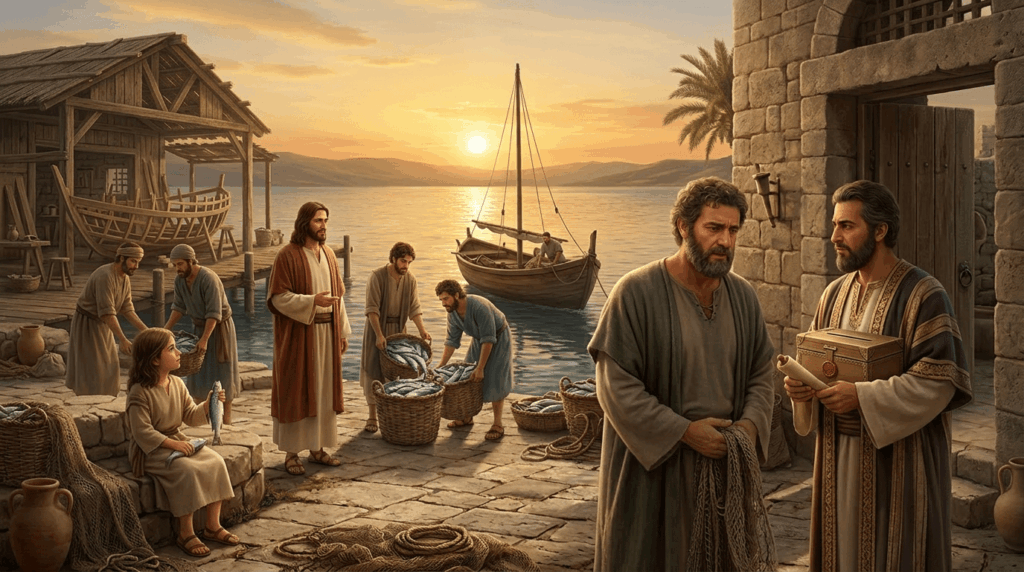
Jeesuksen viipyillessä Andreaksen ja Pietarin kanssa järven rannalla veneveistämön läheisyydessä paikalle osui muuan temppeliveronkantaja, ja Jeesuksen tunnistaessaan tämä pyysi Pietarin hieman sivummalle ja sanoi: ”Eikö Mestarisi maksakaan temppeliveroa?” Pietari tunsi halua osoittaa närkästyksensä ajatuksesta, että joku kehtasi odottaa Jeesuksen avustavan rahallisesti vannoutuneiden vihollistensa uskonnollisten toimintojen ylläpitämistä, mutta koska hän pani merkille veronkantajan kasvoilla karehtivan omituisen ilmeen, hän arveli aivan oikein, että tarkoitus oli saada heidät verekseltään satimeen siitä, että he kieltäytyivät maksamasta tavanomaista puolta sekeliä Jerusalemin temppelipalvelusten tukemiseksi. Siksi Pietari vastasikin: ”Mitä, tottahan toki Mestari temppeliveron maksaa. Odotapa sinä siinä portilla, niin tulen tuota pikaa takaisin veroraha mukanani.”
Mutta Pietari oli puhunut hätiköiden. Heidän rahavaransa olivat Juudaksen hallussa, ja tämä oli järven vastarannalla. Ei hän itse, ei hänen veljensä eikä Jeesuskaan ollut ottanut rahaa mukaansa. Ja tietäessään fariseusten etsiskelevän heitä he eivät mitenkään voineet mennä Betsaidaan hakemaan rahaa. Kun Pietari kertoi Jeesukselle veronkantajasta ja siitä, että hän oli luvannut tälle rahan, Jeesus sanoi: ”Jos olet luvannut, siinä tapauksessa sinun olisi maksettava. Mutta millä aiot lunastaa lupauksesi? Rupeatko taas kalastajaksi voidaksesi pitää sanasi? Oli miten oli, Pietari, näissä olosuhteissa meidän on paras maksaa vero. Älkäämme antako näille ihmisille mitään aihetta suuttua siitä, mitä mieltä olemme. Odotamme täällä sen aikaa, kun menet veneellä heittämään verkot saadaksesi kalaa, ja ne torilla vähän matkan päässä myytyäsi maksa veronkantajalle meidän kaikkien kolmen puolesta.”
Kaiken edellä kerrotun oli kuullut muuan Daavidin salainen sanansaattaja, joka seisoi lähistöllä ja joka sitten antoi lähellä rantaa kalastavalle toverilleen merkin tulla nopeasti maihin. Kun Pietari oli astumassa veneeseen soutaakseen järvelle kalaan, tämä sanansaattaja ja hänen kalastajaystävänsä lahjoittivat hänelle monta suurta korillista kaloja ja auttoivat häntä kantamaan ne lähistön kalakauppiaalle. Tämä osti saaliin ja maksoi siitä sen verran, että se Daavidin sanansaattajan antamalla rahalla lisättynä riitti kattamaan kolmen henkilön temppeliveron. Veronkantaja otti vastaan veron eikä vaatinut sakkoa maksun myöhästymisestä, koska he olivat olleet jonkin aikaa poissa Galileasta.
Ei ole kummeksuttavaa, että kirjoissanne kerrotaan Pietarin saaneen saaliiksi kalan, jonka suussa oli sekeli. Tuohon aikaan oli liikkeellä monia tarinoita aarteiden löytymisestä kalojen suusta. Tuollaiset lähes ihmeistä kertovat jutut olivat tuiki tavallisia. Niinpä kun Pietari poistui heidän seurastaan mennäkseen veneelle, Jeesus huomautti puoliksi leikillään: ”Onpa outoa, että kuninkaan poikien pitää maksaa pakkoveroa, tavallisestihan on niin, että hovin ylläpitämiseksi verotetaan muukalaista. Mutta meidän on paras olla antamatta viranomaisille mitään kompastuskiveä. Menehän siis! Kuka tietää, vaikka pyytäisit kalan, jolla on sekeli suussaan.” Koska Jeesus näin sanoi, ja kun Pietari niin pian ilmestyi temppeliveroineen, ei ole yllättävää, että välikohtauksesta myöhemmin paisuteltiin se ihme, jona se Matteuksen evankeliumin kirjoittajan toimesta on kirjaan pantu.
Jeesus odotti Andreaksen ja Pietarin keralla järven rannalla miltei auringonlaskuun saakka. Sanansaattajat toivat heille viestin, jonka mukaan Marian taloa pidettiin edelleen silmällä. Siksi nämä kolme odottajaa astuivat pimeän tullen veneeseensä ja soutivat hitaasti pois kohti Galileanmeren itärantaa.
As Jesus, with Andrew and Peter, tarried by the lake near the boatshop, a temple-tax collector came upon them and, recognizing Jesus, called Peter to one side and said: “Does not your Master pay the temple tax?” Peter was inclined to show indignation at the suggestion that Jesus should be expected to contribute to the maintenance of the religious activities of his sworn enemies, but, noting a peculiar expression on the face of the tax collector, he rightly surmised that it was the purpose to entrap them in the act of refusing to pay the customary half shekel for the support of the temple services at Jerusalem. Accordingly, Peter replied: “Why of course the Master pays the temple tax. You wait by the gate, and I will presently return with the tax.”
Now Peter had spoken hastily. Judas carried their funds, and he was across the lake. Neither he, his brother, nor Jesus had brought along any money. And knowing that the Pharisees were looking for them, they could not well go to Bethsaida to obtain money. When Peter told Jesus about the collector and that he had promised him the money, Jesus said: “If you have promised, then should you pay. But wherewith will you redeem your promise? Will you again become a fisherman that you may honor your word? Nevertheless, Peter, it is well in the circumstances that we pay the tax. Let us give these men no occasion for offense at our attitude. We will wait here while you go with the boat and cast for the fish, and when you have sold them at yonder market, pay the collector for all three of us.”
All of this had been overheard by the secret messenger of David who stood near by, and who then signaled to an associate, fishing near the shore, to come in quickly. When Peter made ready to go out in the boat for a catch, this messenger and his fisherman friend presented him with several large baskets of fish and assisted him in carrying them to the fish merchant near by, who purchased the catch, paying sufficient, with what was added by the messenger of David, to meet the temple tax for the three. The collector accepted the tax, forgoing the penalty for tardy payment because they had been for some time absent from Galilee.
It is not strange that you have a record of Peter’s catching a fish with a shekel in its mouth. In those days there were current many stories about finding treasures in the mouths of fishes; such tales of near miracles were commonplace. So, as Peter left them to go toward the boat, Jesus remarked, half-humorously: “Strange that the sons of the king must pay tribute; usually it is the stranger who is taxed for the upkeep of the court, but it behooves us to afford no stumbling block for the authorities. Go hence! maybe you will catch the fish with the shekel in its mouth.” Jesus having thus spoken, and Peter so soon appearing with the temple tax, it is not surprising that the episode became later expanded into a miracle as recorded by the writer of Matthew’s Gospel.
Jesus, with Andrew and Peter, waited by the seashore until nearly sundown. Messengers brought them word that Mary’s house was still under surveillance; therefore, when it grew dark, the three waiting men entered their boat and slowly rowed away toward the eastern shore of the Sea of Galilee.
SuomiEnglish
Jeesuksen viipyillessä Andreaksen ja Pietarin kanssa järven rannalla veneveistämön läheisyydessä paikalle osui muuan temppeliveronkantaja, ja Jeesuksen tunnistaessaan tämä pyysi Pietarin hieman sivummalle ja sanoi: ”Eikö Mestarisi maksakaan temppeliveroa?” Pietari tunsi halua osoittaa närkästyksensä ajatuksesta, että joku kehtasi odottaa Jeesuksen avustavan rahallisesti vannoutuneiden vihollistensa uskonnollisten toimintojen ylläpitämistä, mutta koska hän pani merkille veronkantajan kasvoilla karehtivan omituisen ilmeen, hän arveli aivan oikein, että tarkoitus oli saada heidät verekseltään satimeen siitä, että he kieltäytyivät maksamasta tavanomaista puolta sekeliä Jerusalemin temppelipalvelusten tukemiseksi. Siksi Pietari vastasikin: ”Mitä, tottahan toki Mestari temppeliveron maksaa. Odotapa sinä siinä portilla, niin tulen tuota pikaa takaisin veroraha mukanani.”
As Jesus, with Andrew and Peter, tarried by the lake near the boatshop, a temple-tax collector came upon them and, recognizing Jesus, called Peter to one side and said: “Does not your Master pay the temple tax?” Peter was inclined to show indignation at the suggestion that Jesus should be expected to contribute to the maintenance of the religious activities of his sworn enemies, but, noting a peculiar expression on the face of the tax collector, he rightly surmised that it was the purpose to entrap them in the act of refusing to pay the customary half shekel for the support of the temple services at Jerusalem. Accordingly, Peter replied: “Why of course the Master pays the temple tax. You wait by the gate, and I will presently return with the tax.”
Mutta Pietari oli puhunut hätiköiden. Heidän rahavaransa olivat Juudaksen hallussa, ja tämä oli järven vastarannalla. Ei hän itse, ei hänen veljensä eikä Jeesuskaan ollut ottanut rahaa mukaansa. Ja tietäessään fariseusten etsiskelevän heitä he eivät mitenkään voineet mennä Betsaidaan hakemaan rahaa. Kun Pietari kertoi Jeesukselle veronkantajasta ja siitä, että hän oli luvannut tälle rahan, Jeesus sanoi: ”Jos olet luvannut, siinä tapauksessa sinun olisi maksettava. Mutta millä aiot lunastaa lupauksesi? Rupeatko taas kalastajaksi voidaksesi pitää sanasi? Oli miten oli, Pietari, näissä olosuhteissa meidän on paras maksaa vero. Älkäämme antako näille ihmisille mitään aihetta suuttua siitä, mitä mieltä olemme. Odotamme täällä sen aikaa, kun menet veneellä heittämään verkot saadaksesi kalaa, ja ne torilla vähän matkan päässä myytyäsi maksa veronkantajalle meidän kaikkien kolmen puolesta.”
Now Peter had spoken hastily. Judas carried their funds, and he was across the lake. Neither he, his brother, nor Jesus had brought along any money. And knowing that the Pharisees were looking for them, they could not well go to Bethsaida to obtain money. When Peter told Jesus about the collector and that he had promised him the money, Jesus said: “If you have promised, then should you pay. But wherewith will you redeem your promise? Will you again become a fisherman that you may honor your word? Nevertheless, Peter, it is well in the circumstances that we pay the tax. Let us give these men no occasion for offense at our attitude. We will wait here while you go with the boat and cast for the fish, and when you have sold them at yonder market, pay the collector for all three of us.”
Kaiken edellä kerrotun oli kuullut muuan Daavidin salainen sanansaattaja, joka seisoi lähistöllä ja joka sitten antoi lähellä rantaa kalastavalle toverilleen merkin tulla nopeasti maihin. Kun Pietari oli astumassa veneeseen soutaakseen järvelle kalaan, tämä sanansaattaja ja hänen kalastajaystävänsä lahjoittivat hänelle monta suurta korillista kaloja ja auttoivat häntä kantamaan ne lähistön kalakauppiaalle. Tämä osti saaliin ja maksoi siitä sen verran, että se Daavidin sanansaattajan antamalla rahalla lisättynä riitti kattamaan kolmen henkilön temppeliveron. Veronkantaja otti vastaan veron eikä vaatinut sakkoa maksun myöhästymisestä, koska he olivat olleet jonkin aikaa poissa Galileasta.
All of this had been overheard by the secret messenger of David who stood near by, and who then signaled to an associate, fishing near the shore, to come in quickly. When Peter made ready to go out in the boat for a catch, this messenger and his fisherman friend presented him with several large baskets of fish and assisted him in carrying them to the fish merchant near by, who purchased the catch, paying sufficient, with what was added by the messenger of David, to meet the temple tax for the three. The collector accepted the tax, forgoing the penalty for tardy payment because they had been for some time absent from Galilee.
Ei ole kummeksuttavaa, että kirjoissanne kerrotaan Pietarin saaneen saaliiksi kalan, jonka suussa oli sekeli. Tuohon aikaan oli liikkeellä monia tarinoita aarteiden löytymisestä kalojen suusta. Tuollaiset lähes ihmeistä kertovat jutut olivat tuiki tavallisia. Niinpä kun Pietari poistui heidän seurastaan mennäkseen veneelle, Jeesus huomautti puoliksi leikillään: ”Onpa outoa, että kuninkaan poikien pitää maksaa pakkoveroa, tavallisestihan on niin, että hovin ylläpitämiseksi verotetaan muukalaista. Mutta meidän on paras olla antamatta viranomaisille mitään kompastuskiveä. Menehän siis! Kuka tietää, vaikka pyytäisit kalan, jolla on sekeli suussaan.” Koska Jeesus näin sanoi, ja kun Pietari niin pian ilmestyi temppeliveroineen, ei ole yllättävää, että välikohtauksesta myöhemmin paisuteltiin se ihme, jona se Matteuksen evankeliumin kirjoittajan toimesta on kirjaan pantu.
It is not strange that you have a record of Peter’s catching a fish with a shekel in its mouth. In those days there were current many stories about finding treasures in the mouths of fishes; such tales of near miracles were commonplace. So, as Peter left them to go toward the boat, Jesus remarked, half-humorously: “Strange that the sons of the king must pay tribute; usually it is the stranger who is taxed for the upkeep of the court, but it behooves us to afford no stumbling block for the authorities. Go hence! maybe you will catch the fish with the shekel in its mouth.” Jesus having thus spoken, and Peter so soon appearing with the temple tax, it is not surprising that the episode became later expanded into a miracle as recorded by the writer of Matthew’s Gospel.
Jeesus odotti Andreaksen ja Pietarin keralla järven rannalla miltei auringonlaskuun saakka. Sanansaattajat toivat heille viestin, jonka mukaan Marian taloa pidettiin edelleen silmällä. Siksi nämä kolme odottajaa astuivat pimeän tullen veneeseensä ja soutivat hitaasti pois kohti Galileanmeren itärantaa.
Jesus, with Andrew and Peter, waited by the seashore until nearly sundown. Messengers brought them word that Mary’s house was still under surveillance; therefore, when it grew dark, the three waiting men entered their boat and slowly rowed away toward the eastern shore of the Sea of Galilee.