
Teksti
Tausta
Näytä
Lisäasetukset
Kieli
Urantia Opas
Kysy kirjan sisällöstä. Opas vastaa Book Enginen omien lähdekohtien perusteella ja ohjaa sinut lukemaan ne.
Hei! 🙏
Olen sinun Urantia-oppaasi. Tehtäväni on auttaa sinua löytämään oikeat kohdat Urantia-kirjasta ja ymmärtämään sen opetuksia syvemmin. 😊❤️
Lähestyessämme Jeesuksen kuolleistanousun ajankohtaa tänä varhaisena sunnuntaiaamun hetkenä olisi palautettava mieleen, että kymmenen apostolia oli Elia ja Maria Markuksen kodissa, ja he uinuivat yläsalissa ja lepäsivät siellä samoilla lavereilla, joille he olivat oikaisseet itsensä Mestarinsa seurassa viettämänsä viimeisen ehtoollisen aikana. Tänä sunnuntaiaamuna he olivat Tuomasta lukuun ottamatta kaikki samassa paikassa. Tuomas oli heidän seurassaan muutaman minuutin ajan myöhään lauantai-iltana, kun he olivat ensimmäistä kertaa taas yhdessä, mutta apostolien näkeminen oli siihen ajatukseen yhdistyessään, mitä Jeesukselle oli tapahtunut, hänelle liikaa. Hän loi nopean katseen tovereihinsa ja poistui samassa hetkessä huoneesta mennen Simonin kotiin Betfagessa, jossa hän aikoi yksinäisyydessä surra huoliaan. Kaikki apostolit kärsivät, mutta eivät niinkään epäilyksestä ja epätoivosta kuin pelosta, murheesta ja häpeästä.
Nikodemuksen kotiin oli Daavid Sebedeuksen ja Joosef Arimatealaisen lisäksi kokoontunut kaksitoista, ehkä viisitoista, Jeesuksen jerusalemilaista eturivin opetuslasta. Joosef Arimatealaisen kodissa oli viitisentoista, ehkä kaksikymmentä, johtavaa naisuskovaa. Vain nämä naiset pitivät majaa Joosefin talossa, ja he olivat pysytelleet sapattipäivän ja sapattia seuranneen illan tuntien aikana visusti sisällä, joten he eivät tienneet sotilasvartion pitävän haudalla vahtia, eikä heidän tiedossaan liioin ollut, että haudan eteen oli vieritetty toinenkin kivi ja että kumpikin kivi oli sinetöity Pilatuksen sinetein.
Vähän ennen kello kolmea tänä sunnuntaiaamuna, kun ensimmäiset päivän merkit alkoivat näkyä idässä, viisi näistä naisista lähti Jeesuksen haudalle. He olivat valmistaneet suuret määrät erityisiä palsamointivoiteita, ja he kantoivat mukanaan useita pellavakääreitä. Heidän tarkoituksenaan oli antaa Jeesuksen ruumiille perusteellisempi kuolinvoitelu ja kietoa se huolellisemmin uusiin kääreisiin.
Naisjoukkoon, joka lähti suorittamaan tätä Jeesuksen ruumiin voitelua, kuuluivat Magdalan Maria, Alfeuksen kaksosten äiti Maria, Sebedeuksen veljesten äiti Salome, Kuusaan vaimo Joanna ja Ezra Aleksandrialaisen tytär Susanna.
Kello oli noin puoli neljä, kun nämä viisi naista voidekantamuksineen saapuivat tyhjän hautakammion eteen. Astuessaan ulos Damaskoksenportista he kohtasivat joukon sotilaita, jotka enemmän tai vähemmän paniikin vallassa riensivät kaupunkiin, ja tapahtuma sai heidät keskeyttämään matkantekonsa muutamaksi hetkeksi. Mutta kun mitään tätä enempää ei sattunut, he jatkoivat matkaansa.
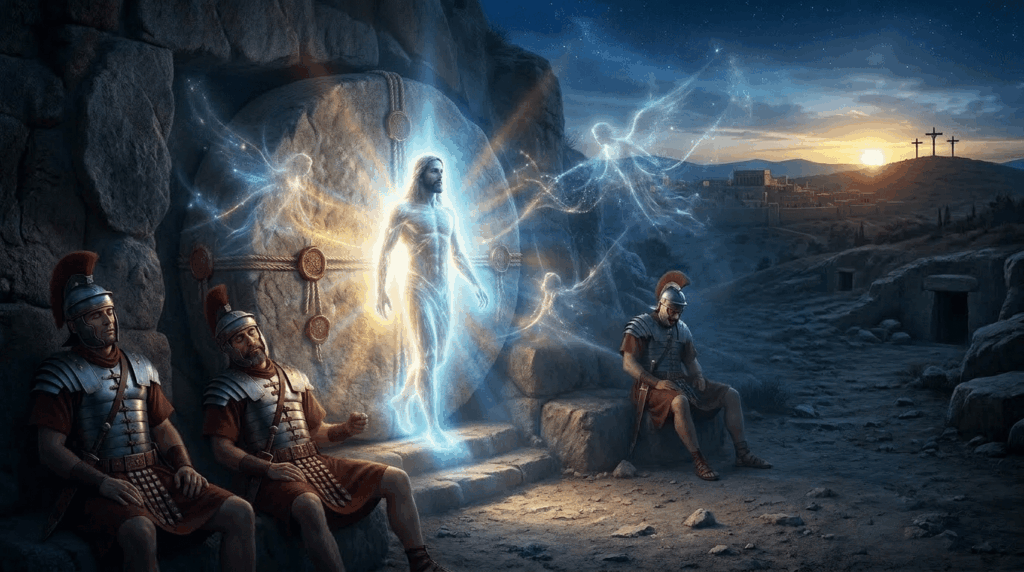
He hämmästyivät suuresti nähdessään, että kivi oli vieritetty pois haudan suulta, etenkin kun he olivat tulomatkalla keskenään puhuneet: ”Kukahan auttaisi meitä vierittämään kiven pois paikaltaan?” He laskivat kuormansa maahan ja alkoivat luoda toisiinsa pelosta ja suuresta hämmästyksestä kertovia katseita. Siinä kun he seisoivat pelosta väristen, Maria Magdalena rohkaisi mielensä, meni pienemmän kiven taakse ja uskaltautui sisälle avoimeen hautakammioon. Tämä Joosefin hauta oli omistajansa puutarhassa, mäen rinteessä tien itäpuolella, ja sen oviaukko avautui sekin itään. Tuohon hetkeen tultaessa uusi päivä oli alkanut sarastaa sen verran, että Maria saattoi sen valossa katsoa haudan perälle, paikkaan, jossa Mestarin ruumis oli levännyt, ja nähdä, että ruumis oli poissa. Kallioseinän syvennyksessä, johon Jeesus oli laskettu, Maria näki vain laskostetun hikiliinan siellä, missä tämän pää oli levännyt, sekä käärinliinat, joihin tämä oli ollut kiedottuna, paikallaan koskemattomina, kuten ne olivat olleet kivellä, ennen kuin taivaalliset armeijat siirsivät ruumiin pois. Peiteliina oli hautasyvennyksen jalkopäässä.
Viivyttyään haudan oviaukolla muutaman hetken (hän ei heti hautaan sisälle astuttuaan nähnyt selvästi) Maria näki, että Jeesuksen ruumis oli poissa ja että sen paikalla olivat vain nämä hautavaatteet, ja hänen suustaan pääsi hätääntynyt ja tuskainen kirkaisu. Kaikki naiset olivat ylen määrin hermostuneita; he olivat olleet säikkyjä siitä lähtien, kun he kaupungin portilla kohtasivat pakokauhuiset sotilaat, ja kun Maria päästi tämän tuskankirkaisun, he joutuivat kauhun valtaan ja pakenivat kiireesti paikalta. He pysähtyivät vasta juostuaan aina Damaskoksenportille saakka. Tuona hetkenä Joanna sai tunnonvaivoja siitä, että he olivat jättäneet Marian yksikseen; hän kokosi toverinsa ympärilleen, ja he lähtivät takaisin haudalle.
Kun he pääsivät hautakammion lähelle, kauhistunut Magdalena, joka oli joutunut kahta kauheamman kammon valtaan, kun hän ei hautakammiosta ulos astuttuaan ollutkaan löytänyt sisariaan odottamasta, ryntäsi heitä kohti ja huusi kiihdyksissään: ”Hän ei ole siellä – ne ovat vieneet hänet pois!” Hän vei heidät takaisin haudalle, ja he astuivat kaikki sisälle ja näkivät, että se oli tyhjä.
Sen jälkeen kaikki viisi naista istuutuivat kivelle, joka oli oviaukon lähellä, ja pohtivat tilannetta. Heidän mieleensä ei ollut vielä juolahtanut, että Jeesus oli nostettu kuolleista. He olivat koko sapatin ajan olleet vain toistensa seurassa, ja he arvelivat, että ruumis oli siirretty toiseen lepopaikkaan. Mutta punnitessaan mielessään tällaista pulmansa ratkaisua he eivät osanneet selittää, miten hautavaatteet olivat niin hyvässä järjestyksessä; kuinka olisi ollut mahdollista siirtää ruumis paikaltaan, kun samat käärinliinat, joihin se oli kiedottu, olivat edelleenkin paikallaan ruumishyllyllä ja näyttivät koskemattomilta?
Siinä kun nämä naiset istuivat tämän uuden päivän sarastuksen ensimmäisinä hetkinä, he loivat katseensa sivulle ja havaitsivat siellä äänettömän ja liikkumattoman muukalaisen. He joutuivat taas hetkeksi pelon valtaan, mutta Maria Magdalena ryntäsi muukalaista kohti ja puhutteli tätä ikään kuin luullen tätä puutarhanhoitajaksi ja sanoi: ”Minne olette vieneet Mestarin? Minne hänet on pantu? Sano se meille, jotta voimme mennä ja ottaa hänet haltuumme.” Kun muukalainen ei vastannut Marialle, tämä alkoi itkeä. Silloin Jeesus puhui heille sanoen: ”Ketä te etsitte?” Maria vastasi: ”Etsimme Jeesusta, joka laskettiin levolle Joosefin hautaan, mutta hän on poissa. Tiedätkö sinä, minne hänet on viety?” Silloin Jeesus sanoi: ”Eikö tämä Jeesus jo Galileassa kertonut teille, että hän kuolisi mutta nousisi ylös kuolleista?” Nämä sanat hätkähdyttivät naisia, mutta Mestari oli niin muuttunut, etteivät he vielä tunnistaneet häntä, kun hänellä oli selkä vasten valohämyä. Ja kun he punnitsivat mielessään hänen sanojaan, hän puhutteli Magdalenaa tutulla äänellä ja sanoi: ”Maria.” Ja kun Maria kuuli tuon sanan, joka merkitsi tutuksi käynyttä myötätuntoa ja kiintymyksellistä tervehdystä, hän tiesi äänen Mestarin ääneksi, ja hän syöksyi polvilleen Mestarin jalkojen juureen huudahtaen: ”Herrani ja Mestarini!” Ja kaikki muutkin naiset tunnistivat, että heidän edessään seisoi Mestari kunnialla kruunatussa hahmossa, ja he polvistuivat kiireesti hänen eteensä.
Syy siihen, miksi nämä ihmissilmät saivat kyvyn Jeesuksen morontiahahmon näkemiseen, oli erityispalvelus, jonka muuntajat ja keskiväliolennot suorittivat yhdessä joidenkuiden muiden tuolloin Jeesuksen mukana olleiden morontiapersoonallisuuksien kanssa.
Kun Maria yritti syleillä Jeesuksen jalkoja, tämä sanoi: ”Älä kosketa minua, Maria, sillä en ole sellainen, jollaisena minut lihallisena ollessani tunsit. Tässä hahmossa viivyn luonanne jonkin aikaa, ennen kuin nousen Isän tykö. Mutta menkää nyt kaikki ja kertokaa apostoleilleni – ja Pietarille –, että olen noussut ja että olette puhuneet kanssani.”
Toinnuttuaan hämmästyksensä aiheuttamasta järkytyksestä nämä naiset riensivät takaisin kaupunkiin ja Elia Markuksen kotiin, jossa he kertoivat kymmenelle apostolille kaiken, mitä heille oli tapahtunut. Mutta apostolit eivät kovinkaan herkästi uskoneet heitä. Ensimmäisenä heidän mieleensä tuli, että naiset olivat nähneet näyn, mutta Maria Magdalenan toistettua Jeesuksen heille lausumat sanat ja Pietarin kuultua nimensä tämä rynnisti Johannes kintereillään ulos yläsalista päästäkseen mahdollisimman nopeasti haudalle omin silmin näkemään, mitä hänelle oli kerrottu.
Naiset toistivat muille apostoleille kertomuksen keskustelustaan Jeesuksen kanssa, mutta nämä eivät halunneet uskoa; eivätkä he tulleet menneeksi ulos ottaakseen asiasta omakohtaisesti selvää, kuten Pietari ja Johannes tekivät.
As we approach the time of the resurrection of Jesus on this early Sunday morning, it should be recalled that the ten apostles were sojourning at the home of Elijah and Mary Mark, where they were asleep in the upper chamber, resting on the very couches whereon they reclined during the last supper with their Master. This Sunday morning they were all there assembled except Thomas. Thomas was with them for a few minutes late Saturday night when they first got together, but the sight of the apostles, coupled with the thought of what had happened to Jesus, was too much for him. He looked his associates over and immediately left the room, going to the home of Simon in Bethpage, where he thought to grieve over his troubles in solitude. The apostles all suffered, not so much from doubt and despair as from fear, grief, and shame.
At the home of Nicodemus there were gathered together, with David Zebedee and Joseph of Arimathea, some twelve or fifteen of the more prominent of the Jerusalem disciples of Jesus. At the home of Joseph of Arimathea there were some fifteen or twenty of the leading women believers. Only these women abode in Joseph’s house, and they had kept close within during the hours of the Sabbath day and the evening after the Sabbath, so that they were ignorant of the military guard on watch at the tomb; neither did they know that a second stone had been rolled in front of the tomb, and that both of these stones had been placed under the seal of Pilate.
A little before three o’clock this Sunday morning, when the first signs of day began to appear in the east, five of the women started out for the tomb of Jesus. They had prepared an abundance of special embalming lotions, and they carried many linen bandages with them. It was their purpose more thoroughly to give the body of Jesus its death anointing and more carefully to wrap it up with the new bandages.
The women who went on this mission of anointing Jesus’ body were: Mary Magdalene, Mary the mother of the Alpheus twins, Salome the mother of the Zebedee brothers, Joanna the wife of Chuza, and Susanna the daughter of Ezra of Alexandria.
It was about half past three o’clock when the five women, laden with their ointments, arrived before the empty tomb. As they passed out of the Damascus gate, they encountered a number of soldiers fleeing into the city more or less panic-stricken, and this caused them to pause for a few minutes; but when nothing more developed, they resumed their journey.
They were greatly surprised to see the stone rolled away from the entrance to the tomb, inasmuch as they had said among themselves on the way out, “Who will help us roll away the stone?” They set down their burdens and began to look upon one another in fear and with great amazement. While they stood there, atremble with fear, Mary Magdalene ventured around the smaller stone and dared to enter the open sepulchre. This tomb of Joseph was in his garden on the hillside on the eastern side of the road, and it also faced toward the east. By this hour there was just enough of the dawn of a new day to enable Mary to look back to the place where the Master’s body had lain and to discern that it was gone. In the recess of stone where they had laid Jesus, Mary saw only the folded napkin where his head had rested and the bandages wherewith he had been wrapped lying intact and as they had rested on the stone before the celestial hosts removed the body. The covering sheet lay at the foot of the burial niche.
After Mary had tarried in the doorway of the tomb for a few moments (she did not see distinctly when she first entered the tomb), she saw that Jesus’ body was gone and in its place only these grave cloths, and she uttered a cry of alarm and anguish. All the women were exceedingly nervous; they had been on edge ever since meeting the panicky soldiers at the city gate, and when Mary uttered this scream of anguish, they were terror-stricken and fled in great haste. And they did not stop until they had run all the way to the Damascus gate. By this time Joanna was conscience-stricken that they had deserted Mary; she rallied her companions, and they started back for the tomb.
As they drew near the sepulchre, the frightened Magdalene, who was even more terrorized when she failed to find her sisters waiting when she came out of the tomb, now rushed up to them, excitedly exclaiming: “He is not there—they have taken him away!” And she led them back to the tomb, and they all entered and saw that it was empty.
All five of the women then sat down on the stone near the entrance and talked over the situation. It had not yet occurred to them that Jesus had been resurrected. They had been by themselves over the Sabbath, and they conjectured that the body had been moved to another resting place. But when they pondered such a solution of their dilemma, they were at a loss to account for the orderly arrangement of the grave cloths; how could the body have been removed since the very bandages in which it was wrapped were left in position and apparently intact on the burial shelf?
As these women sat there in the early hours of the dawn of this new day, they looked to one side and observed a silent and motionless stranger. For a moment they were again frightened, but Mary Magdalene, rushing toward him and addressing him as if she thought he might be the caretaker of the garden, said, “Where have you taken the Master? Where have they laid him? Tell us that we may go and get him.” When the stranger did not answer Mary, she began to weep. Then spoke Jesus to them, saying, “Whom do you seek?” Mary said: “We seek for Jesus who was laid to rest in Joseph’s tomb, but he is gone. Do you know where they have taken him?” Then said Jesus: “Did not this Jesus tell you, even in Galilee, that he would die, but that he would rise again?” These words startled the women, but the Master was so changed that they did not yet recognize him with his back turned to the dim light. And as they pondered his words, he addressed the Magdalene with a familiar voice, saying, “Mary.” And when she heard that word of well-known sympathy and affectionate greeting, she knew it was the voice of the Master, and she rushed to kneel at his feet while she exclaimed, “My Lord, and my Master!” And all of the other women recognized that it was the Master who stood before them in glorified form, and they quickly knelt before him.
These human eyes were enabled to see the morontia form of Jesus because of the special ministry of the transformers and the midwayers in association with certain of the morontia personalities then accompanying Jesus.
As Mary sought to embrace his feet, Jesus said: “Touch me not, Mary, for I am not as you knew me in the flesh. In this form will I tarry with you for a season before I ascend to the Father. But go, all of you, now and tell my apostles—and Peter—that I have risen, and that you have talked with me.”
After these women had recovered from the shock of their amazement, they hastened back to the city and to the home of Elijah Mark, where they related to the ten apostles all that had happened to them; but the apostles were not inclined to believe them. They thought at first that the women had seen a vision, but when Mary Magdalene repeated the words which Jesus had spoken to them, and when Peter heard his name, he rushed out of the upper chamber, followed closely by John, in great haste to reach the tomb and see these things for himself.
The women repeated the story of talking with Jesus to the other apostles, but they would not believe; and they would not go to find out for themselves as had Peter and John.
SuomiEnglish
Lähestyessämme Jeesuksen kuolleistanousun ajankohtaa tänä varhaisena sunnuntaiaamun hetkenä olisi palautettava mieleen, että kymmenen apostolia oli Elia ja Maria Markuksen kodissa, ja he uinuivat yläsalissa ja lepäsivät siellä samoilla lavereilla, joille he olivat oikaisseet itsensä Mestarinsa seurassa viettämänsä viimeisen ehtoollisen aikana. Tänä sunnuntaiaamuna he olivat Tuomasta lukuun ottamatta kaikki samassa paikassa. Tuomas oli heidän seurassaan muutaman minuutin ajan myöhään lauantai-iltana, kun he olivat ensimmäistä kertaa taas yhdessä, mutta apostolien näkeminen oli siihen ajatukseen yhdistyessään, mitä Jeesukselle oli tapahtunut, hänelle liikaa. Hän loi nopean katseen tovereihinsa ja poistui samassa hetkessä huoneesta mennen Simonin kotiin Betfagessa, jossa hän aikoi yksinäisyydessä surra huoliaan. Kaikki apostolit kärsivät, mutta eivät niinkään epäilyksestä ja epätoivosta kuin pelosta, murheesta ja häpeästä.
As we approach the time of the resurrection of Jesus on this early Sunday morning, it should be recalled that the ten apostles were sojourning at the home of Elijah and Mary Mark, where they were asleep in the upper chamber, resting on the very couches whereon they reclined during the last supper with their Master. This Sunday morning they were all there assembled except Thomas. Thomas was with them for a few minutes late Saturday night when they first got together, but the sight of the apostles, coupled with the thought of what had happened to Jesus, was too much for him. He looked his associates over and immediately left the room, going to the home of Simon in Bethpage, where he thought to grieve over his troubles in solitude. The apostles all suffered, not so much from doubt and despair as from fear, grief, and shame.
Nikodemuksen kotiin oli Daavid Sebedeuksen ja Joosef Arimatealaisen lisäksi kokoontunut kaksitoista, ehkä viisitoista, Jeesuksen jerusalemilaista eturivin opetuslasta. Joosef Arimatealaisen kodissa oli viitisentoista, ehkä kaksikymmentä, johtavaa naisuskovaa. Vain nämä naiset pitivät majaa Joosefin talossa, ja he olivat pysytelleet sapattipäivän ja sapattia seuranneen illan tuntien aikana visusti sisällä, joten he eivät tienneet sotilasvartion pitävän haudalla vahtia, eikä heidän tiedossaan liioin ollut, että haudan eteen oli vieritetty toinenkin kivi ja että kumpikin kivi oli sinetöity Pilatuksen sinetein.
At the home of Nicodemus there were gathered together, with David Zebedee and Joseph of Arimathea, some twelve or fifteen of the more prominent of the Jerusalem disciples of Jesus. At the home of Joseph of Arimathea there were some fifteen or twenty of the leading women believers. Only these women abode in Joseph’s house, and they had kept close within during the hours of the Sabbath day and the evening after the Sabbath, so that they were ignorant of the military guard on watch at the tomb; neither did they know that a second stone had been rolled in front of the tomb, and that both of these stones had been placed under the seal of Pilate.
Vähän ennen kello kolmea tänä sunnuntaiaamuna, kun ensimmäiset päivän merkit alkoivat näkyä idässä, viisi näistä naisista lähti Jeesuksen haudalle. He olivat valmistaneet suuret määrät erityisiä palsamointivoiteita, ja he kantoivat mukanaan useita pellavakääreitä. Heidän tarkoituksenaan oli antaa Jeesuksen ruumiille perusteellisempi kuolinvoitelu ja kietoa se huolellisemmin uusiin kääreisiin.
A little before three o’clock this Sunday morning, when the first signs of day began to appear in the east, five of the women started out for the tomb of Jesus. They had prepared an abundance of special embalming lotions, and they carried many linen bandages with them. It was their purpose more thoroughly to give the body of Jesus its death anointing and more carefully to wrap it up with the new bandages.
Naisjoukkoon, joka lähti suorittamaan tätä Jeesuksen ruumiin voitelua, kuuluivat Magdalan Maria, Alfeuksen kaksosten äiti Maria, Sebedeuksen veljesten äiti Salome, Kuusaan vaimo Joanna ja Ezra Aleksandrialaisen tytär Susanna.
The women who went on this mission of anointing Jesus’ body were: Mary Magdalene, Mary the mother of the Alpheus twins, Salome the mother of the Zebedee brothers, Joanna the wife of Chuza, and Susanna the daughter of Ezra of Alexandria.
Kello oli noin puoli neljä, kun nämä viisi naista voidekantamuksineen saapuivat tyhjän hautakammion eteen. Astuessaan ulos Damaskoksenportista he kohtasivat joukon sotilaita, jotka enemmän tai vähemmän paniikin vallassa riensivät kaupunkiin, ja tapahtuma sai heidät keskeyttämään matkantekonsa muutamaksi hetkeksi. Mutta kun mitään tätä enempää ei sattunut, he jatkoivat matkaansa.
It was about half past three o’clock when the five women, laden with their ointments, arrived before the empty tomb. As they passed out of the Damascus gate, they encountered a number of soldiers fleeing into the city more or less panic-stricken, and this caused them to pause for a few minutes; but when nothing more developed, they resumed their journey.
He hämmästyivät suuresti nähdessään, että kivi oli vieritetty pois haudan suulta, etenkin kun he olivat tulomatkalla keskenään puhuneet: ”Kukahan auttaisi meitä vierittämään kiven pois paikaltaan?” He laskivat kuormansa maahan ja alkoivat luoda toisiinsa pelosta ja suuresta hämmästyksestä kertovia katseita. Siinä kun he seisoivat pelosta väristen, Maria Magdalena rohkaisi mielensä, meni pienemmän kiven taakse ja uskaltautui sisälle avoimeen hautakammioon. Tämä Joosefin hauta oli omistajansa puutarhassa, mäen rinteessä tien itäpuolella, ja sen oviaukko avautui sekin itään. Tuohon hetkeen tultaessa uusi päivä oli alkanut sarastaa sen verran, että Maria saattoi sen valossa katsoa haudan perälle, paikkaan, jossa Mestarin ruumis oli levännyt, ja nähdä, että ruumis oli poissa. Kallioseinän syvennyksessä, johon Jeesus oli laskettu, Maria näki vain laskostetun hikiliinan siellä, missä tämän pää oli levännyt, sekä käärinliinat, joihin tämä oli ollut kiedottuna, paikallaan koskemattomina, kuten ne olivat olleet kivellä, ennen kuin taivaalliset armeijat siirsivät ruumiin pois. Peiteliina oli hautasyvennyksen jalkopäässä.
They were greatly surprised to see the stone rolled away from the entrance to the tomb, inasmuch as they had said among themselves on the way out, “Who will help us roll away the stone?” They set down their burdens and began to look upon one another in fear and with great amazement. While they stood there, atremble with fear, Mary Magdalene ventured around the smaller stone and dared to enter the open sepulchre. This tomb of Joseph was in his garden on the hillside on the eastern side of the road, and it also faced toward the east. By this hour there was just enough of the dawn of a new day to enable Mary to look back to the place where the Master’s body had lain and to discern that it was gone. In the recess of stone where they had laid Jesus, Mary saw only the folded napkin where his head had rested and the bandages wherewith he had been wrapped lying intact and as they had rested on the stone before the celestial hosts removed the body. The covering sheet lay at the foot of the burial niche.
Viivyttyään haudan oviaukolla muutaman hetken (hän ei heti hautaan sisälle astuttuaan nähnyt selvästi) Maria näki, että Jeesuksen ruumis oli poissa ja että sen paikalla olivat vain nämä hautavaatteet, ja hänen suustaan pääsi hätääntynyt ja tuskainen kirkaisu. Kaikki naiset olivat ylen määrin hermostuneita; he olivat olleet säikkyjä siitä lähtien, kun he kaupungin portilla kohtasivat pakokauhuiset sotilaat, ja kun Maria päästi tämän tuskankirkaisun, he joutuivat kauhun valtaan ja pakenivat kiireesti paikalta. He pysähtyivät vasta juostuaan aina Damaskoksenportille saakka. Tuona hetkenä Joanna sai tunnonvaivoja siitä, että he olivat jättäneet Marian yksikseen; hän kokosi toverinsa ympärilleen, ja he lähtivät takaisin haudalle.
After Mary had tarried in the doorway of the tomb for a few moments (she did not see distinctly when she first entered the tomb), she saw that Jesus’ body was gone and in its place only these grave cloths, and she uttered a cry of alarm and anguish. All the women were exceedingly nervous; they had been on edge ever since meeting the panicky soldiers at the city gate, and when Mary uttered this scream of anguish, they were terror-stricken and fled in great haste. And they did not stop until they had run all the way to the Damascus gate. By this time Joanna was conscience-stricken that they had deserted Mary; she rallied her companions, and they started back for the tomb.
Kun he pääsivät hautakammion lähelle, kauhistunut Magdalena, joka oli joutunut kahta kauheamman kammon valtaan, kun hän ei hautakammiosta ulos astuttuaan ollutkaan löytänyt sisariaan odottamasta, ryntäsi heitä kohti ja huusi kiihdyksissään: ”Hän ei ole siellä – ne ovat vieneet hänet pois!” Hän vei heidät takaisin haudalle, ja he astuivat kaikki sisälle ja näkivät, että se oli tyhjä.
As they drew near the sepulchre, the frightened Magdalene, who was even more terrorized when she failed to find her sisters waiting when she came out of the tomb, now rushed up to them, excitedly exclaiming: “He is not there—they have taken him away!” And she led them back to the tomb, and they all entered and saw that it was empty.
Sen jälkeen kaikki viisi naista istuutuivat kivelle, joka oli oviaukon lähellä, ja pohtivat tilannetta. Heidän mieleensä ei ollut vielä juolahtanut, että Jeesus oli nostettu kuolleista. He olivat koko sapatin ajan olleet vain toistensa seurassa, ja he arvelivat, että ruumis oli siirretty toiseen lepopaikkaan. Mutta punnitessaan mielessään tällaista pulmansa ratkaisua he eivät osanneet selittää, miten hautavaatteet olivat niin hyvässä järjestyksessä; kuinka olisi ollut mahdollista siirtää ruumis paikaltaan, kun samat käärinliinat, joihin se oli kiedottu, olivat edelleenkin paikallaan ruumishyllyllä ja näyttivät koskemattomilta?
All five of the women then sat down on the stone near the entrance and talked over the situation. It had not yet occurred to them that Jesus had been resurrected. They had been by themselves over the Sabbath, and they conjectured that the body had been moved to another resting place. But when they pondered such a solution of their dilemma, they were at a loss to account for the orderly arrangement of the grave cloths; how could the body have been removed since the very bandages in which it was wrapped were left in position and apparently intact on the burial shelf?
Siinä kun nämä naiset istuivat tämän uuden päivän sarastuksen ensimmäisinä hetkinä, he loivat katseensa sivulle ja havaitsivat siellä äänettömän ja liikkumattoman muukalaisen. He joutuivat taas hetkeksi pelon valtaan, mutta Maria Magdalena ryntäsi muukalaista kohti ja puhutteli tätä ikään kuin luullen tätä puutarhanhoitajaksi ja sanoi: ”Minne olette vieneet Mestarin? Minne hänet on pantu? Sano se meille, jotta voimme mennä ja ottaa hänet haltuumme.” Kun muukalainen ei vastannut Marialle, tämä alkoi itkeä. Silloin Jeesus puhui heille sanoen: ”Ketä te etsitte?” Maria vastasi: ”Etsimme Jeesusta, joka laskettiin levolle Joosefin hautaan, mutta hän on poissa. Tiedätkö sinä, minne hänet on viety?” Silloin Jeesus sanoi: ”Eikö tämä Jeesus jo Galileassa kertonut teille, että hän kuolisi mutta nousisi ylös kuolleista?” Nämä sanat hätkähdyttivät naisia, mutta Mestari oli niin muuttunut, etteivät he vielä tunnistaneet häntä, kun hänellä oli selkä vasten valohämyä. Ja kun he punnitsivat mielessään hänen sanojaan, hän puhutteli Magdalenaa tutulla äänellä ja sanoi: ”Maria.” Ja kun Maria kuuli tuon sanan, joka merkitsi tutuksi käynyttä myötätuntoa ja kiintymyksellistä tervehdystä, hän tiesi äänen Mestarin ääneksi, ja hän syöksyi polvilleen Mestarin jalkojen juureen huudahtaen: ”Herrani ja Mestarini!” Ja kaikki muutkin naiset tunnistivat, että heidän edessään seisoi Mestari kunnialla kruunatussa hahmossa, ja he polvistuivat kiireesti hänen eteensä.
As these women sat there in the early hours of the dawn of this new day, they looked to one side and observed a silent and motionless stranger. For a moment they were again frightened, but Mary Magdalene, rushing toward him and addressing him as if she thought he might be the caretaker of the garden, said, “Where have you taken the Master? Where have they laid him? Tell us that we may go and get him.” When the stranger did not answer Mary, she began to weep. Then spoke Jesus to them, saying, “Whom do you seek?” Mary said: “We seek for Jesus who was laid to rest in Joseph’s tomb, but he is gone. Do you know where they have taken him?” Then said Jesus: “Did not this Jesus tell you, even in Galilee, that he would die, but that he would rise again?” These words startled the women, but the Master was so changed that they did not yet recognize him with his back turned to the dim light. And as they pondered his words, he addressed the Magdalene with a familiar voice, saying, “Mary.” And when she heard that word of well-known sympathy and affectionate greeting, she knew it was the voice of the Master, and she rushed to kneel at his feet while she exclaimed, “My Lord, and my Master!” And all of the other women recognized that it was the Master who stood before them in glorified form, and they quickly knelt before him.
Syy siihen, miksi nämä ihmissilmät saivat kyvyn Jeesuksen morontiahahmon näkemiseen, oli erityispalvelus, jonka muuntajat ja keskiväliolennot suorittivat yhdessä joidenkuiden muiden tuolloin Jeesuksen mukana olleiden morontiapersoonallisuuksien kanssa.
These human eyes were enabled to see the morontia form of Jesus because of the special ministry of the transformers and the midwayers in association with certain of the morontia personalities then accompanying Jesus.
Kun Maria yritti syleillä Jeesuksen jalkoja, tämä sanoi: ”Älä kosketa minua, Maria, sillä en ole sellainen, jollaisena minut lihallisena ollessani tunsit. Tässä hahmossa viivyn luonanne jonkin aikaa, ennen kuin nousen Isän tykö. Mutta menkää nyt kaikki ja kertokaa apostoleilleni – ja Pietarille –, että olen noussut ja että olette puhuneet kanssani.”
As Mary sought to embrace his feet, Jesus said: “Touch me not, Mary, for I am not as you knew me in the flesh. In this form will I tarry with you for a season before I ascend to the Father. But go, all of you, now and tell my apostles—and Peter—that I have risen, and that you have talked with me.”
Toinnuttuaan hämmästyksensä aiheuttamasta järkytyksestä nämä naiset riensivät takaisin kaupunkiin ja Elia Markuksen kotiin, jossa he kertoivat kymmenelle apostolille kaiken, mitä heille oli tapahtunut. Mutta apostolit eivät kovinkaan herkästi uskoneet heitä. Ensimmäisenä heidän mieleensä tuli, että naiset olivat nähneet näyn, mutta Maria Magdalenan toistettua Jeesuksen heille lausumat sanat ja Pietarin kuultua nimensä tämä rynnisti Johannes kintereillään ulos yläsalista päästäkseen mahdollisimman nopeasti haudalle omin silmin näkemään, mitä hänelle oli kerrottu.
After these women had recovered from the shock of their amazement, they hastened back to the city and to the home of Elijah Mark, where they related to the ten apostles all that had happened to them; but the apostles were not inclined to believe them. They thought at first that the women had seen a vision, but when Mary Magdalene repeated the words which Jesus had spoken to them, and when Peter heard his name, he rushed out of the upper chamber, followed closely by John, in great haste to reach the tomb and see these things for himself.
Naiset toistivat muille apostoleille kertomuksen keskustelustaan Jeesuksen kanssa, mutta nämä eivät halunneet uskoa; eivätkä he tulleet menneeksi ulos ottaakseen asiasta omakohtaisesti selvää, kuten Pietari ja Johannes tekivät.
The women repeated the story of talking with Jesus to the other apostles, but they would not believe; and they would not go to find out for themselves as had Peter and John.