
Teksti
Tausta
Näytä
Lisäasetukset
Kieli
Urantia Opas
Kysy kirjan sisällöstä. Opas vastaa Book Enginen omien lähdekohtien perusteella ja ohjaa sinut lukemaan ne.
Hei! 🙏
Olen sinun Urantia-oppaasi. Tehtäväni on auttaa sinua löytämään oikeat kohdat Urantia-kirjasta ja ymmärtämään sen opetuksia syvemmin. 😊❤️
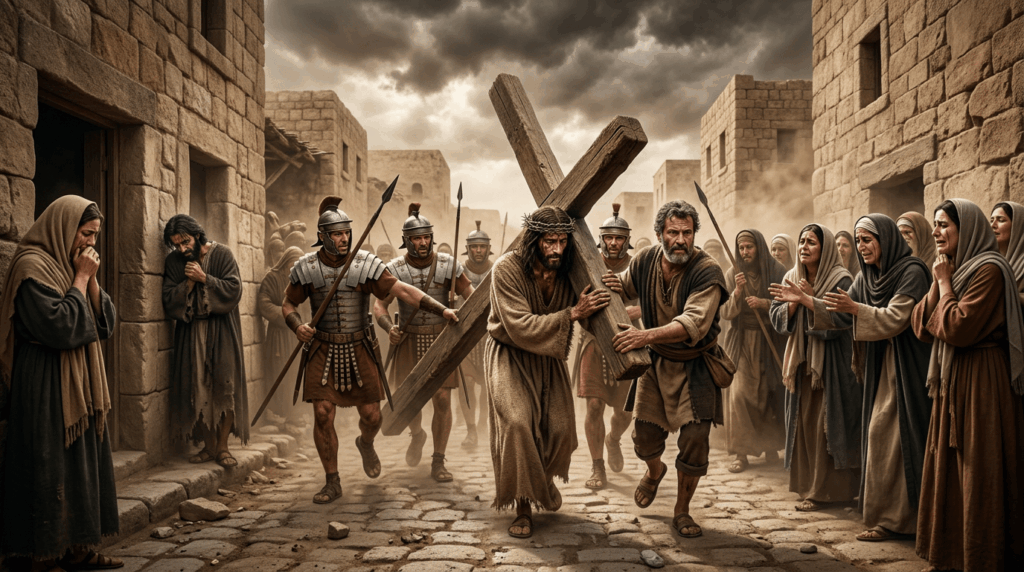
KUN molemmat rosvot oli saatu valmiiksi, sotilaat lähtivät sadanpäämiehen johdolla kohti ristiinnaulitsemisen näyttämöä. Sadanpäämies, jonka vastuulla nämä kaksitoista sotilasta olivat, oli sama kapteeni, joka oli edellisenä yönä johtanut roomalaissotilaat pidättämään Jeesuksen Getsemanesta. Roomalainen tapa oli, että kustakin ristiinnaulittavasta henkilöstä määrättiin vastaamaan neljä sotilasta. Kumpikin rosvo ruoskittiin perusteellisesti, ennen kuin heidät vietiin ristiinnaulittaviksi, mutta Jeesukselle ei enää annettu fyysistä kuritusta; kapteeni epäilemättä ajatteli tätä ruoskitun jo tarpeeksi, ja kaiken lisäksi ennen kuin tätä oli edes tuomittu.
Jeesuksen kanssa ristiinnaulitut kaksi varasta olivat Barabbaan tovereita, ja heiltä olisi riistetty henki myöhemmin yhdessä johtajansa kanssa, ellei tätä Pilatuksen pääsiäisarmahduksen nojalla olisi laskettu vapaaksi. Näin Jeesus siis ristiinnaulittiin Barabbaan sijasta.
Mitä Jeesus on kohta tekevä – alistuu kuolemaan ristillä – sen hän tekee omasta vapaasta tahdostaan. Ennakolta tästä kokemuksesta kertoessaan hän sanoi: ”Isä rakastaa ja tukee minua, sillä olen valmis antamaan pois elämäni. Mutta minä otan sen taas haltuuni. Kukaan ei riistä minulta elämääni – annan sen pois omasta halustani. Minulla on valta antaa se pois ja minulla on valta ottaa se takaisin. Sellaisen käskyn olen saanut Isältäni.”
Kello oli tänä aamuna vähän vaille yhdeksän, kun sotilaat johdattivat Jeesuksen praetoriumista Golgatan-matkalle. Heidän perässään tuli monia, jotka tunsivat salaisesti myötätuntoa Jeesusta kohtaan, mutta useimmat tästä runsaan kahdensadan ihmisen ryhmästä kuuluivat joko hänen vihamiehiinsä tai sitten uteliaaseen joutoväkeen, joka vain halusi nauttia ristiinnaulitsemisten näkemisen tuottamasta shokista. Vain muutamat juutalaisjohtajat menivät paikan päälle nähdäkseen Jeesuksen ristinkuoleman. Tietäessään, että Pilatus oli luovuttanut hänet roomalaissotilaiden huostaan ja että hänet oli tuomittu kuolemaan, he kiiruhtivat taas pitämään kokoustaan temppelissä, ja kokouksessaan he keskustelivat siitä, miten hänen seuraajiensa suhteen pitäisi menetellä.
AFTER the two brigands had been made ready, the soldiers, under the direction of a centurion, started for the scene of the crucifixion. The centurion in charge of these twelve soldiers was the same captain who had led forth the Roman soldiers the previous night to arrest Jesus in Gethsemane. It was the Roman custom to assign four soldiers for each person to be crucified. The two brigands were properly scourged before they were taken out to be crucified, but Jesus was given no further physical punishment; the captain undoubtedly thought he had already been sufficiently scourged, even before his condemnation.
The two thieves crucified with Jesus were associates of Barabbas and would later have been put to death with their leader if he had not been released as the Passover pardon of Pilate. Jesus was thus crucified in the place of Barabbas.
What Jesus is now about to do, submit to death on the cross, he does of his own free will. In foretelling this experience, he said: “The Father loves and sustains me because I am willing to lay down my life. But I will take it up again. No one takes my life away from me—I lay it down of myself. I have authority to lay it down, and I have authority to take it up. I have received such a commandment from my Father.”
It was just before nine o’clock this morning when the soldiers led Jesus from the praetorium on the way to Golgotha. They were followed by many who secretly sympathized with Jesus, but most of this group of two hundred or more were either his enemies or curious idlers who merely desired to enjoy the shock of witnessing the crucifixions. Only a few of the Jewish leaders went out to see Jesus die on the cross. Knowing that he had been turned over to the Roman soldiers by Pilate, and that he was condemned to die, they busied themselves with their meeting in the temple, whereat they discussed what should be done with his followers.
SuomiEnglish
KUN molemmat rosvot oli saatu valmiiksi, sotilaat lähtivät sadanpäämiehen johdolla kohti ristiinnaulitsemisen näyttämöä. Sadanpäämies, jonka vastuulla nämä kaksitoista sotilasta olivat, oli sama kapteeni, joka oli edellisenä yönä johtanut roomalaissotilaat pidättämään Jeesuksen Getsemanesta. Roomalainen tapa oli, että kustakin ristiinnaulittavasta henkilöstä määrättiin vastaamaan neljä sotilasta. Kumpikin rosvo ruoskittiin perusteellisesti, ennen kuin heidät vietiin ristiinnaulittaviksi, mutta Jeesukselle ei enää annettu fyysistä kuritusta; kapteeni epäilemättä ajatteli tätä ruoskitun jo tarpeeksi, ja kaiken lisäksi ennen kuin tätä oli edes tuomittu.
AFTER the two brigands had been made ready, the soldiers, under the direction of a centurion, started for the scene of the crucifixion. The centurion in charge of these twelve soldiers was the same captain who had led forth the Roman soldiers the previous night to arrest Jesus in Gethsemane. It was the Roman custom to assign four soldiers for each person to be crucified. The two brigands were properly scourged before they were taken out to be crucified, but Jesus was given no further physical punishment; the captain undoubtedly thought he had already been sufficiently scourged, even before his condemnation.
Jeesuksen kanssa ristiinnaulitut kaksi varasta olivat Barabbaan tovereita, ja heiltä olisi riistetty henki myöhemmin yhdessä johtajansa kanssa, ellei tätä Pilatuksen pääsiäisarmahduksen nojalla olisi laskettu vapaaksi. Näin Jeesus siis ristiinnaulittiin Barabbaan sijasta.
The two thieves crucified with Jesus were associates of Barabbas and would later have been put to death with their leader if he had not been released as the Passover pardon of Pilate. Jesus was thus crucified in the place of Barabbas.
Mitä Jeesus on kohta tekevä – alistuu kuolemaan ristillä – sen hän tekee omasta vapaasta tahdostaan. Ennakolta tästä kokemuksesta kertoessaan hän sanoi: ”Isä rakastaa ja tukee minua, sillä olen valmis antamaan pois elämäni. Mutta minä otan sen taas haltuuni. Kukaan ei riistä minulta elämääni – annan sen pois omasta halustani. Minulla on valta antaa se pois ja minulla on valta ottaa se takaisin. Sellaisen käskyn olen saanut Isältäni.”
What Jesus is now about to do, submit to death on the cross, he does of his own free will. In foretelling this experience, he said: “The Father loves and sustains me because I am willing to lay down my life. But I will take it up again. No one takes my life away from me—I lay it down of myself. I have authority to lay it down, and I have authority to take it up. I have received such a commandment from my Father.”
Kello oli tänä aamuna vähän vaille yhdeksän, kun sotilaat johdattivat Jeesuksen praetoriumista Golgatan-matkalle. Heidän perässään tuli monia, jotka tunsivat salaisesti myötätuntoa Jeesusta kohtaan, mutta useimmat tästä runsaan kahdensadan ihmisen ryhmästä kuuluivat joko hänen vihamiehiinsä tai sitten uteliaaseen joutoväkeen, joka vain halusi nauttia ristiinnaulitsemisten näkemisen tuottamasta shokista. Vain muutamat juutalaisjohtajat menivät paikan päälle nähdäkseen Jeesuksen ristinkuoleman. Tietäessään, että Pilatus oli luovuttanut hänet roomalaissotilaiden huostaan ja että hänet oli tuomittu kuolemaan, he kiiruhtivat taas pitämään kokoustaan temppelissä, ja kokouksessaan he keskustelivat siitä, miten hänen seuraajiensa suhteen pitäisi menetellä.
It was just before nine o’clock this morning when the soldiers led Jesus from the praetorium on the way to Golgotha. They were followed by many who secretly sympathized with Jesus, but most of this group of two hundred or more were either his enemies or curious idlers who merely desired to enjoy the shock of witnessing the crucifixions. Only a few of the Jewish leaders went out to see Jesus die on the cross. Knowing that he had been turned over to the Roman soldiers by Pilate, and that he was condemned to die, they busied themselves with their meeting in the temple, whereat they discussed what should be done with his followers.