
Teksti
Tausta
Näytä
Lisäasetukset
Kieli
Urantia Opas
Kysy kirjan sisällöstä. Opas vastaa Book Enginen omien lähdekohtien perusteella ja ohjaa sinut lukemaan ne.
Hei! 🙏
Olen sinun Urantia-oppaasi. Tehtäväni on auttaa sinua löytämään oikeat kohdat Urantia-kirjasta ja ymmärtämään sen opetuksia syvemmin. 😊❤️
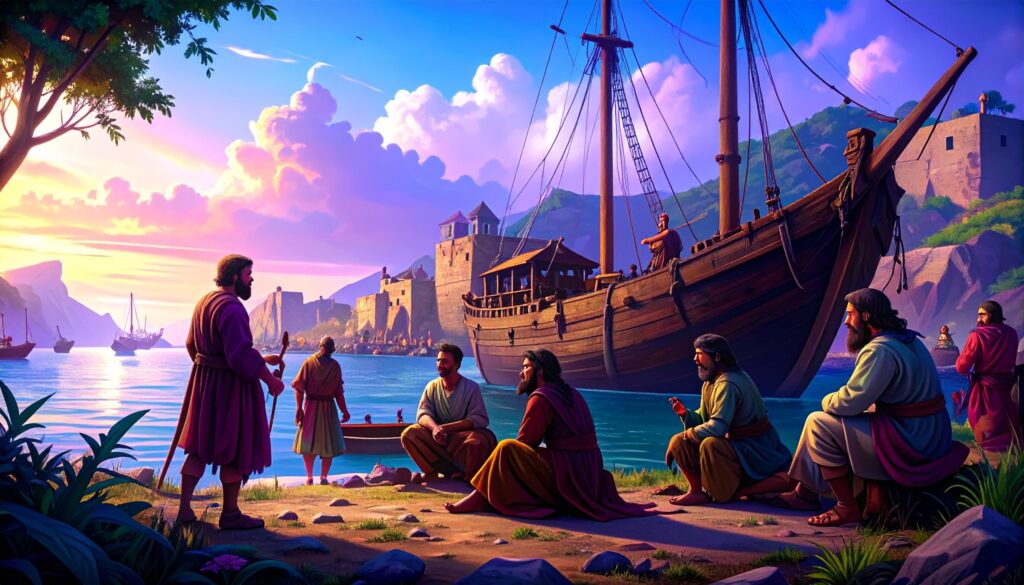
Kesareassa-käynti oli ollut vaiheikas, ja kun laiva oli korjattu, Jeesus ja hänen kaksi ystäväänsä lähtivät päivänä muutamana puoliltapäivin kohti Egyptin Aleksandriaa.
Kolmikon matka Aleksandriaan oli mitä miellyttävin. Ganid iloitsi merimatkasta, eikä Jeesus juuri muuta ehtinyt kuin vastailla hänen kysymyksiinsä. Kun he lähestyivät kaupungin satamaa, nuoressa miehessä herätti kiinnostusta Faroksen suuri majakka. Majakka sijaitsi saarella, jonka Aleksanteri oli yhdistänyt aallonmurtajalla mantereeseen ja luonut sillä keinoin kaksi suurenmoista satamaa ja tehnyt samalla Aleksandriasta Afrikan, Aasian ja Euroopan kauppamerenkulun solmukohdan. Tämä suuri majakka oli yksi maailman seitsemästä ihmeestä ja kaikkien myöhemmin rakennettujen majakoiden esikuva. He nousivat varhain aamulla katsomaan tätä ihmisen ihmishenkien turvaksi rakentamaa loistavaa laitosta, ja Ganidin ihastuksenhuutojen välissä Jeesus sanoi: ”Ja sinä, poikani, tulet Intiaan palatessasi olemaan kuin tämä majakka, vielä senkin jälkeen kun isäsi on laskettu haudan lepoon. Tulet olemaan kuin elämän valo niille, jotka ympärilläsi kyyhöttävät pimeydessä; valo, joka näyttää kaikille sitä haluaville väylän, joka vie turvallisesti pelastuksen satamaan.” Ja Jeesuksen kättä puristaessaan Ganid sanoi: ”Niin olen.”
Ja huomautamme taas, että kristinuskon alkuaikojen opettajat tekivät suuren virheen sikäli, että he niin yksinomaisesti kohdistivat huomionsa roomalaisen maailman läntiseen sivilisaatioon. Jeesuksen opetukset olisi ensimmäisen vuosisadan mesopotamialaisten uskovien vaalimassa muodossa otettu halukkaasti vastaan Aasian uskonnonharjoittajien eri ryhmien keskuudessa.
Neljä tuntia maihinnousun jälkeen he asettuivat asumaan sen pitkän ja leveän valtakadun itäpään tuntumaan, joka yli kolmekymmentä metriä leveänä ja kahdeksan kilometriä pitkänä ulottui tämän miljoonan asukkaan kaupungin länsirajoille asti. Luotuaan ensimmäisen yleissilmäyksen kaupungin tärkeimpiin nähtävyyksiin, joihin kuuluivat yliopisto (museo), kirjasto, Aleksanterin kuninkaallinen mausoleumi, palatsi, Neptunuksen temppeli, teatteri ja gymnasion, Gonod lähti liikeasioilleen, kun Jeesus ja Ganid sen sijaan menivät kirjastoon. Kirjasto oli maailman suurin. Sinne oli kerätty lähes miljoona käsikirjoitusta kaikkialta sivistyneestä maailmasta: Kreikasta, Roomasta, Palestiinasta, Parthiasta, Intiasta, Kiinasta ja jopa Japanista. Tässä kirjastossa Ganid näki koko maailman laajimman kokoelman intialaista kirjallisuutta; ja he viettivät siellä jonkin hetken joka päivä niin kauan kuin he viipyivät Aleksandriassa. Jeesus kertoi Ganidille siellä suoritetusta heprealaisten kirjoitusten kääntämisestä kreikan kielelle. Ja he keskustelivat keskustelemasta päästyään maailman kaikista uskonnoista, ja Jeesus koetti osoittaa tälle nuorelle mielelle, mikä niissä itse kussakin oli totta, ja sanoi aina sen perään: ”Mutta Jahve on Jumala, joka kehittyi Melkisedekin tekemistä totuuden paljastuksista ja Abrahamin kanssa solmitusta liitosta. Juutalaiset olivat Abrahamin jälkeläisiä, ja myöhemmin he ottivat haltuunsa juuri sen maan, jossa Melkisedek oli elänyt ja opettanut ja josta hän lähetti opettajia kaikkialle maailmaan. Ja lopulta juutalaisten uskonto toi mitään muuta maailmanuskontoa selvemmin julki sen, että Israelin Herra, Jumala, on taivaassa oleva Universaalinen Isä.”
Jeesuksen johdolla Ganid laati kokoelman maailman kaikkien niiden uskontojen opetuksista, jotka tunsivat jonkin Universaalisen Jumaluuden, jos kohta niissä saattoi enemmän tai vähemmän ilmetä myös alisteisten jumaluuksien tunnustamista. Asiasta paljon keskusteltuaan Jeesus ja Ganid tekivät johtopäätöksen, ettei roomalaisilla ollut uskonnossaan todellista Jumalaa, että heidän uskontonsa oli tuskin enempää kuin keisarinpalvontaa. He päättelivät, että kreikkalaisilla oli kyllä filosofia, muttei oikeastaan uskontoa persoonallisine Jumalineen. Mysteerikultit he hylkäsivät niiden monikerroksisuudesta johtuvan sekavuuden takia ja siksi, että niiden erilaiset käsitykset Jumaluudesta näyttivät olevan johdettuja muista ja vanhemmista uskonnoista.
Vaikka nämä käännökset tehtiinkin jo Aleksandriassa, Ganid järjesti nämä valikoimat ja lisäsi niihin omat päätelmänsä, vasta kun heidän Roomassa-oleskelunsa läheni loppuaan. Hän oli hyvin yllättynyt huomiostaan, että maailman uskonnollisen kirjallisuuden parhaat kirjoittajat tunnustivat kaikki enemmän tai vähemmän selkeästi ikuisen Jumalan olemassaolon ja olivat hänen luonteestaan ja suhteestaan kuolevaiseen ihmiseen varsin paljossa samaa mieltä.
Aleksandriassa ollessaan Jeesus ja Ganid viettivät paljon aikaa museossa. Tämä museo ei ollut harvinaisten esineiden kokoelma, vaan paremminkin taiteen, tieteen ja kirjallisuuden yliopisto. Oppineet professorit pitivät siellä luentoja päivittäin, ja tuohon aikaan se oli läntisen maailman ajattelun keskus. Päivästä päivään Jeesus tulkitsi luentoja Ganidille. Toisen viikon aikana tämä nuori mies eräänä päivänä huudahti: ”Opettaja Joosua, sinä tiedät enemmän kuin nämä professorit. Sinun pitäisi nousta seisomaan ja kertoa heille ne suurenmoiset asiat, jotka olet kertonut minulle. Paljo ajattelu on sumentanut heidät. Puhun tästä isälleni, ja hän saa järjestää asian.” Jeesus hymyili ja sanoi: ”Sinä olet ihaileva oppilas, mutta nämä opettajat eivät ole kiinnostuneita sellaisesta, että sinä ja minä heitä opettaisimme. Hengellistymättömästä oppineisuudesta johtuva ylpeys on ihmisen kokemuksessa salakavala asia. Oikea opettaja säilyttää älyllisen rehellisyytensä pysymällä iäti opiskelijana.”
Aleksandria oli kaupunki, jossa vallitsi länsimaisen kulttuurin sekoitus, ja Rooman jälkeen se oli maailman suurin ja suurenmoisin kaupunki. Siellä sijaitsi maailman suurin juutalainen synagoga, seitsemänkymmenen johtavan vanhimman eli Aleksandrian sanhedrinin hallintopaikka.
Gonodin monien liiketuttavien joukkoon kuului muuan Alexander-niminen juutalainen pankkiiri, jonka veli, Filon, oli tuon ajan kuuluisa uskonnonfilosofi. Filon oli ottanut itselleen ylistettävän mutta äärimmäisen vaikean tehtävän saattaa sopusointuun kreikkalainen filosofia ja heprealainen teologia. Ganid ja Jeesus keskustelivat paljon Filonin opetuksista ja odottivat saavansa olla läsnä jollakin hänen luennollaan, mutta koko heidän Aleksandriassa-olonsa ajan tämä kuuluisa hellenistijuutalainen makasi sairaana vuoteessaan.
Kreikan filosofiassa ja stoalaisissa opinkappaleissa oli paljon sellaista, jota Jeesus saattoi suositella Ganidille, mutta hän teroitti tämän nuorukaisen mieleen sitä totuutta, että nämä uskomusjärjestelmät samoin kuin muutamien hänen omaan kansaansa kuuluvien epämääräiset opetukset olivat uskontoja vain siinä mielessä, että ne johdattivat ihmisiä löytämään Jumalan ja saamaan elävän kokemuksen Iankaikkisen tuntemisesta.
It had been an eventful visit at Caesarea, and when the boat was ready, Jesus and his two friends departed at noon one day for Alexandria in Egypt.
The three enjoyed a most pleasant passage to Alexandria. Ganid was delighted with the voyage and kept Jesus busy answering questions. As they approached the city’s harbor, the young man was thrilled by the great lighthouse of Pharos, located on the island which Alexander had joined by a mole to the mainland, thus creating two magnificent harbors and thereby making Alexandria the maritime commercial crossroads of Africa, Asia, and Europe. This great lighthouse was one of the seven wonders of the world and was the forerunner of all subsequent lighthouses. They arose early in the morning to view this splendid lifesaving device of man, and amidst the exclamations of Ganid Jesus said: “And you, my son, will be like this lighthouse when you return to India, even after your father is laid to rest; you will become like the light of life to those who sit about you in darkness, showing all who so desire the way to reach the harbor of salvation in safety.” And as Ganid squeezed Jesus’ hand, he said, “I will.”
And again we remark that the early teachers of the Christian religion made a great mistake when they so exclusively turned their attention to the western civilization of the Roman world. The teachings of Jesus, as they were held by the Mesopotamian believers of the first century, would have been readily received by the various groups of Asiatic religionists.
By the fourth hour after landing they were settled near the eastern end of the long and broad avenue, one hundred feet wide and five miles long, which stretched on out to the western limits of this city of one million people. After the first survey of the city’s chief attractions—university (museum), library, the royal mausoleum of Alexander, the palace, temple of Neptune, theater, and gymnasium—Gonod addressed himself to business while Jesus and Ganid went to the library, the greatest in the world. Here were assembled nearly a million manuscripts from all the civilized world: Greece, Rome, Palestine, Parthia, India, China, and even Japan. In this library Ganid saw the largest collection of Indian literature in all the world; and they spent some time here each day throughout their stay in Alexandria. Jesus told Ganid about the translation of the Hebrew scriptures into Greek at this place. And they discussed again and again all the religions of the world, Jesus endeavoring to point out to this young mind the truth in each, always adding: “But Yahweh is the God developed from the revelations of Melchizedek and the covenant of Abraham. The Jews were the offspring of Abraham and subsequently occupied the very land wherein Melchizedek had lived and taught, and from which he sent teachers to all the world; and their religion eventually portrayed a clearer recognition of the Lord God of Israel as the Universal Father in heaven than any other world religion.”
Under Jesus’ direction Ganid made a collection of the teachings of all those religions of the world which recognized a Universal Deity, even though they might also give more or less recognition to subordinate deities. After much discussion Jesus and Ganid decided that the Romans had no real God in their religion, that their religion was hardly more than emperor worship. The Greeks, they concluded, had a philosophy but hardly a religion with a personal God. The mystery cults they discarded because of the confusion of their multiplicity, and because their varied concepts of Deity seemed to be derived from other and older religions.
Although these translations were made at Alexandria, Ganid did not finally arrange these selections and add his own personal conclusions until near the end of their sojourn in Rome. He was much surprised to discover that the best of the authors of the world’s sacred literature all more or less clearly recognized the existence of an eternal God and were much in agreement with regard to his character and his relationship with mortal man.
Jesus and Ganid spent much time in the museum during their stay in Alexandria. This museum was not a collection of rare objects but rather a university of fine art, science, and literature. Learned professors here gave daily lectures, and in those times this was the intellectual center of the Occidental world. Day by day Jesus interpreted the lectures to Ganid; one day during the second week the young man exclaimed: “Teacher Joshua, you know more than these professors; you should stand up and tell them the great things you have told me; they are befogged by much thinking. I shall speak to my father and have him arrange it.” Jesus smiled, saying: “You are an admiring pupil, but these teachers are not minded that you and I should instruct them. The pride of unspiritualized learning is a treacherous thing in human experience. The true teacher maintains his intellectual integrity by ever remaining a learner.”
Alexandria was the city of the blended culture of the Occident and next to Rome the largest and most magnificent in the world. Here was located the largest Jewish synagogue in the world, the seat of government of the Alexandria Sanhedrin, the seventy ruling elders.
Among the many men with whom Gonod transacted business was a certain Jewish banker, Alexander, whose brother, Philo, was a famous religious philosopher of that time. Philo was engaged in the laudable but exceedingly difficult task of harmonizing Greek philosophy and Hebrew theology. Ganid and Jesus talked much about Philo’s teachings and expected to attend some of his lectures, but throughout their stay at Alexandria this famous Hellenistic Jew lay sick abed.
Jesus commended to Ganid much in the Greek philosophy and the Stoic doctrines, but he impressed upon the lad the truth that these systems of belief, like the indefinite teachings of some of his own people, were religions only in the sense that they led men to find God and enjoy a living experience in knowing the Eternal.
SuomiEnglish
Kesareassa-käynti oli ollut vaiheikas, ja kun laiva oli korjattu, Jeesus ja hänen kaksi ystäväänsä lähtivät päivänä muutamana puoliltapäivin kohti Egyptin Aleksandriaa.
It had been an eventful visit at Caesarea, and when the boat was ready, Jesus and his two friends departed at noon one day for Alexandria in Egypt.
Kolmikon matka Aleksandriaan oli mitä miellyttävin. Ganid iloitsi merimatkasta, eikä Jeesus juuri muuta ehtinyt kuin vastailla hänen kysymyksiinsä. Kun he lähestyivät kaupungin satamaa, nuoressa miehessä herätti kiinnostusta Faroksen suuri majakka. Majakka sijaitsi saarella, jonka Aleksanteri oli yhdistänyt aallonmurtajalla mantereeseen ja luonut sillä keinoin kaksi suurenmoista satamaa ja tehnyt samalla Aleksandriasta Afrikan, Aasian ja Euroopan kauppamerenkulun solmukohdan. Tämä suuri majakka oli yksi maailman seitsemästä ihmeestä ja kaikkien myöhemmin rakennettujen majakoiden esikuva. He nousivat varhain aamulla katsomaan tätä ihmisen ihmishenkien turvaksi rakentamaa loistavaa laitosta, ja Ganidin ihastuksenhuutojen välissä Jeesus sanoi: ”Ja sinä, poikani, tulet Intiaan palatessasi olemaan kuin tämä majakka, vielä senkin jälkeen kun isäsi on laskettu haudan lepoon. Tulet olemaan kuin elämän valo niille, jotka ympärilläsi kyyhöttävät pimeydessä; valo, joka näyttää kaikille sitä haluaville väylän, joka vie turvallisesti pelastuksen satamaan.” Ja Jeesuksen kättä puristaessaan Ganid sanoi: ”Niin olen.”
The three enjoyed a most pleasant passage to Alexandria. Ganid was delighted with the voyage and kept Jesus busy answering questions. As they approached the city’s harbor, the young man was thrilled by the great lighthouse of Pharos, located on the island which Alexander had joined by a mole to the mainland, thus creating two magnificent harbors and thereby making Alexandria the maritime commercial crossroads of Africa, Asia, and Europe. This great lighthouse was one of the seven wonders of the world and was the forerunner of all subsequent lighthouses. They arose early in the morning to view this splendid lifesaving device of man, and amidst the exclamations of Ganid Jesus said: “And you, my son, will be like this lighthouse when you return to India, even after your father is laid to rest; you will become like the light of life to those who sit about you in darkness, showing all who so desire the way to reach the harbor of salvation in safety.” And as Ganid squeezed Jesus’ hand, he said, “I will.”
Ja huomautamme taas, että kristinuskon alkuaikojen opettajat tekivät suuren virheen sikäli, että he niin yksinomaisesti kohdistivat huomionsa roomalaisen maailman läntiseen sivilisaatioon. Jeesuksen opetukset olisi ensimmäisen vuosisadan mesopotamialaisten uskovien vaalimassa muodossa otettu halukkaasti vastaan Aasian uskonnonharjoittajien eri ryhmien keskuudessa.
And again we remark that the early teachers of the Christian religion made a great mistake when they so exclusively turned their attention to the western civilization of the Roman world. The teachings of Jesus, as they were held by the Mesopotamian believers of the first century, would have been readily received by the various groups of Asiatic religionists.
Neljä tuntia maihinnousun jälkeen he asettuivat asumaan sen pitkän ja leveän valtakadun itäpään tuntumaan, joka yli kolmekymmentä metriä leveänä ja kahdeksan kilometriä pitkänä ulottui tämän miljoonan asukkaan kaupungin länsirajoille asti. Luotuaan ensimmäisen yleissilmäyksen kaupungin tärkeimpiin nähtävyyksiin, joihin kuuluivat yliopisto (museo), kirjasto, Aleksanterin kuninkaallinen mausoleumi, palatsi, Neptunuksen temppeli, teatteri ja gymnasion, Gonod lähti liikeasioilleen, kun Jeesus ja Ganid sen sijaan menivät kirjastoon. Kirjasto oli maailman suurin. Sinne oli kerätty lähes miljoona käsikirjoitusta kaikkialta sivistyneestä maailmasta: Kreikasta, Roomasta, Palestiinasta, Parthiasta, Intiasta, Kiinasta ja jopa Japanista. Tässä kirjastossa Ganid näki koko maailman laajimman kokoelman intialaista kirjallisuutta; ja he viettivät siellä jonkin hetken joka päivä niin kauan kuin he viipyivät Aleksandriassa. Jeesus kertoi Ganidille siellä suoritetusta heprealaisten kirjoitusten kääntämisestä kreikan kielelle. Ja he keskustelivat keskustelemasta päästyään maailman kaikista uskonnoista, ja Jeesus koetti osoittaa tälle nuorelle mielelle, mikä niissä itse kussakin oli totta, ja sanoi aina sen perään: ”Mutta Jahve on Jumala, joka kehittyi Melkisedekin tekemistä totuuden paljastuksista ja Abrahamin kanssa solmitusta liitosta. Juutalaiset olivat Abrahamin jälkeläisiä, ja myöhemmin he ottivat haltuunsa juuri sen maan, jossa Melkisedek oli elänyt ja opettanut ja josta hän lähetti opettajia kaikkialle maailmaan. Ja lopulta juutalaisten uskonto toi mitään muuta maailmanuskontoa selvemmin julki sen, että Israelin Herra, Jumala, on taivaassa oleva Universaalinen Isä.”
By the fourth hour after landing they were settled near the eastern end of the long and broad avenue, one hundred feet wide and five miles long, which stretched on out to the western limits of this city of one million people. After the first survey of the city’s chief attractions—university (museum), library, the royal mausoleum of Alexander, the palace, temple of Neptune, theater, and gymnasium—Gonod addressed himself to business while Jesus and Ganid went to the library, the greatest in the world. Here were assembled nearly a million manuscripts from all the civilized world: Greece, Rome, Palestine, Parthia, India, China, and even Japan. In this library Ganid saw the largest collection of Indian literature in all the world; and they spent some time here each day throughout their stay in Alexandria. Jesus told Ganid about the translation of the Hebrew scriptures into Greek at this place. And they discussed again and again all the religions of the world, Jesus endeavoring to point out to this young mind the truth in each, always adding: “But Yahweh is the God developed from the revelations of Melchizedek and the covenant of Abraham. The Jews were the offspring of Abraham and subsequently occupied the very land wherein Melchizedek had lived and taught, and from which he sent teachers to all the world; and their religion eventually portrayed a clearer recognition of the Lord God of Israel as the Universal Father in heaven than any other world religion.”
Jeesuksen johdolla Ganid laati kokoelman maailman kaikkien niiden uskontojen opetuksista, jotka tunsivat jonkin Universaalisen Jumaluuden, jos kohta niissä saattoi enemmän tai vähemmän ilmetä myös alisteisten jumaluuksien tunnustamista. Asiasta paljon keskusteltuaan Jeesus ja Ganid tekivät johtopäätöksen, ettei roomalaisilla ollut uskonnossaan todellista Jumalaa, että heidän uskontonsa oli tuskin enempää kuin keisarinpalvontaa. He päättelivät, että kreikkalaisilla oli kyllä filosofia, muttei oikeastaan uskontoa persoonallisine Jumalineen. Mysteerikultit he hylkäsivät niiden monikerroksisuudesta johtuvan sekavuuden takia ja siksi, että niiden erilaiset käsitykset Jumaluudesta näyttivät olevan johdettuja muista ja vanhemmista uskonnoista.
Under Jesus’ direction Ganid made a collection of the teachings of all those religions of the world which recognized a Universal Deity, even though they might also give more or less recognition to subordinate deities. After much discussion Jesus and Ganid decided that the Romans had no real God in their religion, that their religion was hardly more than emperor worship. The Greeks, they concluded, had a philosophy but hardly a religion with a personal God. The mystery cults they discarded because of the confusion of their multiplicity, and because their varied concepts of Deity seemed to be derived from other and older religions.
Vaikka nämä käännökset tehtiinkin jo Aleksandriassa, Ganid järjesti nämä valikoimat ja lisäsi niihin omat päätelmänsä, vasta kun heidän Roomassa-oleskelunsa läheni loppuaan. Hän oli hyvin yllättynyt huomiostaan, että maailman uskonnollisen kirjallisuuden parhaat kirjoittajat tunnustivat kaikki enemmän tai vähemmän selkeästi ikuisen Jumalan olemassaolon ja olivat hänen luonteestaan ja suhteestaan kuolevaiseen ihmiseen varsin paljossa samaa mieltä.
Although these translations were made at Alexandria, Ganid did not finally arrange these selections and add his own personal conclusions until near the end of their sojourn in Rome. He was much surprised to discover that the best of the authors of the world’s sacred literature all more or less clearly recognized the existence of an eternal God and were much in agreement with regard to his character and his relationship with mortal man.
Aleksandriassa ollessaan Jeesus ja Ganid viettivät paljon aikaa museossa. Tämä museo ei ollut harvinaisten esineiden kokoelma, vaan paremminkin taiteen, tieteen ja kirjallisuuden yliopisto. Oppineet professorit pitivät siellä luentoja päivittäin, ja tuohon aikaan se oli läntisen maailman ajattelun keskus. Päivästä päivään Jeesus tulkitsi luentoja Ganidille. Toisen viikon aikana tämä nuori mies eräänä päivänä huudahti: ”Opettaja Joosua, sinä tiedät enemmän kuin nämä professorit. Sinun pitäisi nousta seisomaan ja kertoa heille ne suurenmoiset asiat, jotka olet kertonut minulle. Paljo ajattelu on sumentanut heidät. Puhun tästä isälleni, ja hän saa järjestää asian.” Jeesus hymyili ja sanoi: ”Sinä olet ihaileva oppilas, mutta nämä opettajat eivät ole kiinnostuneita sellaisesta, että sinä ja minä heitä opettaisimme. Hengellistymättömästä oppineisuudesta johtuva ylpeys on ihmisen kokemuksessa salakavala asia. Oikea opettaja säilyttää älyllisen rehellisyytensä pysymällä iäti opiskelijana.”
Jesus and Ganid spent much time in the museum during their stay in Alexandria. This museum was not a collection of rare objects but rather a university of fine art, science, and literature. Learned professors here gave daily lectures, and in those times this was the intellectual center of the Occidental world. Day by day Jesus interpreted the lectures to Ganid; one day during the second week the young man exclaimed: “Teacher Joshua, you know more than these professors; you should stand up and tell them the great things you have told me; they are befogged by much thinking. I shall speak to my father and have him arrange it.” Jesus smiled, saying: “You are an admiring pupil, but these teachers are not minded that you and I should instruct them. The pride of unspiritualized learning is a treacherous thing in human experience. The true teacher maintains his intellectual integrity by ever remaining a learner.”
Aleksandria oli kaupunki, jossa vallitsi länsimaisen kulttuurin sekoitus, ja Rooman jälkeen se oli maailman suurin ja suurenmoisin kaupunki. Siellä sijaitsi maailman suurin juutalainen synagoga, seitsemänkymmenen johtavan vanhimman eli Aleksandrian sanhedrinin hallintopaikka.
Alexandria was the city of the blended culture of the Occident and next to Rome the largest and most magnificent in the world. Here was located the largest Jewish synagogue in the world, the seat of government of the Alexandria Sanhedrin, the seventy ruling elders.
Gonodin monien liiketuttavien joukkoon kuului muuan Alexander-niminen juutalainen pankkiiri, jonka veli, Filon, oli tuon ajan kuuluisa uskonnonfilosofi. Filon oli ottanut itselleen ylistettävän mutta äärimmäisen vaikean tehtävän saattaa sopusointuun kreikkalainen filosofia ja heprealainen teologia. Ganid ja Jeesus keskustelivat paljon Filonin opetuksista ja odottivat saavansa olla läsnä jollakin hänen luennollaan, mutta koko heidän Aleksandriassa-olonsa ajan tämä kuuluisa hellenistijuutalainen makasi sairaana vuoteessaan.
Among the many men with whom Gonod transacted business was a certain Jewish banker, Alexander, whose brother, Philo, was a famous religious philosopher of that time. Philo was engaged in the laudable but exceedingly difficult task of harmonizing Greek philosophy and Hebrew theology. Ganid and Jesus talked much about Philo’s teachings and expected to attend some of his lectures, but throughout their stay at Alexandria this famous Hellenistic Jew lay sick abed.
Kreikan filosofiassa ja stoalaisissa opinkappaleissa oli paljon sellaista, jota Jeesus saattoi suositella Ganidille, mutta hän teroitti tämän nuorukaisen mieleen sitä totuutta, että nämä uskomusjärjestelmät samoin kuin muutamien hänen omaan kansaansa kuuluvien epämääräiset opetukset olivat uskontoja vain siinä mielessä, että ne johdattivat ihmisiä löytämään Jumalan ja saamaan elävän kokemuksen Iankaikkisen tuntemisesta.
Jesus commended to Ganid much in the Greek philosophy and the Stoic doctrines, but he impressed upon the lad the truth that these systems of belief, like the indefinite teachings of some of his own people, were religions only in the sense that they led men to find God and enjoy a living experience in knowing the Eternal.