
Teksti
Tausta
Näytä
Lisäasetukset
Kieli
Urantia Opas
Kysy kirjan sisällöstä. Opas vastaa Book Enginen omien lähdekohtien perusteella ja ohjaa sinut lukemaan ne.
Hei! 🙏
Olen sinun Urantia-oppaasi. Tehtäväni on auttaa sinua löytämään oikeat kohdat Urantia-kirjasta ja ymmärtämään sen opetuksia syvemmin. 😊❤️
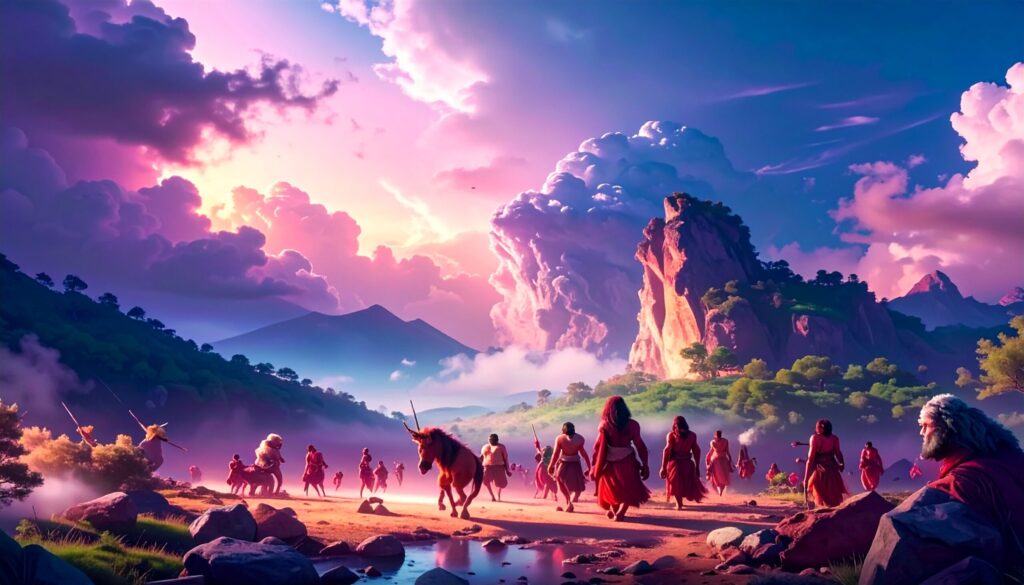
Keskimääräisellä evolutionaarisella planeetalla kuusi värillistä rotua ilmaantuvat yksi kerrallaan. Punainen ihminen kehittyy ensimmäisenä, ja hän samoilee maailmaa iät ja ajat, ennen kuin järjestyksessä seuraavat värilliset rodut ilmaantuvat. Kaikkien kuuden rodun samanaikainen ilmestyminen Urantialle ja vielä samaan perheeseen oli mitä epätavallisinta.
Aiemmin ilmestyneiden andoniittien ilmaantuminen Urantialle oli Sataniassa niin ikään jotakin uutta. Missään muussa tämän paikallisjärjestelmän maailmassa ei tällaista tahdollisten luotujen rotua ole kehittynyt ennen evolutionaarisia värillisrotuja.
1. Punainen ihminen. Nämä kansanheimot olivat erinomaisia ihmiskunnan edustajia, monin tavoin Andonia ja Fontaa etevämpiä. He olivat varsin älykäs ryhmä, ja he kehittivät ensimmäisinä sangikien lapsista heimokulttuurin ja -hallinnon. He olivat aina yksiavioisia; edes heidän muihin rotuihin sekoittuneet jälkeläisensä eivät useinkaan harrastaneet monenkeskistä pariutumista.
Myöhempinä aikoina heillä oli Aasiassa vakavaa ja pitkään jatkunutta kahnausta keltaisten veljiensä kanssa. Heille oli suurta etua siitä, että he jo varhaisessa vaiheessa keksivät jousen ja nuolen, mutta ikävä kyllä he olivat perineet paljon esivanhempiensa alttiudesta keskinäiseen taisteluun, ja se heikensi heitä siinä määrin, että keltaiset heimot pystyivät ajamaan heidät pois Aasian mantereelta.
Noin kahdeksankymmentäviisituhatta vuotta sitten punaisen rodun verrattain puhdasrotuiset rippeet siirtyivät joukolla Pohjois-Amerikkaan, ja pian sen jälkeen Beringin maakannas vajosi mereen jättäen heidät eristyksiin. Yksikään punaihoinen ihminen ei koskaan palannut Aasiaan. Mutta kaikkialle Siperiaan, Kiinaan, Keski-Aasiaan, Intiaan ja Eurooppaan he jättivät jälkeensä paljon omaa rotuainestaan, joka sekoittui muihin värillisiin rotuihin.
Kun punainen ihminen siirtyi Amerikkaan, hän vei mukanaan paljon varhaisen alkulähteensä opetuksista ja perinteistä. Hänen välittömät esivanhempansa olivat olleet kosketuksissa Planeettaprinssin maailmanpäämajan myöhempien aikojen toimintoihin. Mutta pian Amerikkoihin-saapumisensa jälkeen nämä opetukset alkoivat punaiselta ihmiseltä unohtua, ja sekä älyllisessä että hengellisessä kulttuurissa ilmeni melkoista taantumista. Hyvin pian nämä ihmiset sortuivat taas niin raivokkaisiin keskinäisiin taisteluihin, että näytti siltä, että nämä heimosodat johtavat nopeasti tämän suhteellisen puhtaan punaisen rodun rippeen täydelliseen tuhoutumiseen.
Tämän suuren taantumisen vuoksi näytti ilmeiseltä, että punaiset ihmiset olisivat olleet tuhoon tuomittuja, kunnes Onamonalonton noin kuusikymmentäviisituhatta vuotta sitten ilmaantui heidän johtajakseen ja hengelliseksi pelastajakseen. Hän toi väliaikaisen rauhan Amerikan punaisten ihmisten keskuuteen ja elvytti heidän ”Suuren Hengen” palvontansa. Onamonalonton eli yhdeksänkymmenenkuuden vuoden ikäiseksi, ja hän piti päämajaansa Kalifornian suurten punapuiden siimeksessä. Monien hänen myöhempien jälkeläistensä sukuhaarat johtavat nykyisten mustajalkaintiaanien keskuuteen.
Ajan kuluessa Onamonalontonin opetukset muuttuivat hämäriksi traditioiksi. Hävityssodat alkoivat uudelleen, eikä tämän suuren opettajan aikojen jälkeen kukaan muu johtaja koskaan onnistunut saamaan aikaan yleistä rauhaa heidän keskuuteensa. Näissä heimotaisteluissa tuhoutui yhä enemmän älykkäämpää rotuainesta. Ellei niin olisi käynyt, nämä kyvykkäät ja älykkäät punaiset ihmiset olisivat pystyttäneet Pohjois-Amerikan mantereelle suurenmoisen sivilisaation.
Kiinasta Amerikkaan siirryttyään pohjoisen punainen ihminen ei enää koskaan tullut kosketuksiin muiden maailmassa vaikuttavien tekijöiden kanssa (eskimoita lukuun ottamatta), ennen kuin valkoinen ihminen hänet myöhemmin löysi. Oli mitä valitettavinta, että punainen ihminen jäi lähes kokonaan vaille tilaisuutta päästä osalliseksi siitä rodullisesta kohenemisesta, joka olisi ollut seurauksena Aatamin rotuainekseen sekoittumisesta. Punainen ihminen ei tässä tilanteessa pystynyt hallitsemaan valkoista ihmistä, eikä hän mieluusti asettunut tätä palvelemaankaan. Elleivät kaksi rotua tällaisessa tilanteessa sekoitu, on jompikumpi niistä tuhoon tuomittu.
2. Oranssinvärinen ihminen. Tämän rodun huomattavin ominaispiirre oli sen erikoinen innostus rakentamiseen. Se rakensi mitä tahansa ja kaikkea mahdollista, jopa kasasi suunnattoman suuria hiidenkiukaita vain sen vuoksi, että nähtäisiin, mikä heimo pystyi rakentamaan suurimman kivikasan. Vaikkeivät he olleetkaan kovin edistyvää väkeä, oli Prinssin kouluista heille kuitenkin suurta hyötyä, ja he lähettivät niihin edustajiaan opetusta saamaan.
Oranssi rotu oli ensimmäinen, joka kulki rantaviivaa noudatellen etelään Afrikkaa kohti sitä mukaa, kun Välimeri väistyi länteen. Mutta rotu ei koskaan saanut lujaa jalansijaa Afrikasta, ja myöhemmin saapunut vihreä rotu pyyhkäisi sen olemattomiin.
Ennen kuin loppu tuli, tämä kansa astui sivistyksen ja hengellisyyden alalla pitkiä askeleita taaksepäin. Mutta Porshuntan, tämän kovaonnisen rodun hengenjättiläisen, viisaan johtajantaidon ansiosta tapahtui korkeamman elämäntavan merkittävää elpymistä, johtajan, joka piti tästä rodusta huolta, kun sen keskuspaikka oli Harmageddonissa, noin kolmesataatuhatta vuotta sitten.
Viimeinen suuri taistelu oranssin ja vihreän ihmissuvun välillä käytiin Egyptissä alisen Niilinlaakson seutuvilla. Tätä pitkällistä sotaa käytiin melkein sata vuotta, eikä oranssista rodusta sen päättyessä jäänyt montakaan eloon. Näiden kansanheimojen hajalle lyödyt rippeet sulautuivat vihreisiin ja myöhemmin saapuneisiin indigonvärisiin ihmisiin. Mutta rotuna oranssin ihmisen olemassaolo päättyi noin satatuhatta vuotta sitten.
3. Keltainen ihminen. Alkukantaiset keltaiset heimot luopuivat ensimmäisinä riistanpyynnistä, perustivat ensimmäisinä vakinaisia asuinyhdyskuntia ja kehittivät maanviljelyyn perustuvan kotielämän. Älyllisyydessä he olivat aavistuksen verran punaisen ihmisen alapuolella, mutta sosiaalisessa ja kollektiivisessa mielessä he osoittivat olevansa kaikkia sangik-kansoja korkeammalla, erityisesti rodullisen sivilisaation vaalimisessa. Koska heissä kehittyi veljeshenki eri heimojen opittua elämään verrattain rauhanomaisesti yhdessä, he pystyivät ajamaan punaista rotua edellään levittäytyessään vähitellen Aasiaan.
He vaelsivat kauas maailman hengellisen päämajan vaikutuspiiristä ja joutuivat suureen pimeyteen Caligastian luopumuksen jälkeen. Mutta tämän kansan keskuudessa elettiin yksi loistava aikakausi, kun Singlangton noin satatuhatta vuotta sitten nousi näiden heimokuntien johtajaksi ja julisti ”Ainoan Totuuden” palvomista.
Keltaisen rodun säilyminen verrattain suurilukuisena nykyaikaan asti johtuu sen heimojen välillä vallitsevasta sopuisuudesta. Aina Singlangtonin päivistä nykyisen Kiinan aikoihin asti keltainen rotu on luettu Urantian rauhanomaisimpiin kansakuntiin. Tämä rotu sai pienen mutta sitäkin väkevämmän perintöosan myöhemmin Aasiaan tuodusta Aatamin rotuaineksesta.
4. Vihreä ihminen. Vihreä rotu oli yksi alkukantaisten ihmisten vähemmän kyvykkäistä ryhmistä, ja sen keskuudessa tapahtui eri suuntiin ja suurin joukoin tehtyjen vaellusten johdosta merkittävää heikkenemistä. Ennen hajaantumistaan nämä heimot kokivat merkittävän kulttuurisen elpymisen, kun Fantad oli niiden johtajana noin kolmesataaviisikymmentätuhatta vuotta sitten.
Vihreä rotu jakaantui kolmeksi suureksi ryhmäksi. Keltainen ja sininen rotu kukistivat, orjuuttivat ja sulauttivat itseensä sen pohjoiset heimot. Itäinen ryhmä yhdistyi tuolloisiin Intian kansoihin, ja sen rippeitä elää edelleenkin niiden seassa. Eteläinen kansanheimo meni Afrikkaan, jossa se hävitti lähes yhtä alhaisella tasolla olleet oranssinväriset serkkunsa.
Kumpikin ryhmä oli tässä taistelussa monessakin mielessä tasaväkinen, sillä kummankin rotuperimässä esiintyi jättiläiskasvuisuutta, olivathan monet heidän johtajistaan yli kaksi ja puolimetrisiä. Nämä vihreässä rodussa ilmenneet jättiläiskasvuisuuden rotupiirteet rajoittuivat pääasiassa tähän eteläiseen eli egyptiläiseen kansanheimoon.
Taistelusta voittajana selvinneen vihreän rodun rippeet sulatti myöhemmin itseensä indigonvärinen rotu, joka kehittyi viimeisenä ja myös muutti viimeisenä pois alkuperäisestä sangik-rotujen levittäytymiskeskuksesta.
5. Sininen ihminen. Siniset ihmiset olivat suurenmoinen kansakunta. Jo varhain he keksivät keihään ja kehittivät myöhemmin monien nykyajan sivilisaation taitojen alkeet. Sininen ihminen omasi punaisen ihmisen älynlahjat, mihin yhdistyi keltaisen ihmisen sielukkuus ja tunneherkkyys. Aatamin jälkeläiset asettivat sinisen rodun kaikkien muiden myöhemmin vielä elossa olleiden värillisten rotujen edelle.
Muinaiset siniset ihmiset olivat vastaanottavaisia Prinssi Caligastian esikuntaan kuuluneiden opettajien suostutteleville opetuksille, ja näiden petollisten johtajien myöhemmät vääristyneet opetukset ajoivat nämä suureen sekasortoon. Muiden alkukantaisten rotujen tavoin hekään eivät koskaan täysin toipuneet Caligastian petoksen aiheuttamasta mullistuksesta, eivätkä he myöskään koskaan täysin päässeet alttiudestaan keskinäiseen taisteluun.
Noin viisi vuosisataa Caligastian lankeamisen jälkeen koitti tosin primitiivisen mutta siitä huolimatta todellisen ja hyödyllisen oppineisuuden ja uskonnon laaja elpyminen. Sininen rotu sai Orlandofin persoonassa suuren opettajan, joka johdatti monet heimot takaisin ”Korkeimmaksi Päälliköksi” kutsutun todellisen Jumalan palvontaan. Tämä oli sinisen ihmisrodun suurin edistysaskel aina niihin myöhempiin aikoihin saakka, jolloin tähän rotuun sekoittunut Aatamin rotuperimä varsin suuressa määrin sitä kohensi.
Euroopassa suoritetut vanhan kivikauden tutkimukset ja selvitykset ovat kohdistuneet enimmäkseen näiden muinaisaikaisten sinisten ihmisten työkalujen, luiden ja taiteellisten aikaansaannosten esillekaivamiseen, sillä Euroopassa heidän olemassaolonsa jatkui aina viime aikoihin asti. Urantian niin kutsutut valkoiset rodut ovat näiden sinisten ihmisten jälkeläisiä rotumuodoista, joiksi sininen rotu muuntui, kun siihen ensin sekoittui hieman keltaista ja punaista, ja kun se sittemmin kohentui merkittävästi sulauttamalla itseensä valtaosan violetista rodusta.
6. Indigorotu. Samalla kun punaiset ihmiset olivat kaikista sangik-kansanheimoista edistyneimmät, niin mustat ihmiset olivat heistä vähiten eteenpäinpyrkiviä. He muuttivat viimeisinä pois ylämaan alkukodistaan. He vaelsivat Afrikkaan, ottivat tämän mantereen haltuunsa eivätkä ole sieltä sen koommin poistuneet, paitsi milloin heitä on sieltä aika ajoin väkipakolla viety orjiksi.
Afrikkaan eristäytyneinä indigonväriset kansanheimot saivat punaisen ihmisen tavoin osalleen vain vähän tai ei ollenkaan sitä rodunkohennusta, joka olisi seurannut Aatamin rotuperimän lisäyksestä. Omissa oloissaan Afrikassa elänyt indigorotu edistyi hyvin vähän ennen Orvononin aikaa, jolloin se koki suuren hengellisen heräämisen. Vaikka nämä ihmiset myöhemmin lähes täysin unohtivatkin Orvononin julistaman ”Jumalten Jumalan”, he eivät silti kokonaan kadottaneet haluaan palvoa Tuntematonta; he ylläpitivät ainakin jonkinlaista palvonnan muotoa aina muutamia tuhansia vuosia sitten päättyneeseen aikaan asti.
Takapajuisuudestaan huolimatta näillä indigonvärisillä kansoilla on taivaallisten voimien edessä täsmälleen sama asema kuin jokaisella maan rodulla.
Nämä olivat aikakausia, jolloin eri rotujen välillä esiintyi kiivaita taisteluja, mutta Planeettaprinssin päämajan lähistössä vallitsi valistuneempien ja aivan vähän aikaa sitten opetusta saaneiden ryhmien välillä verrattain sopuisat suhteet. Mitään suurta sivistyksellistä läpimurtoa ei maailman rotujen keskuudessa silti ollut tapahtunut siihen mennessä, kun tämä järjestelmä Luciferin kapinan myötä vakavin seurauksin hajosi.
Ajoittain nämä kaikki kansanheimot kokivat sivistyksellisiä ja hengellisiä elpymiskausia. Mansant oli muuan Planeettaprinssin jälkeisten aikojen suuri opettaja. Mutta mainitsemme vain sellaiset huomattavat johtajat ja opettajat, joiden vaikutus ja herätystyö tuntuivat merkittävinä kokonaisen rodun keskuudessa. Aikojen kuluessa eri seuduilla ilmestyi useita vähäisempiä opettajia, jotka yhdessä tarkasteltuina kaikki antoivat suuren panoksen niiden pelastavien tekijöiden kokonaisuuteen, jotka estivät hengenviljelyyn perustuvan sivistyksen kertakaikkisen luhistumisen, erityisesti Caligastian kapinan ja Aatamin saapumisen välisinä pitkinä ja pimeinä aikakausina.
On monta hyvää ja pätevää syytä siihen, miksi avaruuden maailmoihin on tapana kehittää joko kolme tai kuusi värillistä rotua. Vaikka Urantian kuolevaisilla ei lienekään edellytyksiä osata täysin arvostaa kaikkia näitä syitä, tahtoisimme silti kiinnittää huomiota seuraaviin näkökohtiin:
1. Moninaisuus on välttämätöntä, jotta luonnollinen valinta – korkeampien perintöainesten erillinen selviytyminen – pääsee vaikuttamaan mahdollisimman laajalti.
2. Toisistaan eroavien kansojen risteytymisestä on saatavissa voimakkaampia ja oivallisempia rotuja, silloin kun nämä eri rodut kantavat korkeammantasoisia perintötekijöitä. Urantian rodut olisivat hyötyneet tällaisesta alkuvaiheessa tapahtuneesta yhteensulautumisesta edellyttäen, että tätä yhteensulautunutta kansakuntaa olisi voitu tehokkaalla tavalla myöhemmin kohentaa sen perinpohjaisella sekoittumisella Aatamin verrattomaan sukuhaaraan. Nykyisten rotuolosuhteiden vallitessa tällaisen kokeilun yrittäminen Urantialla olisi sangen tuhoisaa.
3. Rotujen erilaistuminen kannustaa terveellä tavalla kilpailua.
4. Rotujen väliset samoin kuin kunkin rodun sisäisten ryhmien väliset statuserot ovat inhimillisen suvaitsevaisuuden ja altruismin kehittymiselle välttämättömiä.
5. Ihmisrodun homogeenisuus ei ole toivottavaa, ennen kuin kehittyvän maailman kansanheimot saavuttavat verrattain korkeat hengellisen kehityksen tasot.
On an average evolutionary planet the six evolutionary races of color appear one by one; the red man is the first to evolve, and for ages he roams the world before the succeeding colored races make their appearance. The simultaneous emergence of all six races on Urantia, and in one family, was most unusual.
The appearance of the earlier Andonites on Urantia was also something new in Satania. On no other world in the local system has such a race of will creatures evolved in advance of the evolutionary races of color.
1. The red man. These peoples were remarkable specimens of the human race, in many ways superior to Andon and Fonta. They were a most intelligent group and were the first of the Sangik children to develop a tribal civilization and government. They were always monogamous; even their mixed descendants seldom practiced plural mating.
In later times they had serious and prolonged trouble with their yellow brethren in Asia. They were aided by their early invention of the bow and arrow, but they had unfortunately inherited much of the tendency of their ancestors to fight among themselves, and this so weakened them that the yellow tribes were able to drive them off the Asiatic continent.
About eighty-five thousand years ago the comparatively pure remnants of the red race went en masse across to North America, and shortly thereafter the Bering land isthmus sank, thus isolating them. No red man ever returned to Asia. But throughout Siberia, China, central Asia, India, and Europe they left behind much of their stock blended with the other colored races.
When the red man crossed over into America, he brought along much of the teachings and traditions of his early origin. His immediate ancestors had been in touch with the later activities of the world headquarters of the Planetary Prince. But in a short time after reaching the Americas, the red men began to lose sight of these teachings, and there occurred a great decline in intellectual and spiritual culture. Very soon these people again fell to fighting so fiercely among themselves that it appeared that these tribal wars would result in the speedy extinction of this remnant of the comparatively pure red race.
Because of this great retrogression the red men seemed doomed when, about sixty-five thousand years ago, Onamonalonton appeared as their leader and spiritual deliverer. He brought temporary peace among the American red men and revived their worship of the “Great Spirit.” Onamonalonton lived to be ninety-six years of age and maintained his headquarters among the great redwood trees of California. Many of his later descendants have come down to modern times among the Blackfoot Indians.
As time passed, the teachings of Onamonalonton became hazy traditions. Internecine wars were resumed, and never after the days of this great teacher did another leader succeed in bringing universal peace among them. Increasingly the more intelligent strains perished in these tribal struggles; otherwise a great civilization would have been built upon the North American continent by these able and intelligent red men.
After crossing over to America from China, the northern red man never again came in contact with other world influences (except the Eskimo) until he was later discovered by the white man. It was most unfortunate that the red man almost completely missed his opportunity of being upstepped by the admixture of the later Adamic stock. As it was, the red man could not rule the white man, and he would not willingly serve him. In such a circumstance, if the two races do not blend, one or the other is doomed.
2. The orange man. The outstanding characteristic of this race was their peculiar urge to build, to build anything and everything, even to the piling up of vast mounds of stone just to see which tribe could build the largest mound. Though they were not a progressive people, they profited much from the schools of the Prince and sent delegates there for instruction.
The orange race was the first to follow the coast line southward toward Africa as the Mediterranean Sea withdrew to the west. But they never secured a favorable footing in Africa and were wiped out of existence by the later arriving green race.
Before the end came, this people lost much cultural and spiritual ground. But there was a great revival of higher living as a result of the wise leadership of Porshunta, the master mind of this unfortunate race, who ministered to them when their headquarters was at Armageddon some three hundred thousand years ago.
The last great struggle between the orange and the green men occurred in the region of the lower Nile valley in Egypt. This long-drawn-out battle was waged for almost one hundred years, and at its close very few of the orange race were left alive. The shattered remnants of these people were absorbed by the green and by the later arriving indigo men. But as a race the orange man ceased to exist about one hundred thousand years ago.
3. The yellow man. The primitive yellow tribes were the first to abandon the chase, establish settled communities, and develop a home life based on agriculture. Intellectually they were somewhat inferior to the red man, but socially and collectively they proved themselves superior to all of the Sangik peoples in the matter of fostering racial civilization. Because they developed a fraternal spirit, the various tribes learning to live together in relative peace, they were able to drive the red race before them as they gradually expanded into Asia.
They traveled far from the influences of the spiritual headquarters of the world and drifted into great darkness following the Caligastia apostasy; but there occurred one brilliant age among this people when Singlangton, about one hundred thousand years ago, assumed the leadership of these tribes and proclaimed the worship of the “One Truth.”
The survival of comparatively large numbers of the yellow race is due to their intertribal peacefulness. From the days of Singlangton to the times of modern China, the yellow race has been numbered among the more peaceful of the nations of Urantia. This race received a small but potent legacy of the later imported Adamic stock.
4. The green man. The green race was one of the less able groups of primitive men, and they were greatly weakened by extensive migrations in different directions. Before their dispersion these tribes experienced a great revival of culture under the leadership of Fantad, some three hundred and fifty thousand years ago.
The green race split into three major divisions: The northern tribes were subdued, enslaved, and absorbed by the yellow and blue races. The eastern group were amalgamated with the Indian peoples of those days, and remnants still persist among them. The southern nation entered Africa, where they destroyed their almost equally inferior orange cousins.
In many ways both groups were evenly matched in this struggle since each carried strains of the giant order, many of their leaders being eight and nine feet in height. These giant strains of the green man were mostly confined to this southern or Egyptian nation.
The remnants of the victorious green men were subsequently absorbed by the indigo race, the last of the colored peoples to develop and emigrate from the original Sangik center of race dispersion.
5. The blue man. The blue men were a great people. They early invented the spear and subsequently worked out the rudiments of many of the arts of modern civilization. The blue man had the brain power of the red man associated with the soul and sentiment of the yellow man. The Adamic descendants preferred them to all of the later persisting colored races.
The early blue men were responsive to the persuasions of the teachers of Prince Caligastia’s staff and were thrown into great confusion by the subsequent perverted teachings of those traitorous leaders. Like other primitive races they never fully recovered from the turmoil produced by the Caligastia betrayal, nor did they ever completely overcome their tendency to fight among themselves.
About five hundred years after Caligastia’s downfall a widespread revival of learning and religion of a primitive sort—but none the less real and beneficial—occurred. Orlandof became a great teacher among the blue race and led many of the tribes back to the worship of the true God under the name of the “Supreme Chief.” This was the greatest advance of the blue man until those later times when this race was so greatly upstepped by the admixture of the Adamic stock.
The European researches and explorations of the Old Stone Age have largely to do with unearthing the tools, bones, and artcraft of these ancient blue men, for they persisted in Europe until recent times. The so-called white races of Urantia are the descendants of these blue men as they were first modified by slight mixture with yellow and red, and as they were later greatly upstepped by assimilating the greater portion of the violet race.
6. The indigo race. As the red men were the most advanced of all the Sangik peoples, so the black men were the least progressive. They were the last to migrate from their highland homes. They journeyed to Africa, taking possession of the continent, and have ever since remained there except when they have been forcibly taken away, from age to age, as slaves.
Isolated in Africa, the indigo peoples, like the red man, received little or none of the race elevation which would have been derived from the infusion of the Adamic stock. Alone in Africa, the indigo race made little advancement until the days of Orvonon, when they experienced a great spiritual awakening. While they later almost entirely forgot the “God of Gods” proclaimed by Orvonon, they did not entirely lose the desire to worship the Unknown; at least they maintained a form of worship up to a few thousand years ago.
Notwithstanding their backwardness, these indigo peoples have exactly the same standing before the celestial powers as any other earthly race.
These were ages of intense struggles between the various races, but near the headquarters of the Planetary Prince the more enlightened and more recently taught groups lived together in comparative harmony, though no great cultural conquest of the world races had been achieved up to the time of the serious disruption of this regime by the outbreak of the Lucifer rebellion.
From time to time all of these different peoples experienced cultural and spiritual revivals. Mansant was a great teacher of the post-Planetary Prince days. But mention is made only of those outstanding leaders and teachers who markedly influenced and inspired a whole race. With the passing of time, many lesser teachers arose in different regions; and in the aggregate they contributed much to the sum total of those saving influences which prevented the total collapse of cultural civilization, especially during the long and dark ages between the Caligastia rebellion and the arrival of Adam.
There are many good and sufficient reasons for the plan of evolving either three or six colored races on the worlds of space. Though Urantia mortals may not be in a position fully to appreciate all of these reasons, we would call attention to the following:
1. Variety is indispensable to opportunity for the wide functioning of natural selection, differential survival of superior strains.
2. Stronger and better races are to be had from the interbreeding of diverse peoples when these different races are carriers of superior inheritance factors. And the Urantia races would have benefited by such an early amalgamation provided such a conjoint people could have been subsequently effectively upstepped by a thoroughgoing admixture with the superior Adamic stock. The attempt to execute such an experiment on Urantia under present racial conditions would be highly disastrous.
3. Competition is healthfully stimulated by diversification of races.
4. Differences in status of the races and of groups within each race are essential to the development of human tolerance and altruism.
5. Homogeneity of the human race is not desirable until the peoples of an evolving world attain comparatively high levels of spiritual development.
SuomiEnglish
Keskimääräisellä evolutionaarisella planeetalla kuusi värillistä rotua ilmaantuvat yksi kerrallaan. Punainen ihminen kehittyy ensimmäisenä, ja hän samoilee maailmaa iät ja ajat, ennen kuin järjestyksessä seuraavat värilliset rodut ilmaantuvat. Kaikkien kuuden rodun samanaikainen ilmestyminen Urantialle ja vielä samaan perheeseen oli mitä epätavallisinta.
On an average evolutionary planet the six evolutionary races of color appear one by one; the red man is the first to evolve, and for ages he roams the world before the succeeding colored races make their appearance. The simultaneous emergence of all six races on Urantia, and in one family, was most unusual.
Aiemmin ilmestyneiden andoniittien ilmaantuminen Urantialle oli Sataniassa niin ikään jotakin uutta. Missään muussa tämän paikallisjärjestelmän maailmassa ei tällaista tahdollisten luotujen rotua ole kehittynyt ennen evolutionaarisia värillisrotuja.
The appearance of the earlier Andonites on Urantia was also something new in Satania. On no other world in the local system has such a race of will creatures evolved in advance of the evolutionary races of color.
1. Punainen ihminen. Nämä kansanheimot olivat erinomaisia ihmiskunnan edustajia, monin tavoin Andonia ja Fontaa etevämpiä. He olivat varsin älykäs ryhmä, ja he kehittivät ensimmäisinä sangikien lapsista heimokulttuurin ja -hallinnon. He olivat aina yksiavioisia; edes heidän muihin rotuihin sekoittuneet jälkeläisensä eivät useinkaan harrastaneet monenkeskistä pariutumista.
1. The red man. These peoples were remarkable specimens of the human race, in many ways superior to Andon and Fonta. They were a most intelligent group and were the first of the Sangik children to develop a tribal civilization and government. They were always monogamous; even their mixed descendants seldom practiced plural mating.
Myöhempinä aikoina heillä oli Aasiassa vakavaa ja pitkään jatkunutta kahnausta keltaisten veljiensä kanssa. Heille oli suurta etua siitä, että he jo varhaisessa vaiheessa keksivät jousen ja nuolen, mutta ikävä kyllä he olivat perineet paljon esivanhempiensa alttiudesta keskinäiseen taisteluun, ja se heikensi heitä siinä määrin, että keltaiset heimot pystyivät ajamaan heidät pois Aasian mantereelta.
In later times they had serious and prolonged trouble with their yellow brethren in Asia. They were aided by their early invention of the bow and arrow, but they had unfortunately inherited much of the tendency of their ancestors to fight among themselves, and this so weakened them that the yellow tribes were able to drive them off the Asiatic continent.
Noin kahdeksankymmentäviisituhatta vuotta sitten punaisen rodun verrattain puhdasrotuiset rippeet siirtyivät joukolla Pohjois-Amerikkaan, ja pian sen jälkeen Beringin maakannas vajosi mereen jättäen heidät eristyksiin. Yksikään punaihoinen ihminen ei koskaan palannut Aasiaan. Mutta kaikkialle Siperiaan, Kiinaan, Keski-Aasiaan, Intiaan ja Eurooppaan he jättivät jälkeensä paljon omaa rotuainestaan, joka sekoittui muihin värillisiin rotuihin.
About eighty-five thousand years ago the comparatively pure remnants of the red race went en masse across to North America, and shortly thereafter the Bering land isthmus sank, thus isolating them. No red man ever returned to Asia. But throughout Siberia, China, central Asia, India, and Europe they left behind much of their stock blended with the other colored races.
Kun punainen ihminen siirtyi Amerikkaan, hän vei mukanaan paljon varhaisen alkulähteensä opetuksista ja perinteistä. Hänen välittömät esivanhempansa olivat olleet kosketuksissa Planeettaprinssin maailmanpäämajan myöhempien aikojen toimintoihin. Mutta pian Amerikkoihin-saapumisensa jälkeen nämä opetukset alkoivat punaiselta ihmiseltä unohtua, ja sekä älyllisessä että hengellisessä kulttuurissa ilmeni melkoista taantumista. Hyvin pian nämä ihmiset sortuivat taas niin raivokkaisiin keskinäisiin taisteluihin, että näytti siltä, että nämä heimosodat johtavat nopeasti tämän suhteellisen puhtaan punaisen rodun rippeen täydelliseen tuhoutumiseen.
When the red man crossed over into America, he brought along much of the teachings and traditions of his early origin. His immediate ancestors had been in touch with the later activities of the world headquarters of the Planetary Prince. But in a short time after reaching the Americas, the red men began to lose sight of these teachings, and there occurred a great decline in intellectual and spiritual culture. Very soon these people again fell to fighting so fiercely among themselves that it appeared that these tribal wars would result in the speedy extinction of this remnant of the comparatively pure red race.
Tämän suuren taantumisen vuoksi näytti ilmeiseltä, että punaiset ihmiset olisivat olleet tuhoon tuomittuja, kunnes Onamonalonton noin kuusikymmentäviisituhatta vuotta sitten ilmaantui heidän johtajakseen ja hengelliseksi pelastajakseen. Hän toi väliaikaisen rauhan Amerikan punaisten ihmisten keskuuteen ja elvytti heidän ”Suuren Hengen” palvontansa. Onamonalonton eli yhdeksänkymmenenkuuden vuoden ikäiseksi, ja hän piti päämajaansa Kalifornian suurten punapuiden siimeksessä. Monien hänen myöhempien jälkeläistensä sukuhaarat johtavat nykyisten mustajalkaintiaanien keskuuteen.
Because of this great retrogression the red men seemed doomed when, about sixty-five thousand years ago, Onamonalonton appeared as their leader and spiritual deliverer. He brought temporary peace among the American red men and revived their worship of the “Great Spirit.” Onamonalonton lived to be ninety-six years of age and maintained his headquarters among the great redwood trees of California. Many of his later descendants have come down to modern times among the Blackfoot Indians.
Ajan kuluessa Onamonalontonin opetukset muuttuivat hämäriksi traditioiksi. Hävityssodat alkoivat uudelleen, eikä tämän suuren opettajan aikojen jälkeen kukaan muu johtaja koskaan onnistunut saamaan aikaan yleistä rauhaa heidän keskuuteensa. Näissä heimotaisteluissa tuhoutui yhä enemmän älykkäämpää rotuainesta. Ellei niin olisi käynyt, nämä kyvykkäät ja älykkäät punaiset ihmiset olisivat pystyttäneet Pohjois-Amerikan mantereelle suurenmoisen sivilisaation.
As time passed, the teachings of Onamonalonton became hazy traditions. Internecine wars were resumed, and never after the days of this great teacher did another leader succeed in bringing universal peace among them. Increasingly the more intelligent strains perished in these tribal struggles; otherwise a great civilization would have been built upon the North American continent by these able and intelligent red men.
Kiinasta Amerikkaan siirryttyään pohjoisen punainen ihminen ei enää koskaan tullut kosketuksiin muiden maailmassa vaikuttavien tekijöiden kanssa (eskimoita lukuun ottamatta), ennen kuin valkoinen ihminen hänet myöhemmin löysi. Oli mitä valitettavinta, että punainen ihminen jäi lähes kokonaan vaille tilaisuutta päästä osalliseksi siitä rodullisesta kohenemisesta, joka olisi ollut seurauksena Aatamin rotuainekseen sekoittumisesta. Punainen ihminen ei tässä tilanteessa pystynyt hallitsemaan valkoista ihmistä, eikä hän mieluusti asettunut tätä palvelemaankaan. Elleivät kaksi rotua tällaisessa tilanteessa sekoitu, on jompikumpi niistä tuhoon tuomittu.
After crossing over to America from China, the northern red man never again came in contact with other world influences (except the Eskimo) until he was later discovered by the white man. It was most unfortunate that the red man almost completely missed his opportunity of being upstepped by the admixture of the later Adamic stock. As it was, the red man could not rule the white man, and he would not willingly serve him. In such a circumstance, if the two races do not blend, one or the other is doomed.
2. Oranssinvärinen ihminen. Tämän rodun huomattavin ominaispiirre oli sen erikoinen innostus rakentamiseen. Se rakensi mitä tahansa ja kaikkea mahdollista, jopa kasasi suunnattoman suuria hiidenkiukaita vain sen vuoksi, että nähtäisiin, mikä heimo pystyi rakentamaan suurimman kivikasan. Vaikkeivät he olleetkaan kovin edistyvää väkeä, oli Prinssin kouluista heille kuitenkin suurta hyötyä, ja he lähettivät niihin edustajiaan opetusta saamaan.
2. The orange man. The outstanding characteristic of this race was their peculiar urge to build, to build anything and everything, even to the piling up of vast mounds of stone just to see which tribe could build the largest mound. Though they were not a progressive people, they profited much from the schools of the Prince and sent delegates there for instruction.
Oranssi rotu oli ensimmäinen, joka kulki rantaviivaa noudatellen etelään Afrikkaa kohti sitä mukaa, kun Välimeri väistyi länteen. Mutta rotu ei koskaan saanut lujaa jalansijaa Afrikasta, ja myöhemmin saapunut vihreä rotu pyyhkäisi sen olemattomiin.
The orange race was the first to follow the coast line southward toward Africa as the Mediterranean Sea withdrew to the west. But they never secured a favorable footing in Africa and were wiped out of existence by the later arriving green race.
Ennen kuin loppu tuli, tämä kansa astui sivistyksen ja hengellisyyden alalla pitkiä askeleita taaksepäin. Mutta Porshuntan, tämän kovaonnisen rodun hengenjättiläisen, viisaan johtajantaidon ansiosta tapahtui korkeamman elämäntavan merkittävää elpymistä, johtajan, joka piti tästä rodusta huolta, kun sen keskuspaikka oli Harmageddonissa, noin kolmesataatuhatta vuotta sitten.
Before the end came, this people lost much cultural and spiritual ground. But there was a great revival of higher living as a result of the wise leadership of Porshunta, the master mind of this unfortunate race, who ministered to them when their headquarters was at Armageddon some three hundred thousand years ago.
Viimeinen suuri taistelu oranssin ja vihreän ihmissuvun välillä käytiin Egyptissä alisen Niilinlaakson seutuvilla. Tätä pitkällistä sotaa käytiin melkein sata vuotta, eikä oranssista rodusta sen päättyessä jäänyt montakaan eloon. Näiden kansanheimojen hajalle lyödyt rippeet sulautuivat vihreisiin ja myöhemmin saapuneisiin indigonvärisiin ihmisiin. Mutta rotuna oranssin ihmisen olemassaolo päättyi noin satatuhatta vuotta sitten.
The last great struggle between the orange and the green men occurred in the region of the lower Nile valley in Egypt. This long-drawn-out battle was waged for almost one hundred years, and at its close very few of the orange race were left alive. The shattered remnants of these people were absorbed by the green and by the later arriving indigo men. But as a race the orange man ceased to exist about one hundred thousand years ago.
3. Keltainen ihminen. Alkukantaiset keltaiset heimot luopuivat ensimmäisinä riistanpyynnistä, perustivat ensimmäisinä vakinaisia asuinyhdyskuntia ja kehittivät maanviljelyyn perustuvan kotielämän. Älyllisyydessä he olivat aavistuksen verran punaisen ihmisen alapuolella, mutta sosiaalisessa ja kollektiivisessa mielessä he osoittivat olevansa kaikkia sangik-kansoja korkeammalla, erityisesti rodullisen sivilisaation vaalimisessa. Koska heissä kehittyi veljeshenki eri heimojen opittua elämään verrattain rauhanomaisesti yhdessä, he pystyivät ajamaan punaista rotua edellään levittäytyessään vähitellen Aasiaan.
3. The yellow man. The primitive yellow tribes were the first to abandon the chase, establish settled communities, and develop a home life based on agriculture. Intellectually they were somewhat inferior to the red man, but socially and collectively they proved themselves superior to all of the Sangik peoples in the matter of fostering racial civilization. Because they developed a fraternal spirit, the various tribes learning to live together in relative peace, they were able to drive the red race before them as they gradually expanded into Asia.
He vaelsivat kauas maailman hengellisen päämajan vaikutuspiiristä ja joutuivat suureen pimeyteen Caligastian luopumuksen jälkeen. Mutta tämän kansan keskuudessa elettiin yksi loistava aikakausi, kun Singlangton noin satatuhatta vuotta sitten nousi näiden heimokuntien johtajaksi ja julisti ”Ainoan Totuuden” palvomista.
They traveled far from the influences of the spiritual headquarters of the world and drifted into great darkness following the Caligastia apostasy; but there occurred one brilliant age among this people when Singlangton, about one hundred thousand years ago, assumed the leadership of these tribes and proclaimed the worship of the “One Truth.”
Keltaisen rodun säilyminen verrattain suurilukuisena nykyaikaan asti johtuu sen heimojen välillä vallitsevasta sopuisuudesta. Aina Singlangtonin päivistä nykyisen Kiinan aikoihin asti keltainen rotu on luettu Urantian rauhanomaisimpiin kansakuntiin. Tämä rotu sai pienen mutta sitäkin väkevämmän perintöosan myöhemmin Aasiaan tuodusta Aatamin rotuaineksesta.
The survival of comparatively large numbers of the yellow race is due to their intertribal peacefulness. From the days of Singlangton to the times of modern China, the yellow race has been numbered among the more peaceful of the nations of Urantia. This race received a small but potent legacy of the later imported Adamic stock.
4. Vihreä ihminen. Vihreä rotu oli yksi alkukantaisten ihmisten vähemmän kyvykkäistä ryhmistä, ja sen keskuudessa tapahtui eri suuntiin ja suurin joukoin tehtyjen vaellusten johdosta merkittävää heikkenemistä. Ennen hajaantumistaan nämä heimot kokivat merkittävän kulttuurisen elpymisen, kun Fantad oli niiden johtajana noin kolmesataaviisikymmentätuhatta vuotta sitten.
4. The green man. The green race was one of the less able groups of primitive men, and they were greatly weakened by extensive migrations in different directions. Before their dispersion these tribes experienced a great revival of culture under the leadership of Fantad, some three hundred and fifty thousand years ago.
Vihreä rotu jakaantui kolmeksi suureksi ryhmäksi. Keltainen ja sininen rotu kukistivat, orjuuttivat ja sulauttivat itseensä sen pohjoiset heimot. Itäinen ryhmä yhdistyi tuolloisiin Intian kansoihin, ja sen rippeitä elää edelleenkin niiden seassa. Eteläinen kansanheimo meni Afrikkaan, jossa se hävitti lähes yhtä alhaisella tasolla olleet oranssinväriset serkkunsa.
The green race split into three major divisions: The northern tribes were subdued, enslaved, and absorbed by the yellow and blue races. The eastern group were amalgamated with the Indian peoples of those days, and remnants still persist among them. The southern nation entered Africa, where they destroyed their almost equally inferior orange cousins.
Kumpikin ryhmä oli tässä taistelussa monessakin mielessä tasaväkinen, sillä kummankin rotuperimässä esiintyi jättiläiskasvuisuutta, olivathan monet heidän johtajistaan yli kaksi ja puolimetrisiä. Nämä vihreässä rodussa ilmenneet jättiläiskasvuisuuden rotupiirteet rajoittuivat pääasiassa tähän eteläiseen eli egyptiläiseen kansanheimoon.
In many ways both groups were evenly matched in this struggle since each carried strains of the giant order, many of their leaders being eight and nine feet in height. These giant strains of the green man were mostly confined to this southern or Egyptian nation.
Taistelusta voittajana selvinneen vihreän rodun rippeet sulatti myöhemmin itseensä indigonvärinen rotu, joka kehittyi viimeisenä ja myös muutti viimeisenä pois alkuperäisestä sangik-rotujen levittäytymiskeskuksesta.
The remnants of the victorious green men were subsequently absorbed by the indigo race, the last of the colored peoples to develop and emigrate from the original Sangik center of race dispersion.
5. Sininen ihminen. Siniset ihmiset olivat suurenmoinen kansakunta. Jo varhain he keksivät keihään ja kehittivät myöhemmin monien nykyajan sivilisaation taitojen alkeet. Sininen ihminen omasi punaisen ihmisen älynlahjat, mihin yhdistyi keltaisen ihmisen sielukkuus ja tunneherkkyys. Aatamin jälkeläiset asettivat sinisen rodun kaikkien muiden myöhemmin vielä elossa olleiden värillisten rotujen edelle.
5. The blue man. The blue men were a great people. They early invented the spear and subsequently worked out the rudiments of many of the arts of modern civilization. The blue man had the brain power of the red man associated with the soul and sentiment of the yellow man. The Adamic descendants preferred them to all of the later persisting colored races.
Muinaiset siniset ihmiset olivat vastaanottavaisia Prinssi Caligastian esikuntaan kuuluneiden opettajien suostutteleville opetuksille, ja näiden petollisten johtajien myöhemmät vääristyneet opetukset ajoivat nämä suureen sekasortoon. Muiden alkukantaisten rotujen tavoin hekään eivät koskaan täysin toipuneet Caligastian petoksen aiheuttamasta mullistuksesta, eivätkä he myöskään koskaan täysin päässeet alttiudestaan keskinäiseen taisteluun.
The early blue men were responsive to the persuasions of the teachers of Prince Caligastia’s staff and were thrown into great confusion by the subsequent perverted teachings of those traitorous leaders. Like other primitive races they never fully recovered from the turmoil produced by the Caligastia betrayal, nor did they ever completely overcome their tendency to fight among themselves.
Noin viisi vuosisataa Caligastian lankeamisen jälkeen koitti tosin primitiivisen mutta siitä huolimatta todellisen ja hyödyllisen oppineisuuden ja uskonnon laaja elpyminen. Sininen rotu sai Orlandofin persoonassa suuren opettajan, joka johdatti monet heimot takaisin ”Korkeimmaksi Päälliköksi” kutsutun todellisen Jumalan palvontaan. Tämä oli sinisen ihmisrodun suurin edistysaskel aina niihin myöhempiin aikoihin saakka, jolloin tähän rotuun sekoittunut Aatamin rotuperimä varsin suuressa määrin sitä kohensi.
About five hundred years after Caligastia’s downfall a widespread revival of learning and religion of a primitive sort—but none the less real and beneficial—occurred. Orlandof became a great teacher among the blue race and led many of the tribes back to the worship of the true God under the name of the “Supreme Chief.” This was the greatest advance of the blue man until those later times when this race was so greatly upstepped by the admixture of the Adamic stock.
Euroopassa suoritetut vanhan kivikauden tutkimukset ja selvitykset ovat kohdistuneet enimmäkseen näiden muinaisaikaisten sinisten ihmisten työkalujen, luiden ja taiteellisten aikaansaannosten esillekaivamiseen, sillä Euroopassa heidän olemassaolonsa jatkui aina viime aikoihin asti. Urantian niin kutsutut valkoiset rodut ovat näiden sinisten ihmisten jälkeläisiä rotumuodoista, joiksi sininen rotu muuntui, kun siihen ensin sekoittui hieman keltaista ja punaista, ja kun se sittemmin kohentui merkittävästi sulauttamalla itseensä valtaosan violetista rodusta.
The European researches and explorations of the Old Stone Age have largely to do with unearthing the tools, bones, and artcraft of these ancient blue men, for they persisted in Europe until recent times. The so-called white races of Urantia are the descendants of these blue men as they were first modified by slight mixture with yellow and red, and as they were later greatly upstepped by assimilating the greater portion of the violet race.
6. Indigorotu. Samalla kun punaiset ihmiset olivat kaikista sangik-kansanheimoista edistyneimmät, niin mustat ihmiset olivat heistä vähiten eteenpäinpyrkiviä. He muuttivat viimeisinä pois ylämaan alkukodistaan. He vaelsivat Afrikkaan, ottivat tämän mantereen haltuunsa eivätkä ole sieltä sen koommin poistuneet, paitsi milloin heitä on sieltä aika ajoin väkipakolla viety orjiksi.
6. The indigo race. As the red men were the most advanced of all the Sangik peoples, so the black men were the least progressive. They were the last to migrate from their highland homes. They journeyed to Africa, taking possession of the continent, and have ever since remained there except when they have been forcibly taken away, from age to age, as slaves.
Afrikkaan eristäytyneinä indigonväriset kansanheimot saivat punaisen ihmisen tavoin osalleen vain vähän tai ei ollenkaan sitä rodunkohennusta, joka olisi seurannut Aatamin rotuperimän lisäyksestä. Omissa oloissaan Afrikassa elänyt indigorotu edistyi hyvin vähän ennen Orvononin aikaa, jolloin se koki suuren hengellisen heräämisen. Vaikka nämä ihmiset myöhemmin lähes täysin unohtivatkin Orvononin julistaman ”Jumalten Jumalan”, he eivät silti kokonaan kadottaneet haluaan palvoa Tuntematonta; he ylläpitivät ainakin jonkinlaista palvonnan muotoa aina muutamia tuhansia vuosia sitten päättyneeseen aikaan asti.
Isolated in Africa, the indigo peoples, like the red man, received little or none of the race elevation which would have been derived from the infusion of the Adamic stock. Alone in Africa, the indigo race made little advancement until the days of Orvonon, when they experienced a great spiritual awakening. While they later almost entirely forgot the “God of Gods” proclaimed by Orvonon, they did not entirely lose the desire to worship the Unknown; at least they maintained a form of worship up to a few thousand years ago.
Takapajuisuudestaan huolimatta näillä indigonvärisillä kansoilla on taivaallisten voimien edessä täsmälleen sama asema kuin jokaisella maan rodulla.
Notwithstanding their backwardness, these indigo peoples have exactly the same standing before the celestial powers as any other earthly race.
Nämä olivat aikakausia, jolloin eri rotujen välillä esiintyi kiivaita taisteluja, mutta Planeettaprinssin päämajan lähistössä vallitsi valistuneempien ja aivan vähän aikaa sitten opetusta saaneiden ryhmien välillä verrattain sopuisat suhteet. Mitään suurta sivistyksellistä läpimurtoa ei maailman rotujen keskuudessa silti ollut tapahtunut siihen mennessä, kun tämä järjestelmä Luciferin kapinan myötä vakavin seurauksin hajosi.
These were ages of intense struggles between the various races, but near the headquarters of the Planetary Prince the more enlightened and more recently taught groups lived together in comparative harmony, though no great cultural conquest of the world races had been achieved up to the time of the serious disruption of this regime by the outbreak of the Lucifer rebellion.
Ajoittain nämä kaikki kansanheimot kokivat sivistyksellisiä ja hengellisiä elpymiskausia. Mansant oli muuan Planeettaprinssin jälkeisten aikojen suuri opettaja. Mutta mainitsemme vain sellaiset huomattavat johtajat ja opettajat, joiden vaikutus ja herätystyö tuntuivat merkittävinä kokonaisen rodun keskuudessa. Aikojen kuluessa eri seuduilla ilmestyi useita vähäisempiä opettajia, jotka yhdessä tarkasteltuina kaikki antoivat suuren panoksen niiden pelastavien tekijöiden kokonaisuuteen, jotka estivät hengenviljelyyn perustuvan sivistyksen kertakaikkisen luhistumisen, erityisesti Caligastian kapinan ja Aatamin saapumisen välisinä pitkinä ja pimeinä aikakausina.
From time to time all of these different peoples experienced cultural and spiritual revivals. Mansant was a great teacher of the post-Planetary Prince days. But mention is made only of those outstanding leaders and teachers who markedly influenced and inspired a whole race. With the passing of time, many lesser teachers arose in different regions; and in the aggregate they contributed much to the sum total of those saving influences which prevented the total collapse of cultural civilization, especially during the long and dark ages between the Caligastia rebellion and the arrival of Adam.
On monta hyvää ja pätevää syytä siihen, miksi avaruuden maailmoihin on tapana kehittää joko kolme tai kuusi värillistä rotua. Vaikka Urantian kuolevaisilla ei lienekään edellytyksiä osata täysin arvostaa kaikkia näitä syitä, tahtoisimme silti kiinnittää huomiota seuraaviin näkökohtiin:
There are many good and sufficient reasons for the plan of evolving either three or six colored races on the worlds of space. Though Urantia mortals may not be in a position fully to appreciate all of these reasons, we would call attention to the following:
1. Moninaisuus on välttämätöntä, jotta luonnollinen valinta – korkeampien perintöainesten erillinen selviytyminen – pääsee vaikuttamaan mahdollisimman laajalti.
1. Variety is indispensable to opportunity for the wide functioning of natural selection, differential survival of superior strains.
2. Toisistaan eroavien kansojen risteytymisestä on saatavissa voimakkaampia ja oivallisempia rotuja, silloin kun nämä eri rodut kantavat korkeammantasoisia perintötekijöitä. Urantian rodut olisivat hyötyneet tällaisesta alkuvaiheessa tapahtuneesta yhteensulautumisesta edellyttäen, että tätä yhteensulautunutta kansakuntaa olisi voitu tehokkaalla tavalla myöhemmin kohentaa sen perinpohjaisella sekoittumisella Aatamin verrattomaan sukuhaaraan. Nykyisten rotuolosuhteiden vallitessa tällaisen kokeilun yrittäminen Urantialla olisi sangen tuhoisaa.
2. Stronger and better races are to be had from the interbreeding of diverse peoples when these different races are carriers of superior inheritance factors. And the Urantia races would have benefited by such an early amalgamation provided such a conjoint people could have been subsequently effectively upstepped by a thoroughgoing admixture with the superior Adamic stock. The attempt to execute such an experiment on Urantia under present racial conditions would be highly disastrous.
3. Rotujen erilaistuminen kannustaa terveellä tavalla kilpailua.
3. Competition is healthfully stimulated by diversification of races.
4. Rotujen väliset samoin kuin kunkin rodun sisäisten ryhmien väliset statuserot ovat inhimillisen suvaitsevaisuuden ja altruismin kehittymiselle välttämättömiä.
4. Differences in status of the races and of groups within each race are essential to the development of human tolerance and altruism.
5. Ihmisrodun homogeenisuus ei ole toivottavaa, ennen kuin kehittyvän maailman kansanheimot saavuttavat verrattain korkeat hengellisen kehityksen tasot.
5. Homogeneity of the human race is not desirable until the peoples of an evolving world attain comparatively high levels of spiritual development.