
Teksti
Tausta
Näytä
Lisäasetukset
Kieli
Urantia Opas
Kysy kirjan sisällöstä. Opas vastaa Book Enginen omien lähdekohtien perusteella ja ohjaa sinut lukemaan ne.
Hei! 🙏
Olen sinun Urantia-oppaasi. Tehtäväni on auttaa sinua löytämään oikeat kohdat Urantia-kirjasta ja ymmärtämään sen opetuksia syvemmin. 😊❤️
Se, että läsnä oli väkeä koko tunnetun maailman piiristä, aina Espanjaa ja Intiaa myöten, teki lehtimajanjuhlasta Jeesuksen kannalta ihanteellisen tilaisuuden julistaa ensi kerran Jerusalemissa julkisesti koko evankeliuminsa. Tämän juhlan aikana ihmiset asuivat paljolti ulkosalla, lehtimajoissa. Kysymyksessä oli sadonkorjuujuhla, ja kun se näin ollen osui syyskuukausien viileään kauteen, maailmalla asuvat juutalaiset osallistuivat tähän juhlaan yleisemmin kuin talvikauden lopulla vietetyille pääsiäisjuhlille tai helluntaijuhlille alkukesästä. Apostolit näkivät Mestarinsa vihdoinkin tuovan rohkeasti julki, ikään kuin koko maailman edessä, mikä hänen tehtävänsä oli maan päällä.
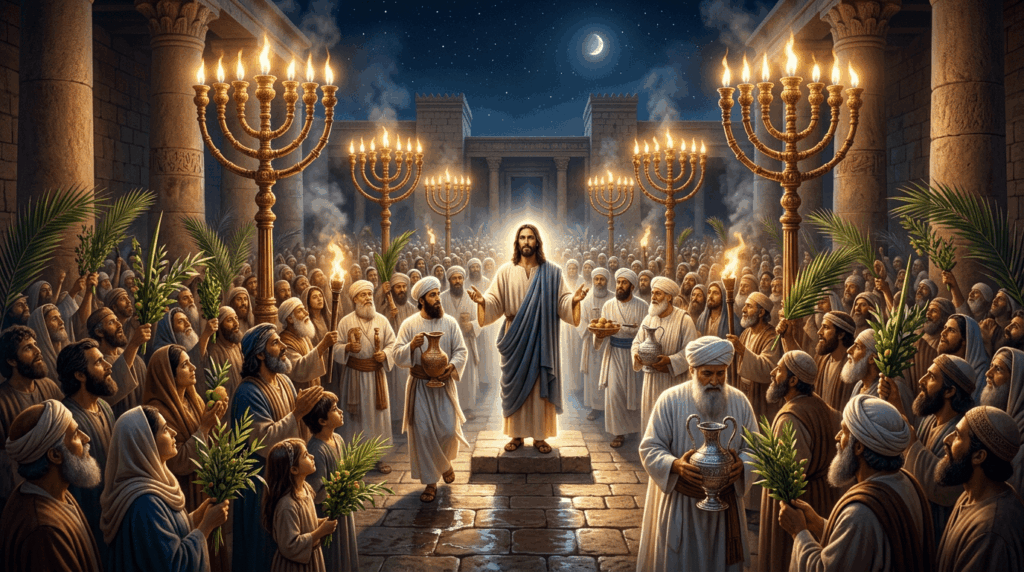
Se oli juhlien juhla, sillä tänä aikana voitiin toimittaa mikä tahansa uhri, jota ei ollut toimitettu jonkin toisen juhlan yhteydessä. Tämä oli temppelille annettujen uhrilahjojen vastaanottotilaisuus; loma-ajan huvitukset yhdistyivät tässä juhlassa uskonnollisen palvonnan juhlallisiin riitteihin. Käsillä oli aika, jolloin koko rotu riemuitsi, ja siinä sekoittuivat uhritoimitukset, leeviläiset psalmilaulut ja pappien hopeatorvien juhlavat törähdykset. Illalla tämän vaikuttavan näkymän ylle, temppeleineen ja pyhiinvaeltajajoukkoineen, lankesi sädehtivä valo naisten pihassa kirkkaasti palavista suurista kyntteliköistä ja niiden kymmenien soihtujen kajosta, jotka oli pystytetty eri puolille temppelipihoja. Koko kaupunki oli iloisesti koristeltu Antonian roomalaislinnaa lukuun ottamatta, joka synkän vastakohdan muodostaen katseli vuoreltaan tätä juhlavaa ja harrasta näyttämöä. Ja miten juutalaiset vihasivatkaan tuota laitosta, joka muistutti heitä alituiseen siitä, että he olivat Rooman ikeen alla!
Juhlan aikana uhrattiin seitsemänkymmentä härkää, jotka symboloivat pakanamaailman seitsemääkymmentä kansakuntaa. Vedenvuodatusseremonia symboloi jumalallisen hengen vuodattamista. Tätä vesiseremoniaa edelsi auringon noustessa toimeenpantu pappien ja leeviläisten kulkue. Hartaudenharjoittajat kulkivat alas Israelin pihasta Naisten pihaan johtavaa portaikkoa, samalla kun hopeatorvilla puhallettiin ilmoille törähdys toisensa perään. Sen jälkeen oikeauskoiset marssivat eteenpäin kohti Kaunistaporttia, joka avautui gentiilipihaan. Siellä he kääntyivät ympäri, kasvot kohti länttä, ja lauloivat toistamiseen psalmilaulujaan ja jatkoivat marssiaan symbolisen veden merkeissä.
Juhlan viimeisenä päivänä temppelipalvelun toimittajina oli lähes neljäsataaviisikymmentä pappia ja vastaava määrä leeviläisiä. Päivänkoitteessa pyhiinvaeltajat kaupungin kaikista osista kokoontuivat yhteen, ja jokainen kantoi oikeassa kädessään myrtin-, pajun- ja palmunoksakimppua, samalla kun jokainen vasemmassa kädessään kantoi paratiisinomenan – sitruunan eli ”kielletyn hedelmän” – oksaa. Pyhiinvaeltajat jakautuivat tätä varhaisen aamuhetken seremoniaa varten kolmeksi ryhmäksi. Yksi ryhmä jäi temppeliin ollakseen läsnä aamun uhritoimituksissa; toinen ryhmä marssi Jerusalemin alapuolelle, lähelle Mazaa, leikkaamaan pajunoksia uhrialttarin koristukseksi; kun kolmas ryhmä taas muodosti kulkueen, joka marssi vesiseremoniaa toimittavan papin jäljessä – tämä kantoi hopeatorvien törähdellessä kultaista kannua, joka oli määrä täyttää symbolisella vedellä – ulos temppelistä Oofelin kautta lähelle Siiloamia, jossa sijaitsi Lähdeportti. Sitten kun kultainen kannu oli Siiloamin lammikolla täytetty vedellä, kulkue marssi takaisin temppeliin niin, että se saapui Vesiportin kautta ja eteni suoraan pappien pihaan, jossa vesikannua kantavan papin seuraan liittyi juomauhriksi tarkoitettua viiniä kantava pappi. Molemmat papit astelivat sitten alttarin juurelle johtavien hopeakourujen ääreen ja kaatoivat kannujen sisällön näihin kouruihin. Tämän veden- ja viininkaatamisriitin toimittaminen oli paikalla oleville pyhiinvaeltajille merkki ryhtyä vuoronperään leeviläisten kanssa laulamaan psalmeja numerosta 113 numeroon 118. Ja näitä säkeitä toistaessaan he tapasivat huiskuttaa oksakimpuillaan alttarin edessä. Sitten seurasivat sen päivän uhritoimitukset, samalla kun toistettiin päivän psalmia, joka viimeisenä juhlapäivänä oli kahdeksaskymmeneskahdes psalmi, viidennestä säkeistöstä eteenpäin.
The presence of people from all of the known world, from Spain to India, made the feast of tabernacles an ideal occasion for Jesus for the first time publicly to proclaim his full gospel in Jerusalem. At this feast the people lived much in the open air, in leafy booths. It was the feast of the harvest ingathering, and coming, as it did, in the cool of the autumn months, it was more generally attended by the Jews of the world than was the Passover at the end of the winter or Pentecost at the beginning of summer. The apostles at last beheld their Master making the bold announcement of his mission on earth before all the world, as it were.
This was the feast of feasts, since any sacrifice not made at the other festivals could be made at this time. This was the occasion of the reception of the temple offerings; it was a combination of vacation pleasures with the solemn rites of religious worship. Here was a time of racial rejoicing, mingled with sacrifices, Levitical chants, and the solemn blasts of the silvery trumpets of the priests. At night the impressive spectacle of the temple and its pilgrim throngs was brilliantly illuminated by the great candelabras which burned brightly in the court of the women as well as by the glare of scores of torches standing about the temple courts. The entire city was gaily decorated except the Roman castle of Antonia, which looked down in grim contrast upon this festive and worshipful scene. And how the Jews did hate this ever-present reminder of the Roman yoke!
Seventy bullocks were sacrificed during the feast, the symbol of the seventy nations of heathendom. The ceremony of the outpouring of the water symbolized the outpouring of the divine spirit. This ceremony of the water followed the sunrise procession of the priests and Levites. The worshipers passed down the steps leading from the court of Israel to the court of the women while successive blasts were blown upon the silvery trumpets. And then the faithful marched on toward the Beautiful Gate, which opened upon the court of the gentiles. Here they turned about to face westward, to repeat their chants, and to continue their march for the symbolic water.
On the last day of the feast almost four hundred and fifty priests with a corresponding number of Levites officiated. At daybreak the pilgrims assembled from all parts of the city, each carrying in the right hand a sheaf of myrtle, willow, and palm branches, while in the left hand each one carried a branch of the paradise apple—the citron, or the “forbidden fruit.” These pilgrims divided into three groups for this early morning ceremony. One band remained at the temple to attend the morning sacrifices; another group marched down below Jerusalem to near Maza to cut the willow branches for the adornment of the sacrificial altar, while the third group formed a procession to march from the temple behind the water priest, who, to the sound of the silvery trumpets, bore the golden pitcher which was to contain the symbolic water, out through Ophel to near Siloam, where was located the fountain gate. After the golden pitcher had been filled at the pool of Siloam, the procession marched back to the temple, entering by way of the water gate and going directly to the court of the priests, where the priest bearing the water pitcher was joined by the priest bearing the wine for the drink offering. These two priests then repaired to the silver funnels leading to the base of the altar and poured the contents of the pitchers therein. The execution of this rite of pouring the wine and the water was the signal for the assembled pilgrims to begin the chanting of the Psalms from 113 to 118 inclusive, in alternation with the Levites. And as they repeated these lines, they would wave their sheaves at the altar. Then followed the sacrifices for the day, associated with the repeating of the Psalm for the day, the Psalm for the last day of the feast being the eighty-second, beginning with the fifth verse.
SuomiEnglish
Se, että läsnä oli väkeä koko tunnetun maailman piiristä, aina Espanjaa ja Intiaa myöten, teki lehtimajanjuhlasta Jeesuksen kannalta ihanteellisen tilaisuuden julistaa ensi kerran Jerusalemissa julkisesti koko evankeliuminsa. Tämän juhlan aikana ihmiset asuivat paljolti ulkosalla, lehtimajoissa. Kysymyksessä oli sadonkorjuujuhla, ja kun se näin ollen osui syyskuukausien viileään kauteen, maailmalla asuvat juutalaiset osallistuivat tähän juhlaan yleisemmin kuin talvikauden lopulla vietetyille pääsiäisjuhlille tai helluntaijuhlille alkukesästä. Apostolit näkivät Mestarinsa vihdoinkin tuovan rohkeasti julki, ikään kuin koko maailman edessä, mikä hänen tehtävänsä oli maan päällä.
The presence of people from all of the known world, from Spain to India, made the feast of tabernacles an ideal occasion for Jesus for the first time publicly to proclaim his full gospel in Jerusalem. At this feast the people lived much in the open air, in leafy booths. It was the feast of the harvest ingathering, and coming, as it did, in the cool of the autumn months, it was more generally attended by the Jews of the world than was the Passover at the end of the winter or Pentecost at the beginning of summer. The apostles at last beheld their Master making the bold announcement of his mission on earth before all the world, as it were.
Se oli juhlien juhla, sillä tänä aikana voitiin toimittaa mikä tahansa uhri, jota ei ollut toimitettu jonkin toisen juhlan yhteydessä. Tämä oli temppelille annettujen uhrilahjojen vastaanottotilaisuus; loma-ajan huvitukset yhdistyivät tässä juhlassa uskonnollisen palvonnan juhlallisiin riitteihin. Käsillä oli aika, jolloin koko rotu riemuitsi, ja siinä sekoittuivat uhritoimitukset, leeviläiset psalmilaulut ja pappien hopeatorvien juhlavat törähdykset. Illalla tämän vaikuttavan näkymän ylle, temppeleineen ja pyhiinvaeltajajoukkoineen, lankesi sädehtivä valo naisten pihassa kirkkaasti palavista suurista kyntteliköistä ja niiden kymmenien soihtujen kajosta, jotka oli pystytetty eri puolille temppelipihoja. Koko kaupunki oli iloisesti koristeltu Antonian roomalaislinnaa lukuun ottamatta, joka synkän vastakohdan muodostaen katseli vuoreltaan tätä juhlavaa ja harrasta näyttämöä. Ja miten juutalaiset vihasivatkaan tuota laitosta, joka muistutti heitä alituiseen siitä, että he olivat Rooman ikeen alla!
This was the feast of feasts, since any sacrifice not made at the other festivals could be made at this time. This was the occasion of the reception of the temple offerings; it was a combination of vacation pleasures with the solemn rites of religious worship. Here was a time of racial rejoicing, mingled with sacrifices, Levitical chants, and the solemn blasts of the silvery trumpets of the priests. At night the impressive spectacle of the temple and its pilgrim throngs was brilliantly illuminated by the great candelabras which burned brightly in the court of the women as well as by the glare of scores of torches standing about the temple courts. The entire city was gaily decorated except the Roman castle of Antonia, which looked down in grim contrast upon this festive and worshipful scene. And how the Jews did hate this ever-present reminder of the Roman yoke!
Juhlan aikana uhrattiin seitsemänkymmentä härkää, jotka symboloivat pakanamaailman seitsemääkymmentä kansakuntaa. Vedenvuodatusseremonia symboloi jumalallisen hengen vuodattamista. Tätä vesiseremoniaa edelsi auringon noustessa toimeenpantu pappien ja leeviläisten kulkue. Hartaudenharjoittajat kulkivat alas Israelin pihasta Naisten pihaan johtavaa portaikkoa, samalla kun hopeatorvilla puhallettiin ilmoille törähdys toisensa perään. Sen jälkeen oikeauskoiset marssivat eteenpäin kohti Kaunistaporttia, joka avautui gentiilipihaan. Siellä he kääntyivät ympäri, kasvot kohti länttä, ja lauloivat toistamiseen psalmilaulujaan ja jatkoivat marssiaan symbolisen veden merkeissä.
Seventy bullocks were sacrificed during the feast, the symbol of the seventy nations of heathendom. The ceremony of the outpouring of the water symbolized the outpouring of the divine spirit. This ceremony of the water followed the sunrise procession of the priests and Levites. The worshipers passed down the steps leading from the court of Israel to the court of the women while successive blasts were blown upon the silvery trumpets. And then the faithful marched on toward the Beautiful Gate, which opened upon the court of the gentiles. Here they turned about to face westward, to repeat their chants, and to continue their march for the symbolic water.
Juhlan viimeisenä päivänä temppelipalvelun toimittajina oli lähes neljäsataaviisikymmentä pappia ja vastaava määrä leeviläisiä. Päivänkoitteessa pyhiinvaeltajat kaupungin kaikista osista kokoontuivat yhteen, ja jokainen kantoi oikeassa kädessään myrtin-, pajun- ja palmunoksakimppua, samalla kun jokainen vasemmassa kädessään kantoi paratiisinomenan – sitruunan eli ”kielletyn hedelmän” – oksaa. Pyhiinvaeltajat jakautuivat tätä varhaisen aamuhetken seremoniaa varten kolmeksi ryhmäksi. Yksi ryhmä jäi temppeliin ollakseen läsnä aamun uhritoimituksissa; toinen ryhmä marssi Jerusalemin alapuolelle, lähelle Mazaa, leikkaamaan pajunoksia uhrialttarin koristukseksi; kun kolmas ryhmä taas muodosti kulkueen, joka marssi vesiseremoniaa toimittavan papin jäljessä – tämä kantoi hopeatorvien törähdellessä kultaista kannua, joka oli määrä täyttää symbolisella vedellä – ulos temppelistä Oofelin kautta lähelle Siiloamia, jossa sijaitsi Lähdeportti. Sitten kun kultainen kannu oli Siiloamin lammikolla täytetty vedellä, kulkue marssi takaisin temppeliin niin, että se saapui Vesiportin kautta ja eteni suoraan pappien pihaan, jossa vesikannua kantavan papin seuraan liittyi juomauhriksi tarkoitettua viiniä kantava pappi. Molemmat papit astelivat sitten alttarin juurelle johtavien hopeakourujen ääreen ja kaatoivat kannujen sisällön näihin kouruihin. Tämän veden- ja viininkaatamisriitin toimittaminen oli paikalla oleville pyhiinvaeltajille merkki ryhtyä vuoronperään leeviläisten kanssa laulamaan psalmeja numerosta 113 numeroon 118. Ja näitä säkeitä toistaessaan he tapasivat huiskuttaa oksakimpuillaan alttarin edessä. Sitten seurasivat sen päivän uhritoimitukset, samalla kun toistettiin päivän psalmia, joka viimeisenä juhlapäivänä oli kahdeksaskymmeneskahdes psalmi, viidennestä säkeistöstä eteenpäin.
On the last day of the feast almost four hundred and fifty priests with a corresponding number of Levites officiated. At daybreak the pilgrims assembled from all parts of the city, each carrying in the right hand a sheaf of myrtle, willow, and palm branches, while in the left hand each one carried a branch of the paradise apple—the citron, or the “forbidden fruit.” These pilgrims divided into three groups for this early morning ceremony. One band remained at the temple to attend the morning sacrifices; another group marched down below Jerusalem to near Maza to cut the willow branches for the adornment of the sacrificial altar, while the third group formed a procession to march from the temple behind the water priest, who, to the sound of the silvery trumpets, bore the golden pitcher which was to contain the symbolic water, out through Ophel to near Siloam, where was located the fountain gate. After the golden pitcher had been filled at the pool of Siloam, the procession marched back to the temple, entering by way of the water gate and going directly to the court of the priests, where the priest bearing the water pitcher was joined by the priest bearing the wine for the drink offering. These two priests then repaired to the silver funnels leading to the base of the altar and poured the contents of the pitchers therein. The execution of this rite of pouring the wine and the water was the signal for the assembled pilgrims to begin the chanting of the Psalms from 113 to 118 inclusive, in alternation with the Levites. And as they repeated these lines, they would wave their sheaves at the altar. Then followed the sacrifices for the day, associated with the repeating of the Psalm for the day, the Psalm for the last day of the feast being the eighty-second, beginning with the fifth verse.