
Teksti
Tausta
Näytä
Lisäasetukset
Kieli
Urantia Opas
Kysy kirjan sisällöstä. Opas vastaa Book Enginen omien lähdekohtien perusteella ja ohjaa sinut lukemaan ne.
Hei! 🙏
Olen sinun Urantia-oppaasi. Tehtäväni on auttaa sinua löytämään oikeat kohdat Urantia-kirjasta ja ymmärtämään sen opetuksia syvemmin. 😊❤️
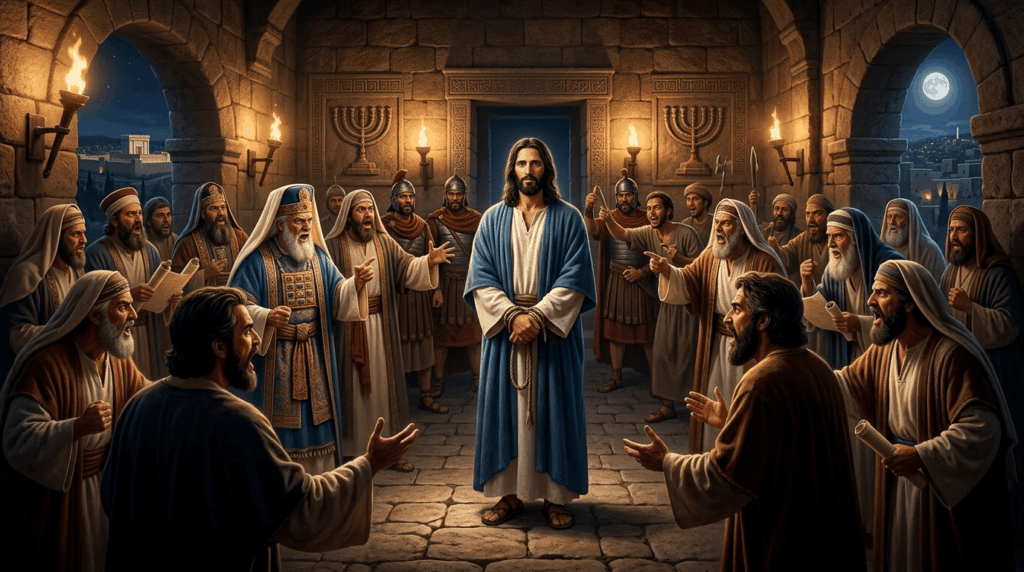
Vartijoiden ja sotilaiden osaston lähestyessä Hannaan palatsin sisäänkäyntiä Johannes Sebedeus marssi roomalaissotilaiden kapteenin vierellä. Juudas oli jättäytynyt jonkin matkaa muista jälkeen, ja Simon Pietari seurasi kaukana perässä. Kun Johannes oli Jeesuksen ja vartijoiden mukana astunut palatsin pihamaalle, Juudas tuli portille, mutta nähdessään Jeesuksen ja Johanneksen hän suuntasi kulkunsa Kaiafaan talolle, jossa varsinainen oikeudenkäynti Mestaria vastaan hänen tietämänsä mukaan myöhemmin pidettäisiin. Pian sen jälkeen kun Juudas oli mennyt matkojaan, paikalle saapui Simon Pietari, ja kun tämä seisoi portin edessä, Johannes näki hänet samana hetkenä, jolloin Jeesusta vietiin sisälle palatsiin. Ovenvartijatyttö, joka piti porttia auki, tunsi Johanneksen, ja tämän puhuteltua tyttöä ja pyydettyä häntä päästämään Pietari sisälle tyttö suostui pyyntöön ilomielin.
Pihamaalle astuttuaan Pietari meni hiilivalkean äärelle ja koetti saada itsensä lämpenemään, sillä yö oli kolea. Hän tunsi olevansa väärässä paikassa täällä Jeesuksen vihamiesten keskellä; ja väärässä paikassa hän totisesti oli. Mestarihan ei ollut antanut hänelle ohjetta pysytellä lähellään, kuten Mestari oli kehottanut Johannesta tekemään. Pietari kuului niihin muihin apostoleihin, joita oli erityisesti varoitettu olemaan vaarantamatta henkeään näinä heidän Mestarinsa oikeudenkäynnin ja ristiinnaulitsemisen tunteina.
Pietari heitti pois miekkansa vähän ennen kuin tuli palatsin portille, joten hän astui Hannaan pihalle aseettomana. Hänen mielessään myllersi täydellinen sekasorto. Hän kykeni vaivoin käsittämään, että Jeesus oli pidätetty. Hän ei pystynyt ymmärtämään tilanteen todellisuutta – sitä, että hän oli Hannaan pihamaalla ja lämmitteli ylipapin palvelijoiden vierellä. Hän ihmetteli, mitä muut apostolit mahtoivat puuhata, ja pyöritteli mielessään kysymystä, mistä syystä Johannes oli päästetty sisälle palatsiin. Hän päätteli tämän johtuneen siitä, että Johannes oli palvelijoiden tuttava, olihan tämä pyytänyt porttivahtia päästämään hänetkin sisäpuolelle.
Pian sen jälkeen kun oli päästänyt Pietarin portin sisäpuolelle, ja kun tämä lämmitteli tulen äärellä, porttivahti astui Pietarin luo ja sanoi pahanilkisesti: ”Etkös olekin tämän miehen opetuslapsia?” Pietarin ei olisi pitänyt yllättyä tästä tunnistetuksi tulemisestaan, juurihan Johannes oli pyytänyt tyttöä päästämään hänet sisälle palatsin porteista. Mutta hänen hermonsa olivat niin kireällä, että tämä opetuslapseksi tunnistaminen suisti hänet tolaltaan. Ja koska hänen mielessään oli päällimmäisenä vain yksi ajatus – ajatus hengissäsäilymisestä –, hän vastasi neitosen kysymykseen topakasti: ”Enkä ole.”
Ei aikaakaan, kun Pietarin luokse tuli muuan toinen palvelija, joka kysyi: ”Enkös minä nähnyt sinua puutarhassa, kun tämä kaveri pidätettiin? Etkö vain lienekin hänen seuralaisiaan?” Pietari oli jo suorastaan kauhuissaan; hän ei nähnyt mitään keinoa päästä turvallisesti pois näiden syyttäjien seurasta, ja niin hän kiivaasti kiisti, että hänellä olisi jotakin tekemistä Jeesuksen kanssa ja sanoi: ”Minä en tätä miestä tunne, enkä ole hänen seuralaisiaan.”
Portinvartijatar vei vähän ajan päästä Pietarin hieman syrjemmälle ja sanoi: ”Olen varma siitä, että olet tämän Jeesuksen opetuslapsia; eikä varmuuteni johdu vain siitä, että yksi hänen seuraajansa pyysi minua päästämään sinut pihalle, vaan myös siitä, että tämä sisareni tässä on nähnyt sinut temppelissä tuon miehen seurassa. Miksi sinä tämän kiellät?” Kuullessaan neitosen esittämän syytöksen Pietari kovasti kiroten ja vannoen kielsi tietävänsä mitään Jeesuksesta ja sanoi uudestaan: ”En ole tämän miehen seuraaja; en edes tunne häntä; en ole koskaan ennen kuullutkaan hänestä.”
Pietari poistui hetkeksi valkean ääreltä ja kuljeskeli pitkin pihamaata. Hän olisi mieluusti paennut paikalta, mutta hän pelkäsi joutua huomion keskipisteeksi. Kun häntä alkoi viluttaa, hän palasi tulen äärelle, ja yksi hänen lähellään seisovista miehistä sanoi: ”Tokihan sinä olet yksi tämän miehen opetuslapsista. Tämä Jeesushan on galilealainen, ja puhetapasi kavaltaa sinut, sillä sinäkin puhut kuten galilealainen.” Ja taas Pietari kiisti, että hänellä olisi jotakin tekemistä Mestarinsa kanssa.
Pietari oli niin poissa tolaltaan, että hän koetti päästä syyttäjiltään turvaan poistumalla tulen ääreltä ja pysyttelemällä yksikseen porttikäytävässä. Kun tätä yksinoloa oli jatkunut yli tunnin ajan, portinvartija ja tämän sisar sattuivat taas hänen eteensä, ja nämä molemmat syyttivät kiusoitellen häntä jälleen Jeesuksen seuraajaksi. Ja taas hän kiisti syytöksen. Ja juuri kun hän oli vielä kerran kiistänyt olevansa missään tekemisissä Jeesuksen kanssa, kiekui kukko, ja Pietari muisti Mestarinsa aiemmin samana yönä hänelle lausumat varoituksen sanat. Kun hän siinä seisoi sydän raskaana ja syyllisyydentunteen musertamana, palatsin ovet avautuivat, ja vartijat veivät Jeesuksen hänen ohitseen matkallaan Kaiafaan luokse. Ohittaessaan Pietarin Mestari näki soihtujen valossa epätoivon katseen entisen itsevarman ja ulkonaisesti urhean apostolinsa kasvoilla, ja hän kääntyi ja katsoi Pietaria. Pietari ei koskaan koko elämänsä aikana unohtanut tuota katsetta. Se oli katse, jossa sekoittuivat sääli ja rakkaus sellaisella tavalla, ettei yksikään kuolevainen ihminen ollut sellaista koskaan Mestarin kasvoilla nähnyt.
Jeesuksen ja vartijoiden mentyä ulos palatsin portista Pietari kulki heidän jäljessään, mutta vain lyhyen matkan. Hän ei kyennyt astumaan enää askeltakaan pitemmälle. Hän istuutui tien varteen ja itki katkerasti. Ja nämä tuskan kyynelet vuodatettuaan hän käänsi kulkunsa takaisin leiriä kohti ja toivoi, että hän löytäisi veljensä Andreaksen. Leirille saavuttuaan hän tapasi sieltä vain Daavid Sebedeuksen. Tämä lähetti sanansaattajan opastamaan Pietaria paikkaan, jossa tämän veli Jerusalemissa piileskeli.
Kaikki mitä Pietari äsken kerrotulla tavalla koki, tapahtui Öljymäellä, Hannaan palatsin pihalla. Hän ei seurannut Jeesusta ylimmäisen papin, Kaiafaan, palatsiin. Se, että juuri kukon kiekuminen sai Pietarin tajuamaan hänen useaan kertaan kieltäneen Mestarinsa, osoittaa tämän kaiken tapahtuneeksi Jerusalemin ulkopuolella, sillä siipikarjanpito varsinaisen kaupungin alueella oli vastoin lakia.
Ennen kuin kukon kiekuminen palautti Pietarin järkiinsä, hän oli lämpimikseen porttikäytävää edestakaisin kulkiessaan ajatellut vain, miten ovelasti hän olikaan väistänyt palvelijoiden esittämät syytökset ja miten hän oli tehnyt tyhjiksi heidän aikeensa yhdistää hänet Jeesukseen. Sillä hetkellä hän oli ollut vain sitä mieltä, ettei näillä palvelijoilla ollut mitään moraalista eikä laillista oikeutta sillä tavoin häntä kuulustella, ja hän tosiaankin onnitteli itseään siitä, kuinka neuvokkaasti luuli välttyneensä henkilöllisyytensä paljastumiselta sekä mahdolliselta pidättämiseltä ja vangitsemiselta. Vasta kun kukko kiekui, Pietarin mieleen juolahti, että hän oli kieltänyt Mestarinsa. Vasta Jeesuksen katsoessa häntä hän tajusi, ettei ollut kyennyt olemaan niiden etuoikeuksien arvoinen, jotka hänelle valtakunnan lähettiläänä kuuluivat.
Otettuaan ensimmäisen askelen tiellä, joka merkitsi kompromissien tekemistä ja menemistä siitä, missä aita on matalin, Pietari ei nähnyt muuta vaihtoehtoa kuin noudattaa edelleen toimintalinjaa, josta oli päätöksensä tehnyt. Siihen, että kerran väärälle tielle lähdettyään kääntyy ympäri ja lähtee oikealle tielle, vaaditaan suurta ja jaloa luonnetta. Aivan liian usein ihmisen oma mieli pyrkii keksimään oikeutuksen sille, miksi jatketaan erheen tiellä, kun sille kerran on astuttu.
Pietari ei koskaan täydelleen uskonut saavansa anteeksi, ennen kuin kohtasi Mestarinsa tämän kuolleistaheräämisen jälkeen ja huomasi, että hänet otettiin vastaan aivan kuin hänet oli otettu vastaan ennen tämän traagisen kiistämisten yön kokemuksia.
As the band of guards and soldiers approached the entrance to the palace of Annas, John Zebedee was marching by the side of the captain of the Roman soldiers. Judas had dropped some distance behind, and Simon Peter followed afar off. After John had entered the palace courtyard with Jesus and the guards, Judas came up to the gate but, seeing Jesus and John, went on over to the home of Caiaphas, where he knew the real trial of the Master would later take place. Soon after Judas had left, Simon Peter arrived, and as he stood before the gate, John saw him just as they were about to take Jesus into the palace. The portress who kept the gate knew John, and when he spoke to her, requesting that she let Peter in, she gladly assented.
Peter, upon entering the courtyard, went over to the charcoal fire and sought to warm himself, for the night was chilly. He felt very much out of place here among the enemies of Jesus, and indeed he was out of place. The Master had not instructed him to keep near at hand as he had admonished John. Peter belonged with the other apostles, who had been specifically warned not to endanger their lives during these times of the trial and crucifixion of their Master.
Peter threw away his sword shortly before he came up to the palace gate so that he entered the courtyard of Annas unarmed. His mind was in a whirl of confusion; he could scarcely realize that Jesus had been arrested. He could not grasp the reality of the situation—that he was here in the courtyard of Annas, warming himself beside the servants of the high priest. He wondered what the other apostles were doing and, in turning over in his mind as to how John came to be admitted to the palace, concluded that it was because he was known to the servants, since he had bidden the gate-keeper admit him.
Shortly after the portress let Peter in, and while he was warming himself by the fire, she went over to him and mischievously said, “Are you not also one of this man’s disciples?” Now Peter should not have been surprised at this recognition, for it was John who had requested that the girl let him pass through the palace gates; but he was in such a tense nervous state that this identification as a disciple threw him off his balance, and with only one thought uppermost in his mind—the thought of escaping with his life—he promptly answered the maid’s question by saying, “I am not.”
Very soon another servant came up to Peter and asked: “Did I not see you in the garden when they arrested this fellow? Are you not also one of his followers?” Peter was now thoroughly alarmed; he saw no way of safely escaping from these accusers; so he vehemently denied all connection with Jesus, saying, “I know not this man, neither am I one of his followers.”
About this time the portress of the gate drew Peter to one side and said: “I am sure you are a disciple of this Jesus, not only because one of his followers bade me let you in the courtyard, but my sister here has seen you in the temple with this man. Why do you deny this?” When Peter heard the maid accuse him, he denied all knowledge of Jesus with much cursing and swearing, again saying, “I am not this man’s follower; I do not even know him; I never heard of him before.”
Peter left the fireside for a time while he walked about the courtyard. He would have liked to have escaped, but he feared to attract attention to himself. Getting cold, he returned to the fireside, and one of the men standing near him said: “Surely you are one of this man’s disciples. This Jesus is a Galilean, and your speech betrays you, for you also speak as a Galilean.” And again Peter denied all connection with his Master.
Peter was so perturbed that he sought to escape contact with his accusers by going away from the fire and remaining by himself on the porch. After more than an hour of this isolation, the gate-keeper and her sister chanced to meet him, and both of them again teasingly charged him with being a follower of Jesus. And again he denied the accusation. Just as he had once more denied all connection with Jesus, the cock crowed, and Peter remembered the words of warning spoken to him by his Master earlier that same night. As he stood there, heavy of heart and crushed with the sense of guilt, the palace doors opened, and the guards led Jesus past on the way to Caiaphas. As the Master passed Peter, he saw, by the light of the torches, the look of despair on the face of his former self-confident and superficially brave apostle, and he turned and looked upon Peter. Peter never forgot that look as long as he lived. It was such a glance of commingled pity and love as mortal man had never beheld in the face of the Master.
After Jesus and the guards passed out of the palace gates, Peter followed them, but only for a short distance. He could not go farther. He sat down by the side of the road and wept bitterly. And when he had shed these tears of agony, he turned his steps back toward the camp, hoping to find his brother, Andrew. On arriving at the camp, he found only David Zebedee, who sent a messenger to direct him to where his brother had gone to hide in Jerusalem.
Peter’s entire experience occurred in the courtyard of the palace of Annas on Mount Olivet. He did not follow Jesus to the palace of the high priest, Caiaphas. That Peter was brought to the realization that he had repeatedly denied his Master by the crowing of a cock indicates that this all occurred outside of Jerusalem since it was against the law to keep poultry within the city proper.
Until the crowing of the cock brought Peter to his better senses, he had only thought, as he walked up and down the porch to keep warm, how cleverly he had eluded the accusations of the servants, and how he had frustrated their purpose to identify him with Jesus. For the time being, he had only considered that these servants had no moral or legal right thus to question him, and he really congratulated himself over the manner in which he thought he had avoided being identified and possibly subjected to arrest and imprisonment. Not until the cock crowed did it occur to Peter that he had denied his Master. Not until Jesus looked upon him, did he realize that he had failed to live up to his privileges as an ambassador of the kingdom.
Having taken the first step along the path of compromise and least resistance, there was nothing apparent to Peter but to go on with the course of conduct decided upon. It requires a great and noble character, having started out wrong, to turn about and go right. All too often one’s own mind tends to justify continuance in the path of error when once it is entered upon.
Peter never fully believed that he could be forgiven until he met his Master after the resurrection and saw that he was received just as before the experiences of this tragic night of the denials.
SuomiEnglish
Vartijoiden ja sotilaiden osaston lähestyessä Hannaan palatsin sisäänkäyntiä Johannes Sebedeus marssi roomalaissotilaiden kapteenin vierellä. Juudas oli jättäytynyt jonkin matkaa muista jälkeen, ja Simon Pietari seurasi kaukana perässä. Kun Johannes oli Jeesuksen ja vartijoiden mukana astunut palatsin pihamaalle, Juudas tuli portille, mutta nähdessään Jeesuksen ja Johanneksen hän suuntasi kulkunsa Kaiafaan talolle, jossa varsinainen oikeudenkäynti Mestaria vastaan hänen tietämänsä mukaan myöhemmin pidettäisiin. Pian sen jälkeen kun Juudas oli mennyt matkojaan, paikalle saapui Simon Pietari, ja kun tämä seisoi portin edessä, Johannes näki hänet samana hetkenä, jolloin Jeesusta vietiin sisälle palatsiin. Ovenvartijatyttö, joka piti porttia auki, tunsi Johanneksen, ja tämän puhuteltua tyttöä ja pyydettyä häntä päästämään Pietari sisälle tyttö suostui pyyntöön ilomielin.
As the band of guards and soldiers approached the entrance to the palace of Annas, John Zebedee was marching by the side of the captain of the Roman soldiers. Judas had dropped some distance behind, and Simon Peter followed afar off. After John had entered the palace courtyard with Jesus and the guards, Judas came up to the gate but, seeing Jesus and John, went on over to the home of Caiaphas, where he knew the real trial of the Master would later take place. Soon after Judas had left, Simon Peter arrived, and as he stood before the gate, John saw him just as they were about to take Jesus into the palace. The portress who kept the gate knew John, and when he spoke to her, requesting that she let Peter in, she gladly assented.
Pihamaalle astuttuaan Pietari meni hiilivalkean äärelle ja koetti saada itsensä lämpenemään, sillä yö oli kolea. Hän tunsi olevansa väärässä paikassa täällä Jeesuksen vihamiesten keskellä; ja väärässä paikassa hän totisesti oli. Mestarihan ei ollut antanut hänelle ohjetta pysytellä lähellään, kuten Mestari oli kehottanut Johannesta tekemään. Pietari kuului niihin muihin apostoleihin, joita oli erityisesti varoitettu olemaan vaarantamatta henkeään näinä heidän Mestarinsa oikeudenkäynnin ja ristiinnaulitsemisen tunteina.
Peter, upon entering the courtyard, went over to the charcoal fire and sought to warm himself, for the night was chilly. He felt very much out of place here among the enemies of Jesus, and indeed he was out of place. The Master had not instructed him to keep near at hand as he had admonished John. Peter belonged with the other apostles, who had been specifically warned not to endanger their lives during these times of the trial and crucifixion of their Master.
Pietari heitti pois miekkansa vähän ennen kuin tuli palatsin portille, joten hän astui Hannaan pihalle aseettomana. Hänen mielessään myllersi täydellinen sekasorto. Hän kykeni vaivoin käsittämään, että Jeesus oli pidätetty. Hän ei pystynyt ymmärtämään tilanteen todellisuutta – sitä, että hän oli Hannaan pihamaalla ja lämmitteli ylipapin palvelijoiden vierellä. Hän ihmetteli, mitä muut apostolit mahtoivat puuhata, ja pyöritteli mielessään kysymystä, mistä syystä Johannes oli päästetty sisälle palatsiin. Hän päätteli tämän johtuneen siitä, että Johannes oli palvelijoiden tuttava, olihan tämä pyytänyt porttivahtia päästämään hänetkin sisäpuolelle.
Peter threw away his sword shortly before he came up to the palace gate so that he entered the courtyard of Annas unarmed. His mind was in a whirl of confusion; he could scarcely realize that Jesus had been arrested. He could not grasp the reality of the situation—that he was here in the courtyard of Annas, warming himself beside the servants of the high priest. He wondered what the other apostles were doing and, in turning over in his mind as to how John came to be admitted to the palace, concluded that it was because he was known to the servants, since he had bidden the gate-keeper admit him.
Pian sen jälkeen kun oli päästänyt Pietarin portin sisäpuolelle, ja kun tämä lämmitteli tulen äärellä, porttivahti astui Pietarin luo ja sanoi pahanilkisesti: ”Etkös olekin tämän miehen opetuslapsia?” Pietarin ei olisi pitänyt yllättyä tästä tunnistetuksi tulemisestaan, juurihan Johannes oli pyytänyt tyttöä päästämään hänet sisälle palatsin porteista. Mutta hänen hermonsa olivat niin kireällä, että tämä opetuslapseksi tunnistaminen suisti hänet tolaltaan. Ja koska hänen mielessään oli päällimmäisenä vain yksi ajatus – ajatus hengissäsäilymisestä –, hän vastasi neitosen kysymykseen topakasti: ”Enkä ole.”
Shortly after the portress let Peter in, and while he was warming himself by the fire, she went over to him and mischievously said, “Are you not also one of this man’s disciples?” Now Peter should not have been surprised at this recognition, for it was John who had requested that the girl let him pass through the palace gates; but he was in such a tense nervous state that this identification as a disciple threw him off his balance, and with only one thought uppermost in his mind—the thought of escaping with his life—he promptly answered the maid’s question by saying, “I am not.”
Ei aikaakaan, kun Pietarin luokse tuli muuan toinen palvelija, joka kysyi: ”Enkös minä nähnyt sinua puutarhassa, kun tämä kaveri pidätettiin? Etkö vain lienekin hänen seuralaisiaan?” Pietari oli jo suorastaan kauhuissaan; hän ei nähnyt mitään keinoa päästä turvallisesti pois näiden syyttäjien seurasta, ja niin hän kiivaasti kiisti, että hänellä olisi jotakin tekemistä Jeesuksen kanssa ja sanoi: ”Minä en tätä miestä tunne, enkä ole hänen seuralaisiaan.”
Very soon another servant came up to Peter and asked: “Did I not see you in the garden when they arrested this fellow? Are you not also one of his followers?” Peter was now thoroughly alarmed; he saw no way of safely escaping from these accusers; so he vehemently denied all connection with Jesus, saying, “I know not this man, neither am I one of his followers.”
Portinvartijatar vei vähän ajan päästä Pietarin hieman syrjemmälle ja sanoi: ”Olen varma siitä, että olet tämän Jeesuksen opetuslapsia; eikä varmuuteni johdu vain siitä, että yksi hänen seuraajansa pyysi minua päästämään sinut pihalle, vaan myös siitä, että tämä sisareni tässä on nähnyt sinut temppelissä tuon miehen seurassa. Miksi sinä tämän kiellät?” Kuullessaan neitosen esittämän syytöksen Pietari kovasti kiroten ja vannoen kielsi tietävänsä mitään Jeesuksesta ja sanoi uudestaan: ”En ole tämän miehen seuraaja; en edes tunne häntä; en ole koskaan ennen kuullutkaan hänestä.”
About this time the portress of the gate drew Peter to one side and said: “I am sure you are a disciple of this Jesus, not only because one of his followers bade me let you in the courtyard, but my sister here has seen you in the temple with this man. Why do you deny this?” When Peter heard the maid accuse him, he denied all knowledge of Jesus with much cursing and swearing, again saying, “I am not this man’s follower; I do not even know him; I never heard of him before.”
Pietari poistui hetkeksi valkean ääreltä ja kuljeskeli pitkin pihamaata. Hän olisi mieluusti paennut paikalta, mutta hän pelkäsi joutua huomion keskipisteeksi. Kun häntä alkoi viluttaa, hän palasi tulen äärelle, ja yksi hänen lähellään seisovista miehistä sanoi: ”Tokihan sinä olet yksi tämän miehen opetuslapsista. Tämä Jeesushan on galilealainen, ja puhetapasi kavaltaa sinut, sillä sinäkin puhut kuten galilealainen.” Ja taas Pietari kiisti, että hänellä olisi jotakin tekemistä Mestarinsa kanssa.
Peter left the fireside for a time while he walked about the courtyard. He would have liked to have escaped, but he feared to attract attention to himself. Getting cold, he returned to the fireside, and one of the men standing near him said: “Surely you are one of this man’s disciples. This Jesus is a Galilean, and your speech betrays you, for you also speak as a Galilean.” And again Peter denied all connection with his Master.
Pietari oli niin poissa tolaltaan, että hän koetti päästä syyttäjiltään turvaan poistumalla tulen ääreltä ja pysyttelemällä yksikseen porttikäytävässä. Kun tätä yksinoloa oli jatkunut yli tunnin ajan, portinvartija ja tämän sisar sattuivat taas hänen eteensä, ja nämä molemmat syyttivät kiusoitellen häntä jälleen Jeesuksen seuraajaksi. Ja taas hän kiisti syytöksen. Ja juuri kun hän oli vielä kerran kiistänyt olevansa missään tekemisissä Jeesuksen kanssa, kiekui kukko, ja Pietari muisti Mestarinsa aiemmin samana yönä hänelle lausumat varoituksen sanat. Kun hän siinä seisoi sydän raskaana ja syyllisyydentunteen musertamana, palatsin ovet avautuivat, ja vartijat veivät Jeesuksen hänen ohitseen matkallaan Kaiafaan luokse. Ohittaessaan Pietarin Mestari näki soihtujen valossa epätoivon katseen entisen itsevarman ja ulkonaisesti urhean apostolinsa kasvoilla, ja hän kääntyi ja katsoi Pietaria. Pietari ei koskaan koko elämänsä aikana unohtanut tuota katsetta. Se oli katse, jossa sekoittuivat sääli ja rakkaus sellaisella tavalla, ettei yksikään kuolevainen ihminen ollut sellaista koskaan Mestarin kasvoilla nähnyt.
Peter was so perturbed that he sought to escape contact with his accusers by going away from the fire and remaining by himself on the porch. After more than an hour of this isolation, the gate-keeper and her sister chanced to meet him, and both of them again teasingly charged him with being a follower of Jesus. And again he denied the accusation. Just as he had once more denied all connection with Jesus, the cock crowed, and Peter remembered the words of warning spoken to him by his Master earlier that same night. As he stood there, heavy of heart and crushed with the sense of guilt, the palace doors opened, and the guards led Jesus past on the way to Caiaphas. As the Master passed Peter, he saw, by the light of the torches, the look of despair on the face of his former self-confident and superficially brave apostle, and he turned and looked upon Peter. Peter never forgot that look as long as he lived. It was such a glance of commingled pity and love as mortal man had never beheld in the face of the Master.
Jeesuksen ja vartijoiden mentyä ulos palatsin portista Pietari kulki heidän jäljessään, mutta vain lyhyen matkan. Hän ei kyennyt astumaan enää askeltakaan pitemmälle. Hän istuutui tien varteen ja itki katkerasti. Ja nämä tuskan kyynelet vuodatettuaan hän käänsi kulkunsa takaisin leiriä kohti ja toivoi, että hän löytäisi veljensä Andreaksen. Leirille saavuttuaan hän tapasi sieltä vain Daavid Sebedeuksen. Tämä lähetti sanansaattajan opastamaan Pietaria paikkaan, jossa tämän veli Jerusalemissa piileskeli.
After Jesus and the guards passed out of the palace gates, Peter followed them, but only for a short distance. He could not go farther. He sat down by the side of the road and wept bitterly. And when he had shed these tears of agony, he turned his steps back toward the camp, hoping to find his brother, Andrew. On arriving at the camp, he found only David Zebedee, who sent a messenger to direct him to where his brother had gone to hide in Jerusalem.
Kaikki mitä Pietari äsken kerrotulla tavalla koki, tapahtui Öljymäellä, Hannaan palatsin pihalla. Hän ei seurannut Jeesusta ylimmäisen papin, Kaiafaan, palatsiin. Se, että juuri kukon kiekuminen sai Pietarin tajuamaan hänen useaan kertaan kieltäneen Mestarinsa, osoittaa tämän kaiken tapahtuneeksi Jerusalemin ulkopuolella, sillä siipikarjanpito varsinaisen kaupungin alueella oli vastoin lakia.
Peter’s entire experience occurred in the courtyard of the palace of Annas on Mount Olivet. He did not follow Jesus to the palace of the high priest, Caiaphas. That Peter was brought to the realization that he had repeatedly denied his Master by the crowing of a cock indicates that this all occurred outside of Jerusalem since it was against the law to keep poultry within the city proper.
Ennen kuin kukon kiekuminen palautti Pietarin järkiinsä, hän oli lämpimikseen porttikäytävää edestakaisin kulkiessaan ajatellut vain, miten ovelasti hän olikaan väistänyt palvelijoiden esittämät syytökset ja miten hän oli tehnyt tyhjiksi heidän aikeensa yhdistää hänet Jeesukseen. Sillä hetkellä hän oli ollut vain sitä mieltä, ettei näillä palvelijoilla ollut mitään moraalista eikä laillista oikeutta sillä tavoin häntä kuulustella, ja hän tosiaankin onnitteli itseään siitä, kuinka neuvokkaasti luuli välttyneensä henkilöllisyytensä paljastumiselta sekä mahdolliselta pidättämiseltä ja vangitsemiselta. Vasta kun kukko kiekui, Pietarin mieleen juolahti, että hän oli kieltänyt Mestarinsa. Vasta Jeesuksen katsoessa häntä hän tajusi, ettei ollut kyennyt olemaan niiden etuoikeuksien arvoinen, jotka hänelle valtakunnan lähettiläänä kuuluivat.
Until the crowing of the cock brought Peter to his better senses, he had only thought, as he walked up and down the porch to keep warm, how cleverly he had eluded the accusations of the servants, and how he had frustrated their purpose to identify him with Jesus. For the time being, he had only considered that these servants had no moral or legal right thus to question him, and he really congratulated himself over the manner in which he thought he had avoided being identified and possibly subjected to arrest and imprisonment. Not until the cock crowed did it occur to Peter that he had denied his Master. Not until Jesus looked upon him, did he realize that he had failed to live up to his privileges as an ambassador of the kingdom.
Otettuaan ensimmäisen askelen tiellä, joka merkitsi kompromissien tekemistä ja menemistä siitä, missä aita on matalin, Pietari ei nähnyt muuta vaihtoehtoa kuin noudattaa edelleen toimintalinjaa, josta oli päätöksensä tehnyt. Siihen, että kerran väärälle tielle lähdettyään kääntyy ympäri ja lähtee oikealle tielle, vaaditaan suurta ja jaloa luonnetta. Aivan liian usein ihmisen oma mieli pyrkii keksimään oikeutuksen sille, miksi jatketaan erheen tiellä, kun sille kerran on astuttu.
Having taken the first step along the path of compromise and least resistance, there was nothing apparent to Peter but to go on with the course of conduct decided upon. It requires a great and noble character, having started out wrong, to turn about and go right. All too often one’s own mind tends to justify continuance in the path of error when once it is entered upon.
Pietari ei koskaan täydelleen uskonut saavansa anteeksi, ennen kuin kohtasi Mestarinsa tämän kuolleistaheräämisen jälkeen ja huomasi, että hänet otettiin vastaan aivan kuin hänet oli otettu vastaan ennen tämän traagisen kiistämisten yön kokemuksia.
Peter never fully believed that he could be forgiven until he met his Master after the resurrection and saw that he was received just as before the experiences of this tragic night of the denials.