
Teksti
Tausta
Näytä
Lisäasetukset
Kieli
Urantia Opas
Kysy kirjan sisällöstä. Opas vastaa Book Enginen omien lähdekohtien perusteella ja ohjaa sinut lukemaan ne.
Hei! 🙏
Olen sinun Urantia-oppaasi. Tehtäväni on auttaa sinua löytämään oikeat kohdat Urantia-kirjasta ja ymmärtämään sen opetuksia syvemmin. 😊❤️
KOKO siihen tapahtumaintäyteiseen elämänvaiheeseen, jonka Jeesus vietti maan päällä, ei sisältynyt tapahtumaa, joka olisi ollut kiehtovampi, inhimillisessä mielessä sävähdyttävämpi kuin tämä hänen muistamansa ensimmäinen käynti Jerusalemissa. Erityisen paljon virikkeitä hänelle antoi kokemus yksikseen tapahtuneesta osallistumisesta temppelikeskusteluihin, ja se säilyi kauan aikaa hänen muistissaan lapsuuden loppupuolen ja varhaisnuoruuden merkkitapauksena. Tuolloin hän pääsi ensimmäistä kertaa nauttimaan sellaisesta, että sai muutaman päivän ajan elää riippumattomana, riemuita siitä, että sai mennä ja tulla kenenkään estelemättä tai asettamatta rajoituksia. Tämä pääsiäisen jälkeiselle viikolle osunut lyhyt ajanjakso, jolloin kukaan ei ollut ohjaamassa, miten hän elämäänsä vietti, oli hänelle ensimmäinen tilaisuus olla kokonaan vapaa kaikesta vastuunkantamisesta. Ja tämän jälkeen kului monta vuotta, ennen kuin hänelle seuraavan kerran edes vähäksi aikaa suotiin samanlainen ajanjakso, jonka kestäessä hän saattoi tuntea itsensä kaikesta vastuusta vapaaksi.
Naiset olivat harvoin mukana Jerusalemin pääsiäisjuhlilla; heiltä ei edellytetty läsnä olemista. Jeesus kuitenkin itse asiassa kieltäytyi lähtemästä, ellei hänen äitinsä lähtisi heidän mukaansa. Ja hänen äitinsä tekemä lähtöpäätös sai monet muutkin Nasaretin naiset astumaan matkalle, niin että pääsiäisseurueeseen kuului naisia suhteessa miesten lukumäärään enemmän kuin Nasaretista oli pääsiäisjuhlille koskaan lähtenyt. Matkalla Jerusalemiin he vähän väliä lauloivat sadattakolmattakymmenettä psalmia.
Nasaretista-lähdön hetkestä aina siihen asti, kun he saavuttivat Öljymäen laen, Jeesus koki yhtä pitkää innokkaan odotuksen jännitystä. Koko huolettoman lapsuutensa ajan hän oli kunnioituksen vallassa kuunnellut puheita Jerusalemista ja sen temppelistä; nyt hän oli kohta näkevä ne todellisuudessa. Öljymäeltä katsottuna ja ulkopuolelta lähemmin tarkasteltuna temppeli olikin vastannut kaikkea, mitä Jeesus oli odottanut, ja enemmänkin. Mutta heti, kun hän astui sen pyhien porttien sisäpuolelle, pettymys seurasi pettymyksen perään.
Vanhempiensa seurassa Jeesus kulki temppelialueen läpi, kun hän oli menossa liittymään niiden uusien lain poikien ryhmään, jotka kohta vihittäisiin Israelin kansalaisiksi. Hän oli hieman pettynyt jo siihen, miten temppeliin kokoontunut väkijoukko yleensä käyttäytyi, mutta tuon päivän ensimmäisen suuren järkytyksen hän koki, kun hänen äitinsä erosi heidän seurastaan mennäkseen naisten parvelle. Jeesuksen mieleen ei ollut koskaan juolahtanut, ettei hänen äitinsä tulisi hänen mukanaan vihkimystilaisuuteen, ja hän oli perin pohjin närkästynyt siitä, että tämä joutui kokemaan näin epäoikeudenmukaista syrjintää. Vaikka asia häntä kovin harmittikin, hän ei muutamia isälleen esittämiä tyytymättömyyden ilmauksia lukuun ottamatta puhunut siitä mitään. Mutta hän ajatteli, ja hänen ajatuksensa olivat syvällisiä, kuten hänen viikkoa myöhemmin kirjanoppineille ja opettajille esittämänsä kysymykset osoittivat.
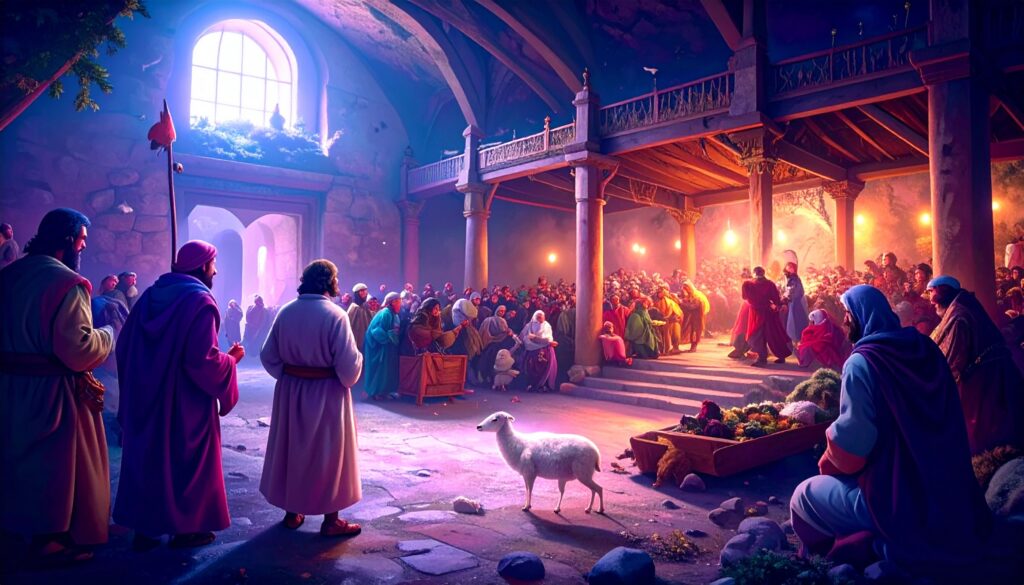
Hän kävi läpi pyhittäytymisrituaalit, mutta niiden pinnallinen ja rutiininomainen luonne oli hänelle pettymys. Hän kaipasi sitä henkilökohtaista kiinnostusta, joka oli ominaista Nasaretin synagogan seremonioille. Sitten hän palasi tervehtimään äitiään ja valmistautui lähtemään isänsä seurassa ensi kertaa tutustumaan temppeliin, sen moniin pihoihin, parviin ja käytäviin. Temppelitiloihin mahtui kerrallaan yli kaksisataatuhatta jumalanpalvelusvierasta, ja vaikka näiden rakennusten suunnattomuus – kaikkeen siihen verrattuna, mitä hän oli koskaan nähnyt – tekikin hänen mieleensä suuren vaikutuksen, temppeliseremonioiden ja niihin liittyvän palvonnan merkityksen pohdiskelu herätti hänessä kuitenkin enemmän kiinnostusta.
Vaikka monet temppelirituaalit koskettivat syvältä hänen kauneuden- ja symboliikantajuaan, hän pettyi joka kerta siihen selitykseen näiden seremonioiden todellisesta merkityksestä, jonka hänen vanhempansa tahtoivat tarjota vastaukseksi hänen moniin syvällisiin kyselyihinsä. Jeesus ei kerta kaikkiaan suostunut hyväksymään sellaisia selityksiä palvonnasta ja uskonnollisesta hartaudenharjoituksesta, jotka vaativat uskomaan Jumalan vihaan ja Kaikkivaltiaan kiivauteen. Näistä kysymyksistä keskusteltiin lisää, sen jälkeen kun temppelissäkäynti oli saatu päätökseen. Ja kun hänen isänsä lempeästi mutta itsepintaisesti vaati häntä ilmoittamaan, että hän hyväksyy puhdasoppiset juutalaiset uskonkäsitykset, Jeesus käänsi silmänräpäyksessä kasvonsa vanhempiensa puoleen ja sanoi isäänsä vetoavasti silmiin katsoen: ”Isäni, se ei voi olla totta – Isä, joka on taivaassa, ei voi sillä tavoin suhtautua erehtyviin lapsiinsa. Taivaallinen Isä ei voi rakastaa lapsiaan vähemmän kuin sinä rakastat minua. Ja tiedän vallan hyvin, että teinpä minkä hyvänsä harkitsemattoman teon, et koskaan vuodattaisi vihaasi päälleni etkä purkaisi kiukkuasi minuun. Jos sinussa, maisessa isässäni, ilmenee tällaisia inhimillisiä heijastumia Jumalallisesta, kuinka paljon enempänä täytyykään taivaallisessa Isässä ilmetä hyvyyden täyteys ja laupeuden ylitsevuotavuus. En suostu uskomaan, että taivaassa oleva Isäni rakastaa minua vähemmän kuin maan päällä oleva isäni.”
Nämä esikoispoikansa sanat kuultuaan Joosef ja Maria vaikenivat. Eivätkä he koskaan enää koettaneet muuttaa hänen mielipidettään Jumalan rakkaudesta ja taivaallisen Isän armahtavaisuudesta.
NO INCIDENT in all Jesus’ eventful earth career was more engaging, more humanly thrilling, than this, his first remembered visit to Jerusalem. He was especially stimulated by the experience of attending the temple discussions by himself, and it long stood out in his memory as the great event of his later childhood and early youth. This was his first opportunity to enjoy a few days of independent living, the exhilaration of going and coming without restraint and restrictions. This brief period of undirected living, during the week following the Passover, was the first complete freedom from responsibility he had ever enjoyed. And it was many years subsequent to this before he again had a like period of freedom from all sense of responsibility, even for a short time.
Women seldom went to the Passover feast at Jerusalem; they were not required to be present. Jesus, however, virtually refused to go unless his mother would accompany them. And when his mother decided to go, many other Nazareth women were led to make the journey, so that the Passover company contained the largest number of women, in proportion to men, ever to go up to the Passover from Nazareth. Ever and anon, on the way to Jerusalem, they chanted the one hundred and thirtieth Psalm.
From the time they left Nazareth until they reached the summit of the Mount of Olives, Jesus experienced one long stress of expectant anticipation. All through a joyful childhood he had reverently heard of Jerusalem and its temple; now he was soon to behold them in reality. From the Mount of Olives and from the outside, on closer inspection, the temple had been all and more than Jesus had expected; but when he once entered its sacred portals, the great disillusionment began.
In company with his parents Jesus passed through the temple precincts on his way to join that group of new sons of the law who were about to be consecrated as citizens of Israel. He was a little disappointed by the general demeanor of the temple throngs, but the first great shock of the day came when his mother took leave of them on her way to the women’s gallery. It had never occurred to Jesus that his mother was not to accompany him to the consecration ceremonies, and he was thoroughly indignant that she was made to suffer from such unjust discrimination. While he strongly resented this, aside from a few remarks of protest to his father, he said nothing. But he thought, and thought deeply, as his questions to the scribes and teachers a week later disclosed.
He passed through the consecration rituals but was disappointed by their perfunctory and routine natures. He missed that personal interest which characterized the ceremonies of the synagogue at Nazareth. He then returned to greet his mother and prepared to accompany his father on his first trip about the temple and its various courts, galleries, and corridors. The temple precincts could accommodate over two hundred thousand worshipers at one time, and while the vastness of these buildings—in comparison with any he had ever seen—greatly impressed his mind, he was more intrigued by the contemplation of the spiritual significance of the temple ceremonies and their associated worship.
Though many of the temple rituals very touchingly impressed his sense of the beautiful and the symbolic, he was always disappointed by the explanation of the real meanings of these ceremonies which his parents would offer in answer to his many searching inquiries. Jesus simply would not accept explanations of worship and religious devotion which involved belief in the wrath of God or the anger of the Almighty. In further discussion of these questions, after the conclusion of the temple visit, when his father became mildly insistent that he acknowledge acceptance of the orthodox Jewish beliefs, Jesus turned suddenly upon his parents and, looking appealingly into the eyes of his father, said: “My father, it cannot be true—the Father in heaven cannot so regard his erring children on earth. The heavenly Father cannot love his children less than you love me. And I well know, no matter what unwise thing I might do, you would never pour out wrath upon me nor vent anger against me. If you, my earthly father, possess such human reflections of the Divine, how much more must the heavenly Father be filled with goodness and overflowing with mercy. I refuse to believe that my Father in heaven loves me less than my father on earth.”
When Joseph and Mary heard these words of their first-born son, they held their peace. And never again did they seek to change his mind about the love of God and the mercifulness of the Father in heaven.
SuomiEnglish
KOKO siihen tapahtumaintäyteiseen elämänvaiheeseen, jonka Jeesus vietti maan päällä, ei sisältynyt tapahtumaa, joka olisi ollut kiehtovampi, inhimillisessä mielessä sävähdyttävämpi kuin tämä hänen muistamansa ensimmäinen käynti Jerusalemissa. Erityisen paljon virikkeitä hänelle antoi kokemus yksikseen tapahtuneesta osallistumisesta temppelikeskusteluihin, ja se säilyi kauan aikaa hänen muistissaan lapsuuden loppupuolen ja varhaisnuoruuden merkkitapauksena. Tuolloin hän pääsi ensimmäistä kertaa nauttimaan sellaisesta, että sai muutaman päivän ajan elää riippumattomana, riemuita siitä, että sai mennä ja tulla kenenkään estelemättä tai asettamatta rajoituksia. Tämä pääsiäisen jälkeiselle viikolle osunut lyhyt ajanjakso, jolloin kukaan ei ollut ohjaamassa, miten hän elämäänsä vietti, oli hänelle ensimmäinen tilaisuus olla kokonaan vapaa kaikesta vastuunkantamisesta. Ja tämän jälkeen kului monta vuotta, ennen kuin hänelle seuraavan kerran edes vähäksi aikaa suotiin samanlainen ajanjakso, jonka kestäessä hän saattoi tuntea itsensä kaikesta vastuusta vapaaksi.
NO INCIDENT in all Jesus’ eventful earth career was more engaging, more humanly thrilling, than this, his first remembered visit to Jerusalem. He was especially stimulated by the experience of attending the temple discussions by himself, and it long stood out in his memory as the great event of his later childhood and early youth. This was his first opportunity to enjoy a few days of independent living, the exhilaration of going and coming without restraint and restrictions. This brief period of undirected living, during the week following the Passover, was the first complete freedom from responsibility he had ever enjoyed. And it was many years subsequent to this before he again had a like period of freedom from all sense of responsibility, even for a short time.
Naiset olivat harvoin mukana Jerusalemin pääsiäisjuhlilla; heiltä ei edellytetty läsnä olemista. Jeesus kuitenkin itse asiassa kieltäytyi lähtemästä, ellei hänen äitinsä lähtisi heidän mukaansa. Ja hänen äitinsä tekemä lähtöpäätös sai monet muutkin Nasaretin naiset astumaan matkalle, niin että pääsiäisseurueeseen kuului naisia suhteessa miesten lukumäärään enemmän kuin Nasaretista oli pääsiäisjuhlille koskaan lähtenyt. Matkalla Jerusalemiin he vähän väliä lauloivat sadattakolmattakymmenettä psalmia.
Women seldom went to the Passover feast at Jerusalem; they were not required to be present. Jesus, however, virtually refused to go unless his mother would accompany them. And when his mother decided to go, many other Nazareth women were led to make the journey, so that the Passover company contained the largest number of women, in proportion to men, ever to go up to the Passover from Nazareth. Ever and anon, on the way to Jerusalem, they chanted the one hundred and thirtieth Psalm.
Nasaretista-lähdön hetkestä aina siihen asti, kun he saavuttivat Öljymäen laen, Jeesus koki yhtä pitkää innokkaan odotuksen jännitystä. Koko huolettoman lapsuutensa ajan hän oli kunnioituksen vallassa kuunnellut puheita Jerusalemista ja sen temppelistä; nyt hän oli kohta näkevä ne todellisuudessa. Öljymäeltä katsottuna ja ulkopuolelta lähemmin tarkasteltuna temppeli olikin vastannut kaikkea, mitä Jeesus oli odottanut, ja enemmänkin. Mutta heti, kun hän astui sen pyhien porttien sisäpuolelle, pettymys seurasi pettymyksen perään.
From the time they left Nazareth until they reached the summit of the Mount of Olives, Jesus experienced one long stress of expectant anticipation. All through a joyful childhood he had reverently heard of Jerusalem and its temple; now he was soon to behold them in reality. From the Mount of Olives and from the outside, on closer inspection, the temple had been all and more than Jesus had expected; but when he once entered its sacred portals, the great disillusionment began.
Vanhempiensa seurassa Jeesus kulki temppelialueen läpi, kun hän oli menossa liittymään niiden uusien lain poikien ryhmään, jotka kohta vihittäisiin Israelin kansalaisiksi. Hän oli hieman pettynyt jo siihen, miten temppeliin kokoontunut väkijoukko yleensä käyttäytyi, mutta tuon päivän ensimmäisen suuren järkytyksen hän koki, kun hänen äitinsä erosi heidän seurastaan mennäkseen naisten parvelle. Jeesuksen mieleen ei ollut koskaan juolahtanut, ettei hänen äitinsä tulisi hänen mukanaan vihkimystilaisuuteen, ja hän oli perin pohjin närkästynyt siitä, että tämä joutui kokemaan näin epäoikeudenmukaista syrjintää. Vaikka asia häntä kovin harmittikin, hän ei muutamia isälleen esittämiä tyytymättömyyden ilmauksia lukuun ottamatta puhunut siitä mitään. Mutta hän ajatteli, ja hänen ajatuksensa olivat syvällisiä, kuten hänen viikkoa myöhemmin kirjanoppineille ja opettajille esittämänsä kysymykset osoittivat.
In company with his parents Jesus passed through the temple precincts on his way to join that group of new sons of the law who were about to be consecrated as citizens of Israel. He was a little disappointed by the general demeanor of the temple throngs, but the first great shock of the day came when his mother took leave of them on her way to the women’s gallery. It had never occurred to Jesus that his mother was not to accompany him to the consecration ceremonies, and he was thoroughly indignant that she was made to suffer from such unjust discrimination. While he strongly resented this, aside from a few remarks of protest to his father, he said nothing. But he thought, and thought deeply, as his questions to the scribes and teachers a week later disclosed.
Hän kävi läpi pyhittäytymisrituaalit, mutta niiden pinnallinen ja rutiininomainen luonne oli hänelle pettymys. Hän kaipasi sitä henkilökohtaista kiinnostusta, joka oli ominaista Nasaretin synagogan seremonioille. Sitten hän palasi tervehtimään äitiään ja valmistautui lähtemään isänsä seurassa ensi kertaa tutustumaan temppeliin, sen moniin pihoihin, parviin ja käytäviin. Temppelitiloihin mahtui kerrallaan yli kaksisataatuhatta jumalanpalvelusvierasta, ja vaikka näiden rakennusten suunnattomuus – kaikkeen siihen verrattuna, mitä hän oli koskaan nähnyt – tekikin hänen mieleensä suuren vaikutuksen, temppeliseremonioiden ja niihin liittyvän palvonnan merkityksen pohdiskelu herätti hänessä kuitenkin enemmän kiinnostusta.
He passed through the consecration rituals but was disappointed by their perfunctory and routine natures. He missed that personal interest which characterized the ceremonies of the synagogue at Nazareth. He then returned to greet his mother and prepared to accompany his father on his first trip about the temple and its various courts, galleries, and corridors. The temple precincts could accommodate over two hundred thousand worshipers at one time, and while the vastness of these buildings—in comparison with any he had ever seen—greatly impressed his mind, he was more intrigued by the contemplation of the spiritual significance of the temple ceremonies and their associated worship.
Vaikka monet temppelirituaalit koskettivat syvältä hänen kauneuden- ja symboliikantajuaan, hän pettyi joka kerta siihen selitykseen näiden seremonioiden todellisesta merkityksestä, jonka hänen vanhempansa tahtoivat tarjota vastaukseksi hänen moniin syvällisiin kyselyihinsä. Jeesus ei kerta kaikkiaan suostunut hyväksymään sellaisia selityksiä palvonnasta ja uskonnollisesta hartaudenharjoituksesta, jotka vaativat uskomaan Jumalan vihaan ja Kaikkivaltiaan kiivauteen. Näistä kysymyksistä keskusteltiin lisää, sen jälkeen kun temppelissäkäynti oli saatu päätökseen. Ja kun hänen isänsä lempeästi mutta itsepintaisesti vaati häntä ilmoittamaan, että hän hyväksyy puhdasoppiset juutalaiset uskonkäsitykset, Jeesus käänsi silmänräpäyksessä kasvonsa vanhempiensa puoleen ja sanoi isäänsä vetoavasti silmiin katsoen: ”Isäni, se ei voi olla totta – Isä, joka on taivaassa, ei voi sillä tavoin suhtautua erehtyviin lapsiinsa. Taivaallinen Isä ei voi rakastaa lapsiaan vähemmän kuin sinä rakastat minua. Ja tiedän vallan hyvin, että teinpä minkä hyvänsä harkitsemattoman teon, et koskaan vuodattaisi vihaasi päälleni etkä purkaisi kiukkuasi minuun. Jos sinussa, maisessa isässäni, ilmenee tällaisia inhimillisiä heijastumia Jumalallisesta, kuinka paljon enempänä täytyykään taivaallisessa Isässä ilmetä hyvyyden täyteys ja laupeuden ylitsevuotavuus. En suostu uskomaan, että taivaassa oleva Isäni rakastaa minua vähemmän kuin maan päällä oleva isäni.”
Though many of the temple rituals very touchingly impressed his sense of the beautiful and the symbolic, he was always disappointed by the explanation of the real meanings of these ceremonies which his parents would offer in answer to his many searching inquiries. Jesus simply would not accept explanations of worship and religious devotion which involved belief in the wrath of God or the anger of the Almighty. In further discussion of these questions, after the conclusion of the temple visit, when his father became mildly insistent that he acknowledge acceptance of the orthodox Jewish beliefs, Jesus turned suddenly upon his parents and, looking appealingly into the eyes of his father, said: “My father, it cannot be true—the Father in heaven cannot so regard his erring children on earth. The heavenly Father cannot love his children less than you love me. And I well know, no matter what unwise thing I might do, you would never pour out wrath upon me nor vent anger against me. If you, my earthly father, possess such human reflections of the Divine, how much more must the heavenly Father be filled with goodness and overflowing with mercy. I refuse to believe that my Father in heaven loves me less than my father on earth.”
Nämä esikoispoikansa sanat kuultuaan Joosef ja Maria vaikenivat. Eivätkä he koskaan enää koettaneet muuttaa hänen mielipidettään Jumalan rakkaudesta ja taivaallisen Isän armahtavaisuudesta.
When Joseph and Mary heard these words of their first-born son, they held their peace. And never again did they seek to change his mind about the love of God and the mercifulness of the Father in heaven.