
Teksti
Tausta
Näytä
Lisäasetukset
Kieli
Urantia Opas
Kysy kirjan sisällöstä. Opas vastaa Book Enginen omien lähdekohtien perusteella ja ohjaa sinut lukemaan ne.
Hei! 🙏
Olen sinun Urantia-oppaasi. Tehtäväni on auttaa sinua löytämään oikeat kohdat Urantia-kirjasta ja ymmärtämään sen opetuksia syvemmin. 😊❤️
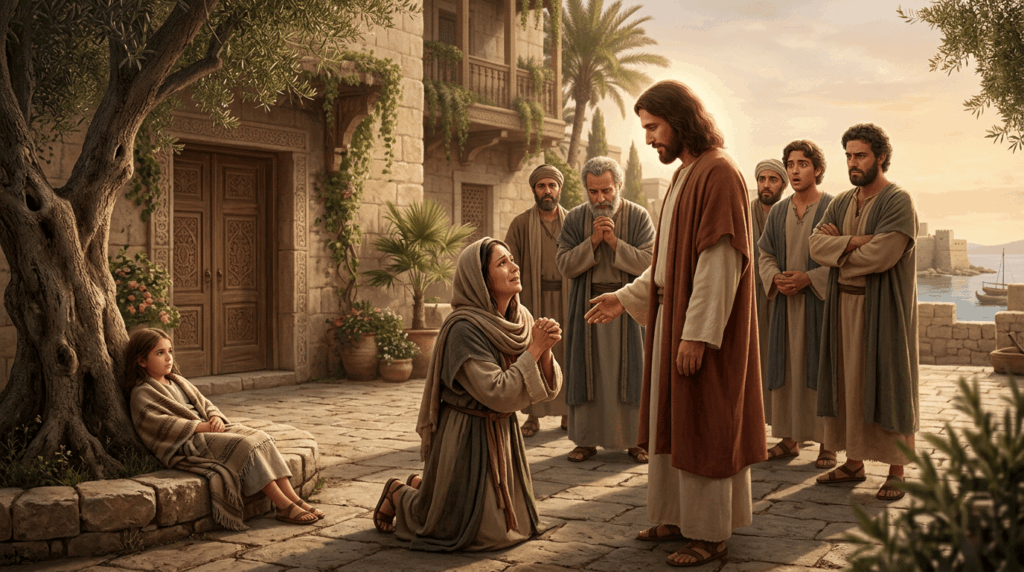
Lähellä Karuskan kotia, jonne Mestari oli majoittunut, asui muuan syyrialaisnainen, joka oli kuullut paljon Jeesuksesta suurena parantajana ja opettajana, ja tänä sapatin iltapäivänä nainen tuli paikalle tuoden mukanaan pikku tyttärensä. Tämä noin kaksitoistavuotias lapsi kärsi vakavasta hermostohäiriöstä, jolle olivat ominaisia kouristukset ja muut tuskalliset oireet.
Jeesus oli velvoittanut työtoverinsa olemaan kertomatta kenellekään, että hän oli Karuskan kodissa, sillä oman selityksensä mukaan hän halusi levätä. Vaikka he olivat noudattaneet Mestarinsa ohjeita, Karuskan palvelija oli kuitenkin mennyt mainitun syyrialaisnaisen, Noranan, taloon ilmoittamaan tälle, että Jeesus oli majoittunut hänen emäntänsä kotiin, ja hän oli kehottanut tätä huolestunutta äitiä tuomaan vaivatun tyttärensä parannettavaksi. Äiti tietenkin uskoi lapsensa olevan demonin, saastaisen hengen, riivaama.
Kun Norana saapui tyttärineen, Alfeuksen kaksoset selittivät tulkin välityksellä, että Mestari oli lepäämässä, eikä häntä voinut häiritä. Norana vastasi tähän, että hän ja lapsi jäisivät niille sijoilleen, kunnes Mestari olisi saanut levätyksi. Myös Pietari koetti puhua hänelle järkeä ja suostutella häntä menemään kotiinsa. Pietari selitti, että Jeesus oli paljosta opettamisesta ja parantamisesta uupunut ja että tämä oli saapunut Foinikiaan saadakseen edes jonkin aikaa nauttia hiljaisuudesta ja levosta. Mutta tällainen puhe oli turhaa; Norana ei suostunut poistumaan. Pietarin pyyntöihin hän vastasi vain: ”En lähde minnekään, ennen kuin olen tavannut Mestarisi. Tiedän, että hän kykenee ajamaan riivaajan ulos lapsestani, enkä poistu täältä, ennen kuin parantaja on katsonut tytärtäni.”
Seuraavaksi Tuomas koetti saada naista poistumaan, mutta hänkin epäonnistui. Tuomakselle nainen sanoi: ”Uskon, että Mestarisi pystyy ajamaan ulos tämän riivaajan, joka piinaa lastani. Olen kuullut hänen Galileassa suorittamistaan voimallisista teoista ja uskon häneen. Mitä teille, hänen opetuslapsilleen, on tapahtunut, kun tahtoisitte lähettää matkoihinsa ne, jotka tulevat pyytämään Mestarinne apua?” Ja kun nainen oli tuolla tavoin puhunut, Tuomas vetäytyi paikalta.
Sitten siihen tuli Simon Selootti Noranaa nuhtelemaan. Simon sanoi: ”Vaimo, sinähän olet kreikankielinen pakana. Ei ole oikein, että odotat Mestarin ottavan suosiossa olevaan talouteen kuuluville lapsille tarkoitetun leivän ja heittävän sen koirille.” Mutta Norana ei suostunut loukkaantumaan Simonin tölväisystä. Hän vastasi vain: ”Ymmärrän toki sanasi, opettaja. Juutalaisten silmissähän minä olen vain koira, mutta Mestarisi kannalta olen uskova koira. Olen peruuttamattomasti päättänyt, että hänen täytyy nähdä tyttäreni, sillä olen vakuuttunut siitä, ettei hänen tarvitse kuin katsoa tytärtäni, ja hän on tämän parantava. Ei kai sinullakaan, hyvä mies, sentään ole otsaa riistää koirilta oikeutta murusiin, jotka sattuvat varisemaan lasten pöydältä.”
Siinä samassa tyttönen sai heidän kaikkien silmiensä edessä ankaran kouristuskohtauksen, ja äiti suorastaan huusi: ”No niin, siinä nyt näette, että lapseni on pahan hengen riivaama. Ellei hätämme teihin teekään vaikutusta, ainakin se vetoaisi Mestariinne, joka kuulemani mukaan rakastaa kaikkia ihmisiä ja rohkenee parantaa jopa pakanat, kunhan nämä uskovat. Ette ole sen arvoisia, että olisitte hänen opetuslapsiaan. En lähde, ennen kuin lapseni on parannettu.”
Jeesus, joka oli avoimen ikkunan kautta kuullut koko tämän keskustelun, tuli nyt – heidän suureksi hämmästyksekseen – ulos ja sanoi: ”Oi vaimo, suuri on sinun uskosi, niin suuri, etten voi evätä sinulta, mitä haluat. Kulje tietäsi rauhassa. Tyttäresi on jo tehty terveeksi.” Ja tyttönen oli siitä hetkestä alkaen terve. Kun Norana ja lapsi lausuivat hyvästejään, Jeesus esitti pyynnön läsnäoleville, etteivät nämä kertoisi tästä tapahtumasta kenellekään. Ja vaikka hänen työtoverinsa noudattivatkin tätä pyyntöä, äiti ja lapsi kulkivat lakkaamatta pitkin maaseutua ja jopa Siidonissa asti levittämässä tietoa pikkutytön parantamisesta, ja tämän johdosta Jeesus muutaman päivän kuluttua katsoi viisaaksi vaihtaa majapaikkaansa.
Kun Jeesus seuraavana päivänä opetti apostolejaan ja esitti näkökohtiaan syyrialaisnaisen tyttären paranemisesta, hän sanoi: ”Ja näin on ollut koko ajan. Näettehän itsekin, kuinka ei-juutalaiset kykenevät harjoittamaan pelastavaa uskoa taivaan valtakunnan evankeliumin opetuksiin. Totisesti, totisesti minä sanon teille, että ei-juutalaiset tulevat valtaamaan Isän valtakunnan, elleivät Abrahamin lapset välitä osoittaa sen vertaa uskoa, että astuisivat sinne sisälle.”
There lived near the home of Karuska, where the Master lodged, a Syrian woman who had heard much of Jesus as a great healer and teacher, and on this Sabbath afternoon she came over, bringing her little daughter. The child, about twelve years old, was afflicted with a grievous nervous disorder characterized by convulsions and other distressing manifestations.
Jesus had charged his associates to tell no one of his presence at the home of Karuska, explaining that he desired to have a rest. While they had obeyed their Master’s instructions, the servant of Karuska had gone over to the house of this Syrian woman, Norana, to inform her that Jesus lodged at the home of her mistress and had urged this anxious mother to bring her afflicted daughter for healing. This mother, of course, believed that her child was possessed by a demon, an unclean spirit.
When Norana arrived with her daughter, the Alpheus twins explained through an interpreter that the Master was resting and could not be disturbed; whereupon Norana replied that she and the child would remain right there until the Master had finished his rest. Peter also endeavored to reason with her and to persuade her to go home. He explained that Jesus was weary with much teaching and healing, and that he had come to Phoenicia for a period of quiet and rest. But it was futile; Norana would not leave. To Peter’s entreaties she replied only: “I will not depart until I have seen your Master. I know he can cast the demon out of my child, and I will not go until the healer has looked upon my daughter.”
Then Thomas sought to send the woman away but met only with failure. To him she said: “I have faith that your Master can cast out this demon which torments my child. I have heard of his mighty works in Galilee, and I believe in him. What has happened to you, his disciples, that you would send away those who come seeking your Master’s help?” And when she had thus spoken, Thomas withdrew.
Then came forward Simon Zelotes to remonstrate with Norana. Said Simon: “Woman, you are a Greek-speaking gentile. It is not right that you should expect the Master to take the bread intended for the children of the favored household and cast it to the dogs.” But Norana refused to take offense at Simon’s thrust. She replied only: “Yes, teacher, I understand your words. I am only a dog in the eyes of the Jews, but as concerns your Master, I am a believing dog. I am determined that he shall see my daughter, for I am persuaded that, if he shall but look upon her, he will heal her. And even you, my good man, would not dare to deprive the dogs of the privilege of obtaining the crumbs which chance to fall from the children’s table.”
At just this time the little girl was seized with a violent convulsion before them all, and the mother cried out: “There, you can see that my child is possessed by an evil spirit. If our need does not impress you, it would appeal to your Master, who I have been told loves all men and dares even to heal the gentiles when they believe. You are not worthy to be his disciples. I will not go until my child has been cured.”
Jesus, who had heard all of this conversation through an open window, now came outside, much to their surprise, and said: “O woman, great is your faith, so great that I cannot withhold that which you desire; go your way in peace. Your daughter already has been made whole.” And the little girl was well from that hour. As Norana and the child took leave, Jesus entreated them to tell no one of this occurrence; and while his associates did comply with this request, the mother and the child ceased not to proclaim the fact of the little girl’s healing throughout all the countryside and even in Sidon, so much so that Jesus found it advisable to change his lodgings within a few days.
The next day, as Jesus taught his apostles, commenting on the cure of the daughter of the Syrian woman, he said: “And so it has been all the way along; you see for yourselves how the gentiles are able to exercise saving faith in the teachings of the gospel of the kingdom of heaven. Verily, verily, I tell you that the Father’s kingdom shall be taken by the gentiles if the children of Abraham are not minded to show faith enough to enter therein.”
SuomiEnglish
Lähellä Karuskan kotia, jonne Mestari oli majoittunut, asui muuan syyrialaisnainen, joka oli kuullut paljon Jeesuksesta suurena parantajana ja opettajana, ja tänä sapatin iltapäivänä nainen tuli paikalle tuoden mukanaan pikku tyttärensä. Tämä noin kaksitoistavuotias lapsi kärsi vakavasta hermostohäiriöstä, jolle olivat ominaisia kouristukset ja muut tuskalliset oireet.
There lived near the home of Karuska, where the Master lodged, a Syrian woman who had heard much of Jesus as a great healer and teacher, and on this Sabbath afternoon she came over, bringing her little daughter. The child, about twelve years old, was afflicted with a grievous nervous disorder characterized by convulsions and other distressing manifestations.
Jeesus oli velvoittanut työtoverinsa olemaan kertomatta kenellekään, että hän oli Karuskan kodissa, sillä oman selityksensä mukaan hän halusi levätä. Vaikka he olivat noudattaneet Mestarinsa ohjeita, Karuskan palvelija oli kuitenkin mennyt mainitun syyrialaisnaisen, Noranan, taloon ilmoittamaan tälle, että Jeesus oli majoittunut hänen emäntänsä kotiin, ja hän oli kehottanut tätä huolestunutta äitiä tuomaan vaivatun tyttärensä parannettavaksi. Äiti tietenkin uskoi lapsensa olevan demonin, saastaisen hengen, riivaama.
Jesus had charged his associates to tell no one of his presence at the home of Karuska, explaining that he desired to have a rest. While they had obeyed their Master’s instructions, the servant of Karuska had gone over to the house of this Syrian woman, Norana, to inform her that Jesus lodged at the home of her mistress and had urged this anxious mother to bring her afflicted daughter for healing. This mother, of course, believed that her child was possessed by a demon, an unclean spirit.
Kun Norana saapui tyttärineen, Alfeuksen kaksoset selittivät tulkin välityksellä, että Mestari oli lepäämässä, eikä häntä voinut häiritä. Norana vastasi tähän, että hän ja lapsi jäisivät niille sijoilleen, kunnes Mestari olisi saanut levätyksi. Myös Pietari koetti puhua hänelle järkeä ja suostutella häntä menemään kotiinsa. Pietari selitti, että Jeesus oli paljosta opettamisesta ja parantamisesta uupunut ja että tämä oli saapunut Foinikiaan saadakseen edes jonkin aikaa nauttia hiljaisuudesta ja levosta. Mutta tällainen puhe oli turhaa; Norana ei suostunut poistumaan. Pietarin pyyntöihin hän vastasi vain: ”En lähde minnekään, ennen kuin olen tavannut Mestarisi. Tiedän, että hän kykenee ajamaan riivaajan ulos lapsestani, enkä poistu täältä, ennen kuin parantaja on katsonut tytärtäni.”
When Norana arrived with her daughter, the Alpheus twins explained through an interpreter that the Master was resting and could not be disturbed; whereupon Norana replied that she and the child would remain right there until the Master had finished his rest. Peter also endeavored to reason with her and to persuade her to go home. He explained that Jesus was weary with much teaching and healing, and that he had come to Phoenicia for a period of quiet and rest. But it was futile; Norana would not leave. To Peter’s entreaties she replied only: “I will not depart until I have seen your Master. I know he can cast the demon out of my child, and I will not go until the healer has looked upon my daughter.”
Seuraavaksi Tuomas koetti saada naista poistumaan, mutta hänkin epäonnistui. Tuomakselle nainen sanoi: ”Uskon, että Mestarisi pystyy ajamaan ulos tämän riivaajan, joka piinaa lastani. Olen kuullut hänen Galileassa suorittamistaan voimallisista teoista ja uskon häneen. Mitä teille, hänen opetuslapsilleen, on tapahtunut, kun tahtoisitte lähettää matkoihinsa ne, jotka tulevat pyytämään Mestarinne apua?” Ja kun nainen oli tuolla tavoin puhunut, Tuomas vetäytyi paikalta.
Then Thomas sought to send the woman away but met only with failure. To him she said: “I have faith that your Master can cast out this demon which torments my child. I have heard of his mighty works in Galilee, and I believe in him. What has happened to you, his disciples, that you would send away those who come seeking your Master’s help?” And when she had thus spoken, Thomas withdrew.
Sitten siihen tuli Simon Selootti Noranaa nuhtelemaan. Simon sanoi: ”Vaimo, sinähän olet kreikankielinen pakana. Ei ole oikein, että odotat Mestarin ottavan suosiossa olevaan talouteen kuuluville lapsille tarkoitetun leivän ja heittävän sen koirille.” Mutta Norana ei suostunut loukkaantumaan Simonin tölväisystä. Hän vastasi vain: ”Ymmärrän toki sanasi, opettaja. Juutalaisten silmissähän minä olen vain koira, mutta Mestarisi kannalta olen uskova koira. Olen peruuttamattomasti päättänyt, että hänen täytyy nähdä tyttäreni, sillä olen vakuuttunut siitä, ettei hänen tarvitse kuin katsoa tytärtäni, ja hän on tämän parantava. Ei kai sinullakaan, hyvä mies, sentään ole otsaa riistää koirilta oikeutta murusiin, jotka sattuvat varisemaan lasten pöydältä.”
Then came forward Simon Zelotes to remonstrate with Norana. Said Simon: “Woman, you are a Greek-speaking gentile. It is not right that you should expect the Master to take the bread intended for the children of the favored household and cast it to the dogs.” But Norana refused to take offense at Simon’s thrust. She replied only: “Yes, teacher, I understand your words. I am only a dog in the eyes of the Jews, but as concerns your Master, I am a believing dog. I am determined that he shall see my daughter, for I am persuaded that, if he shall but look upon her, he will heal her. And even you, my good man, would not dare to deprive the dogs of the privilege of obtaining the crumbs which chance to fall from the children’s table.”
Siinä samassa tyttönen sai heidän kaikkien silmiensä edessä ankaran kouristuskohtauksen, ja äiti suorastaan huusi: ”No niin, siinä nyt näette, että lapseni on pahan hengen riivaama. Ellei hätämme teihin teekään vaikutusta, ainakin se vetoaisi Mestariinne, joka kuulemani mukaan rakastaa kaikkia ihmisiä ja rohkenee parantaa jopa pakanat, kunhan nämä uskovat. Ette ole sen arvoisia, että olisitte hänen opetuslapsiaan. En lähde, ennen kuin lapseni on parannettu.”
At just this time the little girl was seized with a violent convulsion before them all, and the mother cried out: “There, you can see that my child is possessed by an evil spirit. If our need does not impress you, it would appeal to your Master, who I have been told loves all men and dares even to heal the gentiles when they believe. You are not worthy to be his disciples. I will not go until my child has been cured.”
Jeesus, joka oli avoimen ikkunan kautta kuullut koko tämän keskustelun, tuli nyt – heidän suureksi hämmästyksekseen – ulos ja sanoi: ”Oi vaimo, suuri on sinun uskosi, niin suuri, etten voi evätä sinulta, mitä haluat. Kulje tietäsi rauhassa. Tyttäresi on jo tehty terveeksi.” Ja tyttönen oli siitä hetkestä alkaen terve. Kun Norana ja lapsi lausuivat hyvästejään, Jeesus esitti pyynnön läsnäoleville, etteivät nämä kertoisi tästä tapahtumasta kenellekään. Ja vaikka hänen työtoverinsa noudattivatkin tätä pyyntöä, äiti ja lapsi kulkivat lakkaamatta pitkin maaseutua ja jopa Siidonissa asti levittämässä tietoa pikkutytön parantamisesta, ja tämän johdosta Jeesus muutaman päivän kuluttua katsoi viisaaksi vaihtaa majapaikkaansa.
Jesus, who had heard all of this conversation through an open window, now came outside, much to their surprise, and said: “O woman, great is your faith, so great that I cannot withhold that which you desire; go your way in peace. Your daughter already has been made whole.” And the little girl was well from that hour. As Norana and the child took leave, Jesus entreated them to tell no one of this occurrence; and while his associates did comply with this request, the mother and the child ceased not to proclaim the fact of the little girl’s healing throughout all the countryside and even in Sidon, so much so that Jesus found it advisable to change his lodgings within a few days.
Kun Jeesus seuraavana päivänä opetti apostolejaan ja esitti näkökohtiaan syyrialaisnaisen tyttären paranemisesta, hän sanoi: ”Ja näin on ollut koko ajan. Näettehän itsekin, kuinka ei-juutalaiset kykenevät harjoittamaan pelastavaa uskoa taivaan valtakunnan evankeliumin opetuksiin. Totisesti, totisesti minä sanon teille, että ei-juutalaiset tulevat valtaamaan Isän valtakunnan, elleivät Abrahamin lapset välitä osoittaa sen vertaa uskoa, että astuisivat sinne sisälle.”
The next day, as Jesus taught his apostles, commenting on the cure of the daughter of the Syrian woman, he said: “And so it has been all the way along; you see for yourselves how the gentiles are able to exercise saving faith in the teachings of the gospel of the kingdom of heaven. Verily, verily, I tell you that the Father’s kingdom shall be taken by the gentiles if the children of Abraham are not minded to show faith enough to enter therein.”