
Teksti
Tausta
Näytä
Lisäasetukset
Kieli
Urantia Opas
Kysy kirjan sisällöstä. Opas vastaa Book Enginen omien lähdekohtien perusteella ja ohjaa sinut lukemaan ne.
Hei! 🙏
Olen sinun Urantia-oppaasi. Tehtäväni on auttaa sinua löytämään oikeat kohdat Urantia-kirjasta ja ymmärtämään sen opetuksia syvemmin. 😊❤️
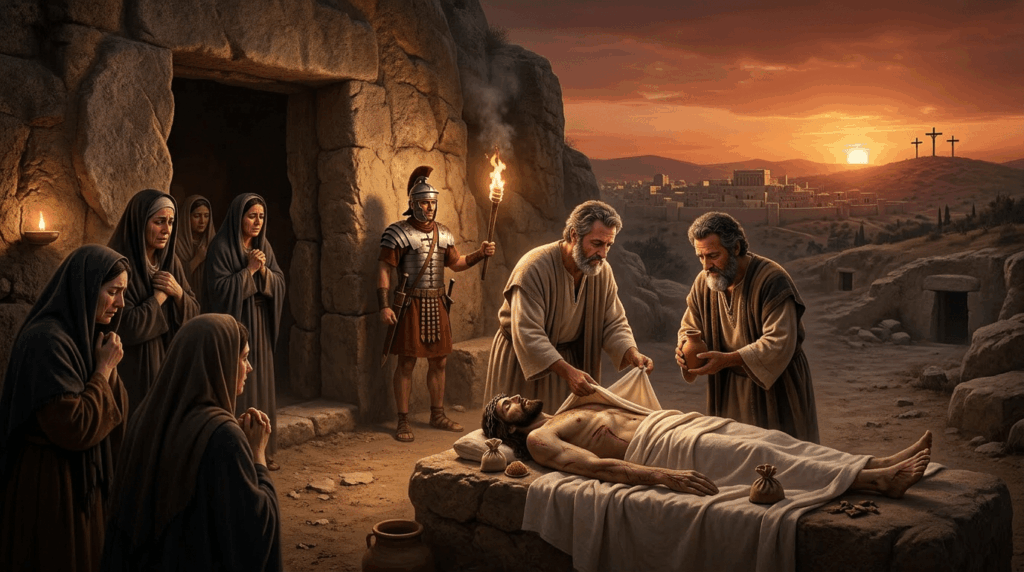
SE PUOLENTOISTA päivän aika, jonka Jeesukselle kuolevaisena kuulunut ruumis lepäsi Joosefin hautakammiossa, hänen ristinkuolemansa ja kuolleistanousunsa välinen ajanjakso, on Mikaelin maisella elämänuralla luku, jota tunnemme varsin vähän. Osaamme kertoa Ihmisen Pojan hautaamisesta ja kirjata käsillä olevaan selontekoon hänen kuolleistanousuunsa liittyneet tapahtumat, mutta paljonkaan autenttisluontoista tietoa emme kykene tuomaan esille siitä, mitä tämän noin kolmekymmentäkuusi tuntia pitkän vaiheen aikana perjantai-iltapäivän kello kolmesta sunnuntaiaamun kello kolmeen todellisuudessa tapahtui. Tämä Mestarin elämänuran jakso alkoi vähän ennen kuin roomalaissotilaat ottivat hänet alas ristiltä. Kuolemansa jälkeen hän riippui ristillä noin tunnin ajan. Hänet olisi otettu ristiltä jo aiemmin, ellei kahden ryövärin hengiltäotto olisi sitä viivyttänyt.
Juutalaisten vallanpitäjät olivat kaavailleet, että Jeesuksen ruumis heitettäisiin kaupungin eteläpuolella sijaitseviin Gehennan avoimiin hautakuoppiin; se nimittäin oli yleinen tapa päästä ristiinnaulinnan uhreista eroon. Mikäli tätä ajatusta olisi seurattu, Mestarin ruumis olisi jätetty villipetojen ruoaksi.
Joosef Arimatealainen oli tällä välin mennyt Nikodemuksen seurassa Pilatuksen luo pyytämään, että Jeesuksen ruumis luovutettaisiin heille asianmukaista hautaanpanoa varten. Ei ollut mitenkään epätavallista ristiinnaulittujen henkilöiden ystäväin tarjota roomalaisviranomaisille lahjuksia siitä etuoikeudesta, että he saivat haltuunsa tällaiset ruumiit. Joosef meni Pilatuksen eteen mukanaan suuri rahasumma siltä varalta, että osoittautuisi välttämättömäksi maksaa rahalla luvasta saada siirtää Jeesuksen ruumis yksityiseen hautakammioon. Mutta Pilatus ei halunnut ottaa tästä luvasta rahaa. Pyynnön kuullessaan hän allekirjoitti nopeasti määräyksen, joka antoi Joosefille valtuudet mennä Golgatalle ja ottaa välittömällä ja täydellä omistajan oikeudella Mestarin ruumis haltuunsa. Koska hiekkamyrsky oli jo melkein asettunut, muuan sanhedrinia edustava juutalaisryhmä oli sillä välin lähtenyt Golgatalle varmistamaan, että Jeesuksen ruumis joutuisi ryöväreiden ruumiiden mukana avoimiin yleisiin hautakuoppiin.
THE day and a half that Jesus’ mortal body lay in the tomb of Joseph, the period between his death on the cross and his resurrection, is a chapter in the earth career of Michael which is little known to us. We can narrate the burial of the Son of Man and put in this record the events associated with his resurrection, but we cannot supply much information of an authentic nature about what really transpired during this epoch of about thirty-six hours, from three o’clock Friday afternoon to three o’clock Sunday morning. This period in the Master’s career began shortly before he was taken down from the cross by the Roman soldiers. He hung upon the cross about one hour after his death. He would have been taken down sooner but for the delay in dispatching the two brigands.
The rulers of the Jews had planned to have Jesus’ body thrown in the open burial pits of Gehenna, south of the city; it was the custom thus to dispose of the victims of crucifixion. If this plan had been followed, the body of the Master would have been exposed to the wild beasts.
In the meantime, Joseph of Arimathea, accompanied by Nicodemus, had gone to Pilate and asked that the body of Jesus be turned over to them for proper burial. It was not uncommon for friends of crucified persons to offer bribes to the Roman authorities for the privilege of gaining possession of such bodies. Joseph went before Pilate with a large sum of money, in case it became necessary to pay for permission to remove Jesus’ body to a private burial tomb. But Pilate would not take money for this. When he heard the request, he quickly signed the order which authorized Joseph to proceed to Golgotha and take immediate and full possession of the Master’s body. In the meantime, the sandstorm having considerably abated, a group of Jews representing the Sanhedrin had gone out to Golgotha for the purpose of making sure that Jesus’ body accompanied those of the brigands to the open public burial pits.
SuomiEnglish
SE PUOLENTOISTA päivän aika, jonka Jeesukselle kuolevaisena kuulunut ruumis lepäsi Joosefin hautakammiossa, hänen ristinkuolemansa ja kuolleistanousunsa välinen ajanjakso, on Mikaelin maisella elämänuralla luku, jota tunnemme varsin vähän. Osaamme kertoa Ihmisen Pojan hautaamisesta ja kirjata käsillä olevaan selontekoon hänen kuolleistanousuunsa liittyneet tapahtumat, mutta paljonkaan autenttisluontoista tietoa emme kykene tuomaan esille siitä, mitä tämän noin kolmekymmentäkuusi tuntia pitkän vaiheen aikana perjantai-iltapäivän kello kolmesta sunnuntaiaamun kello kolmeen todellisuudessa tapahtui. Tämä Mestarin elämänuran jakso alkoi vähän ennen kuin roomalaissotilaat ottivat hänet alas ristiltä. Kuolemansa jälkeen hän riippui ristillä noin tunnin ajan. Hänet olisi otettu ristiltä jo aiemmin, ellei kahden ryövärin hengiltäotto olisi sitä viivyttänyt.
THE day and a half that Jesus’ mortal body lay in the tomb of Joseph, the period between his death on the cross and his resurrection, is a chapter in the earth career of Michael which is little known to us. We can narrate the burial of the Son of Man and put in this record the events associated with his resurrection, but we cannot supply much information of an authentic nature about what really transpired during this epoch of about thirty-six hours, from three o’clock Friday afternoon to three o’clock Sunday morning. This period in the Master’s career began shortly before he was taken down from the cross by the Roman soldiers. He hung upon the cross about one hour after his death. He would have been taken down sooner but for the delay in dispatching the two brigands.
Juutalaisten vallanpitäjät olivat kaavailleet, että Jeesuksen ruumis heitettäisiin kaupungin eteläpuolella sijaitseviin Gehennan avoimiin hautakuoppiin; se nimittäin oli yleinen tapa päästä ristiinnaulinnan uhreista eroon. Mikäli tätä ajatusta olisi seurattu, Mestarin ruumis olisi jätetty villipetojen ruoaksi.
The rulers of the Jews had planned to have Jesus’ body thrown in the open burial pits of Gehenna, south of the city; it was the custom thus to dispose of the victims of crucifixion. If this plan had been followed, the body of the Master would have been exposed to the wild beasts.
Joosef Arimatealainen oli tällä välin mennyt Nikodemuksen seurassa Pilatuksen luo pyytämään, että Jeesuksen ruumis luovutettaisiin heille asianmukaista hautaanpanoa varten. Ei ollut mitenkään epätavallista ristiinnaulittujen henkilöiden ystäväin tarjota roomalaisviranomaisille lahjuksia siitä etuoikeudesta, että he saivat haltuunsa tällaiset ruumiit. Joosef meni Pilatuksen eteen mukanaan suuri rahasumma siltä varalta, että osoittautuisi välttämättömäksi maksaa rahalla luvasta saada siirtää Jeesuksen ruumis yksityiseen hautakammioon. Mutta Pilatus ei halunnut ottaa tästä luvasta rahaa. Pyynnön kuullessaan hän allekirjoitti nopeasti määräyksen, joka antoi Joosefille valtuudet mennä Golgatalle ja ottaa välittömällä ja täydellä omistajan oikeudella Mestarin ruumis haltuunsa. Koska hiekkamyrsky oli jo melkein asettunut, muuan sanhedrinia edustava juutalaisryhmä oli sillä välin lähtenyt Golgatalle varmistamaan, että Jeesuksen ruumis joutuisi ryöväreiden ruumiiden mukana avoimiin yleisiin hautakuoppiin.
In the meantime, Joseph of Arimathea, accompanied by Nicodemus, had gone to Pilate and asked that the body of Jesus be turned over to them for proper burial. It was not uncommon for friends of crucified persons to offer bribes to the Roman authorities for the privilege of gaining possession of such bodies. Joseph went before Pilate with a large sum of money, in case it became necessary to pay for permission to remove Jesus’ body to a private burial tomb. But Pilate would not take money for this. When he heard the request, he quickly signed the order which authorized Joseph to proceed to Golgotha and take immediate and full possession of the Master’s body. In the meantime, the sandstorm having considerably abated, a group of Jews representing the Sanhedrin had gone out to Golgotha for the purpose of making sure that Jesus’ body accompanied those of the brigands to the open public burial pits.