
Teksti
Tausta
Näytä
Lisäasetukset
Kieli
Urantia Opas
Kysy kirjan sisällöstä. Opas vastaa Book Enginen omien lähdekohtien perusteella ja ohjaa sinut lukemaan ne.
Hei! 🙏
Olen sinun Urantia-oppaasi. Tehtäväni on auttaa sinua löytämään oikeat kohdat Urantia-kirjasta ja ymmärtämään sen opetuksia syvemmin. 😊❤️
KUOLLEISTANOUSUN sunnuntai oli apostolien elämässä hirveä päivä; kymmenen heistä vietti suurimman osan tästä päivästä teljettyjen ovien takana yläsalissa. He olisivat saattaneet paeta Jerusalemista, mutta he pelkäsivät joutuvansa sanhedrinin toimitsijoiden pidättämiksi, mikäli heidät tavattaisiin ulkoa. Tuomas hautoi omia huoliaan Betfagen yksinäisyydessä. Hänellä olisi ollut helpompaa, jos hän olisi jäänyt apostolitovereidensa seuraan, ja hän olisi auttanut näitä ohjaamaan keskusteluaan hyödyllisempään suuntaan.
Johannes puolusti kaiken päivää ajatusta, että Jeesus oli noussut kuolleista. Hän kertoi vähintäänkin viidestä eri kerrasta, jolloin Mestari oli vakuuttanut nousevansa elävien pariin, ja vähintäänkin kolme kertaa hän oli vihjannut sen tapahtuvan kolmantena päivänä. Johanneksen näkemys vaikutti heihin melkoisesti, eritoten hänen veljeensä Jaakobiin, samoin kuin Natanaeliin. Johanneksella olisi ollut heihin suurempikin vaikutus, ellei hän olisi ollut ryhmän nuorin jäsen.
Heidän vaikeuksiensa syynä oli paljolti heidän eristyneisyytensä. Johannes Markus piti heitä ajan tasalla sen suhteen, mitä temppelin vaiheilla tapahtui, ja tiedotti heille kaupungilla liikkuvista monista huhuista, mutta hänen mieleensä ei juolahtanut kerätä tietoja niiltä uskovien eri ryhmiltä, joille Jeesus jo oli ilmestynyt. Kysymys oli nimenomaan senkaltaisesta palvelusta, josta Daavidin sanansaattajat olivat aiemmin huolehtineet, mutta nämä olivat kaikki muualla, toimittamassa viimeistä tehtäväänsä eli viemässä kaukana Jerusalemista asuville uskovien ryhmille sanaa ylösnousemuksesta. Niin monta vuotta kuin he olivatkin yhdessä työskennelleet, apostolit huomasivat vasta nyt, miten riippuvaisia he olivat valtakunnan asioita koskevan päivittäisen tiedon osalta olleet Daavidin sanansaattajista.
Koko tämän päivän ajan Pietari itselleen luonteenomaisella tavalla horjui Mestarin kuolleistanousun suhteen emotionaalisesti uskon ja epäilyksen välillä. Pietari ei saanut silmistään hautavaatteita, jotka olivat olleet haudassa ikään kuin Jeesuksen ruumis olisi juuri haihtunut niiden sisältä. ”Mutta”, Pietari järkeili, ”jos hän on noussut haudasta ja kykenee näyttäytymään naisille, miksei hän näyttäydy meille, apostoleilleen?” Pietari muuttui aina surulliseksi ajatellessaan, että Jeesus ei kenties tullut heidän luokseen siksi, että hän oli apostolien joukossa, olihan hän tuona yönä Hannaksen pihalla kieltänyt Jeesuksen. Ja sitten hän taas valoi itseensä rohkeutta siitä, millaisen viestin naiset olivat tuoneet: ”Menkää ja kertokaa apostoleilleni – ja Pietarille.” Mutta tästä sanomasta rohkaistuakseen hänen piti uskoa, että naiset todellakin olivat nähneet kuolleista nousseen Mestarin ja kuulleet häntä. Näin Pietari siis kaiken päivää heittelehti uskon ja epäilyn välillä, kunnes kello oli vähän yli kahdeksan, jolloin hän uskaltautui ulos pihamaalle. Pietarin ajatuksena oli poistua apostolien seurasta, jottei hän vain estäisi Jeesusta tulemasta heidän luokseen sen vuoksi, että hän oli Mestarin kieltänyt.
Jaakob Sebedeus puhui aluksi sen puolesta, että he kaikki menisivät haudalle; hän oli lujasti sillä kannalla, että tehtäisiin jotakin, jotta mysteeristä saataisiin perinpohjainen selvyys. Natanael oli se, joka esti heidän lähtönsä ihmisten ilmoille, mihin Jaakob oli heitä kehottanut, ja Natanael sai tämän aikaan muistuttamalla heitä Jeesuksen varoituksesta, etteivät he näinä aikoina turhaan vaarantaisi henkeään. Puoleenpäivään mennessä Jaakob oli jo asettunut aloilleen ja antautunut muiden mukana valppaaseen odotukseen. Hän ei lausunut montakaan sanaa; hän oli suunnattoman pettynyt siitä, ettei Jeesus ilmestynyt heille, ja hän oli tietämätön Mestarin monista ilmestymisistä muille ryhmille ja yksilöille.
Andreas omistautui tänä päivänä etupäässä kuunteluun. Tilanne hämmensi häntä tavattomasti, ja hänen epäilystensä malja oli enemmän kuin kukkuroillaan, mutta hän sai sentään nauttia tunteesta, ettei hän ollut enää vastuussa apostolitovereidensa ohjaamisesta. Hän oli hyvin kiitollinen siitä, että Mestari oli nostanut hänen hartioiltaan johtajuuden taakat ennen kuin he joutuivat näihin ahdistuksen aikoihin.
Natanaelin vähän väliä kuuluville tuomat, hänelle ominaiset filosofiset pohdiskelut olivat tämän traagisen päivän pitkien ja tuskastuttavien tuntien aikana kerran toisensa jälkeen ainoa ryhmän mielialaa ylläpitänyt tekijä. Hän todellakin oli koko pitkän päivän ajan kymmenen apostolin keskuudessa tilannetta hallitseva henkilö. Hän ei kertaakaan tuonut julki omaa kantaansa siihen, uskoiko hän vai epäilikö hän Mestarin kuolleistanousua. Mutta kun päivä kului pitemmälle, hän kallistui yhä enemmän sille kannalle, että hän uskoi Jeesuksen täyttäneen kuolleistanousustaan antamansa lupauksen.
Simon Selootti oli aivan liian muserruksissa osallistuakseen keskusteluihin. Enimmän aikaa hän vain lepäsi lavitsalla huoneen yhdessä nurkassa kasvot seinään päin. Koko päivän aikana hän ei puhunut puoltakymmentä kertaa. Hänen käsityksensä valtakunnasta oli romahtanut, eikä hän kyennyt näkemään, miten Mestarin kuolleistanousu voisi tilannetta olennaisesti muuttaa. Hänen pettymyksensä oli hyvin henkilökohtaista ja aivan liian tuskallista, jotta siitä olisi ollut mahdollista tointua lyhyessä ajassa olkoonkin, että sen vastapainona oli sellainen häkellyttävä tosiasia kuin kuolleistanousu.
Tavallisesti vaitonainen Filippus oli tuona päivänä koko iltapäivän ajan kummallista kyllä kovastikin äänessä. Aamupäivän aikana hänellä ei ollut paljonkaan sanottavaa, mutta koko iltapäivän ajan hän esitti kysymyksiä muille apostoleille. Pietaria Filippuksen kysymykset monta kertaa tuskastuttivat, mutta muut suhtautuivat hänen kyselyihinsä hyväntahtoisesti. Filippusta halutti erityisesti tietää, olisiko Jeesuksen ruumiissa ristiinnaulitsemisen fyysiset merkit, jos hän nimittäin todellakin oli noussut haudasta.
Matteus oli perin pohjin hämmentynyt; hän kuunteli tovereidensa keskusteluja, mutta hän käytti aikansa enimmäkseen siihen, että tarkasteli mielessään heidän tulevien raha-asioidensa muodostaman ongelman eri puolia. Olipa Jeesuksen oletetun kuolleistanousun laita miten tahansa, Juudas oli joka tapauksessa poissa, Daavid oli luovuttanut rahavarat muitta mutkitta hänen haltuunsa, ja heiltä puuttui arvovaltainen johtaja. Ennen kuin Matteus pääsi niin pitkälle, että olisi uhrannut vakavaa ajatusta apostolien väittelyille kuolleistanoususta, hän oli jo nähnyt Mestarin kasvoista kasvoihin.
Alfeuksen kaksoset eivät näihin vakaviin keskusteluihin liiemmälti osallistuneet, sillä heillä oli melkolailla puuhaa tavanomaisissa toimissaan. Toinen heistä toi julki heidän kumpaisenkin suhtautumisen, kun hän erääseen Filippuksen esittämään kysymykseen vastatessaan sanoi: ”Emme ymmärrä kuolleistanoususta mitään, mutta äitimme sanoo keskustelleensa Mestarin kanssa ja uskomme häntä.”
Tuomas oli hänelle ominaisen epätoivoisen masennuksen kourissa. Hän nukkui osan päivää ja käveli muun aikaa pitkin kukkuloita. Hän tunsi tarvetta liittyä apostolitovereidensa seuraan, mutta halu olla yksin oli sitäkin voimakkaampi.
Oli useitakin syitä siihen, miksi Mestari lykkäsi tuonnemmaksi morontiailmestymistään apostoliensa edessä. Hän halusi ensinnäkin, että näillä olisi, sitten kun he olisivat kuulleet hänen kuolleistanousustaan, aikaa pohtia perusteellisesti mielessään, mitä hän oli kertonut heille kuolemastaan ja ylösnousemuksestaan ollessaan vielä lihallisen hahmossa heidän keskellään. Mestari halusi, että Pietari kävisi loppuun kamppailunsa itselleen ominaisten vaikeuksien kanssa, ennen kuin hän ilmaantuisi heidän kaikkien eteen. Toisekseen hän halusi, että Tuomas olisi heidän kanssaan hetkenä, jolloin hän ilmestyisi ensimmäisen kerran. Johannes Markus löysi Tuomaksen varhain tänä sunnuntaiaamuna Simonin kodista Betfagesta, ja hän ilmoitti asiasta apostoleille noin kello yksitoista. Tuomas olisi tuon päivän kuluessa koska tahansa palannut heidän luokseen, jos Natanael tai ketkä tahansa kaksi muuta apostolia olisivat menneet hakemaan häntä. Hänen palaamishalunsa oli todellista, mutta sillä tavalla kuin hän edellisenä iltana oli poistunut heidän luotaan, hänen ylpeytensä ei antanut myöten mennä oma-aloitteisesti näin pian takaisin heidän pariinsa. Seuraavana päivänä hän olikin jo niin masennuksen vallassa, että hän tarvitsi paluupäätöksen tekemiseen miltei viikon. Apostolit odottivat häntä, ja hän puolestaan odotti, että hänen veljensä etsisivät hänet käsiinsä ja pyytäisivät häntä palaamaan luokseen. Näin ollen Tuomas siis pysyi poissa tovereidensa luota seuraavaan lauantai-iltaan saakka, jolloin Pietari ja Johannes pimeyden laskeuduttua menivät Betfageen ja toivat hänet takaisin muitten seuraan. Ja tämä on myös syynä siihen, mikseivät he menneet Galileaan heti Jeesuksen heille ensimmäisen kerran ilmestyttyä; heitä ei haluttanut lähteä sinne ilman Tuomasta.
RESURRECTION Sunday was a terrible day in the lives of the apostles; ten of them spent the larger part of the day in the upper chamber behind barred doors. They might have fled from Jerusalem, but they were afraid of being arrested by the agents of the Sanhedrin if they were found abroad. Thomas was brooding over his troubles alone at Bethpage. He would have fared better had he remained with his fellow apostles, and he would have aided them to direct their discussions along more helpful lines.
All day long John upheld the idea that Jesus had risen from the dead. He recounted no less than five different times when the Master had affirmed he would rise again and at least three times when he alluded to the third day. John’s attitude had considerable influence on them, especially on his brother James and on Nathaniel. John would have influenced them more if he had not been the youngest member of the group.
Their isolation had much to do with their troubles. John Mark kept them in touch with developments about the temple and informed them as to the many rumors gaining headway in the city, but it did not occur to him to gather up news from the different groups of believers to whom Jesus had already appeared. That was the kind of service which had heretofore been rendered by the messengers of David, but they were all absent on their last assignment as heralds of the resurrection to those groups of believers who dwelt remote from Jerusalem. For the first time in all these years the apostles realized how much they had been dependent on David’s messengers for their daily information regarding the affairs of the kingdom.
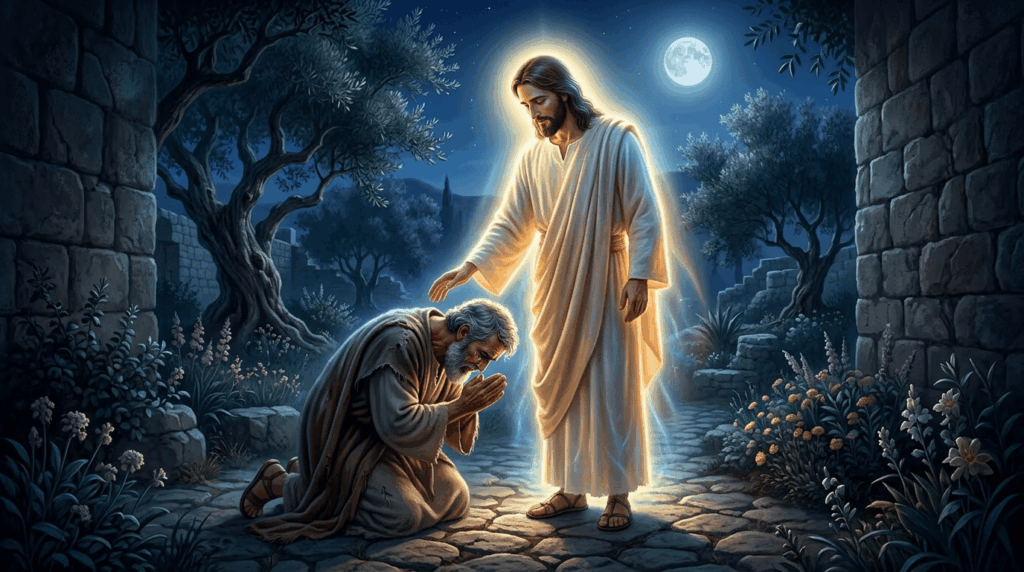
All this day Peter characteristically vacillated emotionally between faith and doubt concerning the Master’s resurrection. Peter could not get away from the sight of the grave cloths resting there in the tomb as if the body of Jesus had just evaporated from within. “But,” reasoned Peter, “if he has risen and can show himself to the women, why does he not show himself to us, his apostles?” Peter would grow sorrowful when he thought that maybe Jesus did not come to them on account of his presence among the apostles, because he had denied him that night in Annas’s courtyard. And then would he cheer himself with the word brought by the women, “Go tell my apostles—and Peter.” But to derive encouragement from this message implied that he must believe that the women had really seen and heard the risen Master. Thus Peter alternated between faith and doubt throughout the whole day, until a little after eight o’clock, when he ventured out into the courtyard. Peter thought to remove himself from among the apostles so that he might not prevent Jesus’ coming to them because of his denial of the Master.
James Zebedee at first advocated that they all go to the tomb; he was strongly in favor of doing something to get to the bottom of the mystery. It was Nathaniel who prevented them from going out in public in response to James’s urging, and he did this by reminding them of Jesus’ warning against unduly jeopardizing their lives at this time. By noontime James had settled down with the others to watchful waiting. He said little; he was tremendously disappointed because Jesus did not appear to them, and he did not know of the Master’s many appearances to other groups and individuals.
Andrew did much listening this day. He was exceedingly perplexed by the situation and had more than his share of doubts, but he at least enjoyed a certain sense of freedom from responsibility for the guidance of his fellow apostles. He was indeed grateful that the Master had released him from the burdens of leadership before they fell upon these distracting times.
More than once during the long and weary hours of this tragic day, the only sustaining influence of the group was the frequent contribution of Nathaniel’s characteristic philosophic counsel. He was really the controlling influence among the ten throughout the entire day. Never once did he express himself concerning either belief or disbelief in the Master’s resurrection. But as the day wore on, he became increasingly inclined toward believing that Jesus had fulfilled his promise to rise again.
Simon Zelotes was too much crushed to participate in the discussions. Most of the time he reclined on a couch in a corner of the room with his face to the wall; he did not speak half a dozen times throughout the whole day. His concept of the kingdom had crashed, and he could not discern that the Master’s resurrection could materially change the situation. His disappointment was very personal and altogether too keen to be recovered from on short notice, even in the face of such a stupendous fact as the resurrection.
Strange to record, the usually inexpressive Philip did much talking throughout the afternoon of this day. During the forenoon he had little to say, but all afternoon he asked questions of the other apostles. Peter was often annoyed by Philip’s questions, but the others took his inquiries good-naturedly. Philip was particularly desirous of knowing, provided Jesus had really risen from the grave, whether his body would bear the physical marks of the crucifixion.
Matthew was highly confused; he listened to the discussions of his fellows but spent most of the time turning over in his mind the problem of their future finances. Regardless of Jesus’ supposed resurrection, Judas was gone, David had unceremoniously turned the funds over to him, and they were without an authoritative leader. Before Matthew got around to giving serious consideration to their arguments about the resurrection, he had already seen the Master face to face.
The Alpheus twins took little part in these serious discussions; they were fairly busy with their customary ministrations. One of them expressed the attitude of both when he said, in reply to a question asked by Philip: “We do not understand about the resurrection, but our mother says she talked with the Master, and we believe her.”
Thomas was in the midst of one of his typical spells of despairing depression. He slept a portion of the day and walked over the hills the rest of the time. He felt the urge to rejoin his fellow apostles, but the desire to be by himself was the stronger.
The Master put off the first morontia appearance to the apostles for a number of reasons. First, he wanted them to have time, after they heard of his resurrection, to think well over what he had told them about his death and resurrection when he was still with them in the flesh. The Master wanted Peter to wrestle through with some of his peculiar difficulties before he manifested himself to them all. In the second place, he desired that Thomas should be with them at the time of his first appearance. John Mark located Thomas at the home of Simon in Bethpage early this Sunday morning, bringing word to that effect to the apostles about eleven o’clock. Any time during this day Thomas would have gone back to them if Nathaniel or any two of the other apostles had gone for him. He really wanted to return, but having left as he did the evening before, he was too proud to go back of his own accord so soon. By the next day he was so depressed that it required almost a week for him to make up his mind to return. The apostles waited for him, and he waited for his brethren to seek him out and ask him to come back to them. Thomas thus remained away from his associates until the next Saturday evening, when, after darkness had come on, Peter and John went over to Bethpage and brought him back with them. And this is also the reason why they did not go at once to Galilee after Jesus first appeared to them; they would not go without Thomas.
SuomiEnglish
KUOLLEISTANOUSUN sunnuntai oli apostolien elämässä hirveä päivä; kymmenen heistä vietti suurimman osan tästä päivästä teljettyjen ovien takana yläsalissa. He olisivat saattaneet paeta Jerusalemista, mutta he pelkäsivät joutuvansa sanhedrinin toimitsijoiden pidättämiksi, mikäli heidät tavattaisiin ulkoa. Tuomas hautoi omia huoliaan Betfagen yksinäisyydessä. Hänellä olisi ollut helpompaa, jos hän olisi jäänyt apostolitovereidensa seuraan, ja hän olisi auttanut näitä ohjaamaan keskusteluaan hyödyllisempään suuntaan.
RESURRECTION Sunday was a terrible day in the lives of the apostles; ten of them spent the larger part of the day in the upper chamber behind barred doors. They might have fled from Jerusalem, but they were afraid of being arrested by the agents of the Sanhedrin if they were found abroad. Thomas was brooding over his troubles alone at Bethpage. He would have fared better had he remained with his fellow apostles, and he would have aided them to direct their discussions along more helpful lines.
Johannes puolusti kaiken päivää ajatusta, että Jeesus oli noussut kuolleista. Hän kertoi vähintäänkin viidestä eri kerrasta, jolloin Mestari oli vakuuttanut nousevansa elävien pariin, ja vähintäänkin kolme kertaa hän oli vihjannut sen tapahtuvan kolmantena päivänä. Johanneksen näkemys vaikutti heihin melkoisesti, eritoten hänen veljeensä Jaakobiin, samoin kuin Natanaeliin. Johanneksella olisi ollut heihin suurempikin vaikutus, ellei hän olisi ollut ryhmän nuorin jäsen.
All day long John upheld the idea that Jesus had risen from the dead. He recounted no less than five different times when the Master had affirmed he would rise again and at least three times when he alluded to the third day. John’s attitude had considerable influence on them, especially on his brother James and on Nathaniel. John would have influenced them more if he had not been the youngest member of the group.
Heidän vaikeuksiensa syynä oli paljolti heidän eristyneisyytensä. Johannes Markus piti heitä ajan tasalla sen suhteen, mitä temppelin vaiheilla tapahtui, ja tiedotti heille kaupungilla liikkuvista monista huhuista, mutta hänen mieleensä ei juolahtanut kerätä tietoja niiltä uskovien eri ryhmiltä, joille Jeesus jo oli ilmestynyt. Kysymys oli nimenomaan senkaltaisesta palvelusta, josta Daavidin sanansaattajat olivat aiemmin huolehtineet, mutta nämä olivat kaikki muualla, toimittamassa viimeistä tehtäväänsä eli viemässä kaukana Jerusalemista asuville uskovien ryhmille sanaa ylösnousemuksesta. Niin monta vuotta kuin he olivatkin yhdessä työskennelleet, apostolit huomasivat vasta nyt, miten riippuvaisia he olivat valtakunnan asioita koskevan päivittäisen tiedon osalta olleet Daavidin sanansaattajista.
Their isolation had much to do with their troubles. John Mark kept them in touch with developments about the temple and informed them as to the many rumors gaining headway in the city, but it did not occur to him to gather up news from the different groups of believers to whom Jesus had already appeared. That was the kind of service which had heretofore been rendered by the messengers of David, but they were all absent on their last assignment as heralds of the resurrection to those groups of believers who dwelt remote from Jerusalem. For the first time in all these years the apostles realized how much they had been dependent on David’s messengers for their daily information regarding the affairs of the kingdom.
Koko tämän päivän ajan Pietari itselleen luonteenomaisella tavalla horjui Mestarin kuolleistanousun suhteen emotionaalisesti uskon ja epäilyksen välillä. Pietari ei saanut silmistään hautavaatteita, jotka olivat olleet haudassa ikään kuin Jeesuksen ruumis olisi juuri haihtunut niiden sisältä. ”Mutta”, Pietari järkeili, ”jos hän on noussut haudasta ja kykenee näyttäytymään naisille, miksei hän näyttäydy meille, apostoleilleen?” Pietari muuttui aina surulliseksi ajatellessaan, että Jeesus ei kenties tullut heidän luokseen siksi, että hän oli apostolien joukossa, olihan hän tuona yönä Hannaksen pihalla kieltänyt Jeesuksen. Ja sitten hän taas valoi itseensä rohkeutta siitä, millaisen viestin naiset olivat tuoneet: ”Menkää ja kertokaa apostoleilleni – ja Pietarille.” Mutta tästä sanomasta rohkaistuakseen hänen piti uskoa, että naiset todellakin olivat nähneet kuolleista nousseen Mestarin ja kuulleet häntä. Näin Pietari siis kaiken päivää heittelehti uskon ja epäilyn välillä, kunnes kello oli vähän yli kahdeksan, jolloin hän uskaltautui ulos pihamaalle. Pietarin ajatuksena oli poistua apostolien seurasta, jottei hän vain estäisi Jeesusta tulemasta heidän luokseen sen vuoksi, että hän oli Mestarin kieltänyt.
All this day Peter characteristically vacillated emotionally between faith and doubt concerning the Master’s resurrection. Peter could not get away from the sight of the grave cloths resting there in the tomb as if the body of Jesus had just evaporated from within. “But,” reasoned Peter, “if he has risen and can show himself to the women, why does he not show himself to us, his apostles?” Peter would grow sorrowful when he thought that maybe Jesus did not come to them on account of his presence among the apostles, because he had denied him that night in Annas’s courtyard. And then would he cheer himself with the word brought by the women, “Go tell my apostles—and Peter.” But to derive encouragement from this message implied that he must believe that the women had really seen and heard the risen Master. Thus Peter alternated between faith and doubt throughout the whole day, until a little after eight o’clock, when he ventured out into the courtyard. Peter thought to remove himself from among the apostles so that he might not prevent Jesus’ coming to them because of his denial of the Master.
Jaakob Sebedeus puhui aluksi sen puolesta, että he kaikki menisivät haudalle; hän oli lujasti sillä kannalla, että tehtäisiin jotakin, jotta mysteeristä saataisiin perinpohjainen selvyys. Natanael oli se, joka esti heidän lähtönsä ihmisten ilmoille, mihin Jaakob oli heitä kehottanut, ja Natanael sai tämän aikaan muistuttamalla heitä Jeesuksen varoituksesta, etteivät he näinä aikoina turhaan vaarantaisi henkeään. Puoleenpäivään mennessä Jaakob oli jo asettunut aloilleen ja antautunut muiden mukana valppaaseen odotukseen. Hän ei lausunut montakaan sanaa; hän oli suunnattoman pettynyt siitä, ettei Jeesus ilmestynyt heille, ja hän oli tietämätön Mestarin monista ilmestymisistä muille ryhmille ja yksilöille.
James Zebedee at first advocated that they all go to the tomb; he was strongly in favor of doing something to get to the bottom of the mystery. It was Nathaniel who prevented them from going out in public in response to James’s urging, and he did this by reminding them of Jesus’ warning against unduly jeopardizing their lives at this time. By noontime James had settled down with the others to watchful waiting. He said little; he was tremendously disappointed because Jesus did not appear to them, and he did not know of the Master’s many appearances to other groups and individuals.
Andreas omistautui tänä päivänä etupäässä kuunteluun. Tilanne hämmensi häntä tavattomasti, ja hänen epäilystensä malja oli enemmän kuin kukkuroillaan, mutta hän sai sentään nauttia tunteesta, ettei hän ollut enää vastuussa apostolitovereidensa ohjaamisesta. Hän oli hyvin kiitollinen siitä, että Mestari oli nostanut hänen hartioiltaan johtajuuden taakat ennen kuin he joutuivat näihin ahdistuksen aikoihin.
Andrew did much listening this day. He was exceedingly perplexed by the situation and had more than his share of doubts, but he at least enjoyed a certain sense of freedom from responsibility for the guidance of his fellow apostles. He was indeed grateful that the Master had released him from the burdens of leadership before they fell upon these distracting times.
Natanaelin vähän väliä kuuluville tuomat, hänelle ominaiset filosofiset pohdiskelut olivat tämän traagisen päivän pitkien ja tuskastuttavien tuntien aikana kerran toisensa jälkeen ainoa ryhmän mielialaa ylläpitänyt tekijä. Hän todellakin oli koko pitkän päivän ajan kymmenen apostolin keskuudessa tilannetta hallitseva henkilö. Hän ei kertaakaan tuonut julki omaa kantaansa siihen, uskoiko hän vai epäilikö hän Mestarin kuolleistanousua. Mutta kun päivä kului pitemmälle, hän kallistui yhä enemmän sille kannalle, että hän uskoi Jeesuksen täyttäneen kuolleistanousustaan antamansa lupauksen.
More than once during the long and weary hours of this tragic day, the only sustaining influence of the group was the frequent contribution of Nathaniel’s characteristic philosophic counsel. He was really the controlling influence among the ten throughout the entire day. Never once did he express himself concerning either belief or disbelief in the Master’s resurrection. But as the day wore on, he became increasingly inclined toward believing that Jesus had fulfilled his promise to rise again.
Simon Selootti oli aivan liian muserruksissa osallistuakseen keskusteluihin. Enimmän aikaa hän vain lepäsi lavitsalla huoneen yhdessä nurkassa kasvot seinään päin. Koko päivän aikana hän ei puhunut puoltakymmentä kertaa. Hänen käsityksensä valtakunnasta oli romahtanut, eikä hän kyennyt näkemään, miten Mestarin kuolleistanousu voisi tilannetta olennaisesti muuttaa. Hänen pettymyksensä oli hyvin henkilökohtaista ja aivan liian tuskallista, jotta siitä olisi ollut mahdollista tointua lyhyessä ajassa olkoonkin, että sen vastapainona oli sellainen häkellyttävä tosiasia kuin kuolleistanousu.
Simon Zelotes was too much crushed to participate in the discussions. Most of the time he reclined on a couch in a corner of the room with his face to the wall; he did not speak half a dozen times throughout the whole day. His concept of the kingdom had crashed, and he could not discern that the Master’s resurrection could materially change the situation. His disappointment was very personal and altogether too keen to be recovered from on short notice, even in the face of such a stupendous fact as the resurrection.
Tavallisesti vaitonainen Filippus oli tuona päivänä koko iltapäivän ajan kummallista kyllä kovastikin äänessä. Aamupäivän aikana hänellä ei ollut paljonkaan sanottavaa, mutta koko iltapäivän ajan hän esitti kysymyksiä muille apostoleille. Pietaria Filippuksen kysymykset monta kertaa tuskastuttivat, mutta muut suhtautuivat hänen kyselyihinsä hyväntahtoisesti. Filippusta halutti erityisesti tietää, olisiko Jeesuksen ruumiissa ristiinnaulitsemisen fyysiset merkit, jos hän nimittäin todellakin oli noussut haudasta.
Strange to record, the usually inexpressive Philip did much talking throughout the afternoon of this day. During the forenoon he had little to say, but all afternoon he asked questions of the other apostles. Peter was often annoyed by Philip’s questions, but the others took his inquiries good-naturedly. Philip was particularly desirous of knowing, provided Jesus had really risen from the grave, whether his body would bear the physical marks of the crucifixion.
Matteus oli perin pohjin hämmentynyt; hän kuunteli tovereidensa keskusteluja, mutta hän käytti aikansa enimmäkseen siihen, että tarkasteli mielessään heidän tulevien raha-asioidensa muodostaman ongelman eri puolia. Olipa Jeesuksen oletetun kuolleistanousun laita miten tahansa, Juudas oli joka tapauksessa poissa, Daavid oli luovuttanut rahavarat muitta mutkitta hänen haltuunsa, ja heiltä puuttui arvovaltainen johtaja. Ennen kuin Matteus pääsi niin pitkälle, että olisi uhrannut vakavaa ajatusta apostolien väittelyille kuolleistanoususta, hän oli jo nähnyt Mestarin kasvoista kasvoihin.
Matthew was highly confused; he listened to the discussions of his fellows but spent most of the time turning over in his mind the problem of their future finances. Regardless of Jesus’ supposed resurrection, Judas was gone, David had unceremoniously turned the funds over to him, and they were without an authoritative leader. Before Matthew got around to giving serious consideration to their arguments about the resurrection, he had already seen the Master face to face.
Alfeuksen kaksoset eivät näihin vakaviin keskusteluihin liiemmälti osallistuneet, sillä heillä oli melkolailla puuhaa tavanomaisissa toimissaan. Toinen heistä toi julki heidän kumpaisenkin suhtautumisen, kun hän erääseen Filippuksen esittämään kysymykseen vastatessaan sanoi: ”Emme ymmärrä kuolleistanoususta mitään, mutta äitimme sanoo keskustelleensa Mestarin kanssa ja uskomme häntä.”
The Alpheus twins took little part in these serious discussions; they were fairly busy with their customary ministrations. One of them expressed the attitude of both when he said, in reply to a question asked by Philip: “We do not understand about the resurrection, but our mother says she talked with the Master, and we believe her.”
Tuomas oli hänelle ominaisen epätoivoisen masennuksen kourissa. Hän nukkui osan päivää ja käveli muun aikaa pitkin kukkuloita. Hän tunsi tarvetta liittyä apostolitovereidensa seuraan, mutta halu olla yksin oli sitäkin voimakkaampi.
Thomas was in the midst of one of his typical spells of despairing depression. He slept a portion of the day and walked over the hills the rest of the time. He felt the urge to rejoin his fellow apostles, but the desire to be by himself was the stronger.
Oli useitakin syitä siihen, miksi Mestari lykkäsi tuonnemmaksi morontiailmestymistään apostoliensa edessä. Hän halusi ensinnäkin, että näillä olisi, sitten kun he olisivat kuulleet hänen kuolleistanousustaan, aikaa pohtia perusteellisesti mielessään, mitä hän oli kertonut heille kuolemastaan ja ylösnousemuksestaan ollessaan vielä lihallisen hahmossa heidän keskellään. Mestari halusi, että Pietari kävisi loppuun kamppailunsa itselleen ominaisten vaikeuksien kanssa, ennen kuin hän ilmaantuisi heidän kaikkien eteen. Toisekseen hän halusi, että Tuomas olisi heidän kanssaan hetkenä, jolloin hän ilmestyisi ensimmäisen kerran. Johannes Markus löysi Tuomaksen varhain tänä sunnuntaiaamuna Simonin kodista Betfagesta, ja hän ilmoitti asiasta apostoleille noin kello yksitoista. Tuomas olisi tuon päivän kuluessa koska tahansa palannut heidän luokseen, jos Natanael tai ketkä tahansa kaksi muuta apostolia olisivat menneet hakemaan häntä. Hänen palaamishalunsa oli todellista, mutta sillä tavalla kuin hän edellisenä iltana oli poistunut heidän luotaan, hänen ylpeytensä ei antanut myöten mennä oma-aloitteisesti näin pian takaisin heidän pariinsa. Seuraavana päivänä hän olikin jo niin masennuksen vallassa, että hän tarvitsi paluupäätöksen tekemiseen miltei viikon. Apostolit odottivat häntä, ja hän puolestaan odotti, että hänen veljensä etsisivät hänet käsiinsä ja pyytäisivät häntä palaamaan luokseen. Näin ollen Tuomas siis pysyi poissa tovereidensa luota seuraavaan lauantai-iltaan saakka, jolloin Pietari ja Johannes pimeyden laskeuduttua menivät Betfageen ja toivat hänet takaisin muitten seuraan. Ja tämä on myös syynä siihen, mikseivät he menneet Galileaan heti Jeesuksen heille ensimmäisen kerran ilmestyttyä; heitä ei haluttanut lähteä sinne ilman Tuomasta.
The Master put off the first morontia appearance to the apostles for a number of reasons. First, he wanted them to have time, after they heard of his resurrection, to think well over what he had told them about his death and resurrection when he was still with them in the flesh. The Master wanted Peter to wrestle through with some of his peculiar difficulties before he manifested himself to them all. In the second place, he desired that Thomas should be with them at the time of his first appearance. John Mark located Thomas at the home of Simon in Bethpage early this Sunday morning, bringing word to that effect to the apostles about eleven o’clock. Any time during this day Thomas would have gone back to them if Nathaniel or any two of the other apostles had gone for him. He really wanted to return, but having left as he did the evening before, he was too proud to go back of his own accord so soon. By the next day he was so depressed that it required almost a week for him to make up his mind to return. The apostles waited for him, and he waited for his brethren to seek him out and ask him to come back to them. Thomas thus remained away from his associates until the next Saturday evening, when, after darkness had come on, Peter and John went over to Bethpage and brought him back with them. And this is also the reason why they did not go at once to Galilee after Jesus first appeared to them; they would not go without Thomas.