
Teksti
Tausta
Näytä
Lisäasetukset
Kieli
Urantia Opas
Kysy kirjan sisällöstä. Opas vastaa Book Enginen omien lähdekohtien perusteella ja ohjaa sinut lukemaan ne.
Hei! 🙏
Olen sinun Urantia-oppaasi. Tehtäväni on auttaa sinua löytämään oikeat kohdat Urantia-kirjasta ja ymmärtämään sen opetuksia syvemmin. 😊❤️
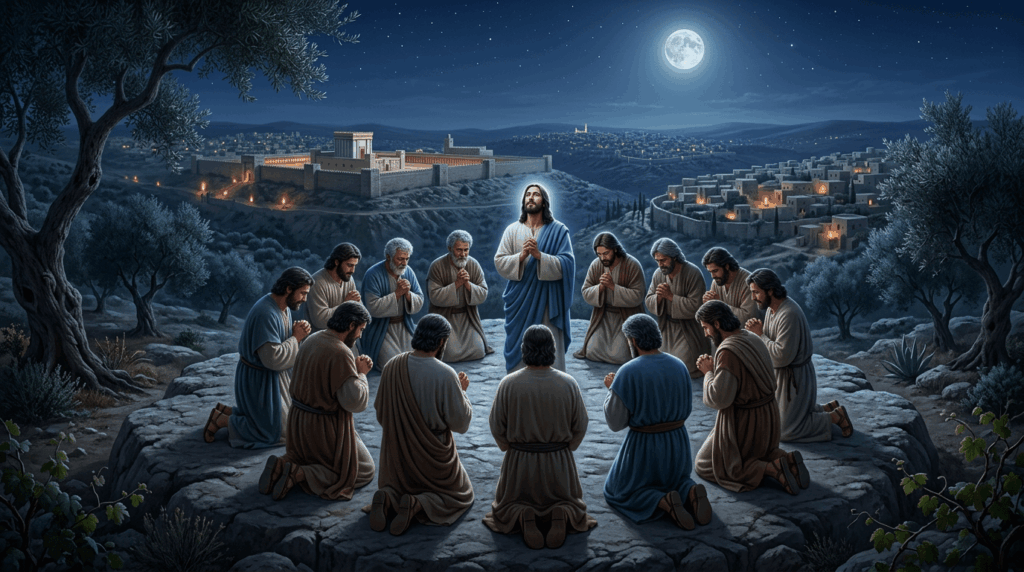
Sitten kun kaikki oli hiljaista ja rauhallista leirin ympärillä, Jeesus otti Pietarin, Jaakobin ja Johanneksen mukaansa ja kulki vähän matkaa ylös lähistön rotkoa, jonne hän oli usein aiemminkin mennyt rukoilemaan ja mietiskelemään. Kolme apostolia eivät voineet olla huomaamatta, että hän oli tuskaisen ahdistunut; he eivät milloinkaan aikaisemmin olleet nähneet Mestariaan yhtä raskautettuna ja murhemielisenä. Kun he saapuivat hänen rukouspaikalleen, hän pyysi kolmea apostolia istumaan ja valvomaan kanssaan sillä aikaa, kun hän menisi kivenheiton päähän rukoilemaan. Ja kasvoilleen langettuaan hän rukoili: ”Isäni, tulin tähän maailmaan täyttämään sinun tahtosi, ja sen minä olen tehnyt. Tiedän, että on tullut hetki luopua tästä lihallishahmoisen elämästä, enkä sitä kavahda, mutta tahtoisin tietää, onko sinun tahtosi, että juon tämän maljan. Lähetä minulle se vakuutus, että olen sinulle mieliksi kuolemassani, niin kuin olen ollut elämässäni.”
Mestari jäi rukousasentoon muutamaksi hetkeksi, ja kun hän sitten meni kolmen apostolin luo, hän löysi nämä sikeästä unesta, sillä heidän luomensa olivat raskaat, eivätkä he kyenneet pysymään hereillä. Heidät herättäessään Jeesus sanoi: ”Mitä! Ettekö kykene valvomaan kanssani edes yhtä hetkeä? Ettekö kykene näkemään, että sieluni on äärimmäisen murheellinen, jopa kuolemaan saakka murheellinen, ja että kaipaan seuraanne?” Kun kolme apostolia olivat havahtuneet unestaan, Mestari meni taas syrjemmälle omiin oloihinsa, ja maahan langeten hän rukoili uudelleen: ”Isä, tiedän, että on mahdollista välttää tämä malja – sinulle on kaikki mahdollista –, mutta olen tullut täyttämään sinun tahtosi, ja vaikka tämä on katkera kalkki, tahdon sen juoda, jos se on sinun tahtosi.” Ja kun hän oli näin sanoin rukoillut, hänen vierelleen laskeutui voimallinen enkeli, joka häntä puhutellen kosketti häntä ja vahvisti häntä.
Tullessaan takaisin puhuakseen kolmen apostolin kanssa Mestari tapasi heidät taas sikeästä unesta. Hän herätti heidät sanomalla: ”Tällaisena hetkenä minulle on tarpeen, että valvotte ja rukoilette kanssani – ja sitäkin enemmän on teidän tarpeen rukoilla, ettette joutuisi kiusaukseen – miksi siis nukahdatte, kun lähden luotanne?”
Ja sitten Mestari vetäytyi kolmannen kerran paikalta ja rukoili: ”Isä, näet nukkuvat apostolini; ole heille armelias. Henki on toden totta altis, mutta liha on heikko. Ja nyt, oi Isä, ellei tämä malja voi mennä ohitseni, siinä tapauksessa tahdon sen juoda. Tapahtukoon ei minun tahtoni vaan sinun tahtosi.” Ja päätettyään rukouksensa hän makasi vielä hetken aikaa pitkällään maassa. Kun hän nousi ja meni takaisin apostoliensa luokse, hän löysi nämä tälläkin kerralla nukkumasta. Hän tarkasteli heitä, ja sääliväisen eleen myötä hän lausui heille hellästi: ”Jatkakaa nyt unianne ja levätkää, sillä päätöksenteon hetki on ohitse. Käsillämme on nyt hetki, jolloin Ihmisen Poika kavalletaan vihamiestensä käsiin.” Kumartuessaan ravistelemaan heidät hereille hän sanoi: ”Nouskaa, suunnatkaamme kulkumme takaisin leirille, sillä katso hän, joka minut kavaltaa, on lähellä, ja se hetki on tullut, jolloin katraani lasketaan hajalle. Mutta olenhan teille jo näistä asioista kertonut.”
Niiden vuosien kuluessa, jotka Jeesus eli seuraajiensa keskuudessa, nämä saivat toden totta monta todistetta hänen jumalallisesta olemuksestaan, mutta nyt he saavat kohta nähdä uusia todisteita hänen ihmisyydestään. Nyt vähää ennen hänen jumalallisuutensa kaikkein suurinta paljastusta, hänen kuolleistaheräämistään, täytyy tulla esille suurimmat todisteet hänen kuolevaisen olemuksestaan: hänen nöyryytyksensä ja ristiinnaulitsemisensa.
Kun hän rukoili puutarhassa, hänen ihmisyytensä sai kerta kerralta yhä lujemman uskon otteen hänen jumalallisuudestaan; hänen ihmistahdostaan tuli yhä täysimääräisemmin yhtä hänen Isänsä jumalallisen tahdon kanssa. Mahtavan enkelin lausumiin viesteihin kuului muiden muassa sellainen sanoma, että Isä halusi Poikansa päättävän maisen lahjoittautumisensa käymällä läpi, mitä luotu kokee kuolemassa, kuten kaikkien kuolevaisluotujen pitää kokea aineellinen hajoaminen siirtyessään ajallisen olemassaolon piiristä ikuisen edistymisen piiriin.
Aiemmin illalla tuon maljan juominen ei ollut tuntunut yhtä vaikealta, mutta ihmis-Jeesuksen lausuessa jäähyväiset apostoleilleen ja lähettäessä heidät levolle koettelemus kävi sitäkin kauhistuttavammaksi. Jeesus koki koko sen tunnekuohun, joka kuuluu kaikkeen inhimilliseen kokemiseen, ja tuona nimenomaisena hetkenä hän oli työn väsyttämä, lopen nääntynyt siitä tuntikausia jatkuneesta uuvuttavasta piinasta ja tuskallisesta levottomuudesta, jota hän tunsi apostoliensa turvallisuudesta. Vaikkei kukaan kuolevainen voi uskotella ymmärtävänsä ajatuksia ja tunteita, joita ruumiillistuneella Jumalan Pojalla tuolla hetkellä oli, tiedämme silti, että hän koki suurta ahdistusta ja kärsi sanoin kuvaamatonta murhetta, sillä hiki virtasi hänen kasvoiltaan suurina karpaloina. Hän oli lopuksi vakuuttunut siitä, että Isä aikoi sallia tapahtumien kulkea luonnollista kulkuaan; hän oli viimeiseen asti sitä mieltä, ettei hän käyttäisi mitään hänelle universumin korkeimpana johtajana kuuluvista suvereeneista valtaoikeuksistaan pelastaakseen itsensä tästä tilanteesta.
Paikalle kerääntyneet valtavan luomakunnan olentojoukot, joita Gabriel ja Jeesuksen Personoitu Suuntaaja väliaikaisesti yhdessä komentavat, leijailevat nyt tämän tapahtumapaikan yllä. Näiden taivaallisten armeijoiden divisioonankomentajia on moneen kertaa varoitettu puuttumasta näihin tapahtumiin maan päällä, ellei Jeesus itse määräisi heitä niihin puuttumaan.
Irtautuminen apostoleista oli kokemus, joka rasitti Jeesuksen ihmissydäntä suuresti. Tämä rakkaudesta johtuva murhe oli ottamassa hänet kokonaan valtoihinsa ja teki hänelle entistäkin vaikeammaksi kohdata sellainen kuolema, jollaisen hän hyvin tiesi itseään odottavan. Hän tajusi, miten heikkoja ja miten tietämättömiä hänen apostolinsa olivat, ja häntä kauhutti jättää heidät. Hän oli täysin tietoinen siitä, että hänen lähtönsä hetki oli koittanut, mutta hänen ihmissydämensä halusi ottaa selville, eikö mahdollisesti olisi jotakin oikeutettua keinoa päästä tästä hirvittävästä kärsimyksen ja murheen ahdingosta. Ja kun tämä sydän oli tällä tavoin etsinyt pakotietä eikä sitä löytänyt, se oli valmis juomaan tämän maljan. Mikaelin jumalallinen mieli tiesi, että hän oli tehnyt parhaansa kahdentoista apostolin hyväksi. Mutta Jeesuksen ihmissydän toivoi, että heidän hyväkseen olisi voitu tehdä enemmän, ennen kuin heidät jätettäisiin tähän maailmaan omiin oloihinsa. Jeesuksen sydän oli murtumaisillaan, sillä hän totisesti rakasti veljiään. Hänen siteensä hänen lihalliseen perheeseensä oli katkaistu; yksi hänen valituista työtovereistaan oli kavaltamassa hänet. Hänen isänsä Joosefin kansa oli torjunut hänet ja niin tehdessään sinetöinyt oman tuomionsa kansana, jolla on tässä maailmassa erityistehtävä. Torjuttu rakkaus ja hylätty armo kiduttivat hänen sieluaan. Se oli täsmällisesti sanottuna yksi niistä kauheista ihmisen kokemista hetkistä, jolloin kaikki näyttää syöksyvän ihmisen päälle musertavalla julmuudella ja hirvittävällä piinalla.
Jeesuksen ihmisyys ei voinut pysyä tunteettomana tätä tilannetta kohtaan, jonka koostumuksena olivat oma yksinäisyys, julkinen häpeä sekä se, että hänen ajamansa asia näytti kärsivän haaksirikon. Kaikki nämä tuntemukset kävivät hänen kimppuunsa sanoin kuvaamattomalla painolla. Tämän suuren murheen hetkellä hänen mielensä palasi lapsuuden päiviin Nasaretissa ja hänen alkuaikojen toimintaansa Galileassa. Tämän suuren koettelemuksen hetkellä hänen mieleensä nousi monia miellyttäviä tapahtumia hänen maisen toimintansa ajalta. Ja juuri näillä vanhoilla muistoilla Nasaretista, Kapernaumista, Hermonvuorelta ja kimmeltävän Galileanmeren päivännousuista ja auringonlaskuista hän tyynnytti itsensä, kun hän lujitti ihmissydämensä ja valmisti sen kohtaamaan petturin, joka muutaman hetken kuluttua hänet kavaltaisi.
Ennen kuin Juudas ja sotilaat saapuivat, Mestari oli voittanut kokonaan takaisin tavanomaisen rauhallisuutensa, henki oli saanut voiton lihasta; usko oli pitänyt puolensa kaikkia pelkoon tai epäilyyn kallistuvia, ihmiselle ominaisia taipumuksia vastaan. Perimmäinen koe ihmisluonnon täysimääräisestä käsittämisestä oli kohdattu ja oivallisesti suoritettu. Ihmisen Poika oli vielä kerran valmis kohtaamaan vihollisensa, ja hän tekisi sen tyynin mielin ja täysin vakuuttuneena omasta voittamattomuudestaan kuolevaisena ihmisenä, joka oli varauksettomasti antautunut täyttämään Isänsä tahdon.
After all was still and quiet about the camp, Jesus, taking Peter, James, and John, went a short way up a near-by ravine where he had often before gone to pray and commune. The three apostles could not help recognizing that he was grievously oppressed; never before had they observed their Master to be so heavy-laden and sorrowful. When they arrived at the place of his devotions, he bade the three sit down and watch with him while he went off about a stone’s throw to pray. And when he had fallen down on his face, he prayed: “My Father, I came into this world to do your will, and so have I. I know that the hour has come to lay down this life in the flesh, and I do not shrink therefrom, but I would know that it is your will that I drink this cup. Send me the assurance that I will please you in my death even as I have in my life.”
The Master remained in a prayerful attitude for a few moments, and then, going over to the three apostles, he found them sound asleep, for their eyes were heavy and they could not remain awake. As Jesus awoke them, he said: “What! can you not watch with me even for one hour? Cannot you see that my soul is exceedingly sorrowful, even to death, and that I crave your companionship?” After the three had aroused from their slumber, the Master again went apart by himself and, falling down on the ground, again prayed: “Father, I know it is possible to avoid this cup—all things are possible with you—but I have come to do your will, and while this is a bitter cup, I would drink it if it is your will.” And when he had thus prayed, a mighty angel came down by his side and, speaking to him, touched him and strengthened him.
When Jesus returned to speak with the three apostles, he again found them fast asleep. He awakened them, saying: “In such an hour I need that you should watch and pray with me—all the more do you need to pray that you enter not into temptation—wherefore do you fall asleep when I leave you?”
And then, for a third time, the Master withdrew and prayed: “Father, you see my sleeping apostles; have mercy upon them. The spirit is indeed willing, but the flesh is weak. And now, O Father, if this cup may not pass, then would I drink it. Not my will, but yours, be done.” And when he had finished praying, he lay for a moment prostrate on the ground. When he arose and went back to his apostles, once more he found them asleep. He surveyed them and, with a pitying gesture, tenderly said: “Sleep on now and take your rest; the time of decision is past. The hour is now upon us wherein the Son of Man will be betrayed into the hands of his enemies.” As he reached down to shake them that he might awaken them, he said: “Arise, let us be going back to the camp, for, behold, he who betrays me is at hand, and the hour has come when my flock shall be scattered. But I have already told you about these things.”
During the years that Jesus lived among his followers, they did, indeed, have much proof of his divine nature, but just now are they about to witness new evidences of his humanity. Just before the greatest of all the revelations of his divinity, his resurrection, must now come the greatest proofs of his mortal nature, his humiliation and crucifixion.
Each time he prayed in the garden, his humanity laid a firmer faith-hold upon his divinity; his human will more completely became one with the divine will of his Father. Among other words spoken to him by the mighty angel was the message that the Father desired his Son to finish his earth bestowal by passing through the creature experience of death just as all mortal creatures must experience material dissolution in passing from the existence of time into the progression of eternity.
Earlier in the evening it had not seemed so difficult to drink the cup, but as the human Jesus bade farewell to his apostles and sent them to their rest, the trial grew more appalling. Jesus experienced that natural ebb and flow of feeling which is common to all human experience, and just now he was weary from work, exhausted from the long hours of strenuous labor and painful anxiety concerning the safety of his apostles. While no mortal can presume to understand the thoughts and feelings of the incarnate Son of God at such a time as this, we know that he endured great anguish and suffered untold sorrow, for the perspiration rolled off his face in great drops. He was at last convinced that the Father intended to allow natural events to take their course; he was fully determined to employ none of his sovereign power as the supreme head of a universe to save himself.
The assembled hosts of a vast creation are now hovered over this scene under the transient joint command of Gabriel and the Personalized Adjuster of Jesus. The division commanders of these armies of heaven have repeatedly been warned not to interfere with these transactions on earth unless Jesus himself should order them to intervene.
The experience of parting with the apostles was a great strain on the human heart of Jesus; this sorrow of love bore down on him and made it more difficult to face such a death as he well knew awaited him. He realized how weak and how ignorant his apostles were, and he dreaded to leave them. He well knew that the time of his departure had come, but his human heart longed to find out whether there might not possibly be some legitimate avenue of escape from this terrible plight of suffering and sorrow. And when it had thus sought escape, and failed, it was willing to drink the cup. The divine mind of Michael knew he had done his best for the twelve apostles; but the human heart of Jesus wished that more might have been done for them before they should be left alone in the world. Jesus’ heart was being crushed; he truly loved his brethren. He was isolated from his family in the flesh; one of his chosen associates was betraying him. His father Joseph’s people had rejected him and thereby sealed their doom as a people with a special mission on earth. His soul was tortured by baffled love and rejected mercy. It was just one of those awful human moments when everything seems to bear down with crushing cruelty and terrible agony.
Jesus’ humanity was not insensible to this situation of private loneliness, public shame, and the appearance of the failure of his cause. All these sentiments bore down on him with indescribable heaviness. In this great sorrow his mind went back to the days of his childhood in Nazareth and to his early work in Galilee. At the time of this great trial there came up in his mind many of those pleasant scenes of his earthly ministry. And it was from these old memories of Nazareth, Capernaum, Mount Hermon, and of the sunrise and sunset on the shimmering Sea of Galilee, that he soothed himself as he made his human heart strong and ready to encounter the traitor who should so soon betray him.
Before Judas and the soldiers arrived, the Master had fully regained his customary poise; the spirit had triumphed over the flesh; faith had asserted itself over all human tendencies to fear or entertain doubt. The supreme test of the full realization of the human nature had been met and acceptably passed. Once more the Son of Man was prepared to face his enemies with equanimity and in the full assurance of his invincibility as a mortal man unreservedly dedicated to the doing of his Father’s will.
SuomiEnglish
Sitten kun kaikki oli hiljaista ja rauhallista leirin ympärillä, Jeesus otti Pietarin, Jaakobin ja Johanneksen mukaansa ja kulki vähän matkaa ylös lähistön rotkoa, jonne hän oli usein aiemminkin mennyt rukoilemaan ja mietiskelemään. Kolme apostolia eivät voineet olla huomaamatta, että hän oli tuskaisen ahdistunut; he eivät milloinkaan aikaisemmin olleet nähneet Mestariaan yhtä raskautettuna ja murhemielisenä. Kun he saapuivat hänen rukouspaikalleen, hän pyysi kolmea apostolia istumaan ja valvomaan kanssaan sillä aikaa, kun hän menisi kivenheiton päähän rukoilemaan. Ja kasvoilleen langettuaan hän rukoili: ”Isäni, tulin tähän maailmaan täyttämään sinun tahtosi, ja sen minä olen tehnyt. Tiedän, että on tullut hetki luopua tästä lihallishahmoisen elämästä, enkä sitä kavahda, mutta tahtoisin tietää, onko sinun tahtosi, että juon tämän maljan. Lähetä minulle se vakuutus, että olen sinulle mieliksi kuolemassani, niin kuin olen ollut elämässäni.”
After all was still and quiet about the camp, Jesus, taking Peter, James, and John, went a short way up a near-by ravine where he had often before gone to pray and commune. The three apostles could not help recognizing that he was grievously oppressed; never before had they observed their Master to be so heavy-laden and sorrowful. When they arrived at the place of his devotions, he bade the three sit down and watch with him while he went off about a stone’s throw to pray. And when he had fallen down on his face, he prayed: “My Father, I came into this world to do your will, and so have I. I know that the hour has come to lay down this life in the flesh, and I do not shrink therefrom, but I would know that it is your will that I drink this cup. Send me the assurance that I will please you in my death even as I have in my life.”
Mestari jäi rukousasentoon muutamaksi hetkeksi, ja kun hän sitten meni kolmen apostolin luo, hän löysi nämä sikeästä unesta, sillä heidän luomensa olivat raskaat, eivätkä he kyenneet pysymään hereillä. Heidät herättäessään Jeesus sanoi: ”Mitä! Ettekö kykene valvomaan kanssani edes yhtä hetkeä? Ettekö kykene näkemään, että sieluni on äärimmäisen murheellinen, jopa kuolemaan saakka murheellinen, ja että kaipaan seuraanne?” Kun kolme apostolia olivat havahtuneet unestaan, Mestari meni taas syrjemmälle omiin oloihinsa, ja maahan langeten hän rukoili uudelleen: ”Isä, tiedän, että on mahdollista välttää tämä malja – sinulle on kaikki mahdollista –, mutta olen tullut täyttämään sinun tahtosi, ja vaikka tämä on katkera kalkki, tahdon sen juoda, jos se on sinun tahtosi.” Ja kun hän oli näin sanoin rukoillut, hänen vierelleen laskeutui voimallinen enkeli, joka häntä puhutellen kosketti häntä ja vahvisti häntä.
The Master remained in a prayerful attitude for a few moments, and then, going over to the three apostles, he found them sound asleep, for their eyes were heavy and they could not remain awake. As Jesus awoke them, he said: “What! can you not watch with me even for one hour? Cannot you see that my soul is exceedingly sorrowful, even to death, and that I crave your companionship?” After the three had aroused from their slumber, the Master again went apart by himself and, falling down on the ground, again prayed: “Father, I know it is possible to avoid this cup—all things are possible with you—but I have come to do your will, and while this is a bitter cup, I would drink it if it is your will.” And when he had thus prayed, a mighty angel came down by his side and, speaking to him, touched him and strengthened him.
Tullessaan takaisin puhuakseen kolmen apostolin kanssa Mestari tapasi heidät taas sikeästä unesta. Hän herätti heidät sanomalla: ”Tällaisena hetkenä minulle on tarpeen, että valvotte ja rukoilette kanssani – ja sitäkin enemmän on teidän tarpeen rukoilla, ettette joutuisi kiusaukseen – miksi siis nukahdatte, kun lähden luotanne?”
When Jesus returned to speak with the three apostles, he again found them fast asleep. He awakened them, saying: “In such an hour I need that you should watch and pray with me—all the more do you need to pray that you enter not into temptation—wherefore do you fall asleep when I leave you?”
Ja sitten Mestari vetäytyi kolmannen kerran paikalta ja rukoili: ”Isä, näet nukkuvat apostolini; ole heille armelias. Henki on toden totta altis, mutta liha on heikko. Ja nyt, oi Isä, ellei tämä malja voi mennä ohitseni, siinä tapauksessa tahdon sen juoda. Tapahtukoon ei minun tahtoni vaan sinun tahtosi.” Ja päätettyään rukouksensa hän makasi vielä hetken aikaa pitkällään maassa. Kun hän nousi ja meni takaisin apostoliensa luokse, hän löysi nämä tälläkin kerralla nukkumasta. Hän tarkasteli heitä, ja sääliväisen eleen myötä hän lausui heille hellästi: ”Jatkakaa nyt unianne ja levätkää, sillä päätöksenteon hetki on ohitse. Käsillämme on nyt hetki, jolloin Ihmisen Poika kavalletaan vihamiestensä käsiin.” Kumartuessaan ravistelemaan heidät hereille hän sanoi: ”Nouskaa, suunnatkaamme kulkumme takaisin leirille, sillä katso hän, joka minut kavaltaa, on lähellä, ja se hetki on tullut, jolloin katraani lasketaan hajalle. Mutta olenhan teille jo näistä asioista kertonut.”
And then, for a third time, the Master withdrew and prayed: “Father, you see my sleeping apostles; have mercy upon them. The spirit is indeed willing, but the flesh is weak. And now, O Father, if this cup may not pass, then would I drink it. Not my will, but yours, be done.” And when he had finished praying, he lay for a moment prostrate on the ground. When he arose and went back to his apostles, once more he found them asleep. He surveyed them and, with a pitying gesture, tenderly said: “Sleep on now and take your rest; the time of decision is past. The hour is now upon us wherein the Son of Man will be betrayed into the hands of his enemies.” As he reached down to shake them that he might awaken them, he said: “Arise, let us be going back to the camp, for, behold, he who betrays me is at hand, and the hour has come when my flock shall be scattered. But I have already told you about these things.”
Niiden vuosien kuluessa, jotka Jeesus eli seuraajiensa keskuudessa, nämä saivat toden totta monta todistetta hänen jumalallisesta olemuksestaan, mutta nyt he saavat kohta nähdä uusia todisteita hänen ihmisyydestään. Nyt vähää ennen hänen jumalallisuutensa kaikkein suurinta paljastusta, hänen kuolleistaheräämistään, täytyy tulla esille suurimmat todisteet hänen kuolevaisen olemuksestaan: hänen nöyryytyksensä ja ristiinnaulitsemisensa.
During the years that Jesus lived among his followers, they did, indeed, have much proof of his divine nature, but just now are they about to witness new evidences of his humanity. Just before the greatest of all the revelations of his divinity, his resurrection, must now come the greatest proofs of his mortal nature, his humiliation and crucifixion.
Kun hän rukoili puutarhassa, hänen ihmisyytensä sai kerta kerralta yhä lujemman uskon otteen hänen jumalallisuudestaan; hänen ihmistahdostaan tuli yhä täysimääräisemmin yhtä hänen Isänsä jumalallisen tahdon kanssa. Mahtavan enkelin lausumiin viesteihin kuului muiden muassa sellainen sanoma, että Isä halusi Poikansa päättävän maisen lahjoittautumisensa käymällä läpi, mitä luotu kokee kuolemassa, kuten kaikkien kuolevaisluotujen pitää kokea aineellinen hajoaminen siirtyessään ajallisen olemassaolon piiristä ikuisen edistymisen piiriin.
Each time he prayed in the garden, his humanity laid a firmer faith-hold upon his divinity; his human will more completely became one with the divine will of his Father. Among other words spoken to him by the mighty angel was the message that the Father desired his Son to finish his earth bestowal by passing through the creature experience of death just as all mortal creatures must experience material dissolution in passing from the existence of time into the progression of eternity.
Aiemmin illalla tuon maljan juominen ei ollut tuntunut yhtä vaikealta, mutta ihmis-Jeesuksen lausuessa jäähyväiset apostoleilleen ja lähettäessä heidät levolle koettelemus kävi sitäkin kauhistuttavammaksi. Jeesus koki koko sen tunnekuohun, joka kuuluu kaikkeen inhimilliseen kokemiseen, ja tuona nimenomaisena hetkenä hän oli työn väsyttämä, lopen nääntynyt siitä tuntikausia jatkuneesta uuvuttavasta piinasta ja tuskallisesta levottomuudesta, jota hän tunsi apostoliensa turvallisuudesta. Vaikkei kukaan kuolevainen voi uskotella ymmärtävänsä ajatuksia ja tunteita, joita ruumiillistuneella Jumalan Pojalla tuolla hetkellä oli, tiedämme silti, että hän koki suurta ahdistusta ja kärsi sanoin kuvaamatonta murhetta, sillä hiki virtasi hänen kasvoiltaan suurina karpaloina. Hän oli lopuksi vakuuttunut siitä, että Isä aikoi sallia tapahtumien kulkea luonnollista kulkuaan; hän oli viimeiseen asti sitä mieltä, ettei hän käyttäisi mitään hänelle universumin korkeimpana johtajana kuuluvista suvereeneista valtaoikeuksistaan pelastaakseen itsensä tästä tilanteesta.
Earlier in the evening it had not seemed so difficult to drink the cup, but as the human Jesus bade farewell to his apostles and sent them to their rest, the trial grew more appalling. Jesus experienced that natural ebb and flow of feeling which is common to all human experience, and just now he was weary from work, exhausted from the long hours of strenuous labor and painful anxiety concerning the safety of his apostles. While no mortal can presume to understand the thoughts and feelings of the incarnate Son of God at such a time as this, we know that he endured great anguish and suffered untold sorrow, for the perspiration rolled off his face in great drops. He was at last convinced that the Father intended to allow natural events to take their course; he was fully determined to employ none of his sovereign power as the supreme head of a universe to save himself.
Paikalle kerääntyneet valtavan luomakunnan olentojoukot, joita Gabriel ja Jeesuksen Personoitu Suuntaaja väliaikaisesti yhdessä komentavat, leijailevat nyt tämän tapahtumapaikan yllä. Näiden taivaallisten armeijoiden divisioonankomentajia on moneen kertaa varoitettu puuttumasta näihin tapahtumiin maan päällä, ellei Jeesus itse määräisi heitä niihin puuttumaan.
The assembled hosts of a vast creation are now hovered over this scene under the transient joint command of Gabriel and the Personalized Adjuster of Jesus. The division commanders of these armies of heaven have repeatedly been warned not to interfere with these transactions on earth unless Jesus himself should order them to intervene.
Irtautuminen apostoleista oli kokemus, joka rasitti Jeesuksen ihmissydäntä suuresti. Tämä rakkaudesta johtuva murhe oli ottamassa hänet kokonaan valtoihinsa ja teki hänelle entistäkin vaikeammaksi kohdata sellainen kuolema, jollaisen hän hyvin tiesi itseään odottavan. Hän tajusi, miten heikkoja ja miten tietämättömiä hänen apostolinsa olivat, ja häntä kauhutti jättää heidät. Hän oli täysin tietoinen siitä, että hänen lähtönsä hetki oli koittanut, mutta hänen ihmissydämensä halusi ottaa selville, eikö mahdollisesti olisi jotakin oikeutettua keinoa päästä tästä hirvittävästä kärsimyksen ja murheen ahdingosta. Ja kun tämä sydän oli tällä tavoin etsinyt pakotietä eikä sitä löytänyt, se oli valmis juomaan tämän maljan. Mikaelin jumalallinen mieli tiesi, että hän oli tehnyt parhaansa kahdentoista apostolin hyväksi. Mutta Jeesuksen ihmissydän toivoi, että heidän hyväkseen olisi voitu tehdä enemmän, ennen kuin heidät jätettäisiin tähän maailmaan omiin oloihinsa. Jeesuksen sydän oli murtumaisillaan, sillä hän totisesti rakasti veljiään. Hänen siteensä hänen lihalliseen perheeseensä oli katkaistu; yksi hänen valituista työtovereistaan oli kavaltamassa hänet. Hänen isänsä Joosefin kansa oli torjunut hänet ja niin tehdessään sinetöinyt oman tuomionsa kansana, jolla on tässä maailmassa erityistehtävä. Torjuttu rakkaus ja hylätty armo kiduttivat hänen sieluaan. Se oli täsmällisesti sanottuna yksi niistä kauheista ihmisen kokemista hetkistä, jolloin kaikki näyttää syöksyvän ihmisen päälle musertavalla julmuudella ja hirvittävällä piinalla.
The experience of parting with the apostles was a great strain on the human heart of Jesus; this sorrow of love bore down on him and made it more difficult to face such a death as he well knew awaited him. He realized how weak and how ignorant his apostles were, and he dreaded to leave them. He well knew that the time of his departure had come, but his human heart longed to find out whether there might not possibly be some legitimate avenue of escape from this terrible plight of suffering and sorrow. And when it had thus sought escape, and failed, it was willing to drink the cup. The divine mind of Michael knew he had done his best for the twelve apostles; but the human heart of Jesus wished that more might have been done for them before they should be left alone in the world. Jesus’ heart was being crushed; he truly loved his brethren. He was isolated from his family in the flesh; one of his chosen associates was betraying him. His father Joseph’s people had rejected him and thereby sealed their doom as a people with a special mission on earth. His soul was tortured by baffled love and rejected mercy. It was just one of those awful human moments when everything seems to bear down with crushing cruelty and terrible agony.
Jeesuksen ihmisyys ei voinut pysyä tunteettomana tätä tilannetta kohtaan, jonka koostumuksena olivat oma yksinäisyys, julkinen häpeä sekä se, että hänen ajamansa asia näytti kärsivän haaksirikon. Kaikki nämä tuntemukset kävivät hänen kimppuunsa sanoin kuvaamattomalla painolla. Tämän suuren murheen hetkellä hänen mielensä palasi lapsuuden päiviin Nasaretissa ja hänen alkuaikojen toimintaansa Galileassa. Tämän suuren koettelemuksen hetkellä hänen mieleensä nousi monia miellyttäviä tapahtumia hänen maisen toimintansa ajalta. Ja juuri näillä vanhoilla muistoilla Nasaretista, Kapernaumista, Hermonvuorelta ja kimmeltävän Galileanmeren päivännousuista ja auringonlaskuista hän tyynnytti itsensä, kun hän lujitti ihmissydämensä ja valmisti sen kohtaamaan petturin, joka muutaman hetken kuluttua hänet kavaltaisi.
Jesus’ humanity was not insensible to this situation of private loneliness, public shame, and the appearance of the failure of his cause. All these sentiments bore down on him with indescribable heaviness. In this great sorrow his mind went back to the days of his childhood in Nazareth and to his early work in Galilee. At the time of this great trial there came up in his mind many of those pleasant scenes of his earthly ministry. And it was from these old memories of Nazareth, Capernaum, Mount Hermon, and of the sunrise and sunset on the shimmering Sea of Galilee, that he soothed himself as he made his human heart strong and ready to encounter the traitor who should so soon betray him.
Ennen kuin Juudas ja sotilaat saapuivat, Mestari oli voittanut kokonaan takaisin tavanomaisen rauhallisuutensa, henki oli saanut voiton lihasta; usko oli pitänyt puolensa kaikkia pelkoon tai epäilyyn kallistuvia, ihmiselle ominaisia taipumuksia vastaan. Perimmäinen koe ihmisluonnon täysimääräisestä käsittämisestä oli kohdattu ja oivallisesti suoritettu. Ihmisen Poika oli vielä kerran valmis kohtaamaan vihollisensa, ja hän tekisi sen tyynin mielin ja täysin vakuuttuneena omasta voittamattomuudestaan kuolevaisena ihmisenä, joka oli varauksettomasti antautunut täyttämään Isänsä tahdon.
Before Judas and the soldiers arrived, the Master had fully regained his customary poise; the spirit had triumphed over the flesh; faith had asserted itself over all human tendencies to fear or entertain doubt. The supreme test of the full realization of the human nature had been met and acceptably passed. Once more the Son of Man was prepared to face his enemies with equanimity and in the full assurance of his invincibility as a mortal man unreservedly dedicated to the doing of his Father’s will.