
Teksti
Tausta
Näytä
Lisäasetukset
Kieli
Urantia Opas
Kysy kirjan sisällöstä. Opas vastaa Book Enginen omien lähdekohtien perusteella ja ohjaa sinut lukemaan ne.
Hei! 🙏
Olen sinun Urantia-oppaasi. Tehtäväni on auttaa sinua löytämään oikeat kohdat Urantia-kirjasta ja ymmärtämään sen opetuksia syvemmin. 😊❤️
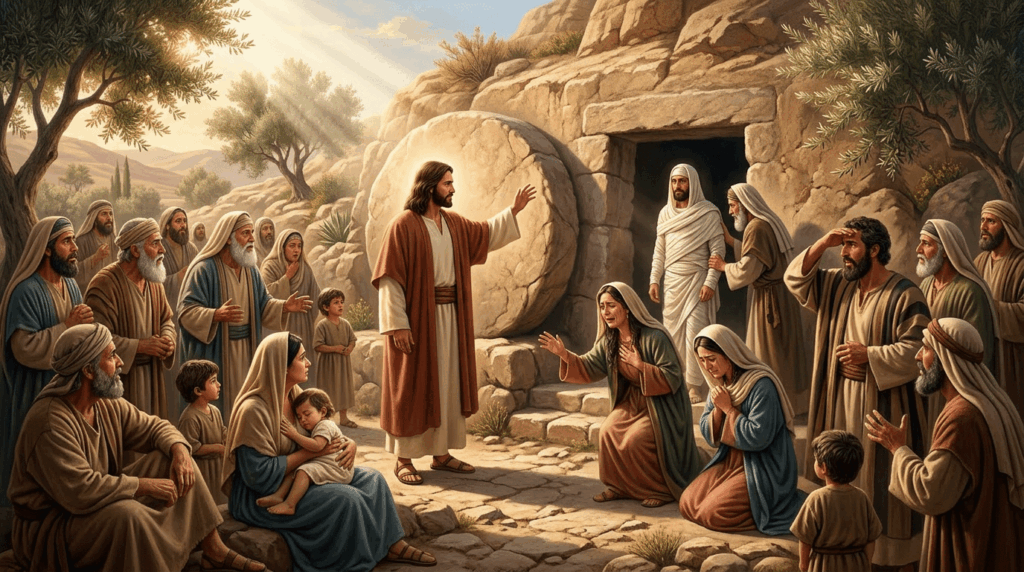
PUOLENPÄIVÄN hetki oli juuri ohitettu, kun Martta lähti Jeesusta vastaan tämän ollessa nousemassa mäenharjan yli Betanian liepeillä. Martan veli, Lasarus, oli ollut kuolleena neljä päivää, ja hänen ruumiinsa oli myöhään sunnuntai-iltapäivänä haudattu heidän yksityiseen hautakammioonsa puutarhan perimmäisessä nurkassa. Ja käsillä olevan torstaipäivän aamuna haudan suuaukon kivi oli vieritetty paikalleen.
Lähettäessään Jeesukselle sanan Lasaruksen sairastumisesta Martta ja Maria olivat vakuuttuneita siitä, että Mestari tekisi sen suhteen jotakin. He tiesivät veljensä toivottoman sairaaksi, ja vaikka he tuskin rohkenivatkaan toivoa, että Jeesus olisi jättänyt opettajan ja saarnaajan työnsä kesken tullakseen heidän avukseen, heillä oli kuitenkin niin luja luottamus hänen sairauksia parantavaan voimaansa, että he ajattelivat hänen lausuvan vain parantavat sanat, ja Lasarus tervehtyisi siinä paikassa. Kun Lasarus muutamaa tuntia viestinviejän Betaniasta Filadelfiaan-lähdön jälkeen kuoli, he päättelivät sen johtuneen siitä, että Mestari oli saanut tietää heidän veljensä sairaudesta, vasta kun se jo oli liian myöhäistä, vasta kun tämä jo oli ollut kuolleena useita tunteja.
Mutta heitä, samoin kuin kaikkia heidän uskovia ystäviään, kummastutti kovasti sanoma, jonka lähetti toi mukanaan saapuessaan tiistaiaamupäivänä Betaniaan. Viestinviejä väitti itsepintaisesti kuulleensa Jeesuksen sanovan: ”– – tämä sairaus ei todellisuudessa ole kuolemaksi.” He eivät liioin voineet käsittää, miksei hän lähettänyt heille mitään viestiä eikä muutenkaan tarjonnut apuaan.
Monet ystävät saapuivat lähiseudun pikkukylistä, ja muutamat Jerusalemistakin, lohduttamaan murheen murtamia sisaria. Lasarus ja hänen sisarensa olivat erään varakkaan ja kunnioitetun juutalaisen lapsia, miehen, joka oli ollut pienen Betanian kylän johtava asukas. Ja vaikka kaikki kolme sisarusta olivat jo kauan olleet Jeesuksen innokkaita seuraajia, silti kaikki, jotka heitä tunsivat, kunnioittivat heitä suuresti. He olivat perineet lähiseudulta laajat viini- ja oliivitarhat, ja heidän vaurauttaan osoitti sekin, että heillä oli varaa yksityiseen hautakammioon omalla tilallaan. Heidän molemmat vanhempansa oli jo laskettu haudan lepoon tuohon hautakammioon.
Maria oli luopunut ajatuksesta, että Jeesus tulisi, ja alistunut suruunsa, mutta Martta oli aina siihen asti, kun he tänä aamuna olivat vierittäneet kiven hautakammion suulle ja sulkeneet haudan sisäänkäynnin, jaksanut toivoa, että Jeesus sittenkin saapuisi. Ja vielä senkin jälkeen hän neuvoi naapurin pikkupoikaa pitämään Betanian itäpuolella olevan mäen harjalta silmällä Jerikontietä. Ja juuri tämä nuorimies sitten toikin Martalle sanoman siitä, että Jeesus ja tämän ystävät olivat lähestymässä.
Kohdatessaan Jeesuksen Martta lankesi hänen jalkojensa juureen ja huudahti: ”Mestari, jos olisit ollut täällä, veljeni ei olisi kuollut!” Martan mielessä risteilivät monet pelot, mutta hän ei antanut epäilystensä tulla julki, eikä hän myöskään rohjennut arvostella tai kyseenalaistaa Mestarin menettelyä Lasaruksen kuoleman suhteen. Martan sanottua sanottavansa Jeesus kumartui, nosti hänet jaloilleen ja sanoi: ”Usko ainoastaan, Martta, ja veljesi nousee kuolleista.” Silloin Martta vastasi: ”Tiedänhän minä, että hän herää kuolleista viimeisen päivän kuolleistanousussa; ja uskon minä nytkin, että mitä tahansa Jumalalta pyydät, Isämme antaa sen sinulle.”
Sen jälkeen Jeesus sanoi Marttaa suoraan silmiin katsoen: ”Minä olen kuolleistaherääminen ja elämä; joka uskoo minuun, hän tulee silti elämään, vaikka hän kuolee. Totisesti, joka elää ja uskoo minuun, ei todellisuudessa koskaan kuole. Martta, uskotko sinä tämän?” Ja Martta vastasi Mestarille: ”Uskon. Olen jo kauan uskonut sinun olevan Vapahtaja, elävän Jumalan Poika, juuri se, jonka piti tulla tähän maailmaan.”
Jeesuksen kyseltyä Mariaa Martta meni oikopäätä sisälle taloon ja kuiskasi sisarelleen nämä sanat: ”Mestari on täällä ja on kysynyt sinua.” Ja tämän kuullessaan Maria nousi kiireesti paikaltaan ja juoksi ulos tavatakseen Jeesuksen, joka yhä viipyi samassa paikassa, talolta jonkin matkan päässä, jossa Martta oli hänet ensiksi kohdannut. Kun Marian seurassa olevat ystävät, jotka koettivat lohduttaa häntä, näkivät hänen nousevan nopeasti paikaltaan ja menevän ulos, he seurasivat hänen perässään olettaessaan hänen olevan menossa haudalle itkemään.
Monet paikallaolijoista olivat Jeesuksen katkeria vihamiehiä. Juuri siitä syystä Martta olikin tullut ulos tapaamaan häntä ilman kenenkään seuraa, ja se oli myös syynä siihen, miksi hän meni salaa sisälle kertomaan Marialle, että Jeesus oli tätä kysellyt. Vaikka Martta kiihkeästi halusikin tavata Jeesuksen, hän tahtoi myös välttää kaikkia mahdollisia ikävyyksiä, jotka saattaisivat seurata, jos Jeesus yhtäkkiä ilmestyisi keskelle suurta joukkoa hänen jerusalemilaisvihamiehiään. Martan aikomuksena oli ollut jäädä heidän ystäviensä seuraan, siksi aikaa kun Maria menisi tervehtimään Jeesusta, mutta tässä hän epäonnistui, sillä nämä kaikki seurasivat Mariaa, ja niin he äkkiarvaamatta huomasivatkin olevansa Mestarin edessä.
Martta johdatti Marian Jeesuksen luo, ja Mestarin nähdessään Maria vaipui tämän jalkojen juureen huudahtaen: ”Jospa vain olisit ollut täällä, niin veljeni ei olisi kuollut!” Ja kun Jeesus näki, kuinka he kaikki surivat Lasaruksen kuolemaa, sääli sai hänen sielunsa liikuttumaan.
Kun surijat näkivät Marian menneen tervehtimään Jeesusta, he vetäytyivät vähän matkan päähän, samalla kun sekä Martta että Maria puhuivat Mestarin kanssa ja saivat kuulla lisää lohdutuksen sanoja sekä kehotuksen pitää yllä lujaa uskoa Isään ja tyytyä täydelleen siihen, mikä on Jumalan tahto.
Jeesuksen ihmismieltä liikutti voimakkaasti taistelu, joka oli käynnissä yhtäältä hänen Lasarusta ja turvattomiksi jääneitä sisaria kohtaan tuntemansa rakkauden ja toisaalta sen ylenkatseen ja halveksunnan välillä, jota hän tunsi muutamien paikalla olevien epäuskoisten ja murhaa mielessään hautovien juutalaisten toimeenpanemaa ulkokohtaista kiintymyksen näyttelemistä kohtaan. Jeesusta närkästytti ärtymykseen asti muutamien ystäviksi julistautuvien osoittama pakotettu ja ulkokohtainen Lasaruksen sureminen, varsinkin kun tähän valheelliseen suruun liittyi heidän sydämessään niin peräti paljon kitkerää vihamielisyyttä Jeesusta itseään kohtaan. Jotkut näistä juutalaisista olivat kuitenkin suremisessaan vilpittömiä, sillä he olivat perheen todellisia ystäviä.
IT WAS shortly after noon when Martha started out to meet Jesus as he came over the brow of the hill near Bethany. Her brother, Lazarus, had been dead four days and had been laid away in their private tomb at the far end of the garden late on Sunday afternoon. The stone at the entrance of the tomb had been rolled in place on the morning of this day, Thursday.
When Martha and Mary sent word to Jesus concerning Lazarus’s illness, they were confident the Master would do something about it. They knew that their brother was desperately sick, and though they hardly dared hope that Jesus would leave his work of teaching and preaching to come to their assistance, they had such confidence in his power to heal disease that they thought he would just speak the curative words, and Lazarus would immediately be made whole. And when Lazarus died a few hours after the messenger left Bethany for Philadelphia, they reasoned that it was because the Master did not learn of their brother’s illness until it was too late, until he had already been dead for several hours.
But they, with all of their believing friends, were greatly puzzled by the message which the runner brought back Tuesday forenoon when he reached Bethany. The messenger insisted that he heard Jesus say, “...this sickness is really not to the death.” Neither could they understand why he sent no word to them nor otherwise proffered assistance.
Many friends from near-by hamlets and others from Jerusalem came over to comfort the sorrow-stricken sisters. Lazarus and his sisters were the children of a well-to-do and honorable Jew, one who had been the leading resident of the little village of Bethany. And notwithstanding that all three had long been ardent followers of Jesus, they were highly respected by all who knew them. They had inherited extensive vineyards and olive orchards in this vicinity, and that they were wealthy was further attested by the fact that they could afford a private burial tomb on their own premises. Both of their parents had already been laid away in this tomb.
Mary had given up the thought of Jesus’ coming and was abandoned to her grief, but Martha clung to the hope that Jesus would come, even up to the time on that very morning when they rolled the stone in front of the tomb and sealed the entrance. Even then she instructed a neighbor lad to keep watch down the Jericho road from the brow of the hill to the east of Bethany; and it was this lad who brought tidings to Martha that Jesus and his friends were approaching.
When Martha met Jesus, she fell at his feet, exclaiming, “Master, if you had been here, my brother would not have died!” Many fears were passing through Martha’s mind, but she gave expression to no doubt, nor did she venture to criticize or question the Master’s conduct as related to Lazarus’s death. When she had spoken, Jesus reached down and, lifting her upon her feet, said, “Only have faith, Martha, and your brother shall rise again.” Then answered Martha: “I know that he will rise again in the resurrection of the last day; and even now I believe that whatever you shall ask of God, our Father will give you.”
Then said Jesus, looking straight into the eyes of Martha: “I am the resurrection and the life; he who believes in me, though he dies, yet shall he live. In truth, whosoever lives and believes in me shall never really die. Martha, do you believe this?” And Martha answered the Master: “Yes, I have long believed that you are the Deliverer, the Son of the living God, even he who should come to this world.”
Jesus having inquired for Mary, Martha went at once into the house and, whispering to her sister, said, “The Master is here and has asked for you.” And when Mary heard this, she rose up quickly and hastened out to meet Jesus, who still tarried at the place, some distance from the house, where Martha had first met him. The friends who were with Mary, seeking to comfort her, when they saw that she rose up quickly and went out, followed her, supposing that she was going to the tomb to weep.
Many of those present were Jesus’ bitter enemies. That is why Martha had come out to meet him alone, and also why she went in secretly to inform Mary that he had asked for her. Martha, while craving to see Jesus, desired to avoid any possible unpleasantness which might be caused by his coming suddenly into the midst of a large group of his Jerusalem enemies. It had been Martha’s intention to remain in the house with their friends while Mary went to greet Jesus, but in this she failed, for they all followed Mary and so found themselves unexpectedly in the presence of the Master.
Martha led Mary to Jesus, and when she saw him, she fell at his feet, exclaiming, “If you had only been here, my brother would not have died!” And when Jesus saw how they all grieved over the death of Lazarus, his soul was moved with compassion.
When the mourners saw that Mary had gone to greet Jesus, they withdrew for a short distance while both Martha and Mary talked with the Master and received further words of comfort and exhortation to maintain strong faith in the Father and complete resignation to the divine will.
The human mind of Jesus was mightily moved by the contention between his love for Lazarus and the bereaved sisters and his disdain and contempt for the outward show of affection manifested by some of these unbelieving and murderously intentioned Jews. Jesus indignantly resented the show of forced and outward mourning for Lazarus by some of these professed friends inasmuch as such false sorrow was associated in their hearts with so much bitter enmity toward himself. Some of these Jews, however, were sincere in their mourning, for they were real friends of the family.
SuomiEnglish
PUOLENPÄIVÄN hetki oli juuri ohitettu, kun Martta lähti Jeesusta vastaan tämän ollessa nousemassa mäenharjan yli Betanian liepeillä. Martan veli, Lasarus, oli ollut kuolleena neljä päivää, ja hänen ruumiinsa oli myöhään sunnuntai-iltapäivänä haudattu heidän yksityiseen hautakammioonsa puutarhan perimmäisessä nurkassa. Ja käsillä olevan torstaipäivän aamuna haudan suuaukon kivi oli vieritetty paikalleen.
IT WAS shortly after noon when Martha started out to meet Jesus as he came over the brow of the hill near Bethany. Her brother, Lazarus, had been dead four days and had been laid away in their private tomb at the far end of the garden late on Sunday afternoon. The stone at the entrance of the tomb had been rolled in place on the morning of this day, Thursday.
Lähettäessään Jeesukselle sanan Lasaruksen sairastumisesta Martta ja Maria olivat vakuuttuneita siitä, että Mestari tekisi sen suhteen jotakin. He tiesivät veljensä toivottoman sairaaksi, ja vaikka he tuskin rohkenivatkaan toivoa, että Jeesus olisi jättänyt opettajan ja saarnaajan työnsä kesken tullakseen heidän avukseen, heillä oli kuitenkin niin luja luottamus hänen sairauksia parantavaan voimaansa, että he ajattelivat hänen lausuvan vain parantavat sanat, ja Lasarus tervehtyisi siinä paikassa. Kun Lasarus muutamaa tuntia viestinviejän Betaniasta Filadelfiaan-lähdön jälkeen kuoli, he päättelivät sen johtuneen siitä, että Mestari oli saanut tietää heidän veljensä sairaudesta, vasta kun se jo oli liian myöhäistä, vasta kun tämä jo oli ollut kuolleena useita tunteja.
When Martha and Mary sent word to Jesus concerning Lazarus’s illness, they were confident the Master would do something about it. They knew that their brother was desperately sick, and though they hardly dared hope that Jesus would leave his work of teaching and preaching to come to their assistance, they had such confidence in his power to heal disease that they thought he would just speak the curative words, and Lazarus would immediately be made whole. And when Lazarus died a few hours after the messenger left Bethany for Philadelphia, they reasoned that it was because the Master did not learn of their brother’s illness until it was too late, until he had already been dead for several hours.
Mutta heitä, samoin kuin kaikkia heidän uskovia ystäviään, kummastutti kovasti sanoma, jonka lähetti toi mukanaan saapuessaan tiistaiaamupäivänä Betaniaan. Viestinviejä väitti itsepintaisesti kuulleensa Jeesuksen sanovan: ”– – tämä sairaus ei todellisuudessa ole kuolemaksi.” He eivät liioin voineet käsittää, miksei hän lähettänyt heille mitään viestiä eikä muutenkaan tarjonnut apuaan.
But they, with all of their believing friends, were greatly puzzled by the message which the runner brought back Tuesday forenoon when he reached Bethany. The messenger insisted that he heard Jesus say, “...this sickness is really not to the death.” Neither could they understand why he sent no word to them nor otherwise proffered assistance.
Monet ystävät saapuivat lähiseudun pikkukylistä, ja muutamat Jerusalemistakin, lohduttamaan murheen murtamia sisaria. Lasarus ja hänen sisarensa olivat erään varakkaan ja kunnioitetun juutalaisen lapsia, miehen, joka oli ollut pienen Betanian kylän johtava asukas. Ja vaikka kaikki kolme sisarusta olivat jo kauan olleet Jeesuksen innokkaita seuraajia, silti kaikki, jotka heitä tunsivat, kunnioittivat heitä suuresti. He olivat perineet lähiseudulta laajat viini- ja oliivitarhat, ja heidän vaurauttaan osoitti sekin, että heillä oli varaa yksityiseen hautakammioon omalla tilallaan. Heidän molemmat vanhempansa oli jo laskettu haudan lepoon tuohon hautakammioon.
Many friends from near-by hamlets and others from Jerusalem came over to comfort the sorrow-stricken sisters. Lazarus and his sisters were the children of a well-to-do and honorable Jew, one who had been the leading resident of the little village of Bethany. And notwithstanding that all three had long been ardent followers of Jesus, they were highly respected by all who knew them. They had inherited extensive vineyards and olive orchards in this vicinity, and that they were wealthy was further attested by the fact that they could afford a private burial tomb on their own premises. Both of their parents had already been laid away in this tomb.
Maria oli luopunut ajatuksesta, että Jeesus tulisi, ja alistunut suruunsa, mutta Martta oli aina siihen asti, kun he tänä aamuna olivat vierittäneet kiven hautakammion suulle ja sulkeneet haudan sisäänkäynnin, jaksanut toivoa, että Jeesus sittenkin saapuisi. Ja vielä senkin jälkeen hän neuvoi naapurin pikkupoikaa pitämään Betanian itäpuolella olevan mäen harjalta silmällä Jerikontietä. Ja juuri tämä nuorimies sitten toikin Martalle sanoman siitä, että Jeesus ja tämän ystävät olivat lähestymässä.
Mary had given up the thought of Jesus’ coming and was abandoned to her grief, but Martha clung to the hope that Jesus would come, even up to the time on that very morning when they rolled the stone in front of the tomb and sealed the entrance. Even then she instructed a neighbor lad to keep watch down the Jericho road from the brow of the hill to the east of Bethany; and it was this lad who brought tidings to Martha that Jesus and his friends were approaching.
Kohdatessaan Jeesuksen Martta lankesi hänen jalkojensa juureen ja huudahti: ”Mestari, jos olisit ollut täällä, veljeni ei olisi kuollut!” Martan mielessä risteilivät monet pelot, mutta hän ei antanut epäilystensä tulla julki, eikä hän myöskään rohjennut arvostella tai kyseenalaistaa Mestarin menettelyä Lasaruksen kuoleman suhteen. Martan sanottua sanottavansa Jeesus kumartui, nosti hänet jaloilleen ja sanoi: ”Usko ainoastaan, Martta, ja veljesi nousee kuolleista.” Silloin Martta vastasi: ”Tiedänhän minä, että hän herää kuolleista viimeisen päivän kuolleistanousussa; ja uskon minä nytkin, että mitä tahansa Jumalalta pyydät, Isämme antaa sen sinulle.”
When Martha met Jesus, she fell at his feet, exclaiming, “Master, if you had been here, my brother would not have died!” Many fears were passing through Martha’s mind, but she gave expression to no doubt, nor did she venture to criticize or question the Master’s conduct as related to Lazarus’s death. When she had spoken, Jesus reached down and, lifting her upon her feet, said, “Only have faith, Martha, and your brother shall rise again.” Then answered Martha: “I know that he will rise again in the resurrection of the last day; and even now I believe that whatever you shall ask of God, our Father will give you.”
Sen jälkeen Jeesus sanoi Marttaa suoraan silmiin katsoen: ”Minä olen kuolleistaherääminen ja elämä; joka uskoo minuun, hän tulee silti elämään, vaikka hän kuolee. Totisesti, joka elää ja uskoo minuun, ei todellisuudessa koskaan kuole. Martta, uskotko sinä tämän?” Ja Martta vastasi Mestarille: ”Uskon. Olen jo kauan uskonut sinun olevan Vapahtaja, elävän Jumalan Poika, juuri se, jonka piti tulla tähän maailmaan.”
Then said Jesus, looking straight into the eyes of Martha: “I am the resurrection and the life; he who believes in me, though he dies, yet shall he live. In truth, whosoever lives and believes in me shall never really die. Martha, do you believe this?” And Martha answered the Master: “Yes, I have long believed that you are the Deliverer, the Son of the living God, even he who should come to this world.”
Jeesuksen kyseltyä Mariaa Martta meni oikopäätä sisälle taloon ja kuiskasi sisarelleen nämä sanat: ”Mestari on täällä ja on kysynyt sinua.” Ja tämän kuullessaan Maria nousi kiireesti paikaltaan ja juoksi ulos tavatakseen Jeesuksen, joka yhä viipyi samassa paikassa, talolta jonkin matkan päässä, jossa Martta oli hänet ensiksi kohdannut. Kun Marian seurassa olevat ystävät, jotka koettivat lohduttaa häntä, näkivät hänen nousevan nopeasti paikaltaan ja menevän ulos, he seurasivat hänen perässään olettaessaan hänen olevan menossa haudalle itkemään.
Jesus having inquired for Mary, Martha went at once into the house and, whispering to her sister, said, “The Master is here and has asked for you.” And when Mary heard this, she rose up quickly and hastened out to meet Jesus, who still tarried at the place, some distance from the house, where Martha had first met him. The friends who were with Mary, seeking to comfort her, when they saw that she rose up quickly and went out, followed her, supposing that she was going to the tomb to weep.
Monet paikallaolijoista olivat Jeesuksen katkeria vihamiehiä. Juuri siitä syystä Martta olikin tullut ulos tapaamaan häntä ilman kenenkään seuraa, ja se oli myös syynä siihen, miksi hän meni salaa sisälle kertomaan Marialle, että Jeesus oli tätä kysellyt. Vaikka Martta kiihkeästi halusikin tavata Jeesuksen, hän tahtoi myös välttää kaikkia mahdollisia ikävyyksiä, jotka saattaisivat seurata, jos Jeesus yhtäkkiä ilmestyisi keskelle suurta joukkoa hänen jerusalemilaisvihamiehiään. Martan aikomuksena oli ollut jäädä heidän ystäviensä seuraan, siksi aikaa kun Maria menisi tervehtimään Jeesusta, mutta tässä hän epäonnistui, sillä nämä kaikki seurasivat Mariaa, ja niin he äkkiarvaamatta huomasivatkin olevansa Mestarin edessä.
Many of those present were Jesus’ bitter enemies. That is why Martha had come out to meet him alone, and also why she went in secretly to inform Mary that he had asked for her. Martha, while craving to see Jesus, desired to avoid any possible unpleasantness which might be caused by his coming suddenly into the midst of a large group of his Jerusalem enemies. It had been Martha’s intention to remain in the house with their friends while Mary went to greet Jesus, but in this she failed, for they all followed Mary and so found themselves unexpectedly in the presence of the Master.
Martta johdatti Marian Jeesuksen luo, ja Mestarin nähdessään Maria vaipui tämän jalkojen juureen huudahtaen: ”Jospa vain olisit ollut täällä, niin veljeni ei olisi kuollut!” Ja kun Jeesus näki, kuinka he kaikki surivat Lasaruksen kuolemaa, sääli sai hänen sielunsa liikuttumaan.
Martha led Mary to Jesus, and when she saw him, she fell at his feet, exclaiming, “If you had only been here, my brother would not have died!” And when Jesus saw how they all grieved over the death of Lazarus, his soul was moved with compassion.
Kun surijat näkivät Marian menneen tervehtimään Jeesusta, he vetäytyivät vähän matkan päähän, samalla kun sekä Martta että Maria puhuivat Mestarin kanssa ja saivat kuulla lisää lohdutuksen sanoja sekä kehotuksen pitää yllä lujaa uskoa Isään ja tyytyä täydelleen siihen, mikä on Jumalan tahto.
When the mourners saw that Mary had gone to greet Jesus, they withdrew for a short distance while both Martha and Mary talked with the Master and received further words of comfort and exhortation to maintain strong faith in the Father and complete resignation to the divine will.
Jeesuksen ihmismieltä liikutti voimakkaasti taistelu, joka oli käynnissä yhtäältä hänen Lasarusta ja turvattomiksi jääneitä sisaria kohtaan tuntemansa rakkauden ja toisaalta sen ylenkatseen ja halveksunnan välillä, jota hän tunsi muutamien paikalla olevien epäuskoisten ja murhaa mielessään hautovien juutalaisten toimeenpanemaa ulkokohtaista kiintymyksen näyttelemistä kohtaan. Jeesusta närkästytti ärtymykseen asti muutamien ystäviksi julistautuvien osoittama pakotettu ja ulkokohtainen Lasaruksen sureminen, varsinkin kun tähän valheelliseen suruun liittyi heidän sydämessään niin peräti paljon kitkerää vihamielisyyttä Jeesusta itseään kohtaan. Jotkut näistä juutalaisista olivat kuitenkin suremisessaan vilpittömiä, sillä he olivat perheen todellisia ystäviä.
The human mind of Jesus was mightily moved by the contention between his love for Lazarus and the bereaved sisters and his disdain and contempt for the outward show of affection manifested by some of these unbelieving and murderously intentioned Jews. Jesus indignantly resented the show of forced and outward mourning for Lazarus by some of these professed friends inasmuch as such false sorrow was associated in their hearts with so much bitter enmity toward himself. Some of these Jews, however, were sincere in their mourning, for they were real friends of the family.