
Teksti
Tausta
Näytä
Lisäasetukset
Kieli
Urantia Opas
Kysy kirjan sisällöstä. Opas vastaa Book Enginen omien lähdekohtien perusteella ja ohjaa sinut lukemaan ne.
Hei! 🙏
Olen sinun Urantia-oppaasi. Tehtäväni on auttaa sinua löytämään oikeat kohdat Urantia-kirjasta ja ymmärtämään sen opetuksia syvemmin. 😊❤️
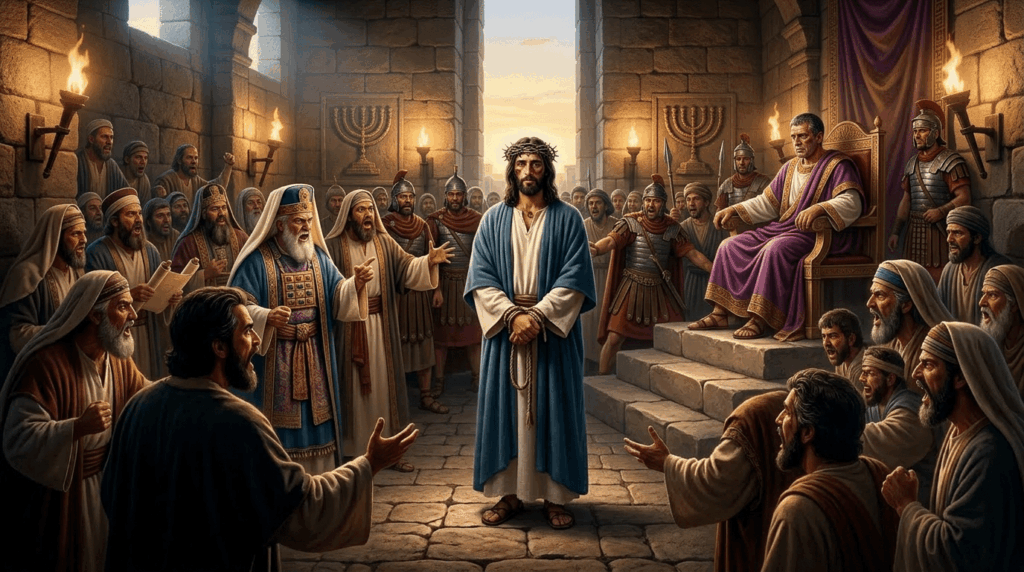
Kun Jeesus ja hänen syyttäjänsä olivat kokoontuneet Pilatuksen tuomiosalin eteen, roomalaismaaherra astui ulos ja paikalle kerääntynyttä seuruetta puhutellen kysyi: ”Minkäs syytteen te tätä kaveria vastaan esitätte?” Saddukeukset ja neuvosmiehet, jotka olivat ottaneet asiakseen raivata Jeesus pois tieltä, olivat päättäneet mennä Pilatuksen eteen ja pyytää vahvistusta kuolemantuomiolle, joka Jeesukselle oli langetettu, ja tehdä se viitsimättä esittää mitään yksiselitteistä syytettä. Siksi sanhedristioikeuden puhemies vastasi Pilatukselle: ”Ellei tämä mies olisi pahantekijä, emme toki olisi toimittaneet häntä luoksesi.”
Huomatessaan, että he hänen tietojensa mukaan koko yön jatkuneista Jeesuksen syyllisyyttä koskeneista keskusteluistaan huolimatta olivat haluttomia tuomaan julki syytteitään tätä vastaan, Pilatus vastasi heille: ”Jos kerran ette löytäneet yhteistä näkemystä mistään yksiselitteisistä syytteistä, niin miksi ette vie tätä miestä mukananne ja langeta hänelle tuomiota omien lakienne mukaisesti?”
Silloin sanhedristioikeuden kirjuri puhui Pilatukselle: ”Ei ole lain mukaista meidän määrätä ketään kuolemaan, ja tämä kansakuntamme villitsijä on ansainnut kuolemansa sillä, mitä hän on sanonut ja tehnyt. Olemme tulleet eteesi saadaksemme vahvistuksen tälle päätöksellemme.”
Se, että he astuivat roomalaismaaherran eteen kerrotunlaisin kiertely-yrityksin, paljastaa ensinnäkin, että sanhedristit tunsivat pahansuopaisuutta ja nurjamielisyyttä Jeesusta kohtaan, ja toisekseen, että heiltä puuttui kunnioitus Pilatuksen rehellisyyttä, kunniallisuutta ja arvoasemaa kohtaan. Millaista häpeämättömyyttä osoittaakaan näiden alamaiskansalaisten taholta se, että he ilmestyvät provinssinsa maaherran eteen pyytämään teloitusmääräystä miehelle, jolle he eivät ole vieläkään suoneet puolueetonta oikeudenkäyntiä, ja nostamatta edes yksiselitteistä rikossyytettä häntä vastaan!
Pilatus oli jonkin verran perillä Jeesuksen toiminnasta juutalaisten keskuudessa, ja hän otaksui, että tätä vastaan mahdollisesti nostettavissa syytteissä olisi kysymys juutalaisten kirkkolakien rikkomuksista. Sen vuoksi hän koetti siirtää jutun takaisin heidän oman tuomioistuimensa ratkaistavaksi. Toisaalta Pilatus nautti siitä, että hän pani heidät julkisesti tunnustamaan voimattomuutensa langettaa ja toimeenpanna kuolemantuomiota edes sellaiselle oman rotunsa edustajalle, jota he olivat katkeraa ja pahansuopaista vihaa tuntien alkaneet halveksia.
Vain muutamaa tuntia aikaisemmin, vähän ennen keskiyötä, ja sen jälkeen kun hän oli myöntänyt luvan käyttää roomalaissotilaita Jeesuksen salaisen pidättämisen toimeenpanemiseen, Pilatus oli vaimoltaan Claudialta kuullut lisää Jeesuksesta ja tämän opetuksista. Claudia oli puolittainen juudaismikäännynnäinen, ja myöhemmin hänestä tuli varaukseton Jeesuksen evankeliumiin uskova.
Pilatus olisi mieluusti lykännyt tämän kuulustelun myöhemmäksi, mutta hän näki juutalaisjohtajista, että nämä olivat lujasti asian käsittelyn jatkamisen kannalla. Hän tiesi tämän aamupäivän merkitsevän valmistautumista pääsiäiseen, mutta koska nyt oli perjantai, hän tiesi päivän olevan lisäksi levon ja jumalanpalveluksen merkeissä vietettävän juutalaisen sapatin valmistuspäivä.
Tuskallisen tietoisena siitä, miten epäkunnioittavasti nämä juutalaiset häntä lähestyivät, Pilatus ei ollut halukas suostumaan heidän vaatimuksiinsa ilman oikeudenkäyntiä tapahtuvasta Jeesuksen kuolemaan tuomitsemisesta. Niinpä hän muutaman hetken odotettuaan, että he esittäisivät syytöksensä vangittua vastaan, kääntyi heihin päin ja sanoi: ”Ilman oikeudenkäyntiä en tätä miestä kuolemaan tuomitse, enkä suostu edes kuulustelemaan häntä, ennen kuin olette kirjallisesti esittäneet syytteenne häntä vastaan.”
Kun ylipappi ja muut olivat kuulleet Pilatuksen äskeiset sanat, he viittasivat paikalle oikeusistuimen kirjurin, joka sitten ojensi Pilatukselle Jeesusta vastaan esitetyt kirjalliset syytökset. Ja syytökset kuuluivat seuraavasti:
”Sanhedristioikeusistuimen nimessä toteamme tämän miehen pahantekijäksi ja kansakuntamme villitsijäksi, sillä hänen viakseen on luettava:
”1. Kansakuntamme turmeleminen ja kansamme yllyttäminen kapinaan.
”2. Se, että hän kieltää kansaa maksamasta henkiveroa keisarille.
”3. Se, että hän kutsuu itseään juutalaisten kuninkaaksi ja opettaa uuden valtakunnan pystyttämistä.”
Jeesusta ei ollut säädösten edellyttämällä tavalla kuultu eikä lain edellyttämällä tavalla todettu syylliseksi yhdenkään esitetyn syytöksen osalta. Hän ei edes kuullut näitä syytöksiä, kun ne ensimmäistä kertaa esitettiin, mutta Pilatus tuotatti hänet praetoriumista, jossa hän oli vartijoiden valvonnassa, ja vaati nämä syytökset toistettaviksi Jeesuksen kuullen.
Nämä syytteet kuullessaan Jeesus tiesi mainiosti, ettei häntä ollut juutalaisen oikeuden edessä kuultu näiden asioiden osalta, ja sen tiesivät myös Johannes Sebedeus ja Jeesuksen syyttäjät, mutta hän ei vastannut mitään heidän valheellisiin syytöksiinsä. Hän ei avannut suutaan, edes silloin kun Pilatus pyysi häntä vastaamaan syyttäjilleen. Pilatusta koko asian käsittelyn oikeudenvastaisuus niin suuresti hämmästytti ja Jeesuksen äänetön ja hillitty käytös teki häneen niin syvän vaikutuksen, että hän päätti viedä vangitun sisälle saliin ja kuulustella häntä yksityisesti.
Mielessään Pilatus oli hämmentynyt, sydämessään hän pelkäsi juutalaisia, ja hengessään hän oli tavattoman liikuttunut tästä näytelmästä, jossa Jeesus seisoi majesteettisena verenhimoisten syyttäjiensä edessä ja katseli heitä ylhäältä alas, ei sanattoman halveksunnan vallassa, vaan kasvoillaan ilme, joka kertoi aidosta säälistä ja surumielisestä hellyydestä.
When Jesus and his accusers had gathered in front of Pilate’s judgment hall, the Roman governor came out and, addressing the company assembled, asked, “What accusation do you bring against this fellow?” The Sadducees and councilors who had taken it upon themselves to put Jesus out of the way had determined to go before Pilate and ask for confirmation of the death sentence pronounced upon Jesus, without volunteering any definite charge. Therefore did the spokesman for the Sanhedrist court answer Pilate: “If this man were not an evildoer, we should not have delivered him up to you.”
When Pilate observed that they were reluctant to state their charges against Jesus, although he knew they had been all night engaged in deliberations regarding his guilt, he answered them: “Since you have not agreed on any definite charges, why do you not take this man and pass judgment on him in accordance with your own laws?”
Then spoke the clerk of the Sanhedrin court to Pilate: “It is not lawful for us to put any man to death, and this disturber of our nation is worthy to die for the things which he has said and done. Therefore have we come before you for confirmation of this decree.”
To come before the Roman governor with this attempt at evasion discloses both the ill-will and the ill-humor of the Sanhedrists toward Jesus as well as their lack of respect for the fairness, honor, and dignity of Pilate. What effrontery for these subject citizens to appear before their provincial governor asking for a decree of execution against a man before affording him a fair trial and without even preferring definite criminal charges against him!
Pilate knew something of Jesus’ work among the Jews, and he surmised that the charges which might be brought against him had to do with infringements of the Jewish ecclesiastical laws; therefore he sought to refer the case back to their own tribunal. Again, Pilate took delight in making them publicly confess that they were powerless to pronounce and execute the death sentence upon even one of their own race whom they had come to despise with a bitter and envious hatred.
It was a few hours previously, shortly before midnight and after he had granted permission to use Roman soldiers in effecting the secret arrest of Jesus, that Pilate had heard further concerning Jesus and his teaching from his wife, Claudia, who was a partial convert to Judaism, and who later on became a full-fledged believer in Jesus’ gospel.
Pilate would have liked to postpone this hearing, but he saw the Jewish leaders were determined to proceed with the case. He knew that this was not only the forenoon of preparation for the Passover, but that this day, being Friday, was also the preparation day for the Jewish Sabbath of rest and worship.
Pilate, being keenly sensitive to the disrespectful manner of the approach of these Jews, was not willing to comply with their demands that Jesus be sentenced to death without a trial. When, therefore, he had waited a few moments for them to present their charges against the prisoner, he turned to them and said: “I will not sentence this man to death without a trial; neither will I consent to examine him until you have presented your charges against him in writing.”
When the high priest and the others heard Pilate say this, they signaled to the clerk of the court, who then handed to Pilate the written charges against Jesus. And these charges were:
“We find in the Sanhedrist tribunal that this man is an evildoer and a disturber of our nation in that he is guilty of:
“1. Perverting our nation and stirring up our people to rebellion.
“2. Forbidding the people to pay tribute to Caesar.
“3. Calling himself the king of the Jews and teaching the founding of a new kingdom.”
Jesus had not been regularly tried nor legally convicted on any of these charges. He did not even hear these charges when first stated, but Pilate had him brought from the praetorium, where he was in the keeping of the guards, and he insisted that these charges be repeated in Jesus’ hearing.
When Jesus heard these accusations, he well knew that he had not been heard on these matters before the Jewish court, and so did John Zebedee and his accusers, but he made no reply to their false charges. Even when Pilate bade him answer his accusers, he opened not his mouth. Pilate was so astonished at the unfairness of the whole proceeding and so impressed by Jesus’ silent and masterly bearing that he decided to take the prisoner inside the hall and examine him privately.
Pilate was confused in mind, fearful of the Jews in his heart, and mightily stirred in his spirit by the spectacle of Jesus’ standing there in majesty before his bloodthirsty accusers and gazing down on them, not in silent contempt, but with an expression of genuine pity and sorrowful affection.
SuomiEnglish
Kun Jeesus ja hänen syyttäjänsä olivat kokoontuneet Pilatuksen tuomiosalin eteen, roomalaismaaherra astui ulos ja paikalle kerääntynyttä seuruetta puhutellen kysyi: ”Minkäs syytteen te tätä kaveria vastaan esitätte?” Saddukeukset ja neuvosmiehet, jotka olivat ottaneet asiakseen raivata Jeesus pois tieltä, olivat päättäneet mennä Pilatuksen eteen ja pyytää vahvistusta kuolemantuomiolle, joka Jeesukselle oli langetettu, ja tehdä se viitsimättä esittää mitään yksiselitteistä syytettä. Siksi sanhedristioikeuden puhemies vastasi Pilatukselle: ”Ellei tämä mies olisi pahantekijä, emme toki olisi toimittaneet häntä luoksesi.”
When Jesus and his accusers had gathered in front of Pilate’s judgment hall, the Roman governor came out and, addressing the company assembled, asked, “What accusation do you bring against this fellow?” The Sadducees and councilors who had taken it upon themselves to put Jesus out of the way had determined to go before Pilate and ask for confirmation of the death sentence pronounced upon Jesus, without volunteering any definite charge. Therefore did the spokesman for the Sanhedrist court answer Pilate: “If this man were not an evildoer, we should not have delivered him up to you.”
Huomatessaan, että he hänen tietojensa mukaan koko yön jatkuneista Jeesuksen syyllisyyttä koskeneista keskusteluistaan huolimatta olivat haluttomia tuomaan julki syytteitään tätä vastaan, Pilatus vastasi heille: ”Jos kerran ette löytäneet yhteistä näkemystä mistään yksiselitteisistä syytteistä, niin miksi ette vie tätä miestä mukananne ja langeta hänelle tuomiota omien lakienne mukaisesti?”
When Pilate observed that they were reluctant to state their charges against Jesus, although he knew they had been all night engaged in deliberations regarding his guilt, he answered them: “Since you have not agreed on any definite charges, why do you not take this man and pass judgment on him in accordance with your own laws?”
Silloin sanhedristioikeuden kirjuri puhui Pilatukselle: ”Ei ole lain mukaista meidän määrätä ketään kuolemaan, ja tämä kansakuntamme villitsijä on ansainnut kuolemansa sillä, mitä hän on sanonut ja tehnyt. Olemme tulleet eteesi saadaksemme vahvistuksen tälle päätöksellemme.”
Then spoke the clerk of the Sanhedrin court to Pilate: “It is not lawful for us to put any man to death, and this disturber of our nation is worthy to die for the things which he has said and done. Therefore have we come before you for confirmation of this decree.”
Se, että he astuivat roomalaismaaherran eteen kerrotunlaisin kiertely-yrityksin, paljastaa ensinnäkin, että sanhedristit tunsivat pahansuopaisuutta ja nurjamielisyyttä Jeesusta kohtaan, ja toisekseen, että heiltä puuttui kunnioitus Pilatuksen rehellisyyttä, kunniallisuutta ja arvoasemaa kohtaan. Millaista häpeämättömyyttä osoittaakaan näiden alamaiskansalaisten taholta se, että he ilmestyvät provinssinsa maaherran eteen pyytämään teloitusmääräystä miehelle, jolle he eivät ole vieläkään suoneet puolueetonta oikeudenkäyntiä, ja nostamatta edes yksiselitteistä rikossyytettä häntä vastaan!
To come before the Roman governor with this attempt at evasion discloses both the ill-will and the ill-humor of the Sanhedrists toward Jesus as well as their lack of respect for the fairness, honor, and dignity of Pilate. What effrontery for these subject citizens to appear before their provincial governor asking for a decree of execution against a man before affording him a fair trial and without even preferring definite criminal charges against him!
Pilatus oli jonkin verran perillä Jeesuksen toiminnasta juutalaisten keskuudessa, ja hän otaksui, että tätä vastaan mahdollisesti nostettavissa syytteissä olisi kysymys juutalaisten kirkkolakien rikkomuksista. Sen vuoksi hän koetti siirtää jutun takaisin heidän oman tuomioistuimensa ratkaistavaksi. Toisaalta Pilatus nautti siitä, että hän pani heidät julkisesti tunnustamaan voimattomuutensa langettaa ja toimeenpanna kuolemantuomiota edes sellaiselle oman rotunsa edustajalle, jota he olivat katkeraa ja pahansuopaista vihaa tuntien alkaneet halveksia.
Pilate knew something of Jesus’ work among the Jews, and he surmised that the charges which might be brought against him had to do with infringements of the Jewish ecclesiastical laws; therefore he sought to refer the case back to their own tribunal. Again, Pilate took delight in making them publicly confess that they were powerless to pronounce and execute the death sentence upon even one of their own race whom they had come to despise with a bitter and envious hatred.
Vain muutamaa tuntia aikaisemmin, vähän ennen keskiyötä, ja sen jälkeen kun hän oli myöntänyt luvan käyttää roomalaissotilaita Jeesuksen salaisen pidättämisen toimeenpanemiseen, Pilatus oli vaimoltaan Claudialta kuullut lisää Jeesuksesta ja tämän opetuksista. Claudia oli puolittainen juudaismikäännynnäinen, ja myöhemmin hänestä tuli varaukseton Jeesuksen evankeliumiin uskova.
It was a few hours previously, shortly before midnight and after he had granted permission to use Roman soldiers in effecting the secret arrest of Jesus, that Pilate had heard further concerning Jesus and his teaching from his wife, Claudia, who was a partial convert to Judaism, and who later on became a full-fledged believer in Jesus’ gospel.
Pilatus olisi mieluusti lykännyt tämän kuulustelun myöhemmäksi, mutta hän näki juutalaisjohtajista, että nämä olivat lujasti asian käsittelyn jatkamisen kannalla. Hän tiesi tämän aamupäivän merkitsevän valmistautumista pääsiäiseen, mutta koska nyt oli perjantai, hän tiesi päivän olevan lisäksi levon ja jumalanpalveluksen merkeissä vietettävän juutalaisen sapatin valmistuspäivä.
Pilate would have liked to postpone this hearing, but he saw the Jewish leaders were determined to proceed with the case. He knew that this was not only the forenoon of preparation for the Passover, but that this day, being Friday, was also the preparation day for the Jewish Sabbath of rest and worship.
Tuskallisen tietoisena siitä, miten epäkunnioittavasti nämä juutalaiset häntä lähestyivät, Pilatus ei ollut halukas suostumaan heidän vaatimuksiinsa ilman oikeudenkäyntiä tapahtuvasta Jeesuksen kuolemaan tuomitsemisesta. Niinpä hän muutaman hetken odotettuaan, että he esittäisivät syytöksensä vangittua vastaan, kääntyi heihin päin ja sanoi: ”Ilman oikeudenkäyntiä en tätä miestä kuolemaan tuomitse, enkä suostu edes kuulustelemaan häntä, ennen kuin olette kirjallisesti esittäneet syytteenne häntä vastaan.”
Pilate, being keenly sensitive to the disrespectful manner of the approach of these Jews, was not willing to comply with their demands that Jesus be sentenced to death without a trial. When, therefore, he had waited a few moments for them to present their charges against the prisoner, he turned to them and said: “I will not sentence this man to death without a trial; neither will I consent to examine him until you have presented your charges against him in writing.”
Kun ylipappi ja muut olivat kuulleet Pilatuksen äskeiset sanat, he viittasivat paikalle oikeusistuimen kirjurin, joka sitten ojensi Pilatukselle Jeesusta vastaan esitetyt kirjalliset syytökset. Ja syytökset kuuluivat seuraavasti:
When the high priest and the others heard Pilate say this, they signaled to the clerk of the court, who then handed to Pilate the written charges against Jesus. And these charges were:
”Sanhedristioikeusistuimen nimessä toteamme tämän miehen pahantekijäksi ja kansakuntamme villitsijäksi, sillä hänen viakseen on luettava:
“We find in the Sanhedrist tribunal that this man is an evildoer and a disturber of our nation in that he is guilty of:
”1. Kansakuntamme turmeleminen ja kansamme yllyttäminen kapinaan.
“1. Perverting our nation and stirring up our people to rebellion.
”2. Se, että hän kieltää kansaa maksamasta henkiveroa keisarille.
“2. Forbidding the people to pay tribute to Caesar.
”3. Se, että hän kutsuu itseään juutalaisten kuninkaaksi ja opettaa uuden valtakunnan pystyttämistä.”
“3. Calling himself the king of the Jews and teaching the founding of a new kingdom.”
Jeesusta ei ollut säädösten edellyttämällä tavalla kuultu eikä lain edellyttämällä tavalla todettu syylliseksi yhdenkään esitetyn syytöksen osalta. Hän ei edes kuullut näitä syytöksiä, kun ne ensimmäistä kertaa esitettiin, mutta Pilatus tuotatti hänet praetoriumista, jossa hän oli vartijoiden valvonnassa, ja vaati nämä syytökset toistettaviksi Jeesuksen kuullen.
Jesus had not been regularly tried nor legally convicted on any of these charges. He did not even hear these charges when first stated, but Pilate had him brought from the praetorium, where he was in the keeping of the guards, and he insisted that these charges be repeated in Jesus’ hearing.
Nämä syytteet kuullessaan Jeesus tiesi mainiosti, ettei häntä ollut juutalaisen oikeuden edessä kuultu näiden asioiden osalta, ja sen tiesivät myös Johannes Sebedeus ja Jeesuksen syyttäjät, mutta hän ei vastannut mitään heidän valheellisiin syytöksiinsä. Hän ei avannut suutaan, edes silloin kun Pilatus pyysi häntä vastaamaan syyttäjilleen. Pilatusta koko asian käsittelyn oikeudenvastaisuus niin suuresti hämmästytti ja Jeesuksen äänetön ja hillitty käytös teki häneen niin syvän vaikutuksen, että hän päätti viedä vangitun sisälle saliin ja kuulustella häntä yksityisesti.
When Jesus heard these accusations, he well knew that he had not been heard on these matters before the Jewish court, and so did John Zebedee and his accusers, but he made no reply to their false charges. Even when Pilate bade him answer his accusers, he opened not his mouth. Pilate was so astonished at the unfairness of the whole proceeding and so impressed by Jesus’ silent and masterly bearing that he decided to take the prisoner inside the hall and examine him privately.
Mielessään Pilatus oli hämmentynyt, sydämessään hän pelkäsi juutalaisia, ja hengessään hän oli tavattoman liikuttunut tästä näytelmästä, jossa Jeesus seisoi majesteettisena verenhimoisten syyttäjiensä edessä ja katseli heitä ylhäältä alas, ei sanattoman halveksunnan vallassa, vaan kasvoillaan ilme, joka kertoi aidosta säälistä ja surumielisestä hellyydestä.
Pilate was confused in mind, fearful of the Jews in his heart, and mightily stirred in his spirit by the spectacle of Jesus’ standing there in majesty before his bloodthirsty accusers and gazing down on them, not in silent contempt, but with an expression of genuine pity and sorrowful affection.