
Teksti
Tausta
Näytä
Lisäasetukset
Kieli
Urantia Opas
Kysy kirjan sisällöstä. Opas vastaa Book Enginen omien lähdekohtien perusteella ja ohjaa sinut lukemaan ne.
Hei! 🙏
Olen sinun Urantia-oppaasi. Tehtäväni on auttaa sinua löytämään oikeat kohdat Urantia-kirjasta ja ymmärtämään sen opetuksia syvemmin. 😊❤️
Kirjanoppineiden ja johtomiesten vetäydyttyä paikalta Jeesus kohdisti taas sanansa paikalla olevalle väenkokoukselle ja esitti vertauksen hääjuhlasta. Hän sanoi:
”Taivaan valtakuntaa voidaan verrata tiettyyn kuninkaaseen, joka järjesti hääjuhlan pojalleen ja lähetti viestinviejät toimittamaan sanan niille, jotka oli aiemmin kutsuttu juhlaan. Viesti kuului: ’Kuninkaan palatsissa on kaikki valmiina hääillallista varten.’ Kävi kuitenkin niin, että monet, jotka olivat aikaisemmin luvanneet olla läsnä, tällä kertaa kieltäytyivätkin tulemasta. Kuullessaan kutsunsa tulleen torjutuksi kuningas lähetti vielä toiset palvelijat ja viestinviejät sanoen: ’Pyytäkää kaikkia kutsun saaneita tulemaan, sillä katsokaa, illalliseni on valmis. Härkäni ja juottovasikkani on teurastettu, ja kaikki odottaa valmiina poikani lähestyvien häiden juhlintaa.’ Mutta ajattelemattomat kutsutut suhtautuivat taas väheksyvästi tähän kuninkaansa kutsuun ja menivät omia teitään, kuka pellolleen, kuka savenvalimoon, kuka kauppatavaroilleen. Oli vielä niitäkin, jotka eivät tyytyneet vain tällä tavoin halventamaan kuninkaan kutsua, vaan kävivät avoimesti kapinoiden käsiksi kuninkaan lähetteihin ja pahoinpitelivät näitä häpeällisesti, heistä muutaman jopa tappaen. Ja kun kuninkaalle selvisi, että hänen valikoidut vieraansa, yksinpä nekin, jotka olivat hyväksyneet hänen alustavan kutsunsa ja luvanneet olla mukana hääjuhlilla, olivat loppujen lopuksi hylänneet hänen kutsunsa ja kapinoiden käyneet kiinni hänen valittuihin sanansaattajiinsa ja heitä tappaneet, hän vihastui silmittömäsi. Ja silloin tämä loukattu kuningas määräsi liikekannalle omat armeijansa ja liittolaistensa armeijat ja antoi niille määräyksen hävittää nämä kapinalliset murhamiehet ja polttaa poroksi heidän kaupunkinsa.
”Ja rankaistuaan niitä, jotka olivat ylenkatsoneet hänen kutsunsa, hän määräsi hääjuhlille taas uuden päivämäärän sanoen viestinviejilleen: ’Ne, jotka alkujaan kutsuttiin häihin, eivät olleet sen arvoisia; menkää nyt siis teidenristeyksiin ja maanteille ja jo kaupunginrajojen ulkopuolellekin, ja niin monta kuin te heitä löydätte, vaikkapa muukalaisia, pyytäkää heitä tulemaan ja olemaan mukana tässä hääjuhlassa.’ Ja sen jälkeen nämä palvelijat menivät maanteille ja aitovierille ja keräsivät koolle kaikki, jotka he tapasivat, niin hyvät kuin pahat, niin rikkaat kuin köyhät, joten häähuone oli lopultakin täynnä mieluusti saapuneita vieraita. Kun kaikki oli valmista, kuningas astui sisään katsomaan vieraitaan, ja suureksi hämmästyksekseen hän näki siellä miehen, jolla ei ollut hääpukua. Koska kuningas oli järjestänyt yltä kyllin häävaatteita kaikille vierailleen, hän tätä miestä puhutellen sanoi: ’Ystävä, kuinka on selitettävissä, että sinä tulet tässä tilanteessa vierashuoneeseeni ilman hääpukua?’ Ja tämä valmistautumaton mies ei saanut sanaa suustaan. Sitten kuningas sanoi palvelijoilleen: ’Heittäkää tämä välinpitämätön mies ulos talostani, jotta hän jakaisi kaikkien niiden muiden kohtalon, jotka ovat ylenkatsoneet vieraanvaraisuuttani ja torjuneet kutsuni. En halua tänne muita kuin ne, joista on ilo hyväksyä kutsuni ja jotka suovat minulle sen kunnian, että he kantavat vierasvaatteita, joita on yltä kyllin järjestetty kaikkien käyttöön.’”
Tämän vertauksen esitettyään Jeesus oli lähettämäisillään väkijoukon pois, kun muuan myötämielinen uskova raivasi tiensä tungoksen läpi hänen luokseen ja kysyi: ”Mutta, Mestari, miten me näistä asioista tietäisimme? Miten olisimme valmistautuneita kuninkaan kutsuun? Minkä merkin tulet antamaan meille, jotta me siitä tietäisimme, että olet Jumalan Poika?” Ja kun Mestari tämän kuuli, hän sanoi: ”Vain yksi merkki teille annetaan.” Ja sitten hän omaa ruumistaan osoittaen jatkoi: ”Hävittäkää tämä temppeli, ja kolmessa päivässä minä nostan sen ylös.” Mutta he eivät ymmärtäneet häntä. Ja hajaantuessaan tahoilleen he keskustelivat toistensa kanssa sanoen: ”Tätä temppeliä on rakennettu kohta viisikymmentä vuotta, ja silti hän sanoo hävittävänsä sen ja nostavansa sen pystyyn kolmessa päivässä.” Edes hänen omat opetuslapsensa eivät ymmärtäneet tämän ilmaisun merkitystä, mutta sittemmin he hänen kuolleistanousunsa jälkeen muistivat, mitä hän oli sanonut.
Kello neljän maissa iltapäivällä Jeesus antoi apostoleilleen merkin antaen heidän ymmärtää, että hän halusi poistua temppeliltä ja mennä Betaniaan illalliselle ja yölevolle. Taitettaessa taivalta ylös Öljymäkeä Jeesus antoi Andreakselle, Filippukselle ja Tuomakselle ohjeen heidän pystyttää seuraavana aamuna lähemmäksi kaupunkia leiri, jota he voisivat käyttää pääsiäisviikon loppuajan. Tätä ohjetta noudattaen he pystyttivät seuraavana aamuna telttansa Simon Betanialaisen omistamalle maapalstalle, mäenrinteessä olevaan rotkoon, josta oli näkymä Getsemanen yleiseen leiriytymispuistoon.
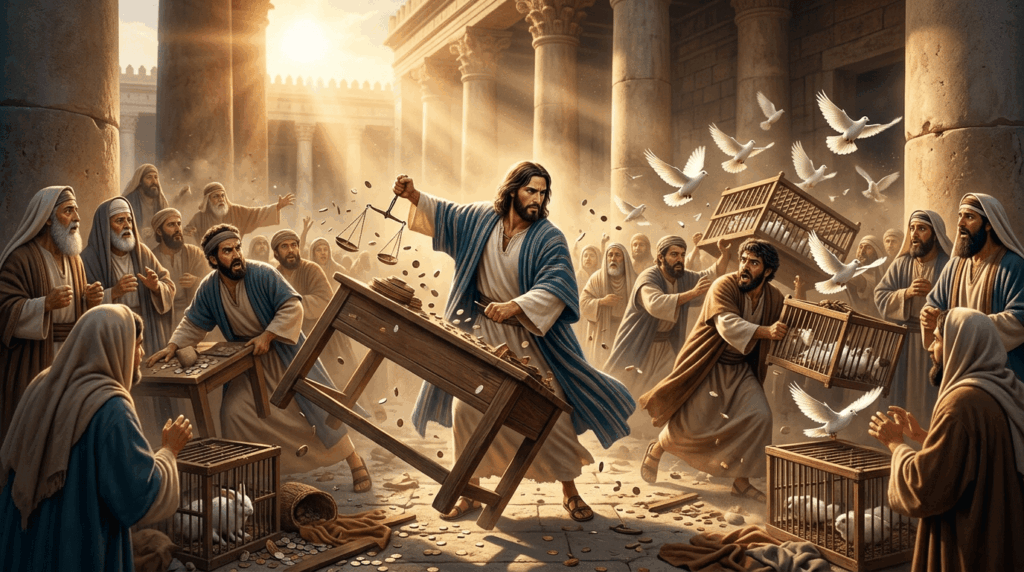
Tuona maanantai-iltana vaelsi taas kerran vaitonainen juutalaisjoukko ylös Öljymäen läntistä rinnettä. Nämä kaksitoista miestä alkoivat aivan uudella tavalla vaistota, että jotakin traagista oli kohta tapahtuva. Vaikka varhain aamulla tapahtunut dramaattinen temppelin puhdistus oli herättänyt heidän toiveensa siitä, että he näkisivät Mestarin ottavan hänelle kuuluvan paikkansa ja osoittavan mahtavat valtuutensa, toisaalta kaikki se, mitä koko iltapäivän mittaan tapahtui, vaikutti pelkästään innostuksen lamaannuttajana sikäli, että se osoitti kaiken kaikkiaan vain yhteen suuntaan eli siihen, että juutalaisviranomaiset epäilyksettä torjuisivat Jeesuksen opetuksen. Apostolit olivat epätietoisuuden vallassa, hirvittävä epävarmuus piti heitä lujassa otteessaan. He ymmärsivät, että juuri päättyneen päivän tapahtumien ja vääjäämättömän tuomion päällekaatumisen välillä saattoi olla korkeintaan muutama lyhyt päivä. He kaikki tunsivat, että jotakin kauhistuttavaa tulisi kohta tapahtumaan, mutta he eivät tienneet, mitä odottaa. He hajaantuivat lepopaikkoihinsa, mutta perin vähäiseksi jäi heidän unensa. Yksinpä Alfeuksen kaksosetkin heräsivät vihdoin tajuamaan, että Mestarin elämän tapahtumat vyöryivät lujaa vauhtia kohti lopullista huipentumaansa.
After the scribes and rulers had withdrawn, Jesus addressed himself again to the assembled crowd and spoke the parable of the wedding feast. He said:
“The kingdom of heaven may be likened to a certain king who made a marriage feast for his son and dispatched messengers to call those who had previously been invited to the feast to come, saying, ‘Everything is ready for the marriage supper at the king’s palace.’ Now, many of those who had once promised to attend, at this time refused to come. When the king heard of these rejections of his invitation, he sent other servants and messengers, saying: ‘Tell all those who were bidden, to come, for, behold, my dinner is ready. My oxen and my fatlings are killed, and all is in readiness for the celebration of the forthcoming marriage of my son.’ But again did the thoughtless make light of this call of their king, and they went their ways, one to the farm, another to the pottery, and others to their merchandise. Still others were not content thus to slight the king’s call, but in open rebellion they laid hands on the king’s messengers and shamefully mistreated them, even killing some of them. And when the king perceived that his chosen guests, even those who had accepted his preliminary invitation and had promised to attend the wedding feast, had finally rejected his call and in rebellion had assaulted and slain his chosen messengers, he was exceedingly wroth. And then this insulted king ordered out his armies and the armies of his allies and instructed them to destroy these rebellious murderers and to burn down their city.
“And when he had punished those who spurned his invitation, he appointed yet another day for the wedding feast and said to his messengers: ‘They who were first bidden to the wedding were not worthy; so go now into the parting of the ways and into the highways and even beyond the borders of the city, and as many as you shall find, bid even these strangers to come in and attend this wedding feast.’ And then these servants went out into the highways and the out-of-the-way places, and they gathered together as many as they found, good and bad, rich and poor, so that at last the wedding chamber was filled with willing guests. When all was ready, the king came in to view his guests, and much to his surprise he saw there a man without a wedding garment. The king, since he had freely provided wedding garments for all his guests, addressing this man, said: ‘Friend, how is it that you come into my guest chamber on this occasion without a wedding garment?’ And this unprepared man was speechless. Then said the king to his servants: ‘Cast out this thoughtless guest from my house to share the lot of all the others who have spurned my hospitality and rejected my call. I will have none here except those who delight to accept my invitation, and who do me the honor to wear those guest garments so freely provided for all.’”
After speaking this parable, Jesus was about to dismiss the multitude when a sympathetic believer, making his way through the crowds toward him, asked: “But, Master, how shall we know about these things? how shall we be ready for the king’s invitation? what sign will you give us whereby we shall know that you are the Son of God?” And when the Master heard this, he said, “Only one sign shall be given you.” And then, pointing to his own body, he continued, “Destroy this temple, and in three days I will raise it up.” But they did not understand him, and as they dispersed, they talked among themselves, saying, “Almost fifty years has this temple been in building, and yet he says he will destroy it and raise it up in three days.” Even his own apostles did not comprehend the significance of this utterance, but subsequently, after his resurrection, they recalled what he had said.
About four o’clock this afternoon Jesus beckoned to his apostles and indicated that he desired to leave the temple and to go to Bethany for their evening meal and a night of rest. On the way up Olivet Jesus instructed Andrew, Philip, and Thomas that, on the morrow, they should establish a camp nearer the city which they could occupy during the remainder of the Passover week. In compliance with this instruction the following morning they pitched their tents in the hillside ravine overlooking the public camping park of Gethsemane, on a plot of ground belonging to Simon of Bethany.
Again it was a silent group of Jews who made their way up the western slope of Olivet on this Monday night. These twelve men, as never before, were beginning to sense that something tragic was about to happen. While the dramatic cleansing of the temple during the early morning had aroused their hopes of seeing the Master assert himself and manifest his mighty powers, the events of the entire afternoon only operated as an anticlimax in that they all pointed to the certain rejection of Jesus’ teaching by the Jewish authorities. The apostles were gripped by suspense and were held in the firm grasp of a terrible uncertainty. They realized that only a few short days could intervene between the events of the day just passed and the crash of an impending doom. They all felt that something tremendous was about to happen, but they knew not what to expect. They went to their various places for rest, but they slept very little. Even the Alpheus twins were at last aroused to the realization that the events of the Master’s life were moving swiftly toward their final culmination.
SuomiEnglish
Kirjanoppineiden ja johtomiesten vetäydyttyä paikalta Jeesus kohdisti taas sanansa paikalla olevalle väenkokoukselle ja esitti vertauksen hääjuhlasta. Hän sanoi:
After the scribes and rulers had withdrawn, Jesus addressed himself again to the assembled crowd and spoke the parable of the wedding feast. He said:
”Taivaan valtakuntaa voidaan verrata tiettyyn kuninkaaseen, joka järjesti hääjuhlan pojalleen ja lähetti viestinviejät toimittamaan sanan niille, jotka oli aiemmin kutsuttu juhlaan. Viesti kuului: ’Kuninkaan palatsissa on kaikki valmiina hääillallista varten.’ Kävi kuitenkin niin, että monet, jotka olivat aikaisemmin luvanneet olla läsnä, tällä kertaa kieltäytyivätkin tulemasta. Kuullessaan kutsunsa tulleen torjutuksi kuningas lähetti vielä toiset palvelijat ja viestinviejät sanoen: ’Pyytäkää kaikkia kutsun saaneita tulemaan, sillä katsokaa, illalliseni on valmis. Härkäni ja juottovasikkani on teurastettu, ja kaikki odottaa valmiina poikani lähestyvien häiden juhlintaa.’ Mutta ajattelemattomat kutsutut suhtautuivat taas väheksyvästi tähän kuninkaansa kutsuun ja menivät omia teitään, kuka pellolleen, kuka savenvalimoon, kuka kauppatavaroilleen. Oli vielä niitäkin, jotka eivät tyytyneet vain tällä tavoin halventamaan kuninkaan kutsua, vaan kävivät avoimesti kapinoiden käsiksi kuninkaan lähetteihin ja pahoinpitelivät näitä häpeällisesti, heistä muutaman jopa tappaen. Ja kun kuninkaalle selvisi, että hänen valikoidut vieraansa, yksinpä nekin, jotka olivat hyväksyneet hänen alustavan kutsunsa ja luvanneet olla mukana hääjuhlilla, olivat loppujen lopuksi hylänneet hänen kutsunsa ja kapinoiden käyneet kiinni hänen valittuihin sanansaattajiinsa ja heitä tappaneet, hän vihastui silmittömäsi. Ja silloin tämä loukattu kuningas määräsi liikekannalle omat armeijansa ja liittolaistensa armeijat ja antoi niille määräyksen hävittää nämä kapinalliset murhamiehet ja polttaa poroksi heidän kaupunkinsa.
“The kingdom of heaven may be likened to a certain king who made a marriage feast for his son and dispatched messengers to call those who had previously been invited to the feast to come, saying, ‘Everything is ready for the marriage supper at the king’s palace.’ Now, many of those who had once promised to attend, at this time refused to come. When the king heard of these rejections of his invitation, he sent other servants and messengers, saying: ‘Tell all those who were bidden, to come, for, behold, my dinner is ready. My oxen and my fatlings are killed, and all is in readiness for the celebration of the forthcoming marriage of my son.’ But again did the thoughtless make light of this call of their king, and they went their ways, one to the farm, another to the pottery, and others to their merchandise. Still others were not content thus to slight the king’s call, but in open rebellion they laid hands on the king’s messengers and shamefully mistreated them, even killing some of them. And when the king perceived that his chosen guests, even those who had accepted his preliminary invitation and had promised to attend the wedding feast, had finally rejected his call and in rebellion had assaulted and slain his chosen messengers, he was exceedingly wroth. And then this insulted king ordered out his armies and the armies of his allies and instructed them to destroy these rebellious murderers and to burn down their city.
”Ja rankaistuaan niitä, jotka olivat ylenkatsoneet hänen kutsunsa, hän määräsi hääjuhlille taas uuden päivämäärän sanoen viestinviejilleen: ’Ne, jotka alkujaan kutsuttiin häihin, eivät olleet sen arvoisia; menkää nyt siis teidenristeyksiin ja maanteille ja jo kaupunginrajojen ulkopuolellekin, ja niin monta kuin te heitä löydätte, vaikkapa muukalaisia, pyytäkää heitä tulemaan ja olemaan mukana tässä hääjuhlassa.’ Ja sen jälkeen nämä palvelijat menivät maanteille ja aitovierille ja keräsivät koolle kaikki, jotka he tapasivat, niin hyvät kuin pahat, niin rikkaat kuin köyhät, joten häähuone oli lopultakin täynnä mieluusti saapuneita vieraita. Kun kaikki oli valmista, kuningas astui sisään katsomaan vieraitaan, ja suureksi hämmästyksekseen hän näki siellä miehen, jolla ei ollut hääpukua. Koska kuningas oli järjestänyt yltä kyllin häävaatteita kaikille vierailleen, hän tätä miestä puhutellen sanoi: ’Ystävä, kuinka on selitettävissä, että sinä tulet tässä tilanteessa vierashuoneeseeni ilman hääpukua?’ Ja tämä valmistautumaton mies ei saanut sanaa suustaan. Sitten kuningas sanoi palvelijoilleen: ’Heittäkää tämä välinpitämätön mies ulos talostani, jotta hän jakaisi kaikkien niiden muiden kohtalon, jotka ovat ylenkatsoneet vieraanvaraisuuttani ja torjuneet kutsuni. En halua tänne muita kuin ne, joista on ilo hyväksyä kutsuni ja jotka suovat minulle sen kunnian, että he kantavat vierasvaatteita, joita on yltä kyllin järjestetty kaikkien käyttöön.’”
“And when he had punished those who spurned his invitation, he appointed yet another day for the wedding feast and said to his messengers: ‘They who were first bidden to the wedding were not worthy; so go now into the parting of the ways and into the highways and even beyond the borders of the city, and as many as you shall find, bid even these strangers to come in and attend this wedding feast.’ And then these servants went out into the highways and the out-of-the-way places, and they gathered together as many as they found, good and bad, rich and poor, so that at last the wedding chamber was filled with willing guests. When all was ready, the king came in to view his guests, and much to his surprise he saw there a man without a wedding garment. The king, since he had freely provided wedding garments for all his guests, addressing this man, said: ‘Friend, how is it that you come into my guest chamber on this occasion without a wedding garment?’ And this unprepared man was speechless. Then said the king to his servants: ‘Cast out this thoughtless guest from my house to share the lot of all the others who have spurned my hospitality and rejected my call. I will have none here except those who delight to accept my invitation, and who do me the honor to wear those guest garments so freely provided for all.’”
Tämän vertauksen esitettyään Jeesus oli lähettämäisillään väkijoukon pois, kun muuan myötämielinen uskova raivasi tiensä tungoksen läpi hänen luokseen ja kysyi: ”Mutta, Mestari, miten me näistä asioista tietäisimme? Miten olisimme valmistautuneita kuninkaan kutsuun? Minkä merkin tulet antamaan meille, jotta me siitä tietäisimme, että olet Jumalan Poika?” Ja kun Mestari tämän kuuli, hän sanoi: ”Vain yksi merkki teille annetaan.” Ja sitten hän omaa ruumistaan osoittaen jatkoi: ”Hävittäkää tämä temppeli, ja kolmessa päivässä minä nostan sen ylös.” Mutta he eivät ymmärtäneet häntä. Ja hajaantuessaan tahoilleen he keskustelivat toistensa kanssa sanoen: ”Tätä temppeliä on rakennettu kohta viisikymmentä vuotta, ja silti hän sanoo hävittävänsä sen ja nostavansa sen pystyyn kolmessa päivässä.” Edes hänen omat opetuslapsensa eivät ymmärtäneet tämän ilmaisun merkitystä, mutta sittemmin he hänen kuolleistanousunsa jälkeen muistivat, mitä hän oli sanonut.
After speaking this parable, Jesus was about to dismiss the multitude when a sympathetic believer, making his way through the crowds toward him, asked: “But, Master, how shall we know about these things? how shall we be ready for the king’s invitation? what sign will you give us whereby we shall know that you are the Son of God?” And when the Master heard this, he said, “Only one sign shall be given you.” And then, pointing to his own body, he continued, “Destroy this temple, and in three days I will raise it up.” But they did not understand him, and as they dispersed, they talked among themselves, saying, “Almost fifty years has this temple been in building, and yet he says he will destroy it and raise it up in three days.” Even his own apostles did not comprehend the significance of this utterance, but subsequently, after his resurrection, they recalled what he had said.
Kello neljän maissa iltapäivällä Jeesus antoi apostoleilleen merkin antaen heidän ymmärtää, että hän halusi poistua temppeliltä ja mennä Betaniaan illalliselle ja yölevolle. Taitettaessa taivalta ylös Öljymäkeä Jeesus antoi Andreakselle, Filippukselle ja Tuomakselle ohjeen heidän pystyttää seuraavana aamuna lähemmäksi kaupunkia leiri, jota he voisivat käyttää pääsiäisviikon loppuajan. Tätä ohjetta noudattaen he pystyttivät seuraavana aamuna telttansa Simon Betanialaisen omistamalle maapalstalle, mäenrinteessä olevaan rotkoon, josta oli näkymä Getsemanen yleiseen leiriytymispuistoon.
About four o’clock this afternoon Jesus beckoned to his apostles and indicated that he desired to leave the temple and to go to Bethany for their evening meal and a night of rest. On the way up Olivet Jesus instructed Andrew, Philip, and Thomas that, on the morrow, they should establish a camp nearer the city which they could occupy during the remainder of the Passover week. In compliance with this instruction the following morning they pitched their tents in the hillside ravine overlooking the public camping park of Gethsemane, on a plot of ground belonging to Simon of Bethany.
Tuona maanantai-iltana vaelsi taas kerran vaitonainen juutalaisjoukko ylös Öljymäen läntistä rinnettä. Nämä kaksitoista miestä alkoivat aivan uudella tavalla vaistota, että jotakin traagista oli kohta tapahtuva. Vaikka varhain aamulla tapahtunut dramaattinen temppelin puhdistus oli herättänyt heidän toiveensa siitä, että he näkisivät Mestarin ottavan hänelle kuuluvan paikkansa ja osoittavan mahtavat valtuutensa, toisaalta kaikki se, mitä koko iltapäivän mittaan tapahtui, vaikutti pelkästään innostuksen lamaannuttajana sikäli, että se osoitti kaiken kaikkiaan vain yhteen suuntaan eli siihen, että juutalaisviranomaiset epäilyksettä torjuisivat Jeesuksen opetuksen. Apostolit olivat epätietoisuuden vallassa, hirvittävä epävarmuus piti heitä lujassa otteessaan. He ymmärsivät, että juuri päättyneen päivän tapahtumien ja vääjäämättömän tuomion päällekaatumisen välillä saattoi olla korkeintaan muutama lyhyt päivä. He kaikki tunsivat, että jotakin kauhistuttavaa tulisi kohta tapahtumaan, mutta he eivät tienneet, mitä odottaa. He hajaantuivat lepopaikkoihinsa, mutta perin vähäiseksi jäi heidän unensa. Yksinpä Alfeuksen kaksosetkin heräsivät vihdoin tajuamaan, että Mestarin elämän tapahtumat vyöryivät lujaa vauhtia kohti lopullista huipentumaansa.
Again it was a silent group of Jews who made their way up the western slope of Olivet on this Monday night. These twelve men, as never before, were beginning to sense that something tragic was about to happen. While the dramatic cleansing of the temple during the early morning had aroused their hopes of seeing the Master assert himself and manifest his mighty powers, the events of the entire afternoon only operated as an anticlimax in that they all pointed to the certain rejection of Jesus’ teaching by the Jewish authorities. The apostles were gripped by suspense and were held in the firm grasp of a terrible uncertainty. They realized that only a few short days could intervene between the events of the day just passed and the crash of an impending doom. They all felt that something tremendous was about to happen, but they knew not what to expect. They went to their various places for rest, but they slept very little. Even the Alpheus twins were at last aroused to the realization that the events of the Master’s life were moving swiftly toward their final culmination.