
Teksti
Tausta
Näytä
Lisäasetukset
Kieli
Urantia Opas
Kysy kirjan sisällöstä. Opas vastaa Book Enginen omien lähdekohtien perusteella ja ohjaa sinut lukemaan ne.
Hei! 🙏
Olen sinun Urantia-oppaasi. Tehtäväni on auttaa sinua löytämään oikeat kohdat Urantia-kirjasta ja ymmärtämään sen opetuksia syvemmin. 😊❤️
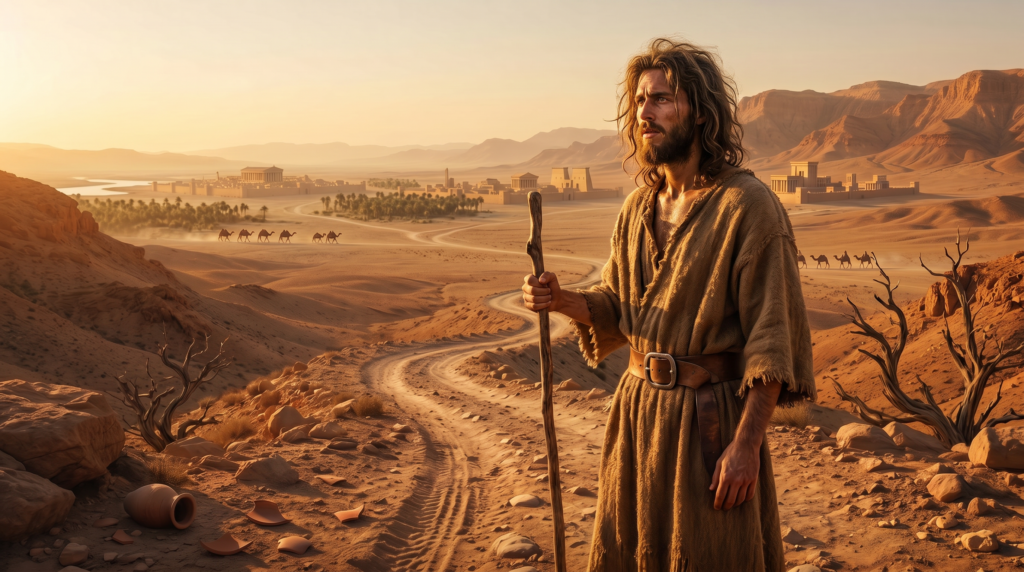
Maaliskuun alussa vuonna 25 jKr. Johannes taivalsi Kuolleenmeren länsirannan kautta ja Jordanin vartta ylävirtaan kulkien vastarannan Jerikoon, muinaiselle kahluupaikalle, josta Joosua ja Israelin lapset kulkivat saapuessaan ensi kertaa luvattuun maahan. Ja joen ylitettyään hän asettui lähelle kahluupaikan suuta ja ryhtyi saarnaamaan ihmisille, jotka kulkivat hänen ohitseen mennessään joen yli ja palatessaan sieltä takaisin. Paikka oli Jordanin kaikista ylityspaikoista eniten käytetty.
Kaikille, jotka Johannesta kuulivat, kävi selväksi, että hän oli enemmän kuin saarnamies. Suuri enemmistö tämän Juudean autiomaasta tulleen oudon miehen kuuntelijoista poistui paikalta uskoen kuulleensa profeetan ääntä. Eikä ole mikään ihme, että tällainen ilmiö kuohutti syvästi näiden tuskastuneiden ja odotuksentäyteisten juutalaisten sielua. Niin pitkälle kuin juutalaisten historia ulottui, Abrahamin hurskaat lapset eivät olleet milloinkaan yhtä syvästi kaivanneet ”Israelin lohdutusta” tai palavammin odottaneet ”kuningaskunnan uudelleenpystyttämistä”. Niin pitkälle kuin juutalaisten historia ulottuikin, ei Johanneksen sanoma siitä, että ”taivaan valtakunta on lähellä”, olisi milloinkaan aikaisemmin voinut saavuttaa yhtä syvää ja kaiken kattavaa vastakaikua kuin sinä ajankohtana, jolloin hän niin salaperäisesti ilmestyi Jordanvirran eteläisen ylityspaikan töyräälle.
Hän tuli Aamoksen tavoin lammaspaimenten parista. Hän pukeutui kuin muinainen Elia, ja hänen nuhteensa jyrisivät ja hänen varoituksensa ryöppysivät ”Elian hengessä ja väkevyydessä”. Ei sen vuoksi ole yllätys, että tämä outo saarnaaja herätti valtavaa kohua koko Palestiinassa, sitä mukaa kun matkamiehet levittivät tietoa hänen saarnaamisestaan Jordanin rannoilla.
Tämän nasiirisaarnaajan työskentelyssä oli lisäksi muuan uusi piirre: ”syntien anteeksi saamiseksi” hän kastoi jokaisen uskovansa Jordanissa. Vaikkei kaste ollut juutalaisten keskuudessa mikään uusi seremonia, he eivät kuitenkaan olleet nähneet sitä käytettävän sillä tavoin kuin Johannes nyt teki. Näin oli jo kauan aikaa ollut tapana kastaa gentiilikäännynnäiset temppelin ulkopihayhteisön jäseniksi, mutta juutalaisia itseään ei koskaan ollut pyydetty nöyrtymään katumuskasteeseen. Vain viisitoista kuukautta ehti kulua siitä, kun Johannes aloitti saarnaamisensa ja kastamisensa, siihen kun hänet Herodes Antipaan toimesta pidätettiin ja teljettiin vankilaan, mutta tässä lyhyessä ajassa hän kastoi hyvän matkaa yli satatuhatta katuvaa.
Johannes saarnasi neljän kuukauden ajan Betanian kahluupaikalla, ennen kuin hän jatkoi matkaansa pohjoiseen, Jordanin vartta ylävirtaan. Kymmenettuhannet kuulijat, jotkut uteliaisuuttaan mutta monet vakavissaan ja tosissaan, tulivat kuuntelemaan häntä Juudean, Perean ja Samarian kaikista osista. Jokunen tuli Galileastakin asti.
Johanneksen viipyessä vielä Betanian kahluupaikalla papit ja leviitat lähettivät tämän vuoden toukokuussa hänen luokseen lähetystön kysymään, väittikö hän olevansa Messias ja keneltä hän oli saanut valtuudet saarnaamiseensa. Johannes vastasi kysymyksen esittäjille seuraavin sanoin: ”Menkää ja kertokaa isännillenne, että olette kuulleet ’erämaassa huutavan äänen’ ikään kuin profeetta olisi puhunut sanoen: ’Valmistakaa tie Herralle, suoristakaa valtatie meidän Jumalallemme. Kaikki laaksot täytettäköön, kaikki vuoret ja kukkulat alennettakoon; koleikot tulkoot tasangoksi ja louhokset laakeaksi maaksi; ja kaikki liha on näkevä Jumalan pelastuksen.’”
Johannes oli urhea mutta tahditon saarnaaja. Kun hän eräänä päivänä oli saarnaamassa ja kastamassa Jordanin länsirannalla, paikalle saapui ryhmä fariseuksia ja muutama saddukeus, jotka tarjoutuivat kastettaviksi. Ennen kuin Johannes johdatti heidät veteen, hän puhutteli heitä ryhmänä ja sanoi: ”Kuka teille antoi varoituksen, että pakenisitte tulevaa vihaa, niin kuin kyykäärmeet tulen edestä? Minä kastan teidät, mutta kehotan teitä kantamaan vilpittömän katumuksen arvoisia hedelmiä, mikäli mielitte saada syntinne anteeksi. Älkää minulle sanoko, että Abraham on isänne. Sanon teille, että Jumala kykenee näistä edessänne olevista kahdestatoista kivestä herättämään Abrahamille oivallisia lapsia. Ja nytkin on kirves pantuna puitten juurelle. Jokainen puu, joka ei tee hyvää hedelmää, tulee hakatuksi maahan ja viskatuksi tuleen.” (Johanneksen mainitsemat kaksitoista kiveä olivat kuuluisat muistomerkkikivet, jotka Joosua pystytti sen muistoksi, että ”kaksitoista heimoa” juuri tuolla kohdin ylittivät joen luvattuun maahan ensimmäistä kertaa saapuessaan.)
Johannes piti opetuslapsilleen oppitunteja, joiden kuluessa hän antoi heille neuvoja heidän uuden elämänsä yksityiskohdista ja pyrki vastaamaan heidän moniin kysymyksiinsä. Hän neuvoi opettajia opettamaan sekä lain hengessä että sen kirjaimen mukaisesti. Hän neuvoi rikkaita antamaan ruokaa köyhille. Veronkantajille hän sanoi: ”Älkää ketään pakottako maksamaan enempää kuin on tehtäväksenne annettu.” Sotilaille hän sanoi: ”Älkää tehkö väkivaltaa älkääkä keneltäkään kiskoko mitään vääryydellä – tyytykää siihen, mitä palkaksi saatte.” Seuraavan neuvon hän sen sijaan osoitti kaikille: ”Valmistautukaa aikakauden päättymiseen – taivaan valtakunta on lähellä.”
Early in the month of March, a.d. 25, John journeyed around the western coast of the Dead Sea and up the river Jordan to opposite Jericho, the ancient ford over which Joshua and the children of Israel passed when they first entered the promised land; and crossing over to the other side of the river, he established himself near the entrance to the ford and began to preach to the people who passed by on their way back and forth across the river. This was the most frequented of all the Jordan crossings.
It was apparent to all who heard John that he was more than a preacher. The great majority of those who listened to this strange man who had come up from the Judean wilderness went away believing that they had heard the voice of a prophet. No wonder the souls of these weary and expectant Jews were deeply stirred by such a phenomenon. Never in all Jewish history had the devout children of Abraham so longed for the “consolation of Israel” or more ardently anticipated “the restoration of the kingdom.” Never in all Jewish history could John’s message, “the kingdom of heaven is at hand,” have made such a deep and universal appeal as at the very time he so mysteriously appeared on the bank of this southern crossing of the Jordan.
He came from the herdsmen, like Amos. He was dressed like Elijah of old, and he thundered his admonitions and poured forth his warnings in the “spirit and power of Elijah.” It is not surprising that this strange preacher created a mighty stir throughout all Palestine as the travelers carried abroad the news of his preaching along the Jordan.
There was still another and a new feature about the work of this Nazarite preacher: He baptized every one of his believers in the Jordan “for the remission of sins.” Although baptism was not a new ceremony among the Jews, they had never seen it employed as John now made use of it. It had long been the practice thus to baptize the gentile proselytes into the fellowship of the outer court of the temple, but never had the Jews themselves been asked to submit to the baptism of repentance. Only fifteen months intervened between the time John began to preach and baptize and his arrest and imprisonment at the instigation of Herod Antipas, but in this short time he baptized considerably over one hundred thousand penitents.
John preached four months at Bethany ford before starting north up the Jordan. Tens of thousands of listeners, some curious but many earnest and serious, came to hear him from all parts of Judea, Perea, and Samaria. Even a few came from Galilee.
In May of this year, while he still lingered at Bethany ford, the priests and Levites sent a delegation out to inquire of John whether he claimed to be the Messiah, and by whose authority he preached. John answered these questioners by saying: “Go tell your masters that you have heard ‘the voice of one crying in the wilderness,’ as spoken by the prophet, saying, ‘make ready the way of the Lord, make straight a highway for our God. Every valley shall be filled, and every mountain and hill shall be brought low; the uneven ground shall become a plain, while the rough places shall become a smooth valley; and all flesh shall see the salvation of God.’”
John was a heroic but tactless preacher. One day when he was preaching and baptizing on the west bank of the Jordan, a group of Pharisees and a number of Sadducees came forward and presented themselves for baptism. Before leading them down into the water, John, addressing them as a group said: “Who warned you to flee, as vipers before the fire, from the wrath to come? I will baptize you, but I warn you to bring forth fruit worthy of sincere repentance if you would receive the remission of your sins. Tell me not that Abraham is your father. I declare that God is able of these twelve stones here before you to raise up worthy children for Abraham. And even now is the ax laid to the very roots of the trees. Every tree that brings not forth good fruit is destined to be cut down and cast into the fire.” (The twelve stones to which he referred were the reputed memorial stones set up by Joshua to commemorate the crossing of the “twelve tribes” at this very point when they first entered the promised land.)
John conducted classes for his disciples, in the course of which he instructed them in the details of their new life and endeavored to answer their many questions. He counseled the teachers to instruct in the spirit as well as the letter of the law. He instructed the rich to feed the poor; to the tax gatherers he said: “Extort no more than that which is assigned you.” To the soldiers he said: “Do no violence and exact nothing wrongfully—be content with your wages.” While he counseled all: “Make ready for the end of the age—the kingdom of heaven is at hand.”
SuomiEnglish
Maaliskuun alussa vuonna 25 jKr. Johannes taivalsi Kuolleenmeren länsirannan kautta ja Jordanin vartta ylävirtaan kulkien vastarannan Jerikoon, muinaiselle kahluupaikalle, josta Joosua ja Israelin lapset kulkivat saapuessaan ensi kertaa luvattuun maahan. Ja joen ylitettyään hän asettui lähelle kahluupaikan suuta ja ryhtyi saarnaamaan ihmisille, jotka kulkivat hänen ohitseen mennessään joen yli ja palatessaan sieltä takaisin. Paikka oli Jordanin kaikista ylityspaikoista eniten käytetty.
Early in the month of March, a.d. 25, John journeyed around the western coast of the Dead Sea and up the river Jordan to opposite Jericho, the ancient ford over which Joshua and the children of Israel passed when they first entered the promised land; and crossing over to the other side of the river, he established himself near the entrance to the ford and began to preach to the people who passed by on their way back and forth across the river. This was the most frequented of all the Jordan crossings.
Kaikille, jotka Johannesta kuulivat, kävi selväksi, että hän oli enemmän kuin saarnamies. Suuri enemmistö tämän Juudean autiomaasta tulleen oudon miehen kuuntelijoista poistui paikalta uskoen kuulleensa profeetan ääntä. Eikä ole mikään ihme, että tällainen ilmiö kuohutti syvästi näiden tuskastuneiden ja odotuksentäyteisten juutalaisten sielua. Niin pitkälle kuin juutalaisten historia ulottui, Abrahamin hurskaat lapset eivät olleet milloinkaan yhtä syvästi kaivanneet ”Israelin lohdutusta” tai palavammin odottaneet ”kuningaskunnan uudelleenpystyttämistä”. Niin pitkälle kuin juutalaisten historia ulottuikin, ei Johanneksen sanoma siitä, että ”taivaan valtakunta on lähellä”, olisi milloinkaan aikaisemmin voinut saavuttaa yhtä syvää ja kaiken kattavaa vastakaikua kuin sinä ajankohtana, jolloin hän niin salaperäisesti ilmestyi Jordanvirran eteläisen ylityspaikan töyräälle.
It was apparent to all who heard John that he was more than a preacher. The great majority of those who listened to this strange man who had come up from the Judean wilderness went away believing that they had heard the voice of a prophet. No wonder the souls of these weary and expectant Jews were deeply stirred by such a phenomenon. Never in all Jewish history had the devout children of Abraham so longed for the “consolation of Israel” or more ardently anticipated “the restoration of the kingdom.” Never in all Jewish history could John’s message, “the kingdom of heaven is at hand,” have made such a deep and universal appeal as at the very time he so mysteriously appeared on the bank of this southern crossing of the Jordan.
Hän tuli Aamoksen tavoin lammaspaimenten parista. Hän pukeutui kuin muinainen Elia, ja hänen nuhteensa jyrisivät ja hänen varoituksensa ryöppysivät ”Elian hengessä ja väkevyydessä”. Ei sen vuoksi ole yllätys, että tämä outo saarnaaja herätti valtavaa kohua koko Palestiinassa, sitä mukaa kun matkamiehet levittivät tietoa hänen saarnaamisestaan Jordanin rannoilla.
He came from the herdsmen, like Amos. He was dressed like Elijah of old, and he thundered his admonitions and poured forth his warnings in the “spirit and power of Elijah.” It is not surprising that this strange preacher created a mighty stir throughout all Palestine as the travelers carried abroad the news of his preaching along the Jordan.
Tämän nasiirisaarnaajan työskentelyssä oli lisäksi muuan uusi piirre: ”syntien anteeksi saamiseksi” hän kastoi jokaisen uskovansa Jordanissa. Vaikkei kaste ollut juutalaisten keskuudessa mikään uusi seremonia, he eivät kuitenkaan olleet nähneet sitä käytettävän sillä tavoin kuin Johannes nyt teki. Näin oli jo kauan aikaa ollut tapana kastaa gentiilikäännynnäiset temppelin ulkopihayhteisön jäseniksi, mutta juutalaisia itseään ei koskaan ollut pyydetty nöyrtymään katumuskasteeseen. Vain viisitoista kuukautta ehti kulua siitä, kun Johannes aloitti saarnaamisensa ja kastamisensa, siihen kun hänet Herodes Antipaan toimesta pidätettiin ja teljettiin vankilaan, mutta tässä lyhyessä ajassa hän kastoi hyvän matkaa yli satatuhatta katuvaa.
There was still another and a new feature about the work of this Nazarite preacher: He baptized every one of his believers in the Jordan “for the remission of sins.” Although baptism was not a new ceremony among the Jews, they had never seen it employed as John now made use of it. It had long been the practice thus to baptize the gentile proselytes into the fellowship of the outer court of the temple, but never had the Jews themselves been asked to submit to the baptism of repentance. Only fifteen months intervened between the time John began to preach and baptize and his arrest and imprisonment at the instigation of Herod Antipas, but in this short time he baptized considerably over one hundred thousand penitents.
Johannes saarnasi neljän kuukauden ajan Betanian kahluupaikalla, ennen kuin hän jatkoi matkaansa pohjoiseen, Jordanin vartta ylävirtaan. Kymmenettuhannet kuulijat, jotkut uteliaisuuttaan mutta monet vakavissaan ja tosissaan, tulivat kuuntelemaan häntä Juudean, Perean ja Samarian kaikista osista. Jokunen tuli Galileastakin asti.
John preached four months at Bethany ford before starting north up the Jordan. Tens of thousands of listeners, some curious but many earnest and serious, came to hear him from all parts of Judea, Perea, and Samaria. Even a few came from Galilee.
Johanneksen viipyessä vielä Betanian kahluupaikalla papit ja leviitat lähettivät tämän vuoden toukokuussa hänen luokseen lähetystön kysymään, väittikö hän olevansa Messias ja keneltä hän oli saanut valtuudet saarnaamiseensa. Johannes vastasi kysymyksen esittäjille seuraavin sanoin: ”Menkää ja kertokaa isännillenne, että olette kuulleet ’erämaassa huutavan äänen’ ikään kuin profeetta olisi puhunut sanoen: ’Valmistakaa tie Herralle, suoristakaa valtatie meidän Jumalallemme. Kaikki laaksot täytettäköön, kaikki vuoret ja kukkulat alennettakoon; koleikot tulkoot tasangoksi ja louhokset laakeaksi maaksi; ja kaikki liha on näkevä Jumalan pelastuksen.’”
In May of this year, while he still lingered at Bethany ford, the priests and Levites sent a delegation out to inquire of John whether he claimed to be the Messiah, and by whose authority he preached. John answered these questioners by saying: “Go tell your masters that you have heard ‘the voice of one crying in the wilderness,’ as spoken by the prophet, saying, ‘make ready the way of the Lord, make straight a highway for our God. Every valley shall be filled, and every mountain and hill shall be brought low; the uneven ground shall become a plain, while the rough places shall become a smooth valley; and all flesh shall see the salvation of God.’”
Johannes oli urhea mutta tahditon saarnaaja. Kun hän eräänä päivänä oli saarnaamassa ja kastamassa Jordanin länsirannalla, paikalle saapui ryhmä fariseuksia ja muutama saddukeus, jotka tarjoutuivat kastettaviksi. Ennen kuin Johannes johdatti heidät veteen, hän puhutteli heitä ryhmänä ja sanoi: ”Kuka teille antoi varoituksen, että pakenisitte tulevaa vihaa, niin kuin kyykäärmeet tulen edestä? Minä kastan teidät, mutta kehotan teitä kantamaan vilpittömän katumuksen arvoisia hedelmiä, mikäli mielitte saada syntinne anteeksi. Älkää minulle sanoko, että Abraham on isänne. Sanon teille, että Jumala kykenee näistä edessänne olevista kahdestatoista kivestä herättämään Abrahamille oivallisia lapsia. Ja nytkin on kirves pantuna puitten juurelle. Jokainen puu, joka ei tee hyvää hedelmää, tulee hakatuksi maahan ja viskatuksi tuleen.” (Johanneksen mainitsemat kaksitoista kiveä olivat kuuluisat muistomerkkikivet, jotka Joosua pystytti sen muistoksi, että ”kaksitoista heimoa” juuri tuolla kohdin ylittivät joen luvattuun maahan ensimmäistä kertaa saapuessaan.)
John was a heroic but tactless preacher. One day when he was preaching and baptizing on the west bank of the Jordan, a group of Pharisees and a number of Sadducees came forward and presented themselves for baptism. Before leading them down into the water, John, addressing them as a group said: “Who warned you to flee, as vipers before the fire, from the wrath to come? I will baptize you, but I warn you to bring forth fruit worthy of sincere repentance if you would receive the remission of your sins. Tell me not that Abraham is your father. I declare that God is able of these twelve stones here before you to raise up worthy children for Abraham. And even now is the ax laid to the very roots of the trees. Every tree that brings not forth good fruit is destined to be cut down and cast into the fire.” (The twelve stones to which he referred were the reputed memorial stones set up by Joshua to commemorate the crossing of the “twelve tribes” at this very point when they first entered the promised land.)
Johannes piti opetuslapsilleen oppitunteja, joiden kuluessa hän antoi heille neuvoja heidän uuden elämänsä yksityiskohdista ja pyrki vastaamaan heidän moniin kysymyksiinsä. Hän neuvoi opettajia opettamaan sekä lain hengessä että sen kirjaimen mukaisesti. Hän neuvoi rikkaita antamaan ruokaa köyhille. Veronkantajille hän sanoi: ”Älkää ketään pakottako maksamaan enempää kuin on tehtäväksenne annettu.” Sotilaille hän sanoi: ”Älkää tehkö väkivaltaa älkääkä keneltäkään kiskoko mitään vääryydellä – tyytykää siihen, mitä palkaksi saatte.” Seuraavan neuvon hän sen sijaan osoitti kaikille: ”Valmistautukaa aikakauden päättymiseen – taivaan valtakunta on lähellä.”
John conducted classes for his disciples, in the course of which he instructed them in the details of their new life and endeavored to answer their many questions. He counseled the teachers to instruct in the spirit as well as the letter of the law. He instructed the rich to feed the poor; to the tax gatherers he said: “Extort no more than that which is assigned you.” To the soldiers he said: “Do no violence and exact nothing wrongfully—be content with your wages.” While he counseled all: “Make ready for the end of the age—the kingdom of heaven is at hand.”