
Teksti
Tausta
Näytä
Lisäasetukset
Kieli
Urantia Opas
Kysy kirjan sisällöstä. Opas vastaa Book Enginen omien lähdekohtien perusteella ja ohjaa sinut lukemaan ne.
Hei! 🙏
Olen sinun Urantia-oppaasi. Tehtäväni on auttaa sinua löytämään oikeat kohdat Urantia-kirjasta ja ymmärtämään sen opetuksia syvemmin. 😊❤️
Abner oli järjestänyt niin, että Mestari opetti synagogassa tänä sapattipäivänä, ja se oli Jeesuksen ensimmäinen esiintyminen synagogassa sen jälkeen, kun kaikki synagogat oli sanhedrinin määräyksestä suljettu hänen opetuksiltaan. Synagogapalveluksen päättyessä Jeesus loi katseensa alas eteensä, ja siinä sattui olemaan vanhahko nainen, jonka kasvoilla oli masentunut ilme ja jonka ulkoinen olemus oli perin kumarainen. Tämä nainen oli jo kauan aikaa ollut pelon vallassa, ja kaikki ilo oli kaikonnut hänen elämästään. Puhujapulpetista alas astuessaan Jeesus meni naisen luokse, ja koskettaen tämän kumaraista hahmoa olkapäästä hän sanoi: ”Vaimo, sinun ei tarvitse kuin uskoa ja voisit täysin vapautua voimattomuuden hengestäsi.” Ja tämä nainen, jonka olivat painaneet kasaan ja kumaraan yli kahdeksantoistavuotisen pelokkuuden aiheuttamat masennustilat, uskoi Mestarin sanat, ja uskon avulla hänen vartensa samassa hetkessä suoristui. Nähdessään, että hänen kumaruutensa oli oikaistu, tämä nainen huusi ääneensä ja ylisti Jumalaa.
Vaikka siis oli niin, että tämän naisen vaiva oli kokonaan mentaalinen, sillä hänen kumaruutensa syynä oli hänen masentunut mielensä, ihmiset luulivat, että Jeesus oli parantanut todellisen fyysisen vamman. Jos kohta Filadelfian synagogan seurakuntaväki suhtautuikin Jeesuksen opetuksiin suopeasti, synagogan esimiesten johtaja oli joka tapauksessa vihamielinen fariseus. Ja koska hän seurakuntalaisten tavoin oli sitä mieltä, että Jeesus oli parantanut fyysisen vamman, ja koska häntä närkästytti se, että Jeesuksella oli ollut otsaa suorittaa moinen teko sapattina, hän nousi seisaalleen seurakunnan edessä ja sanoi: ”Eikö ole niin, että on kuusi päivää, joiden aikana ihmisten tulisi toimittaa kaikki askarensa? Tulkaa siis näinä arkipäivinä tänne paranemaan, vaan älkää sapattipäivänä.”
Vihamielisen esimiehen lausuttua nämä sanat Jeesus palasi puhujakorokkeelle ja sanoi: ”Miksi näytellä tekopyhäin osaa? Eikö teistä jokainen sapattinakin irrota härkäänsä kytkyestään ja vie sitä juomaan? Jos tällainen palvelus on sallittua sapattipäivänä, niin eikö pitäisi tätä naista, Abrahamin tytärtä, joka kuluneet kahdeksantoista vuotta on ollut pahan kahleissa, kirvoittaa tästä orjuudesta ja viedä juomaan vapahduksen ja elämän vettä, niin sapattipäivä kuin nyt onkin?” Ja kun nainen edelleenkin ylisti Jumalaa, Jeesuksen arvostelija joutui häpeään, ja seurakunta riemuitsi yhdessä naisen kanssa siitä, että hänet oli parannettu.
Jeesusta vastaan tuona sapattina esittämänsä julkisen arvostelun johdosta synagogan esimiesten johtaja pantiin viralta ja hänen tilalleen asetettiin muuan Jeesuksen seuraaja.
Jeesus vapautti tavan takaa tällaisia pelon uhreja heidän voimattomuuden hengestään, mielenmasennuksestaan ja pelon orjuudestaan. Mutta ihmiset luulivat kaikkien tuollaisten vaivojen olevan joko fyysisiä vammoja tai johtuvan siitä, että asianomainen henkilö oli pahojen henkien riivaama.
Jeesus opetti synagogassa taas sunnuntaina, ja paljon oli niitä, jotka Abner puoliltapäivin kastoi kaupungin eteläpuolella virtaavassa joessa. Jeesus ja kymmenen apostolia olisivat seuraavana aamuna lähteneet takaisin Pellan leirille, ellei paikalle olisi saapunut yksi Daavidin läheteistä, joka toi tärkeän viestin Jeesukselle hänen ystäviltään Betaniasta, Jerusalemin liepeiltä.
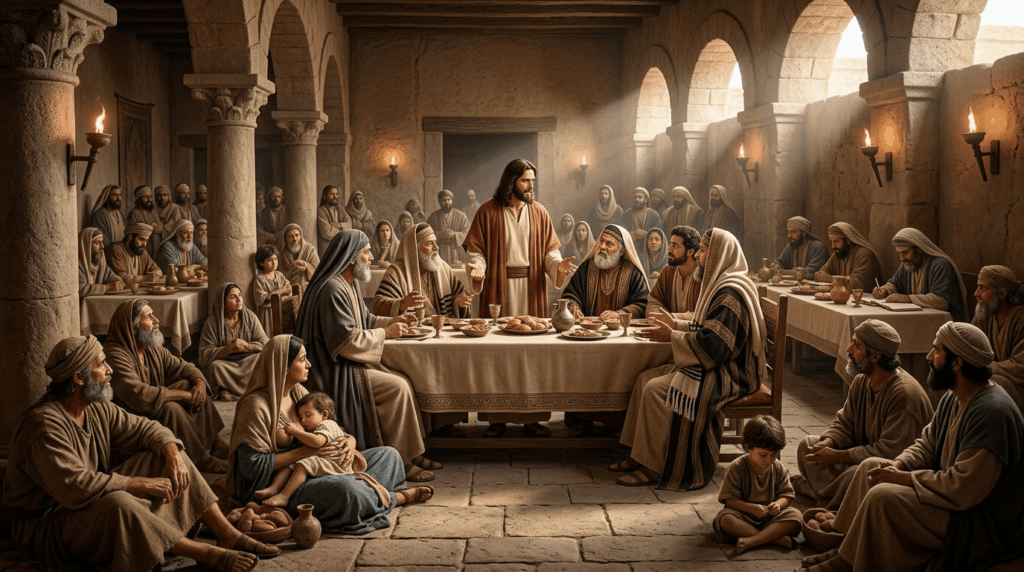
As Jesus finished speaking at the breakfast table of the Pharisee, one of the lawyers present, desiring to relieve the silence, thoughtlessly said: “Blessed is he who shall eat bread in the kingdom of God”—that being a common saying of those days. And then Jesus spoke a parable, which even his friendly host was compelled to take to heart. He said:
“A certain ruler gave a great supper, and having bidden many guests, he dispatched his servants at suppertime to say to those who were invited, ‘Come, for everything is now ready.’ And they all with one accord began to make excuses. The first said, ‘I have just bought a farm, and I must needs go to prove it; I pray you have me excused.’ Another said, ‘I have bought five yoke of oxen, and I must go to receive them; I pray you have me excused.’ And another said, ‘I have just married a wife, and therefore I cannot come.’ So the servants went back and reported this to their master. When the master of the house heard this, he was very angry, and turning to his servants, he said: ‘I have made ready this marriage feast; the fatlings are killed, and all is in readiness for my guests, but they have spurned my invitation; they have gone every man after his lands and his merchandise, and they even show disrespect to my servants who bid them come to my feast. Go out quickly, therefore, into the streets and lanes of the city, out into the highways and the byways, and bring hither the poor and the outcast, the blind and the lame, that the marriage feast may have guests.’ And the servants did as their lord commanded, and even then there was room for more guests. Then said the lord to his servants: ‘Go now out into the roads and the countryside and constrain those who are there to come in that my house may be filled. I declare that none of those who were first bidden shall taste of my supper.’ And the servants did as their master commanded, and the house was filled.”
And when they heard these words, they departed; every man went to his own place. At least one of the sneering Pharisees present that morning comprehended the meaning of this parable, for he was baptized that day and made public confession of his faith in the gospel of the kingdom. Abner preached on this parable that night at the general council of believers.
The next day all of the apostles engaged in the philosophic exercise of endeavoring to interpret the meaning of this parable of the great supper. Though Jesus listened with interest to all of these differing interpretations, he steadfastly refused to offer them further help in understanding the parable. He would only say, “Let every man find out the meaning for himself and in his own soul.”
SuomiEnglish
As Jesus finished speaking at the breakfast table of the Pharisee, one of the lawyers present, desiring to relieve the silence, thoughtlessly said: “Blessed is he who shall eat bread in the kingdom of God”—that being a common saying of those days. And then Jesus spoke a parable, which even his friendly host was compelled to take to heart. He said:
“A certain ruler gave a great supper, and having bidden many guests, he dispatched his servants at suppertime to say to those who were invited, ‘Come, for everything is now ready.’ And they all with one accord began to make excuses. The first said, ‘I have just bought a farm, and I must needs go to prove it; I pray you have me excused.’ Another said, ‘I have bought five yoke of oxen, and I must go to receive them; I pray you have me excused.’ And another said, ‘I have just married a wife, and therefore I cannot come.’ So the servants went back and reported this to their master. When the master of the house heard this, he was very angry, and turning to his servants, he said: ‘I have made ready this marriage feast; the fatlings are killed, and all is in readiness for my guests, but they have spurned my invitation; they have gone every man after his lands and his merchandise, and they even show disrespect to my servants who bid them come to my feast. Go out quickly, therefore, into the streets and lanes of the city, out into the highways and the byways, and bring hither the poor and the outcast, the blind and the lame, that the marriage feast may have guests.’ And the servants did as their lord commanded, and even then there was room for more guests. Then said the lord to his servants: ‘Go now out into the roads and the countryside and constrain those who are there to come in that my house may be filled. I declare that none of those who were first bidden shall taste of my supper.’ And the servants did as their master commanded, and the house was filled.”
And when they heard these words, they departed; every man went to his own place. At least one of the sneering Pharisees present that morning comprehended the meaning of this parable, for he was baptized that day and made public confession of his faith in the gospel of the kingdom. Abner preached on this parable that night at the general council of believers.
The next day all of the apostles engaged in the philosophic exercise of endeavoring to interpret the meaning of this parable of the great supper. Though Jesus listened with interest to all of these differing interpretations, he steadfastly refused to offer them further help in understanding the parable. He would only say, “Let every man find out the meaning for himself and in his own soul.”
Abner oli järjestänyt niin, että Mestari opetti synagogassa tänä sapattipäivänä, ja se oli Jeesuksen ensimmäinen esiintyminen synagogassa sen jälkeen, kun kaikki synagogat oli sanhedrinin määräyksestä suljettu hänen opetuksiltaan. Synagogapalveluksen päättyessä Jeesus loi katseensa alas eteensä, ja siinä sattui olemaan vanhahko nainen, jonka kasvoilla oli masentunut ilme ja jonka ulkoinen olemus oli perin kumarainen. Tämä nainen oli jo kauan aikaa ollut pelon vallassa, ja kaikki ilo oli kaikonnut hänen elämästään. Puhujapulpetista alas astuessaan Jeesus meni naisen luokse, ja koskettaen tämän kumaraista hahmoa olkapäästä hän sanoi: ”Vaimo, sinun ei tarvitse kuin uskoa ja voisit täysin vapautua voimattomuuden hengestäsi.” Ja tämä nainen, jonka olivat painaneet kasaan ja kumaraan yli kahdeksantoistavuotisen pelokkuuden aiheuttamat masennustilat, uskoi Mestarin sanat, ja uskon avulla hänen vartensa samassa hetkessä suoristui. Nähdessään, että hänen kumaruutensa oli oikaistu, tämä nainen huusi ääneensä ja ylisti Jumalaa.
Vaikka siis oli niin, että tämän naisen vaiva oli kokonaan mentaalinen, sillä hänen kumaruutensa syynä oli hänen masentunut mielensä, ihmiset luulivat, että Jeesus oli parantanut todellisen fyysisen vamman. Jos kohta Filadelfian synagogan seurakuntaväki suhtautuikin Jeesuksen opetuksiin suopeasti, synagogan esimiesten johtaja oli joka tapauksessa vihamielinen fariseus. Ja koska hän seurakuntalaisten tavoin oli sitä mieltä, että Jeesus oli parantanut fyysisen vamman, ja koska häntä närkästytti se, että Jeesuksella oli ollut otsaa suorittaa moinen teko sapattina, hän nousi seisaalleen seurakunnan edessä ja sanoi: ”Eikö ole niin, että on kuusi päivää, joiden aikana ihmisten tulisi toimittaa kaikki askarensa? Tulkaa siis näinä arkipäivinä tänne paranemaan, vaan älkää sapattipäivänä.”
Vihamielisen esimiehen lausuttua nämä sanat Jeesus palasi puhujakorokkeelle ja sanoi: ”Miksi näytellä tekopyhäin osaa? Eikö teistä jokainen sapattinakin irrota härkäänsä kytkyestään ja vie sitä juomaan? Jos tällainen palvelus on sallittua sapattipäivänä, niin eikö pitäisi tätä naista, Abrahamin tytärtä, joka kuluneet kahdeksantoista vuotta on ollut pahan kahleissa, kirvoittaa tästä orjuudesta ja viedä juomaan vapahduksen ja elämän vettä, niin sapattipäivä kuin nyt onkin?” Ja kun nainen edelleenkin ylisti Jumalaa, Jeesuksen arvostelija joutui häpeään, ja seurakunta riemuitsi yhdessä naisen kanssa siitä, että hänet oli parannettu.
Jeesusta vastaan tuona sapattina esittämänsä julkisen arvostelun johdosta synagogan esimiesten johtaja pantiin viralta ja hänen tilalleen asetettiin muuan Jeesuksen seuraaja.
Jeesus vapautti tavan takaa tällaisia pelon uhreja heidän voimattomuuden hengestään, mielenmasennuksestaan ja pelon orjuudestaan. Mutta ihmiset luulivat kaikkien tuollaisten vaivojen olevan joko fyysisiä vammoja tai johtuvan siitä, että asianomainen henkilö oli pahojen henkien riivaama.
Jeesus opetti synagogassa taas sunnuntaina, ja paljon oli niitä, jotka Abner puoliltapäivin kastoi kaupungin eteläpuolella virtaavassa joessa. Jeesus ja kymmenen apostolia olisivat seuraavana aamuna lähteneet takaisin Pellan leirille, ellei paikalle olisi saapunut yksi Daavidin läheteistä, joka toi tärkeän viestin Jeesukselle hänen ystäviltään Betaniasta, Jerusalemin liepeiltä.